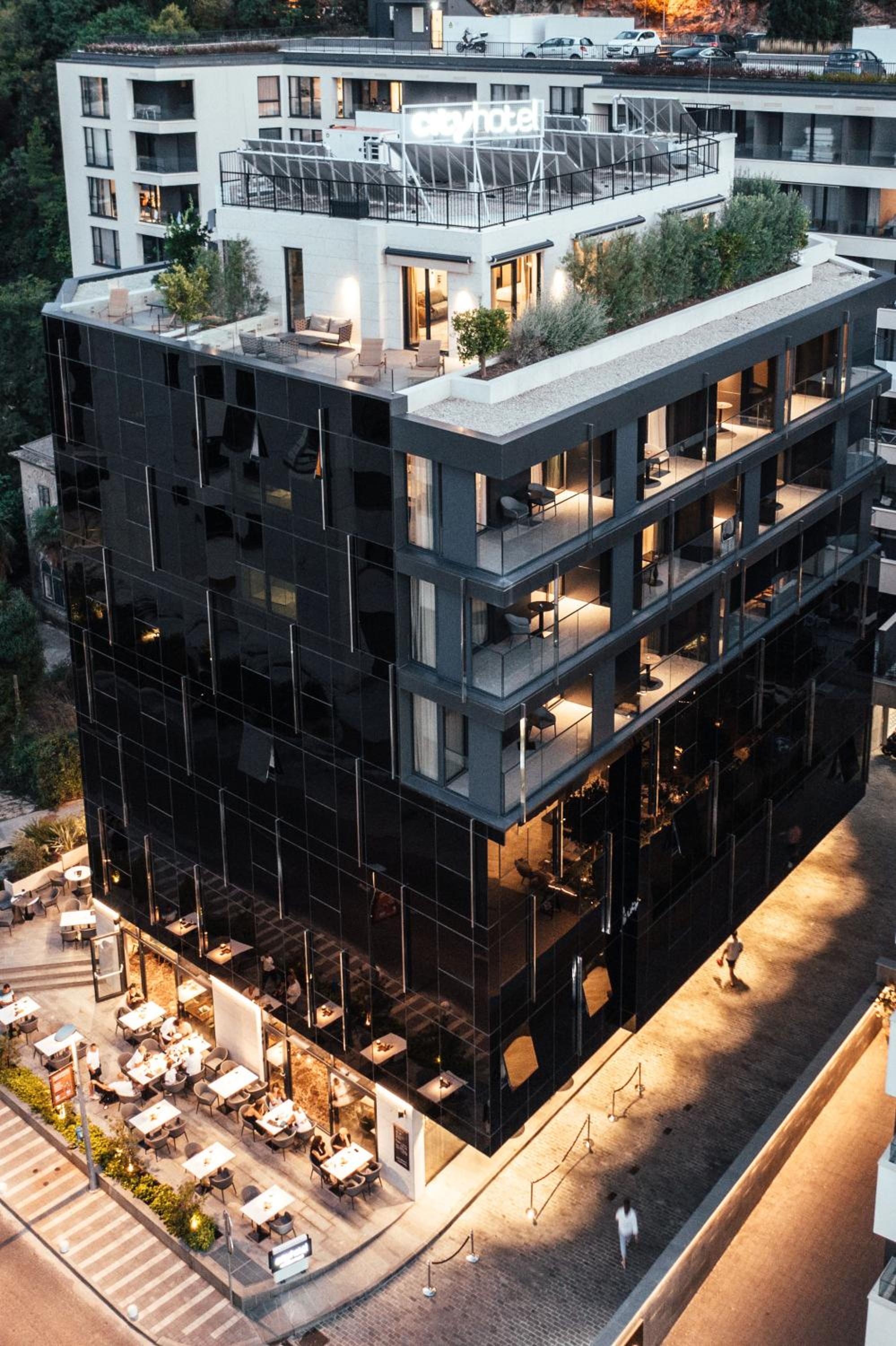
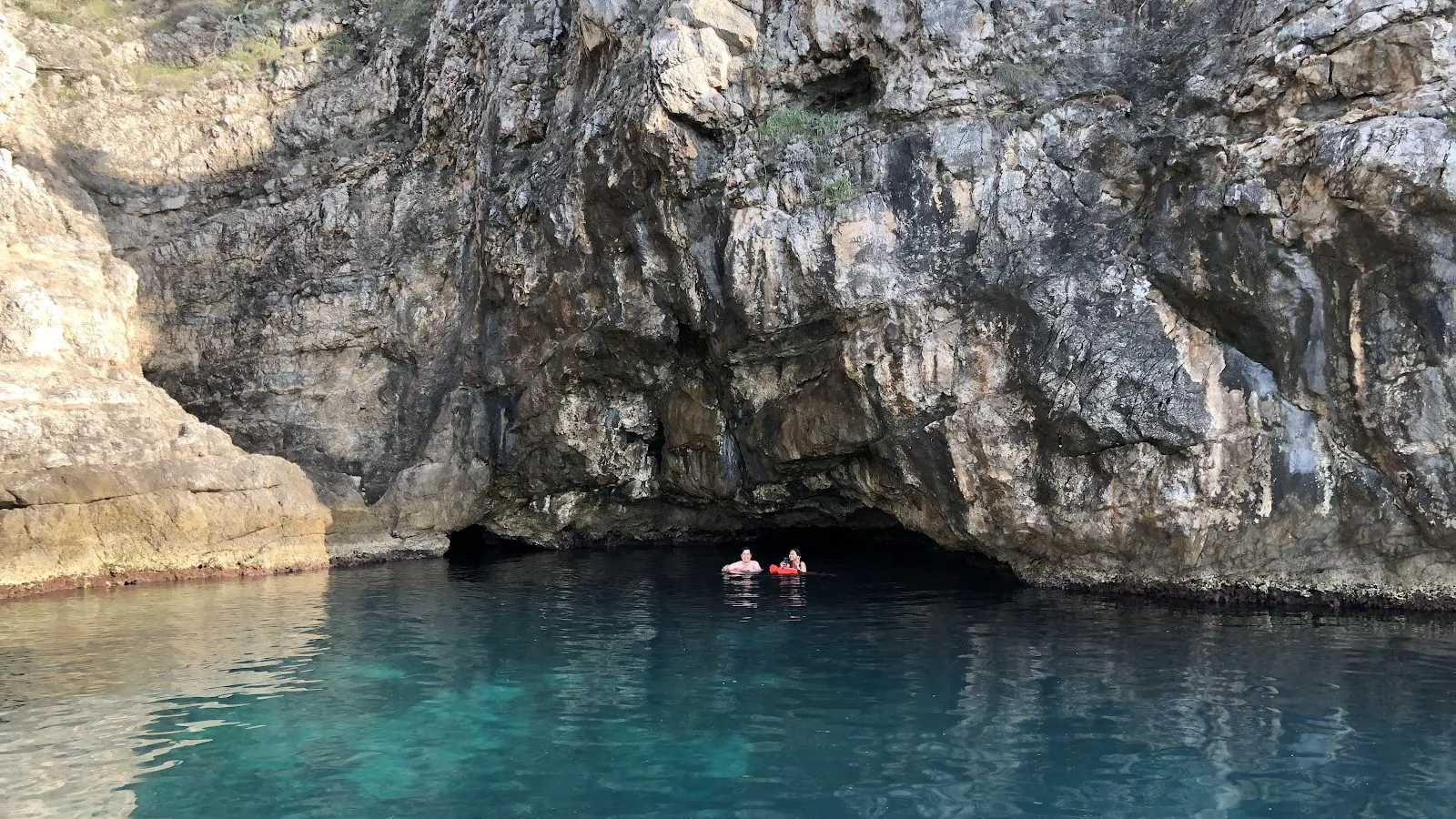
The entrance to the Blue Cave (Plava špilja) on Koločep is 1.5 m under the waterline and too narrow for any boat, so you swim in. The chamber holds a handful of swimmers at a time, so the skipper anchors outside and lets people in in batches. A shared half-day boat costs €49 to €65 per person and runs four hours.
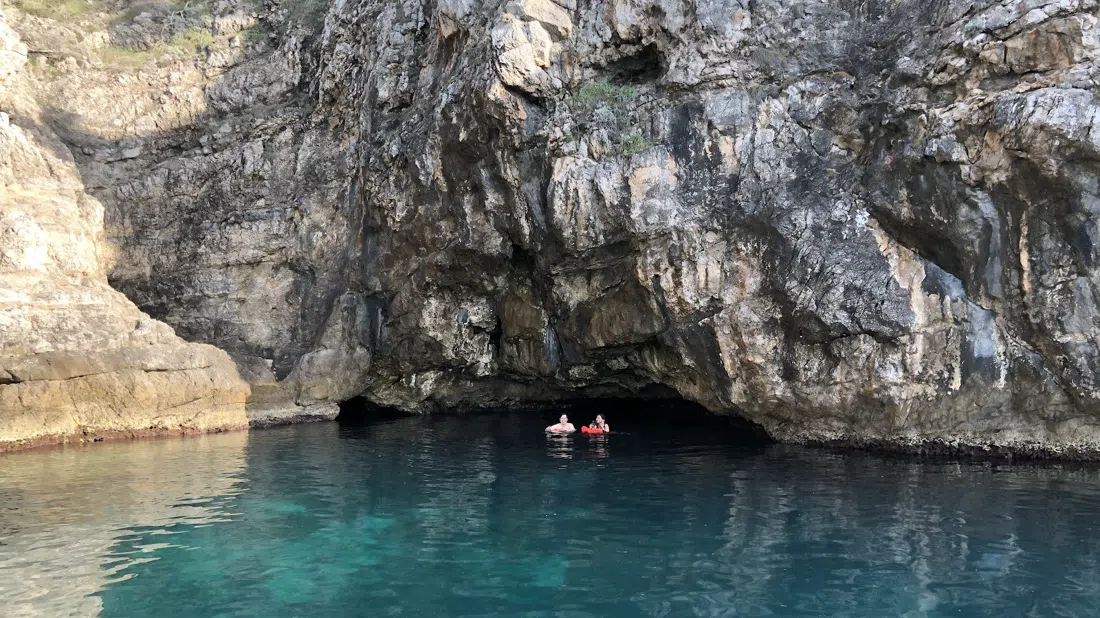
Swimming into the Blue Cave on Koločep
The cave is a low rock arch in Koločep's south cliff, with no gate and no entry fee. Inside, swimmers tread water in orange life jackets in a small chamber lit electric cobalt from below, the white seabed glowing up through the submerged opening. The boat fare is the only money the cave costs you.
Boats arrive by the boatload and the chamber takes only a few people at once, so you wait your turn on the water while the group ahead of you is inside. If you are not willing to go under the surface and through a narrow gap, settle that before you book, because the swim is the whole attraction.
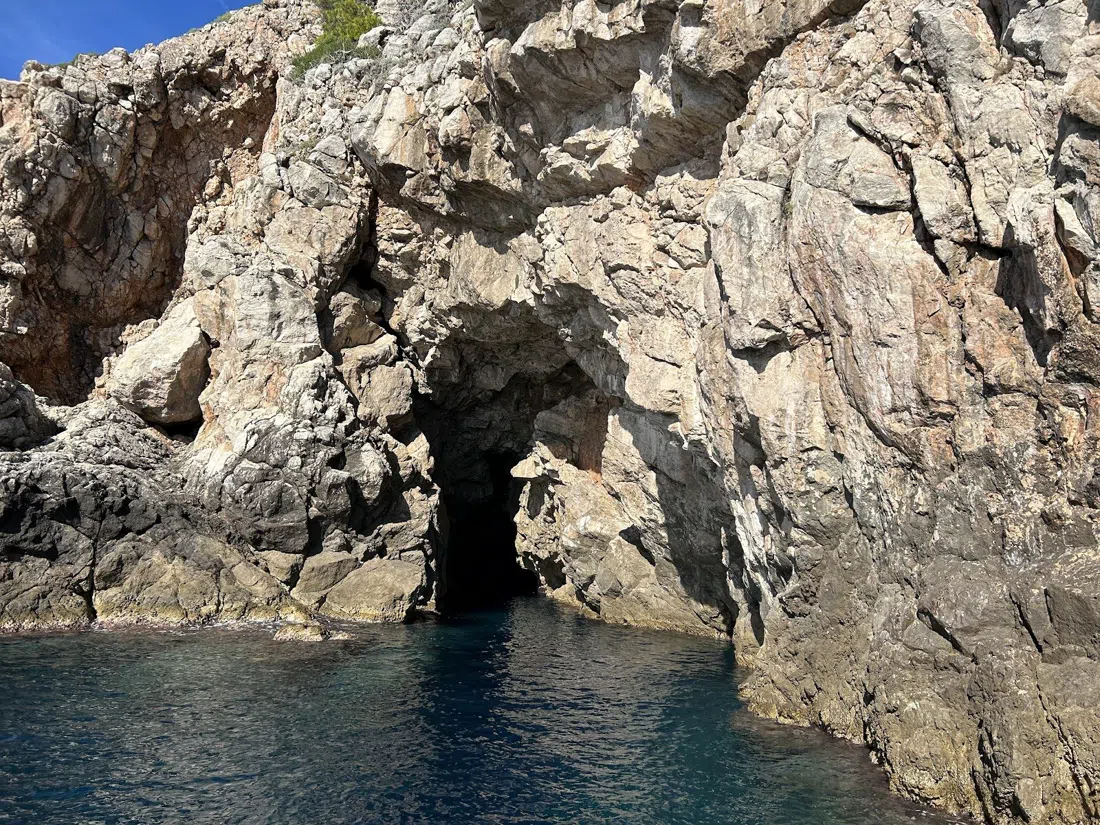
Green Caves (Zelene špilje) are on the same boat-only stretch of Koločep coast, a wider and higher cave mouth with emerald-tinted water and daylight falling through a side passage onto grey limestone streaked at the waterline. Swimming them is free, and they come included on cave boat trips. Koločep has three of them, and most cave boats pair one with the Blue Cave. Ask whether yours includes a green cave stop, because the colour contrast is the best part.
Timing the four hours
Those four hours cover the crossing, the caves and the beach stop in between. The village stop can run as short as an hour, which decides whether lunch is a sit-down or not.
Nothing here is sold at a door. The only ticket is the boat seat, and the only queue is the one on the water while the batch ahead of you swims.
The colour in the Blue Cave comes up from the seabed through the submerged opening, so take a boat that puts you in the chamber while the sun is high.
Šunj Beach and the walk from Lopud village
Šunj Beach, on Lopud's seaward side, is an 800 m crescent of soft pale sand with pine and scrub hillside behind it and no road or buildings in view. The water stays knee-deep a long way out, shallow enough for small children. Sandy beaches are rare this close to Dubrovnik.
The sand is public. Only the lounger rows are paid, at €5 to €10 each per day.
Šunj is a 20 to 30 minute walk from the village, or you can take one of the electric golf carts that queue at the promenade end to run the transfer.
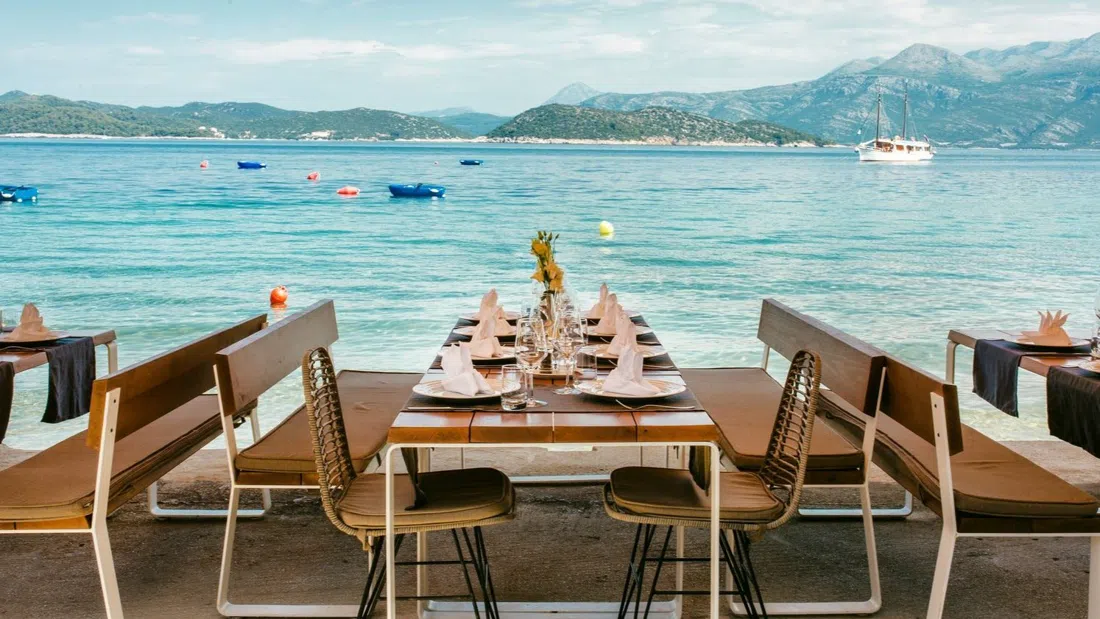
Cima Beach Bar & Restaurant sits back on the sand at Šunj, open-sided timber with tables under straw shade, cold drinks and grill smoke, loungers lined up in front. A beer or coffee is €3 to €5, simple plates are €10 to €18, and a lounger is often free if you order at the bar. It is the only food and drink on Šunj itself, so check it is still trading if you come late in the season.
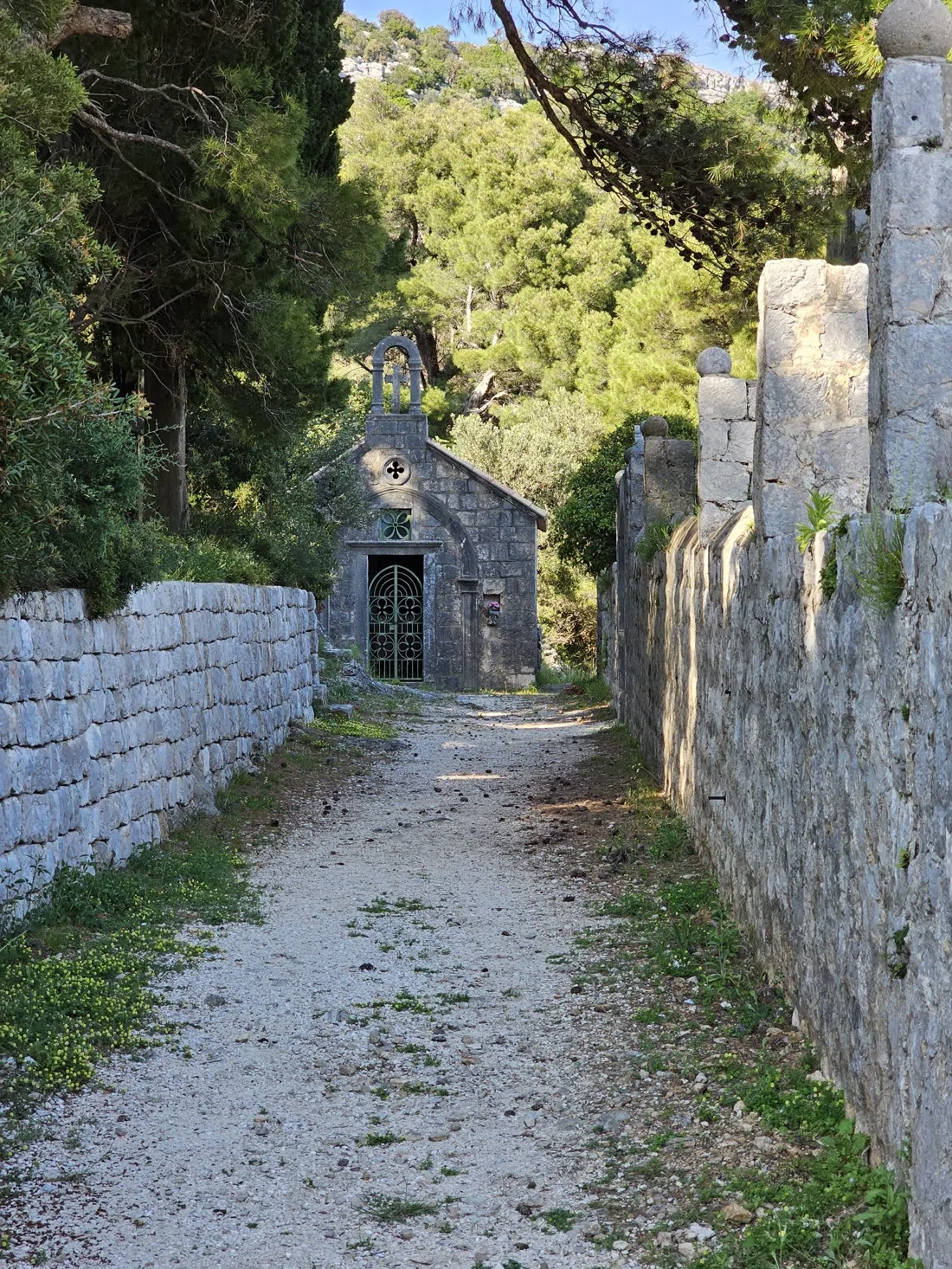
Church of Our Lady of Šunj (Gospa od Šunja) is on the rise above the bay on the Šunj path, plain 15th-century stone with cypresses outside. The carved Renaissance-Baroque wooden altar inside, with its gilded saint reliefs, is the best art object you can see for nothing on Lopud. Entry is free, with donations. The interior is small and often locked outside service and festival times.
Lopud village, the park and the fort
Lopud waterfront promenade (Obala Ive Kuljevana) is a traffic-free stone strip curving round the bay, with shuttered 19th-century townhouses and palms along it and electric golf carts and luggage trolleys moving where cars would be. Lopud has no cars at all. The ferry lands here and every café on the island is on this strip, so you pass through it whichever way your day runs.
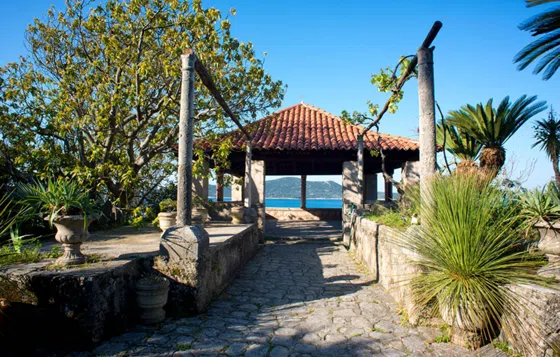
Đorđić-Mayneri Park starts at the stone stairs up from the seafront: 13,000 m² of walled garden with eucalyptus and cedar avenues, lavender and palms, and a villa at its centre. Entry is free and it is open 07:00 to 21:00. The paths are wide and shaded, and parts still look half-restored. It is the easiest worthwhile thing to do with a spare half-hour by the harbour.
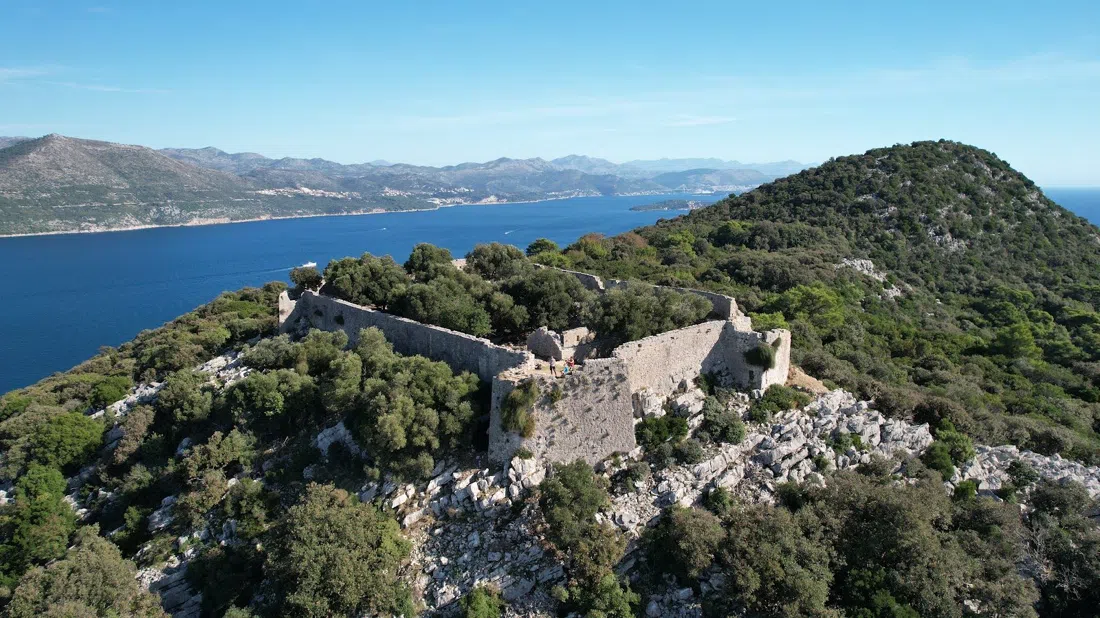
Sutvrač Fortress (Lopud Fort) is a roofless 1563 stone fort on the island's highest point, with the whole Elafiti chain and the Dubrovnik coast laid out below. It gives the best panorama of the archipelago anywhere on this trip. Red-dot waymarks lead up over scrub and goats, and no gate or staff stand between you and the ruin. The climb is steep, 30 to 90 minutes on loose rock, and the trail narrows to single file in places. Wear proper shoes, and leave the fort out of a day built around a four-hour boat tour's beach stop.
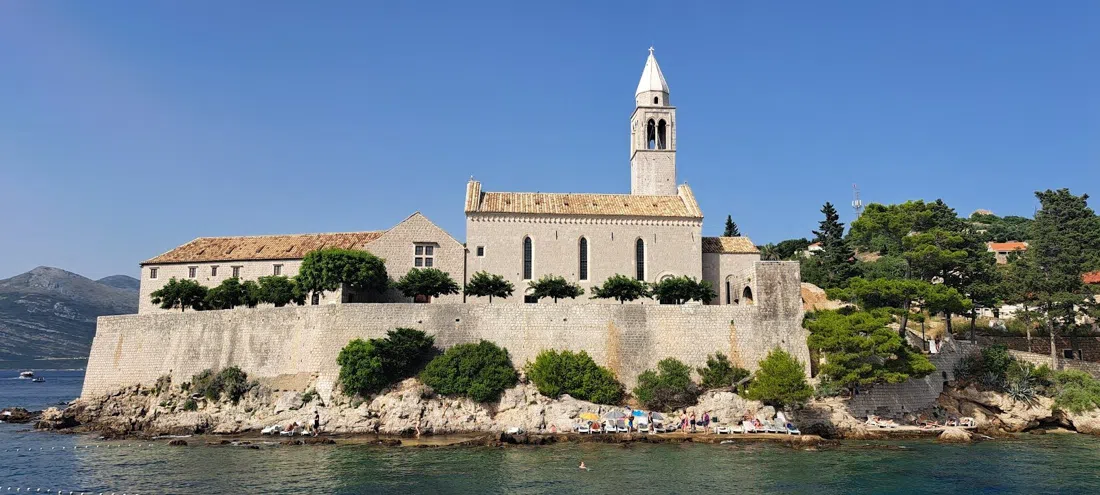
LOPUD 1483 occupies the fortified 1483 Franciscan cloister on the island's northern tip: crenellated walls above a private beach, a terraced inner garden of more than 80 plant species, Renaissance furniture against bare stone. It goes as a whole-property exclusive rental, five suites, one group at a time, at four figures and up per night. There are no walk-in visits and no day tickets, whatever guides still tell people about wandering into the monastery. The public religious site on Lopud is the Šunj church.
Lunch on Lopud
Obala Restaurant puts its terrace tables right on the stone quay edge in the village, white cloths, grilled whole fish and black risotto, the water lapping a metre away. Mains are €20 to €35 and whole fish goes by the kilo. It is confirmed trading into October 2026, which not every Lopud kitchen is. Book ahead for a party of more than six.
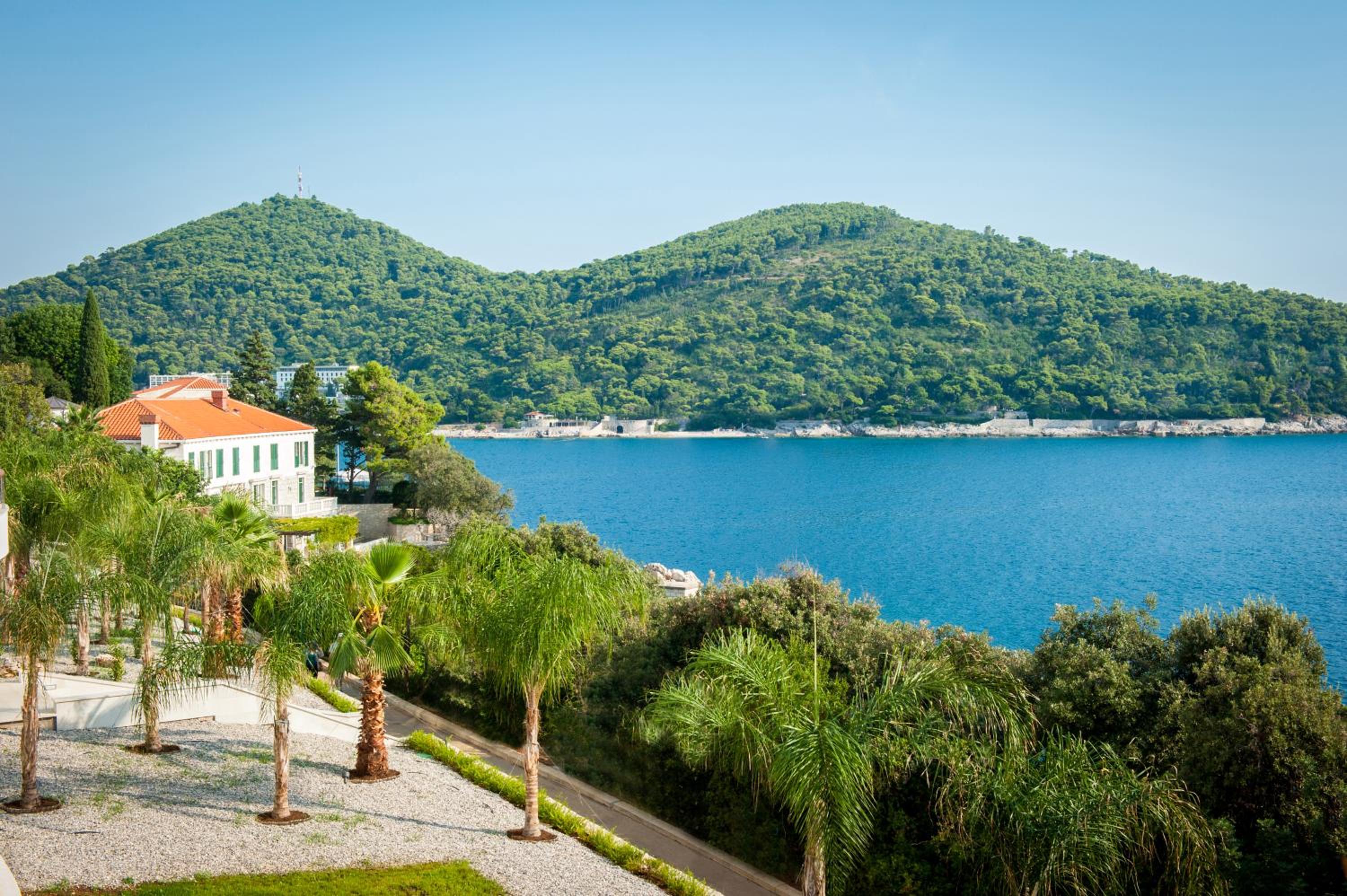
La Villa Restaurant cooks the island's most ambitious food across two sea-level terraces beneath a restored stone villa, bougainvillea around them, sunset light coming straight down the channel onto the tables. Mains are €22 to €38, and evening tables want reserving. The half-day boats are back in Dubrovnik well before dinner, so La Villa belongs to a night on the island rather than a day trip.
Where the boats leave from
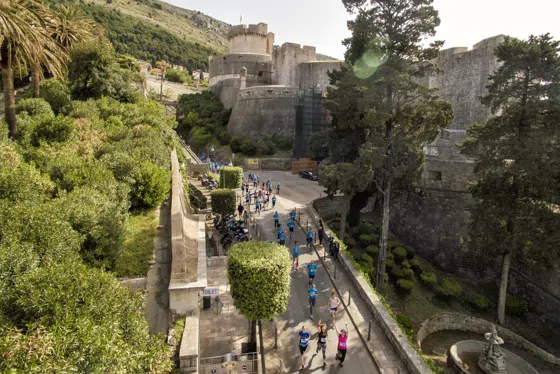
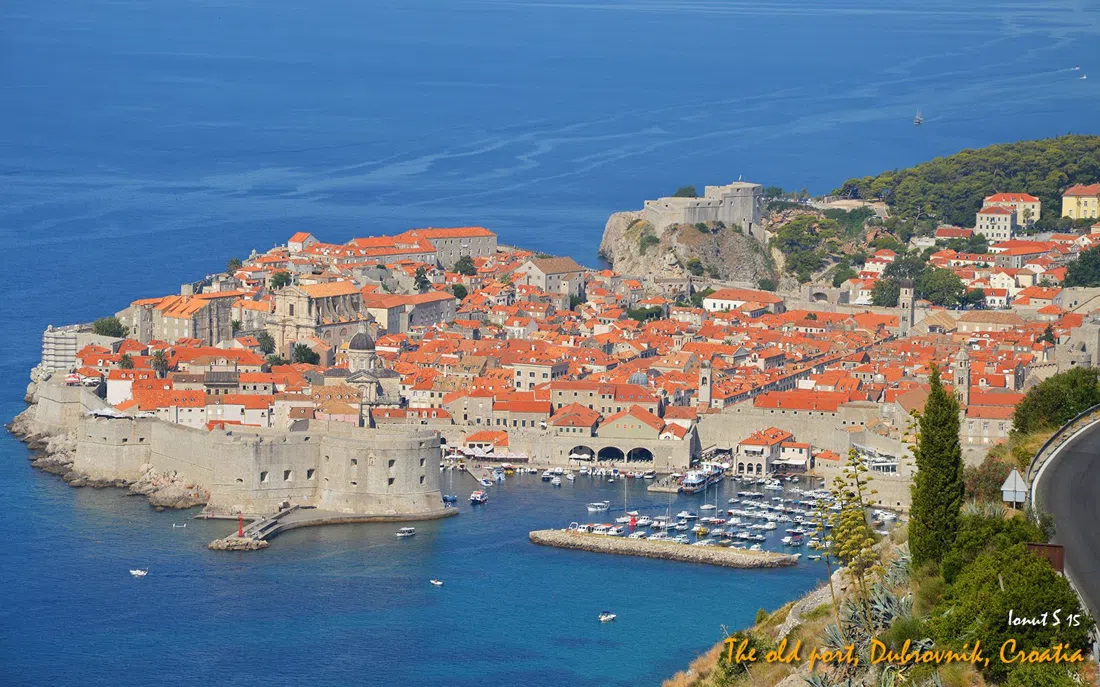
Dubrovnik Old Port (Gradska luka) is the enclosed stone harbour on the Old Town's east side, between the Revelin and St John's fortresses, city walls rising straight out of the water and small excursion boats rafted along the quay. Island and cave boats cast off from inside the walls here, which makes it the most atmospheric start. The quay is free to enter, and tendered cruise passengers land on it too.
Marina Frapa Dubrovnik in Lapad is where most small-group cave speedboats brief and board, with RIBs and open boats under bimini tops along the pontoons at Lapadska obala, life jackets and briefing boards on the dock and Lapad's wooded ridge behind. It is the usual departure point for the fast boats, 18 to 20 minutes from Koločep, and reaching it from the Old Town means a taxi. Check which harbour your ticket names before you set off.
Donje Čelo is Koločep's landing village: a small concrete ferry quay backed by terracotta roofs, a narrow sand-and-pebble beach curving round the bay, pine paths leading inland and no vehicles. It is five kilometres from Gruž and the do-it-yourself way onto the island the Blue Cave belongs to, though the cave itself still needs a boat from here. A konoba lunch runs €15 to €30, and you should bring cash.
Mount Srđ and Cave Bar More
Dubrovnik Cable Car to Mount Srđ lifts two red-and-white gondolas 412 m above the Old Town's terracotta roofs to a summit terrace beside Fort Imperial, with Lokrum and the Elafiti chain strung out across the sea. It is the one place you can see the whole archipelago you sailed through laid out at once. An adult return is €27 to €30 and a child return is €8. Book online to skip the 45 to 60 minute queues at the lower station in summer. October hours are 09:00 to 21:00 until 20 October, then 09:00 to 20:00, and the last car leaves 30 minutes before close.

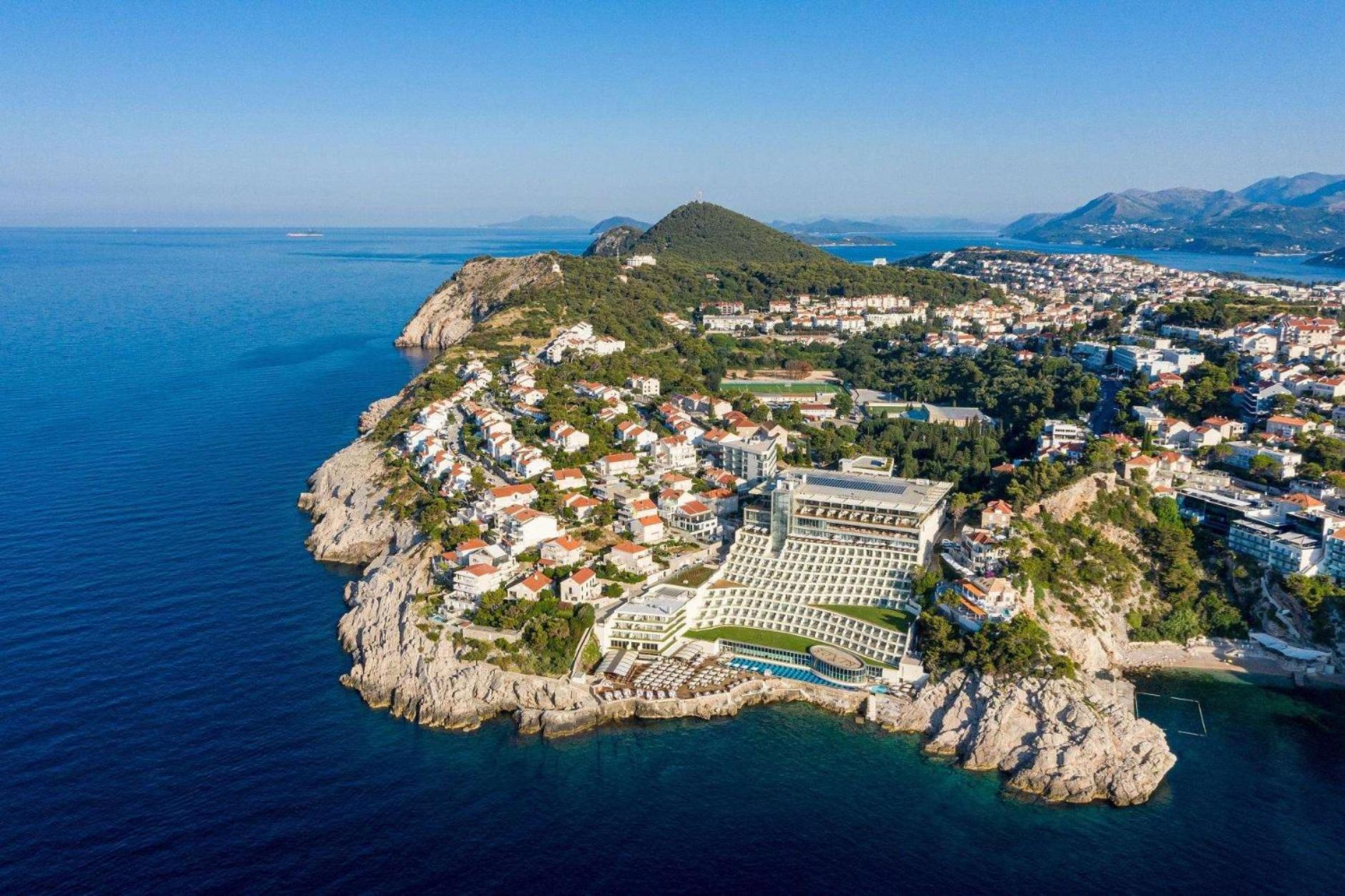
Cave Bar More is under Hotel More in Lapad, a limestone cave with a stalactite ceiling lit from below, a glass floor panel over a rock pool and bar stools against raw rock. It takes no reservations, so you walk in. Cocktails are €12 to €18 and the doors are open 08:00 to 00:00. The cave room is small and the rest of the drinking happens on the terrace. It is close to the Lapad marina departures.
October on this route
The cave boats run seven days a week, and the season runs 1 April 2026 to 15 November 2027. The trip is weather dependent, and it is booking steadily.
October falls after the organised season at Šunj: the zone with the showers and the beach bar runs late May to late September. The sand stays open and free either way.
Who the trip suits
The trip suits a confident swimmer with a free half day. The swim into the lit chamber is what you are paying for, and the Šunj stop gives the rest of the time to flat sand. If you will not swim through a submerged entrance, spend the day on the Lopud paths and the cable car instead.
Before you go
Book the boat seat ahead, and reserve Obala for a party of more than six. In October the Šunj church may be locked and the beach bar may have closed for the season.
See the Dubrovnik guide and the Dubrovnik hotel search.