A data-driven guide — where to stay, what to eat, and what not to miss.
Guests & rooms
The Florence guide
An insider’s read on Florence
The crowds can be overwhelming, the summer heat stifling, and the commercialization of the center undeniable.
Florence is a city defined by its physical limits and its artistic density. Contained within a compact basin carved by the Arno River, its skyline is still dominated by the same brick dome that Brunelleschi completed in 1436. The streets are narrow, paved with massive stone slabs, and flanked by austere, fortress-like palazzi that block out the summer sun. It is a place where the weight of the Renaissance is inescapable, felt in the sheer concentration of frescoed chapels, marble sculptures, and world-class galleries.
Yet, beneath the weight of this artistic heritage lies a living, working city. Beyond the tourist-clogged arteries of the historic center, the Oltrarno district preserves its gritty artisan workshops, where woodcarvers and leather gilders work in damp ground-floor studios. The air smells of roasted coffee, tripe simmering in broth, and the sharp scent of tanned leather. It is a city of sharp contrasts, where high-fashion boutiques share walls with centuries-old wine windows and unpretentious neighborhood trattorias.
To experience the city properly requires navigating its intense popularity. The crowds can be overwhelming, the summer heat stifling, and the commercialization of the center undeniable. But by shifting your schedule to match the locals—drinking espresso standing up at the bar, retreating to quiet residential neighborhoods during the afternoon heat, and exploring the hills of San Miniato at dusk—you will find a city that remains fiercely proud, deeply traditional, and visually arresting.
Where to base yourself
The neighborhoods
Where you sleep shapes the trip. Here’s the honest orientation, area by area.
via Google
Centro Storico (Duomo & Piazza della Signoria)
For First-time visitors who want to be steps away from the major sights. The trade-off is high noise levels, elevated prices, and a lack of authentic local life.
The geographic and historical heart of the city, packed with iconic monuments, high-end shops, and dense crowds.
Where to sleepLuxury hotels in converted palazzi or high-end apartment rentals.
The Duomo complex and Giotto's Campanile
Piazza della Signoria and the Loggia dei Lanzi
The luxury shopping strip along Via de' Tornabuoni
via Google
San Lorenzo & Santa Maria Novella
For Budget travelers and those relying on train travel. The trade-off is that the streets immediately surrounding the station can feel sketchy late at night.
A bustling, slightly gritty transport and market hub defined by leather stalls, historic chapels, and the central train station.
Where to sleepMid-range boutique hotels, budget guesthouses, and modern hostels.
The Medici Chapels with Michelangelo's sculptures
Mercato Centrale, a two-story historic food market
The Gothic Basilica of Santa Maria Novella
via Google
Santa Croce
For Younger travelers and nightlife seekers. The trade-off is that streets near Piazza Santa Croce can be extremely noisy until the early hours.
A historic neighborhood centered around a grand Franciscan basilica, transitioning from quiet residential streets by day to a lively nightlife hub by night.
Where to sleepChic apartments, historic guesthouses, and mid-range hotels.
The Basilica of Santa Croce, resting place of Michelangelo and Galileo
The historic leather school, Scuola del Cuoio
The lively bars along Via de' Benci
via Google
Santo Spirito
For Travelers seeking a local, artistic vibe and great dining. The trade-off is that the main piazza is a loud gathering spot for youth until 2 AM.
The bohemian heart of the Oltrarno, where artisan workshops, vintage boutiques, and lively local cafes cluster around a shady piazza.
Where to sleepBoutique guesthouses, artisan-owned apartments, and stylish bed and breakfasts.
The Basilica of Santo Spirito with its simple, unfinished facade
The daily morning flea and produce market in the piazza
Artisan studios specializing in woodcarving and jewelry
via Google
San Frediano
For Slow travelers and food lovers looking to escape the tourist bubble. The trade-off is a longer walk to the main Renaissance sights.
A gritty, authentic neighborhood in the western Oltrarno, known for its traditional workshops, hip bars, and unpretentious trattorias.
Where to sleepValue-focused apartments and local residential rentals.
The Brancacci Chapel with Masaccio's groundbreaking frescoes
The medieval Porta San Frediano gate
The craft cocktail bars along Via San Giovanni
via Google
San Niccolò
For Couples and hikers seeking quiet charm. The trade-off is the steep uphill climb required to get home from the city center.
A quiet, village-like neighborhood tucked beneath the hillside, featuring narrow streets, medieval defensive walls, and steep stone staircases.
Where to sleepRomantic boutique hotels and quiet residential apartments.
The steep climb up to Piazzale Michelangelo for panoramic views
The rose garden (Giardino delle Rose) overlooking the city
The studio of local street artist Clet Abraham
via Google
Sant'Ambrogio
For Food enthusiasts and long-term visitors who want to live like locals. The trade-off is that it is a fifteen-minute walk to the main central sights.
A vibrant, deeply local residential neighborhood centered around a bustling daily food market and a historic synagogue.
Where to sleepAuthentic local apartments and family-run guesthouses.
The Mercato di Sant'Ambrogio for fresh produce, cheeses, and meats
The Great Synagogue of Florence with its distinctive Moorish dome
The cheap, traditional food stalls inside the market hall
via Google
Campo di Marte
For Families and travelers seeking peace, quiet, and easy parking. The trade-off is that you must rely on buses or local trains to reach the historic core.
A leafy, residential district located northeast of the center, home to the city's main sports complexes and wide, tree-lined avenues.
Where to sleepModern residential apartments and family-friendly hotels.
Stadio Artemio Franchi, home of ACF Fiorentina football club
The sprawling green spaces of Campo di Marte park
Excellent neighborhood pizzerias catering strictly to locals
via Google
Porta al Prato & Cascine
For Travelers attending events at the opera house or seeking green space. The trade-off is a lack of medieval architectural charm.
A transitional neighborhood west of the center, dominated by the city's largest public park and modern residential developments.
Where to sleepLarge, modern business hotels and budget-friendly hostels.
Parco delle Cascine, a massive park running along the Arno
The ultra-modern Teatro del Maggio Musicale Fiorentino
The massive Tuesday morning market in the park
Eat & drink
Where to eat in Florence
Real tables, by category — from seafood and grills to the budget classics locals actually queue for.
Steak & grills
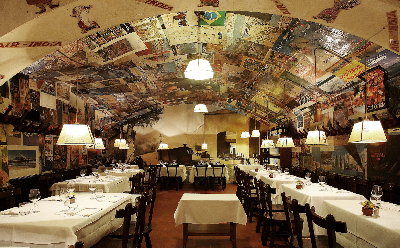
The undisputed king of Florentine cuisine is the Bistecca alla Fiorentina—a thick, T-bone cut from Chianina beef, grilled over charcoal and served strictly rare.
Scale the 463 narrow stone steps between the inner and outer shells of the dome to see the construction techniques up close and enjoy panoramic views.
via Google
Sunset at Piazzale Michelangelo
San Niccolò1.5 hours★★★★★★★★★★4.9(2,737)
Join locals and travelers on the stone steps of the panoramic terrace to watch the sun go down over the Arno with a bottle of Chianti.
via Google
Leather Crafting at Scuola del Cuoio
Santa Croce1 hour★★★★★★★★★★4.6(760)
Visit the historic leather school tucked behind the Basilica of Santa Croce to watch masters craft handmade bags and learn traditional gilding techniques.
via Google
Beyond the city
Day trips
Fiesole
An ancient Etruscan and Roman hilltop town offering a well-preserved Roman amphitheater, archaeological museum, and panoramic views of Florence.
Getting thereTake the local ATAF Bus 7 from the central station directly to Fiesole's main piazza in twenty-five minutes.
Siena
A medieval rival city famous for its stunning shell-shaped Piazza del Campo, striped marble cathedral, and preserved Gothic architecture.
Getting thereTake the direct Rapida bus from the bus station next to Santa Maria Novella, which takes about one hour and fifteen minutes.
Lucca
A peaceful, walled Renaissance city where you can rent bicycles to ride along the top of the wide, tree-lined defensive ramparts.
Getting thereTake a direct regional train from Santa Maria Novella station, arriving in approximately one hour and twenty minutes.
Book ahead
Things to do in Florence
Top-rated tours, tickets and experiences — book in seconds, skip the line.
These are affiliate links. We may earn a commission when you book — at no extra cost to you. Tours are sold and operated by our partner, who is the merchant of record.
What it costs
Budgeting
Florence can be expensive in the historic center, but smart dining choices and walking instead of using transit can keep costs manageable.
Travel style
Per day
Backpacker
€60-90
Mid-range
€150-250
Luxury
€500+
Timing
When to visit
Timing a visit to Florence is a balancing act between managing extreme weather and navigating massive tourist crowds.
SpringApril and May bring beautiful blooms and mild temperatures, but also mark the beginning of the peak tourist season with long lines at major monuments.
SummerJune through August is intensely hot and humid, with temperatures regularly exceeding 35°C. Mosquitoes are prevalent, and many local shops close in August for annual holidays.
AutumnSeptember and October offer ideal weather, grape harvest festivals in the surrounding hills, and a lively culinary scene centered around fresh porcini and truffles.
WinterNovember to March is cold and occasionally rainy, but offers the quietest streets, empty museums, and significantly lower accommodation rates.
Amerigo Vespucci Airport (FLR) is highly accessible. The T2 tramway runs directly from the terminal to the central Santa Maria Novella railway station in under twenty minutes, costing only a few euros. Taxis operate on a fixed-tariff system to the center, which increases slightly on weekends and late at night.
Public transit
The city center is served by a network of small electric buses (Autolinee Toscane) that navigate the narrow pedestrianized streets. However, public transit is rarely necessary for visitors staying within the historic core.
Passes & tickets
The Firenze Card grants entry to major museums for a seventy-two-hour window, but it is only cost-effective if you plan to visit multiple high-ticket sites daily. For transit, standard single-use tickets are cheap and must be validated upon boarding.
On foot
Florence is an exceptionally walkable city. You can walk from one side of the historic center to the other in under thirty minutes. Most of the central core is a designated limited traffic zone (ZTL), making pedestrian exploration the safest and most practical option.
1
Always validate your bus or tram ticket in the machine immediately upon boarding to avoid steep, on-the-spot fines.
2
Watch out for silent electric scooters and bicycles that zip through pedestrianized streets without warning.
3
Wear thick-soled shoes; the historic stone paving slabs (pietra forte) are uneven and tough on thin footwear.
Travel smart
Safety & etiquette
Florence is generally very safe, but pickpocketing is common in crowded areas like the Duomo, Ponte Vecchio, and around Santa Maria Novella train station. Keep your belongings secure and avoid carrying large amounts of cash.
Local etiquette
Dress respectfully when entering churches; shoulders and knees must be covered, and hats must be removed.
Do not sit on the steps of churches or monuments to eat your lunch; the city enforces strict fines to keep historic steps clean.
When ordering steak, do not ask for it well-done; it is considered an insult to the chef and the quality of the meat.
From the ground
Practical tips
1
Buy your museum tickets only from the official B-Ticket website to avoid paying massive markups on third-party reseller platforms.
2
Carry a reusable water bottle and use the free public water fountains (fontanelli) that offer chilled, filtered sparkling water.
3
Avoid restaurants with picture menus or hosts standing outside trying to lure you in, especially around Piazza del Duomo.
4
Validate your train or bus ticket in the green machines before boarding to avoid heavy, on-the-spot fines.
5
Visit the Uffizi late in the afternoon, around 4:30 PM, when the large tour groups have departed and the galleries are much quieter.
6
Always ask for Bistecca alla Fiorentina by weight and expect to pay by the kilo; a standard steak is meant to be shared between two or three people.
Book direct
Book a hotel in Florence
Loading live availability and real-time prices…
Good to know
Florence FAQs
How do I avoid the lines at the Uffizi and Accademia?
You must book timed-entry tickets weeks in advance through the official B-Ticket website, or select the earliest morning or late afternoon slots.
Why is Florentine bread unsalted?
The tradition dates back to a medieval feud with Pisa, which cut off salt supplies to Florence, leading bakers to make bread without it.
Is tap water safe to drink in Florence?
Yes, tap water is completely safe. You can also refill your bottle with chilled still or sparkling water at the city's public water fountains.
Can I drive a rental car into the center of Florence?
No, the entire historic center is a restricted ZTL zone monitored by cameras, and unauthorized driving results in heavy automated fines.
Do I need to tip at restaurants in Florence?
Tipping is not expected. A service charge (coperto) is usually added to the bill; rounding up to the nearest euro is appreciated but optional.