Non-Muslims can get inside the Hassan II Mosque only on the official guided tour, which costs 140 DH for an adult. Departures go out in Arabic, French, English, Spanish and Italian, each running 45 to 60 minutes. The minaret rises 210m above the Atlantic sea wall, and the waves break below the esplanade while you wait.
The Casablanca start
The Hassan II Mosque tour runs Saturday to Thursday at 09:00, 10:00, 11:00, 12:00 and 15:00. Friday drops to three departures, at 09:00, 10:00 and 15:00. Foreign students pay 70 DH, children aged six to 12 pay 30 DH, and under-sixes go free. Fix your departure time before anything else and build the day around it, because nothing else in the city runs on so short a timetable. Inside, the prayer hall sets titanium against zellij, the cedar roof retracts, and a glass floor lets you stand above the ocean.
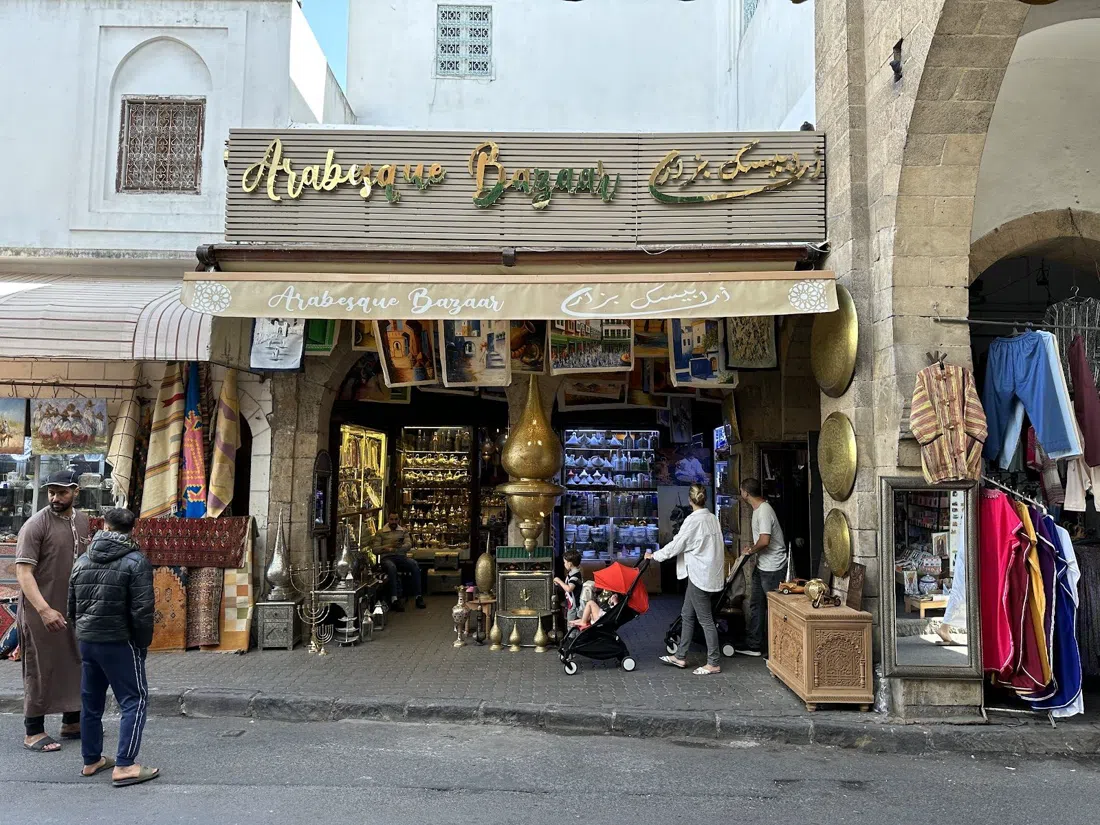
Quartier Habous, the New Medina, is a 1930s plan of arcaded pale stone, horseshoe arches and orange trees, and it is free to walk. The souk here sells carpets, babouches and spices, and the streets stay calmer and cleaner than the old medina's. Many shops close over lunch, so come in the morning or the late afternoon.
The Mahkama du Pacha stands in the same streets and has no ticket office. A guardian decides whether to let you in, and small groups do better than coachloads. Tip whoever opens the door 20 DH to 50 DH. Access is never guaranteed. Behind the doors are rooms of carved cedar ceilings, white stucco lacework and green-tiled roofs.
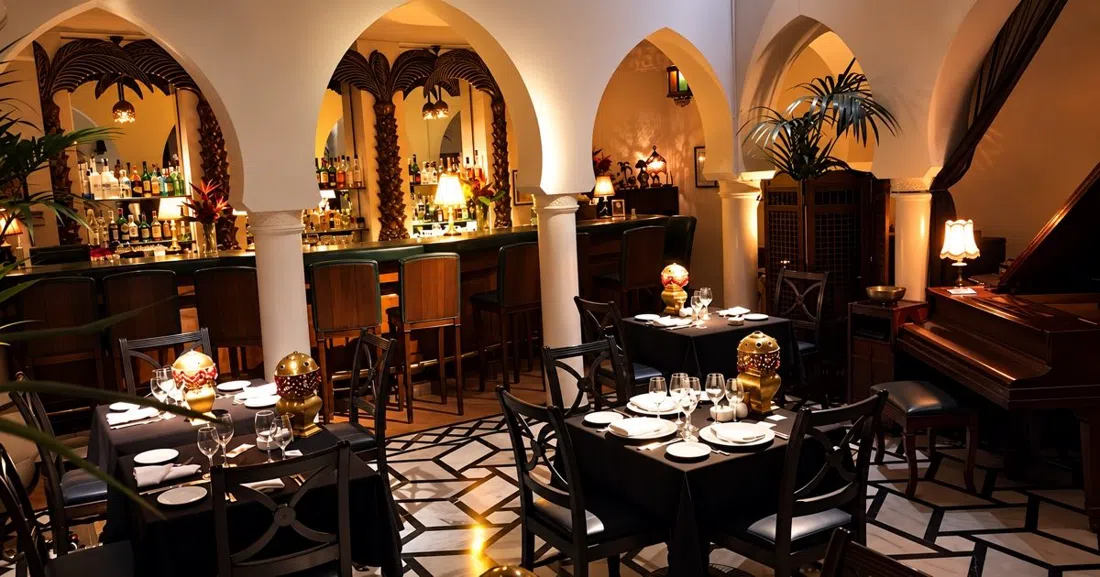
Rick's Café, near the old medina walls, is a courtyard bar in an old mansion: arched balconies, brass lanterns, potted palms and a grand piano under a curved staircase. It opens 365 days a year. Lunch runs 12:00 to 15:00, the first dinner seating 18:30 to 20:30 and the second 21:00 to 00:30, with live piano from 20:00. Reservations are effectively mandatory and a dress code applies; even booked guests queue at the door to be checked off the list. Tables are tight, the seatings are fixed, and a weekend table wants 48 hours' notice. Dinner is DHDHDH.
A Rabat morning above the Bou Regreg
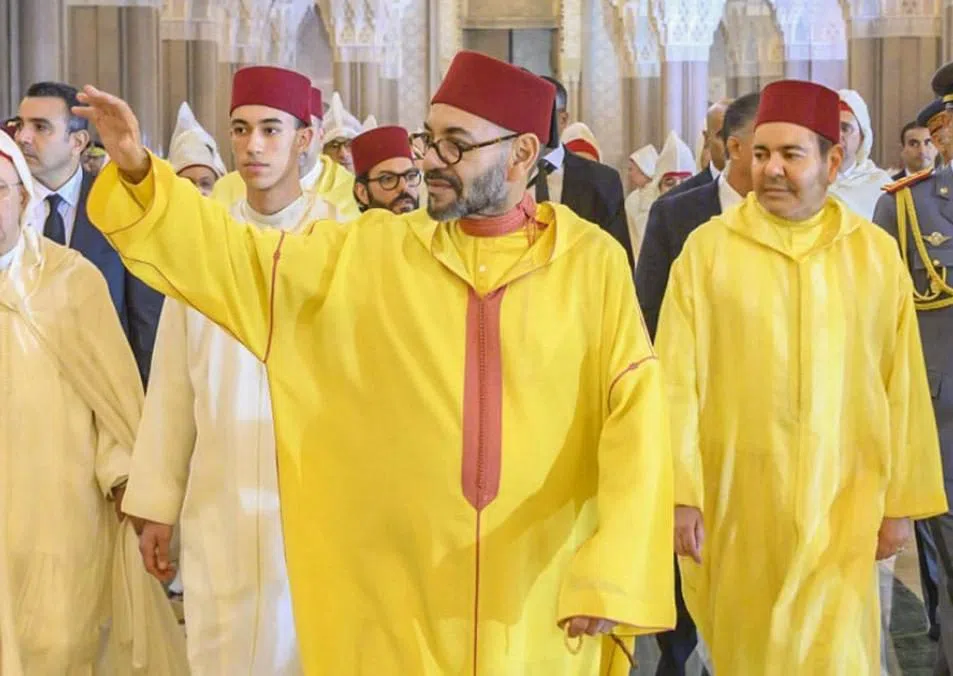
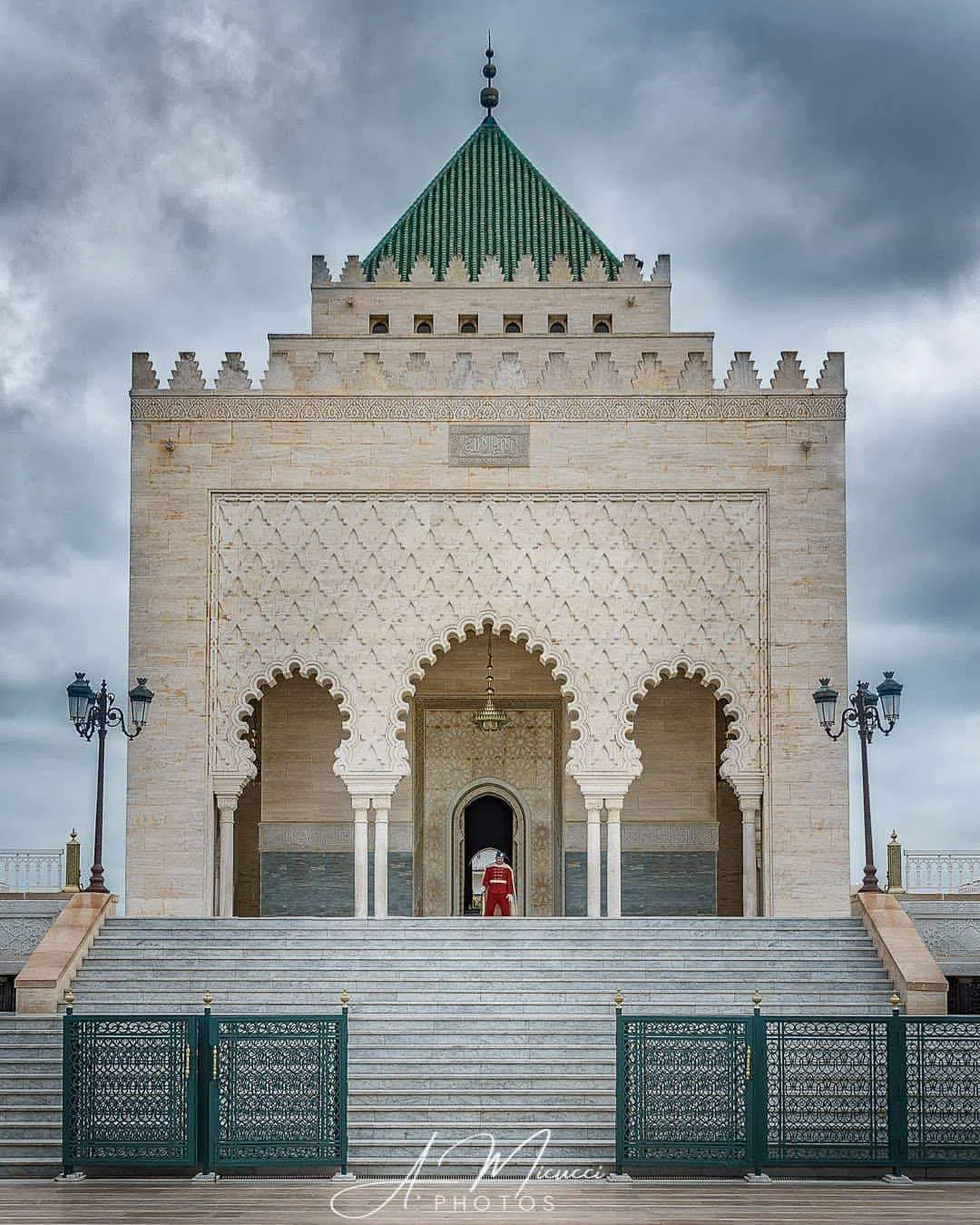
Hassan Tower and the Mausoleum of Mohammed V share one open esplanade, free and open daily to non-Muslims. The unfinished 12th-century ochre minaret stands over a field of several hundred broken stone columns. Opposite it, white marble under a green pyramid roof holds an onyx sarcophagus you look down on from a balcony, with royal guards in red capes at the doors. Cover shoulders and knees. This is a working royal tomb, and guides keep a group quiet and moving through it.
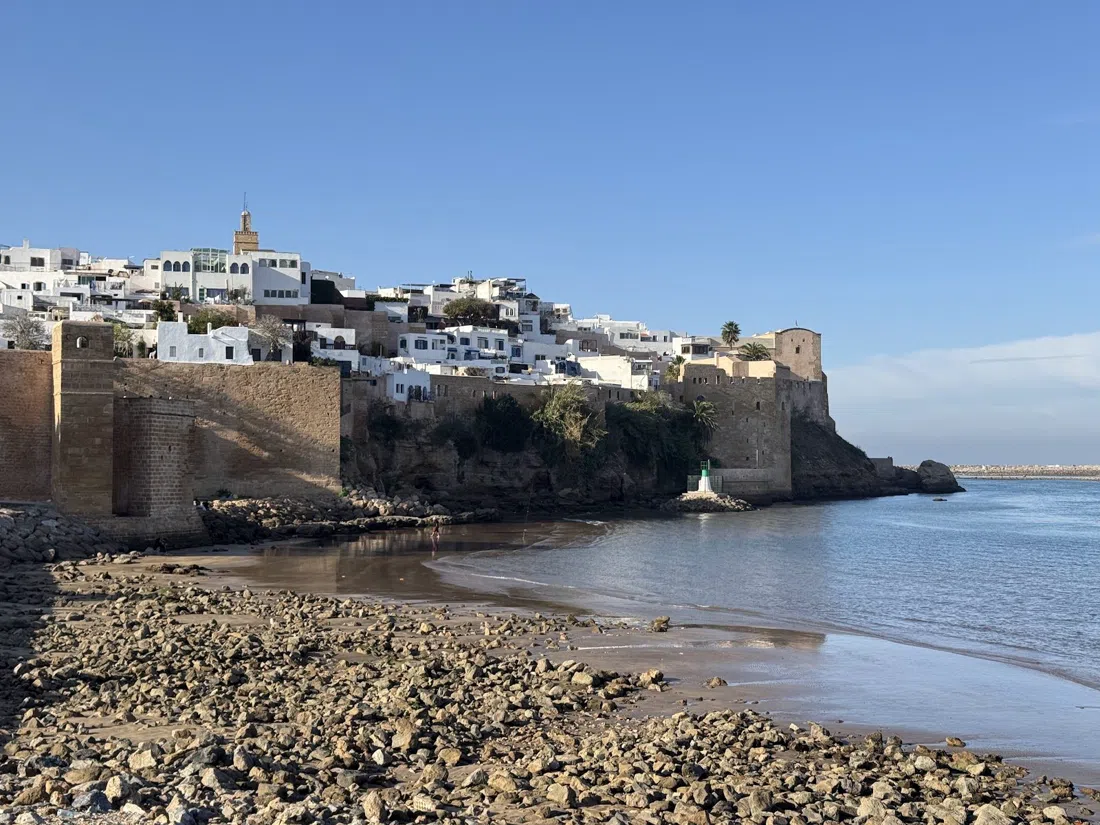
A 15-minute downhill walk brings you to the Kasbah of the Udayas, a 12th-century clifftop fortress above the mouth of the Bou Regreg. Entry is free and unticketed, the walled Andalusian garden included. Go in through the monumental Almohad gate, work along the blue-and-white painted lanes, and finish at the terrace café above the Atlantic surf, looking across to Salé. Those lanes are narrow and residential, and people live along them. The two stops pair naturally in one morning.
Volubilis and the granary at Meknes
Volubilis sits on the green farmland below Zerhoun, a hillside Roman city and a UNESCO site, where a triumphal arch and the basilica columns stand against open sky. Floor mosaics of Orpheus, Hercules and Bacchus lie uncovered in situ where the villas stood. Adults pay 70 DH and children under 12 pay 30 DH. Official guides wait at the entrance, from 150 DH for a group and 300 DH for a private tour. Allow two hours. There is almost no shade on the site.
At Heri es-Souani and the Royal Stables in Meknes, Moulay Ismail built a granary on cathedral-scale vaulted arches of mud brick, some of them now roofless and open to the sky, with a deep stone water basin alongside. The spaces are vast and there is no timed entry. Admission runs 10 DH to 70 DH depending on the gate, cash only, in small notes. The site opens 09:00 to 12:00 and 15:00 to 18:30, closing over the long midday break. Bab Mansour, the gate nearby, is admired from outside, since you cannot pass through it. Most itineraries rush this city.
The tannery terraces and the Al Batha museum
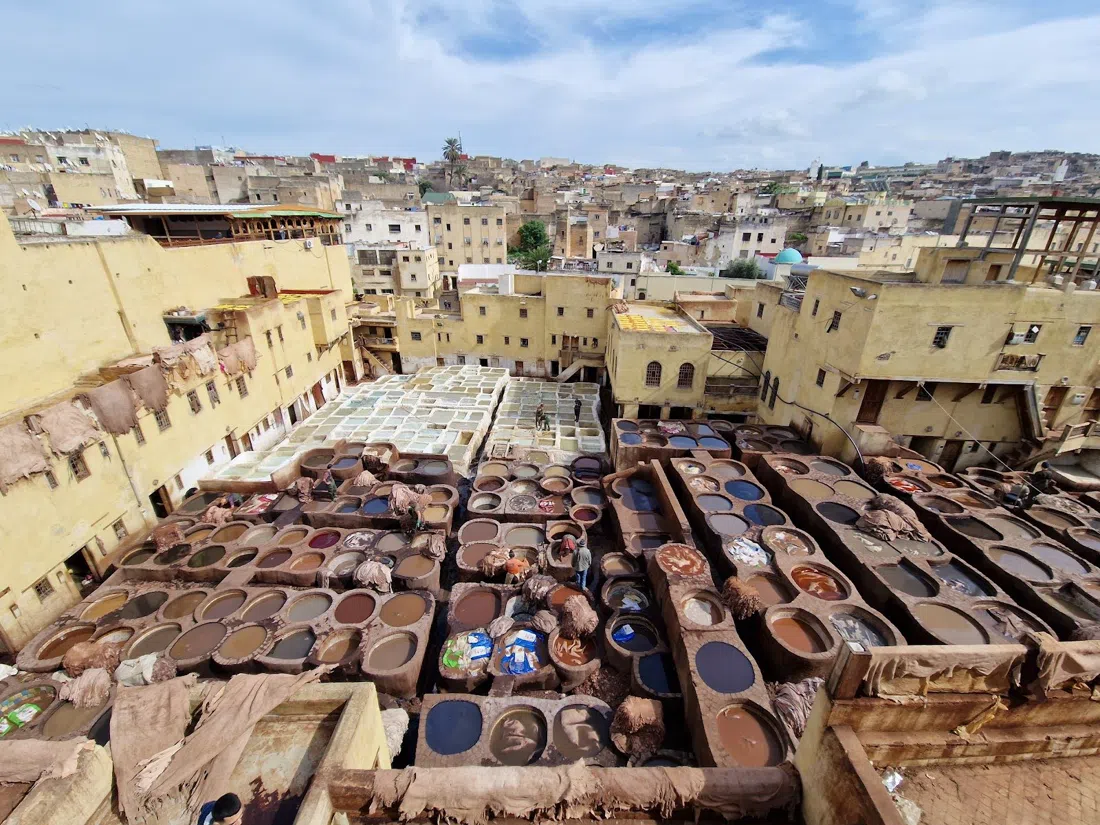
You look down on the Chouara Tannery from the terraces of the leather shops that ring the pits. Chalky white lime pits sit on one side; across the honeycomb of round stone vats the liquid glows saffron, poppy red, indigo and brown, and the hides dry on the surrounding rooftops. Nobody should charge you for the climb. The terraces belong to the shops and no ticket exists. Each terrace holds only a handful of people, so a group goes up in shifts. The pits have worked for a thousand years, the smell is strong, and the sprig of mint handed to you at the stairs does a real job. Browse the shop on the way down.
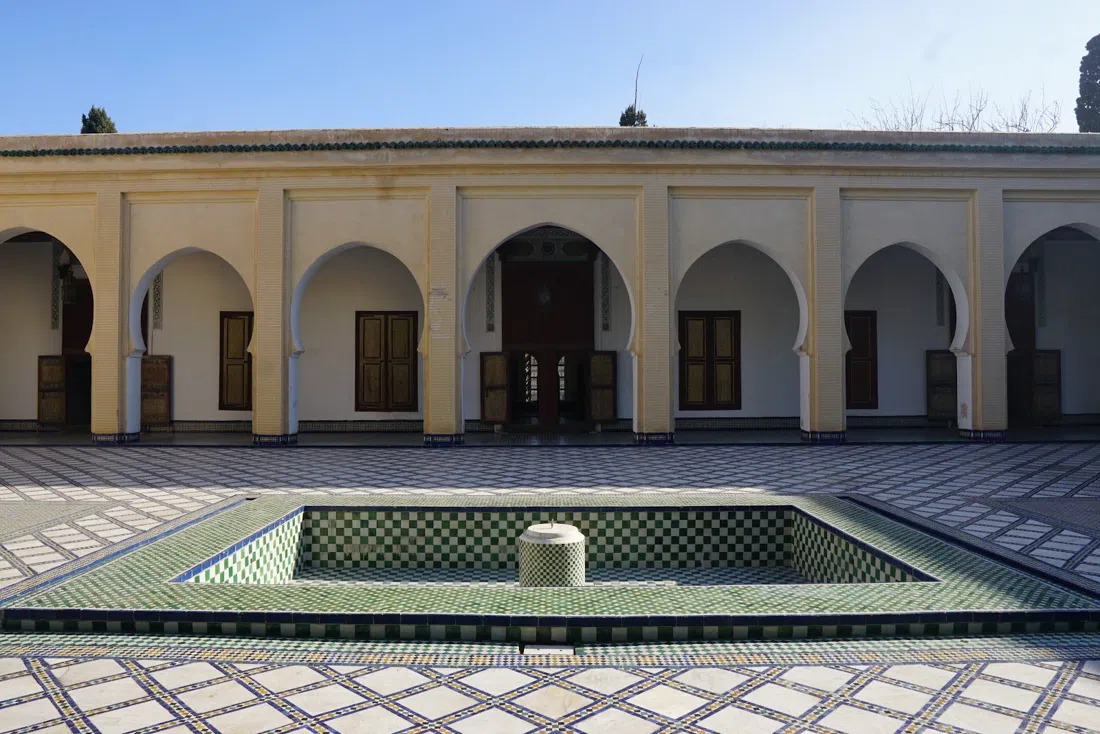
The Al Batha Museum of Islamic Arts, or Dar Batha, reopened on 26 February 2025 after six years of restoration, and that is the name to ask for now. The display runs dynasty by dynasty from the 8th century onward, much of it shown publicly for the first time, over a purpose-built circuit of 7,500 sq m. Blue-and-white Fassi ceramics, carved cedar panels and astrolabes sit behind glass in a 19th-century palace built around a sunken Andalusian garden of tall palms and orange trees. Admission is DHDH.
Chefchaouen's blue lanes
The medina of Chefchaouen stacks lime-blue houses up a steep slope under the twin Rif peaks, and the lanes climb steep and narrow. Both the medina and the Spanish Mosque viewpoint are free public space. The path to the mosque, a small abandoned 1920s building with a square stone minaret on the facing hill, is single file and takes 20 to 30 minutes. It ends looking down over the blue rooftops. Give the town an overnight.
Todra Gorge and a night on Erg Chebbi
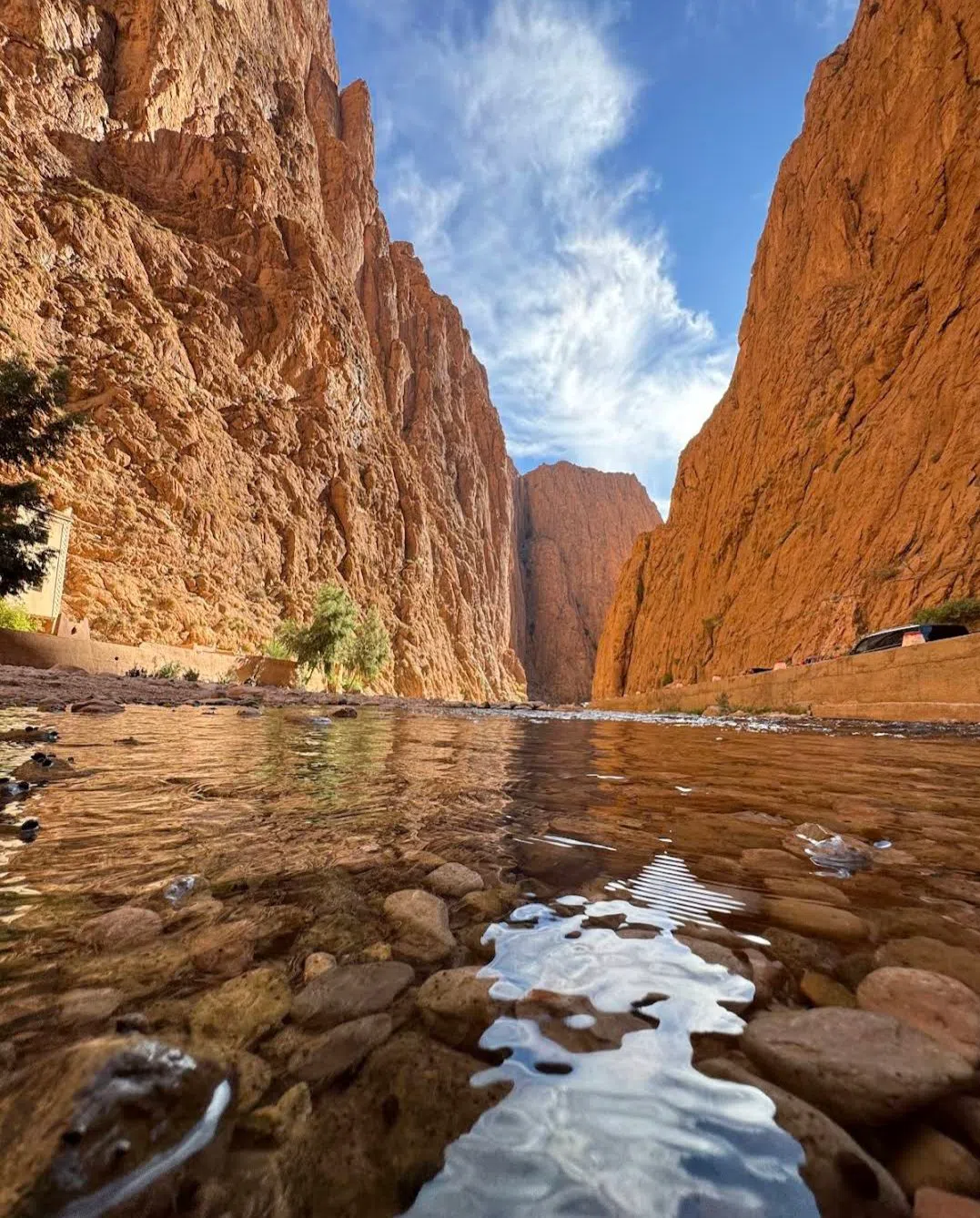
Todra Gorge lies 12 km to 15 km from Tinghir on good paved road, so you do not need a 4x4. Limestone walls up to 300m high close to a slot barely 10m wide, with a shallow stream and the road running along the canyon floor between them. A palm oasis and flat-roofed Berber villages sit at the mouth. Entry is free and a local guide starts at 150 DH. Walk the oasis rather than only driving through the canyon, which is the difference between a morning here and a photo stop. Climbing is done with certified local guides from Tinghir, booked a few days ahead, with guide and gear charged on top. The gorge is the breather between the Dades valley and the desert run.
Erg Chebbi, at Merzouga, is an orange Saharan dune field rising to 150m in sharp wind-carved crests, with black nomad tents pitched in a hollow between the dunes. A camel trek and one night in a luxury camp is DHDHDH. The camps are set up for groups, with private tents, a shared dinner and music round a fire. One night is the minimum that works, since sunset and sunrise are the hours to be out on the sand, when a camel train throws long shadows. This is the longest driving day of the loop.
Jemaa el-Fnaa, Bahia Palace and Jardin Majorelle
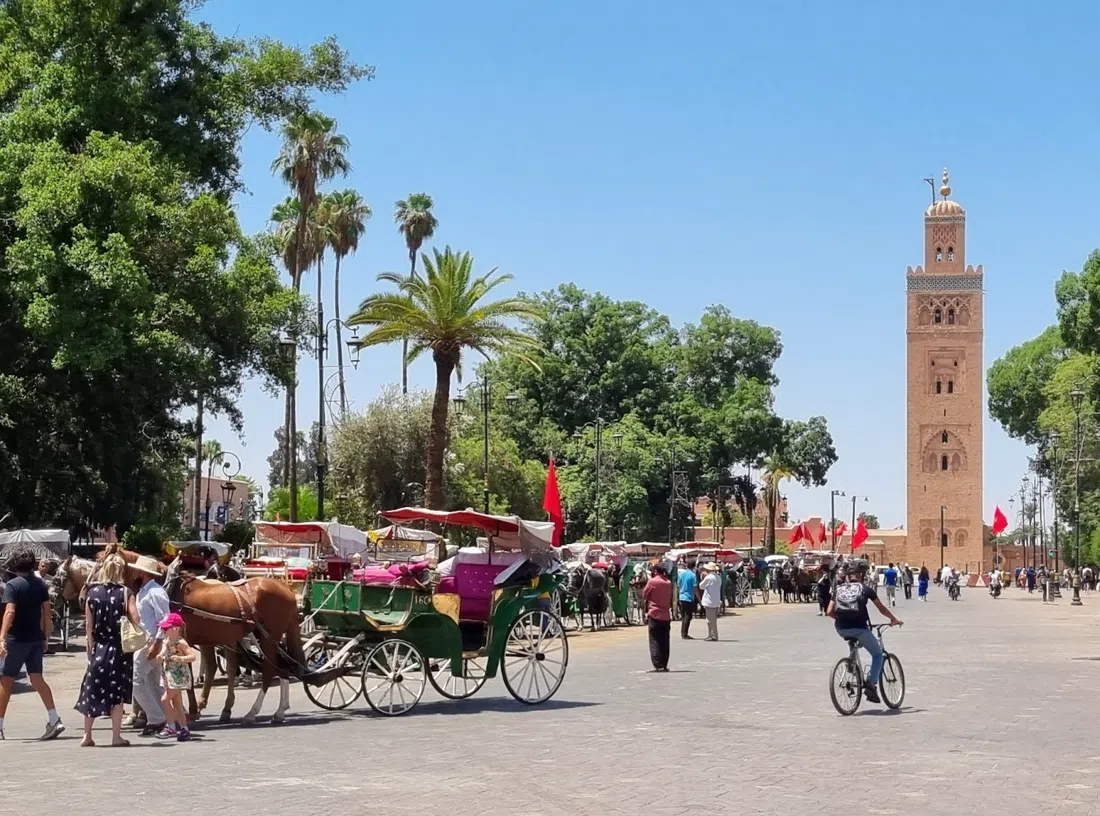
Jemaa el-Fnaa is a huge open square ringed by low terraces, free to enter, with rows of numbered food stalls under hanging bulbs and smoke, drum circles on the paving and the Koutoubia minaret lit behind. The stalls ladle harira and press orange juice. A 160-million-dirham requalification was in its final phase through 2026. It laid new natural cut stone underfoot, widened the halqa performance area and had the food stalls newly fabricated; the networks beneath were re-laid and the traffic around the edge reorganised. The square never shut for any of it, and hoardings still stand in places. Pickpockets and insistent performers work the crowd.
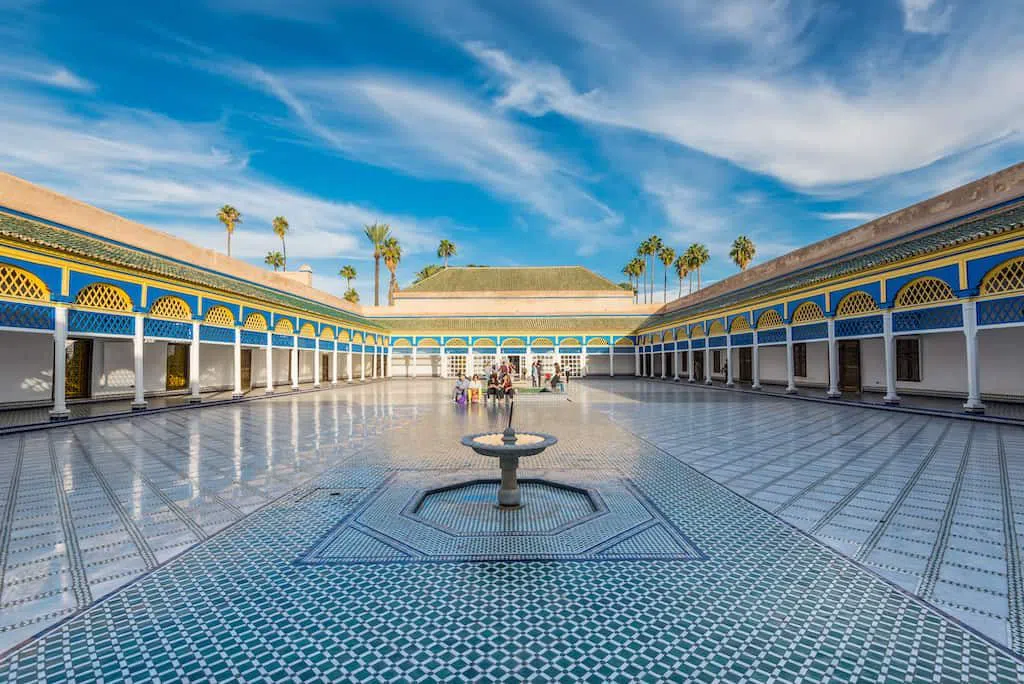
Bahia Palace opens daily 09:00 to 17:00, with last entry at 16:30 and shorter hours in Ramadan. Adults pay 70 DH to 100 DH. The 19th-century vizier's palace links courtyard to courtyard, from a vast marble court to painted and carved cedar ceilings, zellij dados in blue and gold, riad gardens of orange trees and empty harem apartments. The ceiling rooms bottleneck badly mid-morning. Expect scaffolding in a courtyard or two: the palace is on the post-earthquake restoration programme alongside El Badi and the Saadian Tombs, and it has stayed open throughout.
Jardin Majorelle sells tickets online only, through tickets.jardinmajorelle.com, and walk-ups cannot buy at the gate. The garden is 170 DH, 230 DH with the Pierre Bergé Museum of Berber Arts and 330 DH adding the Yves Saint Laurent museum. Entry is timed in 30-minute slots and numbers are capped, so a group has to be pre-booked and split across slots. The villa and its pergolas carry Majorelle blue against bamboo groves and towering cacti, with yellow planters, lily ponds and a shaded central walk. The garden runs 08:00 to 17:30, last entry 17:00, and the Berber arts museum 08:30 to 17:00. Villa Oasis closes Wednesdays.

Booking ahead and who the route suits
En privat version af denne otte-dages rute med chauffør kører syv dage om ugen. Det, du betaler for, er kørslen og rækkefølgen af dagene, for ørkenetapen koster køretimer, og flere stop følger faste tidsplaner.
Ruten passer til en rejsende med otte ledige dage, som vil have de romerske mosaikker, klitterne og den blå medina på én linje. Den kræver tidlige starter og to overnatninger væk fra startbyen. Entré betales ved porten samme dag de fleste steder; haveturen og middagsbordet i Casablanca er de to ting, du ordner først.
Bedste tidspunkt at tage af sted
Volubilis åbner kl. 08:00 og lukker kl. 19:00 fra april til september, kl. 17:30 fra oktober til marts. Kom ved åbningen, for både varmen og turistgrupperne bliver hurtigt mange efter midt på formiddagen. Hassan II-moskéen har en afgang kl. 16:00 mellem 15. marts og 15. september. I højsæsonen er de tidlige formiddagstider i Jardin Majorelle booket flere dage i forvejen. Den sene eftermiddag er tidspunktet for mausoleet, når søjlerne kaster lange skygger, og udsigten over floden til Salé er at den smukkeste. I Chefchaouen er tidsrummet 07:00 til 09:00 det eneste med tomme gader og uden turistgrupper i billedet, og opstigningen til udsigtspunktet belønner dig i den gyldne time. Klatreguider i Tinghir bliver fuldt booket om foråret og efteråret.
Lukkedage og hvad du skal bestille
Fredag er der færre tider i moskéens program, Villa Oasis er lukket om onsdagen, og kornlageret lukker i den lange middagspause, så tilpas hver dags start efter det, der gælder. Bestil det tidsbestemte haveadgang og middagsbordet på forhånd, og medbring småsedler til porten, der kun tager kontanter.
Se Casablanca-guiden og søgningen efter hoteller i Casablanca.
Hoteller i Casablanca
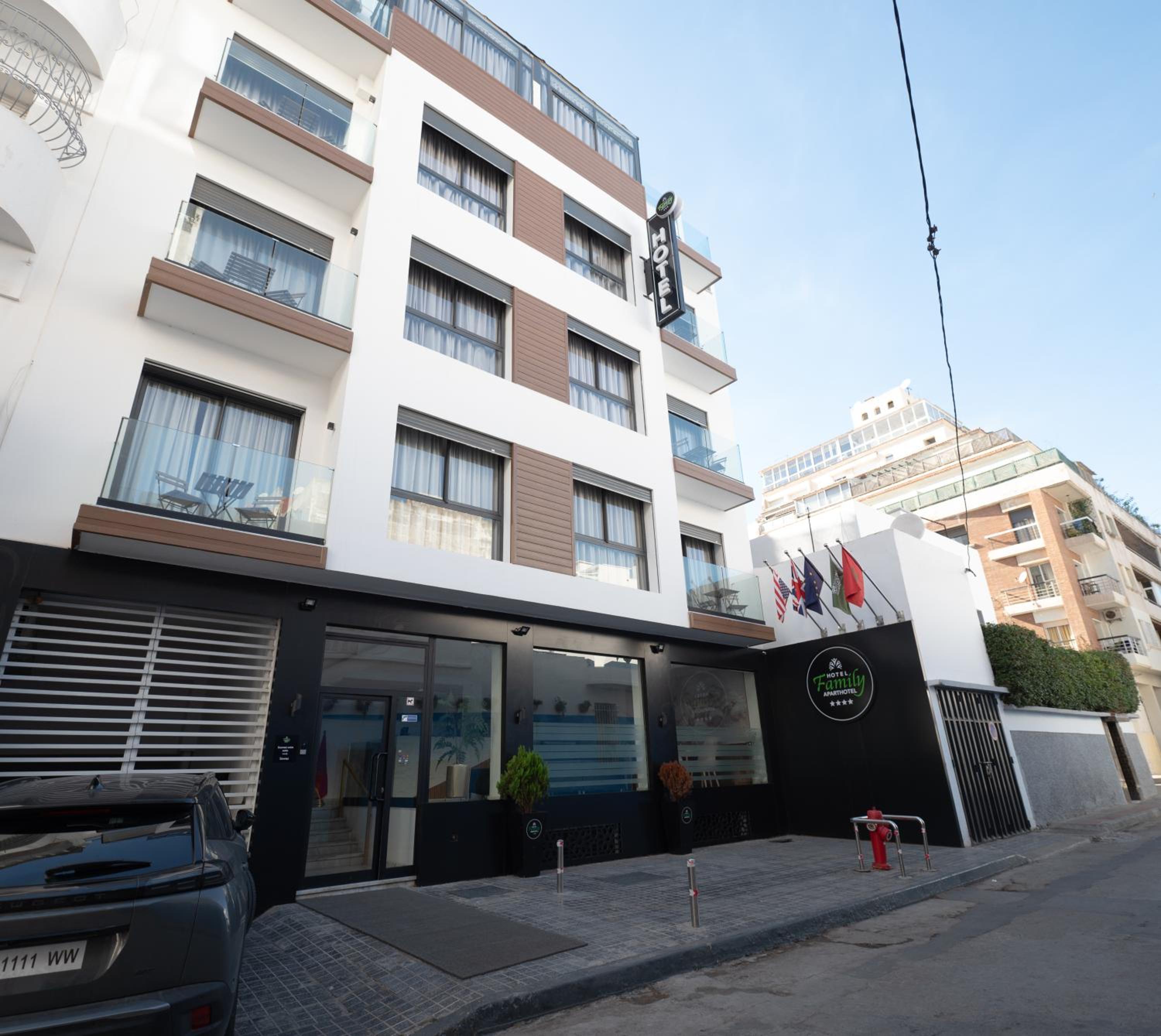
Family Aparthotel
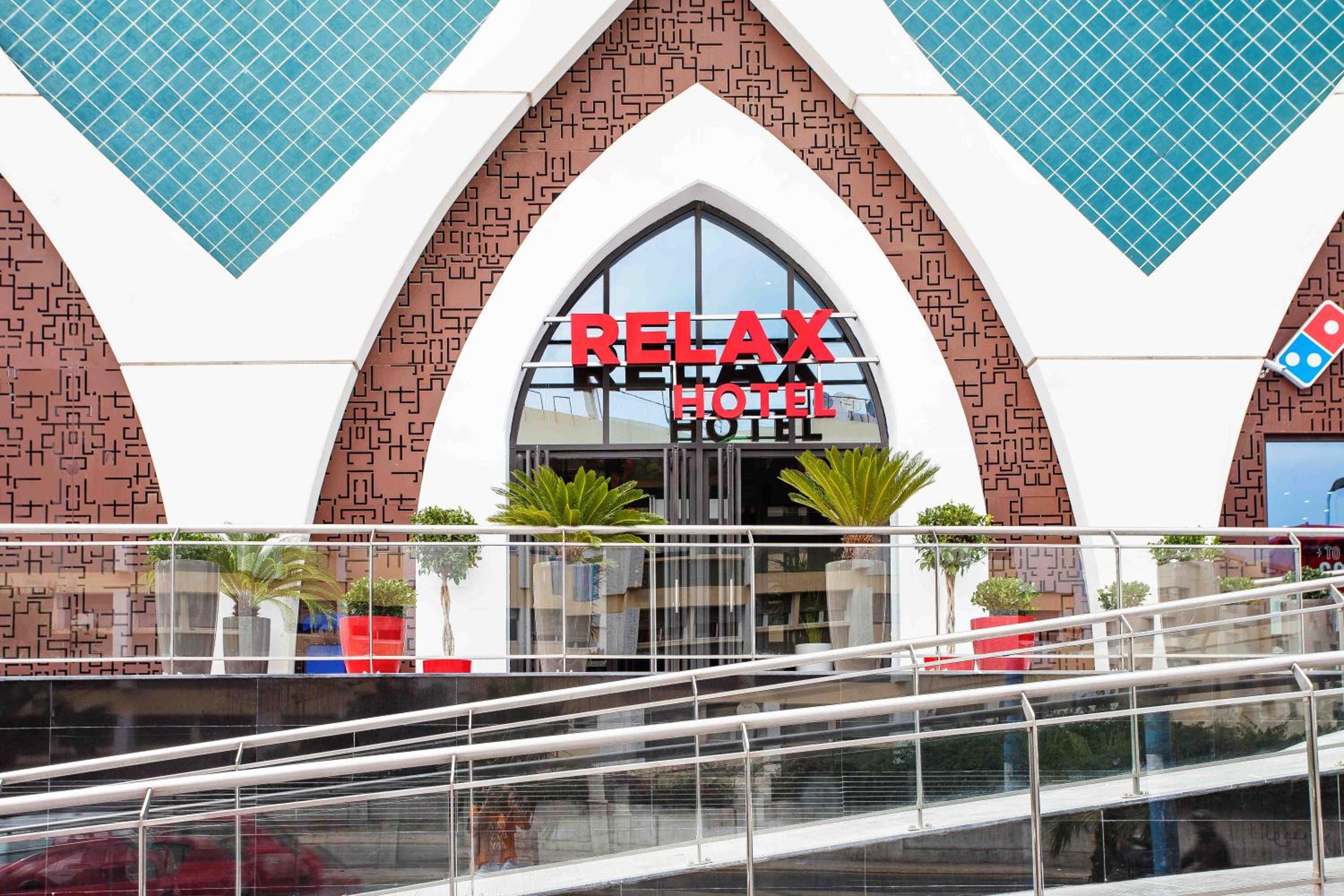
Relax Hotel Casa Voyageurs
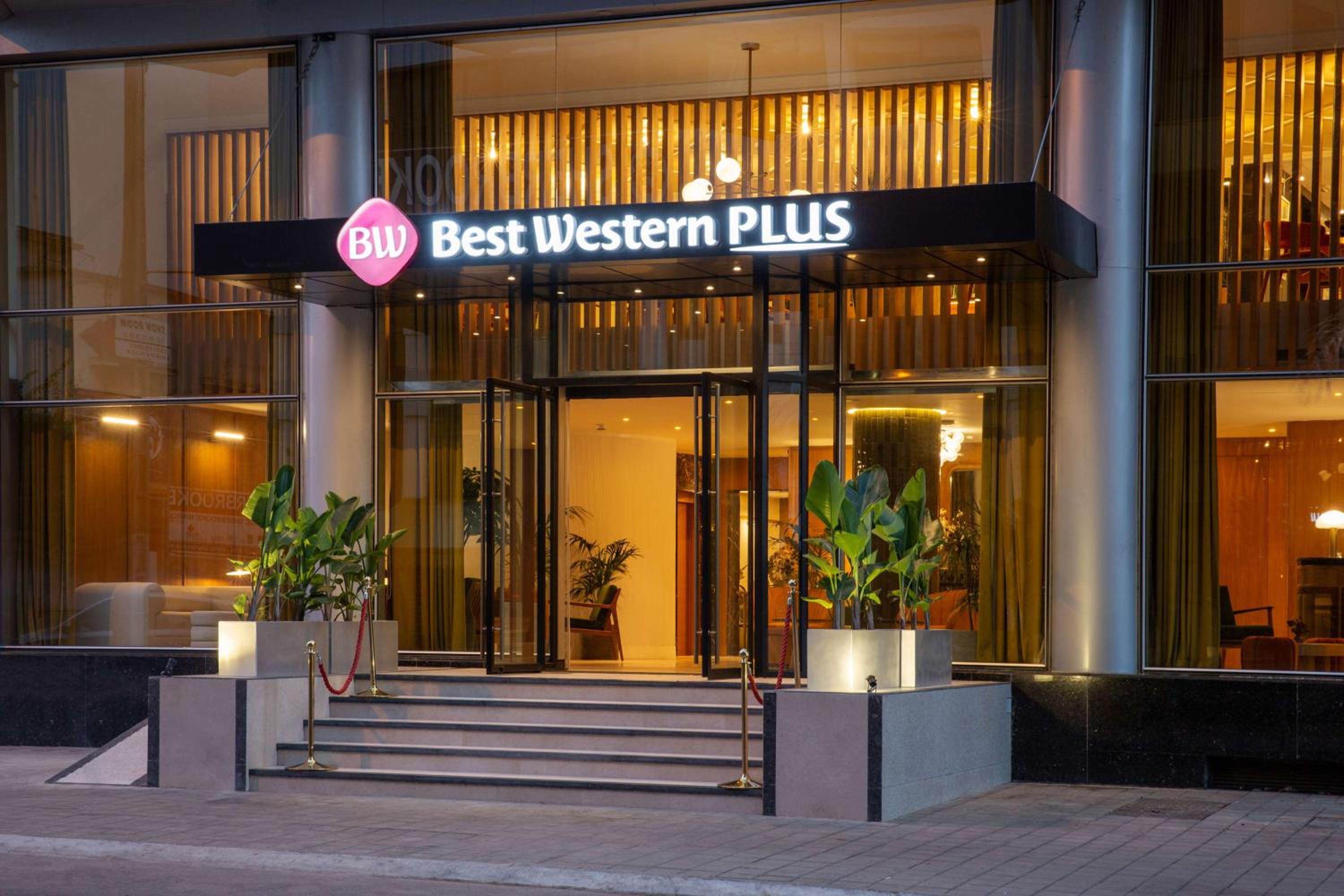
Best Western Plus Casablanca City Center
Ofte stillede spørgsmål
Må ikke-muslimer gå ind i Hassan II-moskéen?
Ja, men kun på den officielle guidede rundvisning. Den varer 45 til 60 minutter og gives på arabisk, fransk, engelsk, spansk og italiensk. Rundvisningerne går lørdag til torsdag kl. 09:00, 10:00, 11:00, 12:00 og 15:00, med en ekstra afgang kl. 16:00 fra 15. marts til 15. september. Fredag har tre afgange, kl. 09:00, 10:00 og 15:00. Voksne betaler 140 DH, udenlandske studerende 70 DH, børn i alderen seks til 12 betaler 30 DH, og børn under seks er gratis.
Hvilke stop skal bestilles, før jeg ankommer?
Jardin Majorelle sælger kun billetter online via tickets.jardinmajorelle.com, i tidsbestemte 30-minutters tider; der er ingen billetsalg ved porten, og i højsæsonen er de tidlige formiddagstider booket flere dage i forvejen. Rick's Café sætter dig ikke til bords uden reservation, og et bord i weekenden kræver 48 timers varsel. Klatring i Todra-kløften betyder, at du hyrer en certificeret lokal guide fra Tinghir, som bestilles nogle dage i forvejen. Alt andet på ruten betaler du for ved porten.
Hvor skal du bruge kontanter, og hvor meget?
Heri es-Souani og de kongelige stalde i Meknès tager kun kontanter, 10 til 70 DH afhængigt af porten, så medbring småsedler. Mahkama du Pacha har ingen billetkontor; drikkepengene til vagten, der låser den op, er 20 til 50 DH. Terrasserne i Chouara-garverierne er gratis, og ingen må tage betaling for at gå derop.
Hvor lang tid skal du bruge i Volubilis, og er en guide umagen værd?
Afsæt to timer. Voksne betaler 70 DH, og børn under 12 år betaler 30 DH. Officielle guider venter ved indgangen, fra 150 DH for en gruppe og 300 DH for en privat rundvisning. Stedet åbner kl. 08:00 og lukker kl. 19:00 fra april til september, kl. 17:30 fra oktober til marts. Kom ved åbningen, for der er næsten ingen skygge, og både varmen og turistgrupperne bliver hurtigt mange efter midt på formiddagen.
Er én nat i ørkenen nok?
En nat er minimum for at det fungerer i Erg Chebbi, for solnedgang og solopgang er de timer, hvor det er værd at være ude på klitterne. En kamelvandring med én nat i en luksuscamp giver dig et privat telt, fælles middag og musik omkring et bål. Regn også med vejen: ørkenetapen er den længste køredag på rundturen.
Skrevet af
Etienne Delmas
Reading Casablanca street by street
Etienne first came to Casablanca to catalogue its Art Deco and Mauresque facades and has spent fifteen years walking the centre-ville, Habous and Anfa on foot. He writes about the city's neighbourhoods, its architecture and the day trips out to the Hassan II Mosque and the coast.