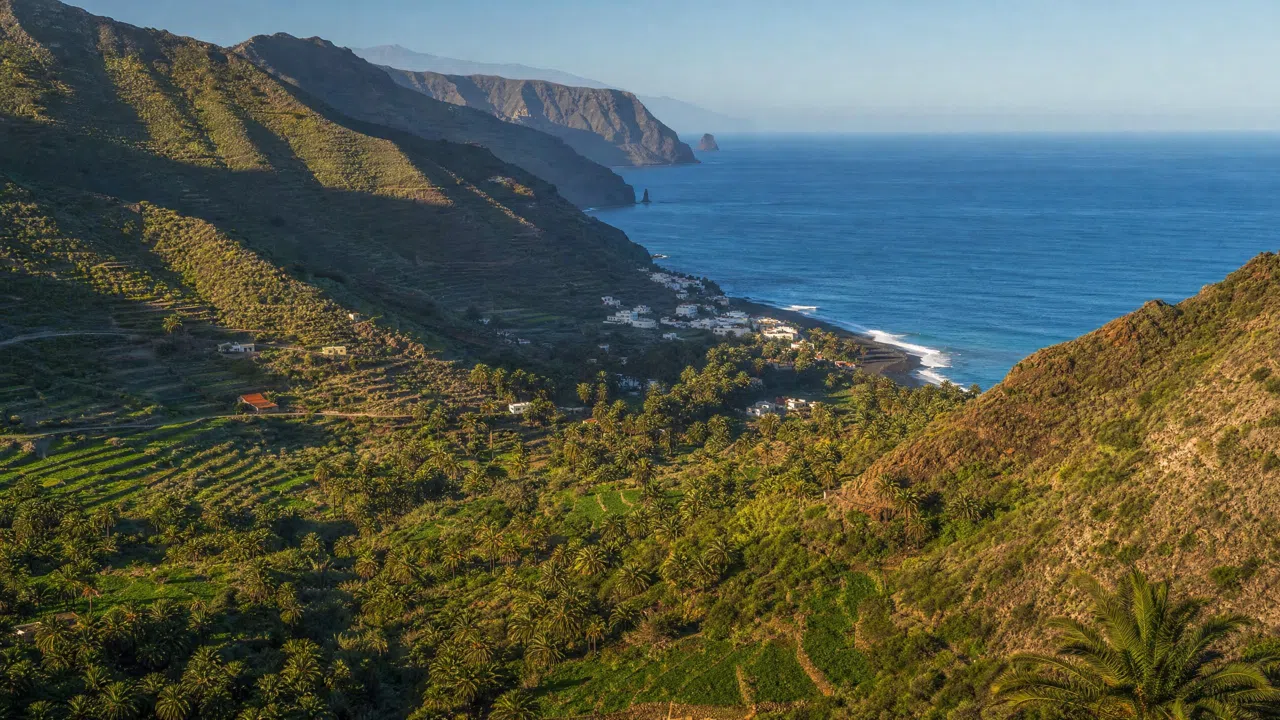
La Gomera at golden hour

La Gomera

현지인이 작성한 가이드 — 어디에 머물고, 무엇을 먹고, 무엇을 놓치지 말아야 할지 알려드립니다.

La Gomera 가이드

현지인이 추천하는 La Gomera

There is no direct flight from mainland Europe, so almost everyone arrives on a fast boat from Los Cristianos

La Gomera is the island the ferry schedule decides for you. There is no direct flight from mainland Europe, so almost everyone arrives on a fast boat from Los Cristianos, and that fifty-minute crossing filters out most of the package-holiday traffic that fills the rest of the Canaries. What is left is a circular volcanic island cut by deep ravines, roads that switch back every few hundred metres, and a laurel forest in the middle that is older than the archipelago's other islands can show.

The island works on gradients. San Sebastián de La Gomera, the capital, is a working port town with ferries, admin offices and the Columbus story bolted on. Valle Gran Rey, an hour and three-quarters away by the island's single winding main road, is where the hippie-era drifters settled and the sunsets happen. In between sit banana-valley towns like Hermigua and cliff-perched villages like Agulo, each one a different answer to the same question: how do you live on a rock this steep.

La Gomera rewards people who hike, drive slowly and don't mind patchy phone signal. It punishes anyone expecting a beach-club island: the black-sand coves are often rough-surfed, the nightlife is three good bars rather than a strip, and a fair few restaurants close without warning out of season. Go for Garajonay's permanently damp forest, the whistled language still spoken across its ravines, and the sense of a place still run by the people who were born on it.

AI-generated image (OpenAI gpt-image-2)

숙소 선택

동네

숙소가 여행을 결정합니다. 지역별로 솔직하게 안내해 드립니다.

The harbour of San Sebastián de La Gomera
AI-generated image (OpenAI gpt-image-2)

San Sebastián de La Gomera

For Good for a first and last night either side of the ferry, for anyone who wants real town life over resort amenities, and for access to the airport and most bus routes. It's not the place for beach lounging - the swimming here is secondary to the port.

The island's working capital and ferry port, built around a black-sand town beach, a core of narrow lanes off Calle Real, and the Columbus-era sites clustered within a few minutes' walk of each other. It feels administrative rather than resort-like: offices, fishing boats, a harbour-front square that fills with locals in the evening more than tourists.

숙소 찾기The historic Parador sits on the clifftop above town for travellers wanting character and a pool; smaller in-town guesthouses and the Cactus Coliving hostel cover the budget end right by the port.

  • Torre del Conde
  • Casa de Colón
  • Plaza de las Américas waterfront
The beach at Valle Gran Rey under its terraced valley walls, La Gomera
AI-generated image (OpenAI gpt-image-2)

Valle Gran Rey

For Suits travellers who want sunsets, swimming, nightlife by La Gomera's modest standards, and the most choice of places to eat and sleep. The trade-off is distance: it's the far end of the island from the airport and ferry, roughly two hours by road from San Sebastián.

A terraced ravine running down to the sea on the island's south-west, split into the harbour district of Vueltas, the beach strip of La Playa and the hillside of La Calera. This is where the hippie-era settlers stayed, and it still has the loosest, most bohemian atmosphere on the island - live music in beach bars, longer-stay visitors, the best spread of restaurants.

숙소 찾기Apartments and small hotels cluster around Vueltas harbour and La Playa beach; the hostel and co-living scene here is the island's best for budget and long-stay travellers.

  • Vueltas harbour
  • La Playa beach promenade
  • whale-watching boat departures
The harbour and beach of Playa de Santiago, La Gomera
AI-generated image (OpenAI gpt-image-2)

Playa de Santiago

For Suits travellers who want resort comfort, golf, or a self-contained base with on-site restaurants, and who are happy to drive for variety. It has little independent village life beyond the hotel's footprint.

A quieter, drier resort pocket in the island's south, built almost entirely around the Hotel Jardín Tecina complex and its golf course, with a small working fishing harbour below. It gets the least rain on the island and some of the calmest water for swimming.

숙소 찾기The Jardín Tecina is effectively the area's accommodation; smaller apartments exist in the village below for those who want to self-cater away from the resort.

  • Tecina Golf course
  • clifftop lift down to the beach
  • fishing harbour
The green Hermigua valley meeting the Atlantic, La Gomera
AI-generated image (OpenAI gpt-image-2)

Hermigua

For Suits travellers who want rural quiet, hiking access, and a sense of how the island actually farms, over nightlife or beach time. Few shops stay open late and options for eating out are limited to a handful of family-run places.

The greenest valley on the island, terraced with banana plantations and still agricultural rather than touristic, with a natural seawater swimming pool at its lower end and direct trailheads up into Garajonay's forest.

숙소 찾기Rural hotels converted from old manor houses and farmhouses - this is the island's best base for agritourism-style stays.

  • natural swimming pool (Charco de la Laja)
  • banana terraces
  • trailheads into El Cedro
Roque Cano above Vallehermoso, La Gomera
AI-generated image (OpenAI gpt-image-2)

Vallehermoso

For Suits hikers using it as a base for the north of the island and travellers who want to see La Gomera away from any resort infrastructure at all. There is very little to do here after dark.

A small northern town dominated visually by Roque Cano, a sheer volcanic plug rising straight out of the rooftops, with a ruined castle above and some of the island's least-visited coastline below.

숙소 찾기A couple of small rural hotels cover the town; most visitors pass through rather than stay.

  • Roque Cano
  • Castillo del Mar ruins
  • GR131 trail access
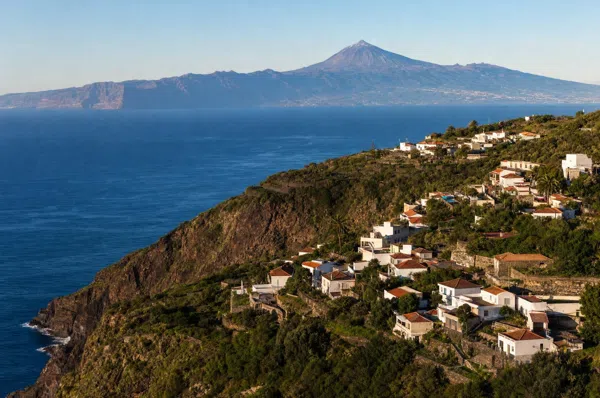
Agulo on its clifftop terrace with Mount Teide across the sea, La Gomera
AI-generated image (OpenAI gpt-image-2)

Agulo

For Suits a half-day stop for the view and a meal rather than a multi-night base - there's very little accommodation and almost no nightlife.

A tight cluster of white houses on a shelf above the sea, looking directly across to Tenerife and Mount Teide, often cited as the island's prettiest village without the island's tourist board having to try. The Mirador de Abrante glass walkway sits just above it.

숙소 찾기A small number of rural guesthouses in the village itself; most visitors stay elsewhere and drive in.

  • Mirador de Abrante glass walkway
  • Casa Museo José Aguiar
  • views across to Teide

먹고 마시기

La Gomera에서 먹을 곳

해산물, 그릴부터 현지인들이 줄 서서 기다리는 가성비 맛집까지, 카테고리별 진짜 맛집.

Budget eats

A handful of pizzerias and bar-restaurants keep prices down across the island, aimed at locals and long-stay visitors rather than a holiday crowd.

Vegetarian/vegan

Plant-based options are thin outside Valle Gran Rey and San Sebastián, but what exists is run with intent rather than tacked onto a standard menu.

야간 활동

나이트라이프

밤이 흘러가는 곳 — 클럽, 루프탑 칵테일, 최고의 라이브 음악이 있는 공간.

Cocktail & rooftop bars

Nightlife here means a handful of harbour and square-side bars rather than a strip - La Gomera's social life happens outdoors, over a long drink, not inside a club.

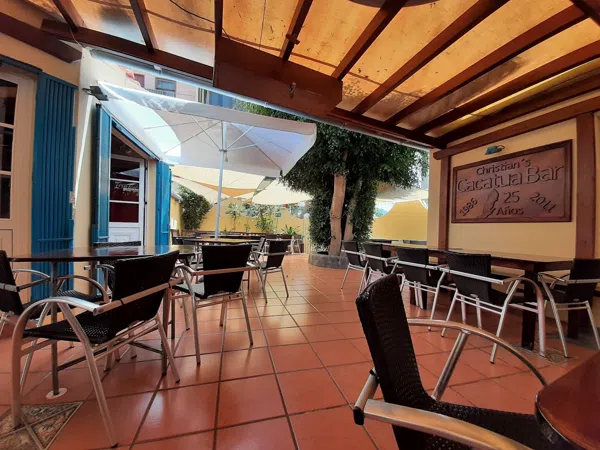
Cacatua, La Gomera
Photo via Google

Cacatua

mixed locals and long-stay travellers, garden terrace by day, buzzing bar by night

Valle Gran Rey

A Vueltas harbour fixture for more than two decades, it runs as a relaxed café by day and the resort's default late-night meeting point once the sun goes down.

La Tasca, La Gomera
Photo via Google

La Tasca

casual harbour-front drinking, occasional live guitar

Valle Gran Rey

A cocktail bar in the Vueltas harbour area known specifically for its caipirinhas, with an outdoor patio that occasionally turns into an impromptu live-music spot.

Gomera Lounge Piano Bar, La Gomera
Photo via Google

Gomera Lounge Piano Bar

dressed-up lounge atmosphere, beachfront piano and flamenco sets

Valle Gran Rey

Set on La Calera beach, it runs scheduled piano and flamenco evenings through the season rather than background music, making it the resort's closest thing to a dedicated music venue.

Bar Café Ambigú, La Gomera
Photo via Google

Bar Café Ambigú

relaxed square-side terrace, port views, local crowd into the evening

San Sebastián de La Gomera

A terrace right on Plaza de las Américas with sofa seating looking over the square and the port, the default spot for an evening drink in the capital.

Blue Marlin Bar, La Gomera
Photo via Google

Blue Marlin Bar

sailors'-bar atmosphere, music and late hours, one of the only options in town after midnight

San Sebastián de La Gomera

A sailing-themed bar off Plaza de la Constitución, its walls covered in messages left by rowers from the transatlantic race that passes through the port, open later than almost anywhere else in the capital.

Casa Maria, La Gomera
Photo via Google

Casa Maria

bohemian beachfront, sunset crowd, informal live sets

Valle Gran Rey

A long-running La Playa institution combining a bar, rooms and live music that becomes the beach's default sunset gathering point.

관광 및 액티비티

문화

하루를 계획할 가치가 있는 박물관, 랜드마크, 갤러리.

놓치지 말아야 할 것

시그니처 체험

Hike the Gran Ruta 18 through Garajonay

Garajonay National Parkfull day

A circular route from El Cedro up to Alto de Garajonay, the island's highest point, passing through laurel forest so damp it's been compared to a sauna; the ecosystem shift along the climb is the whole point.

Whale and dolphin watching from Valle Gran Rey

Valle Gran Reyhalf day

Boats leave the harbour several times a week with a quoted sighting rate near 90%, usually stopping for a swim in a sheltered cove once something's been spotted.

Cross the Mirador de Abrante glass walkway

Agulo1-2 hours

A cantilevered glass floor suspended 625 metres above Agulo's terraces, with Mount Teide visible across the water on a clear morning.

Hear a Silbo Gomero demonstration

Agulo / San Sebastián de La Gomera1 hour

The island's whistled language is still taught in local schools and demonstrated live at a handful of restaurants and cultural stops, the only way to actually hear it used rather than just read about it.

Swim at a protected cove

Playa de Santiago / Hermigua2-3 hours

Open Atlantic swimming on La Gomera carries real rip-current risk, so locals swim at the handful of sheltered spots instead - the port side of Playa de Santiago and the natural pool at Hermigua among them.

Browse the San Sebastián weekend market

San Sebastián de La Gomera1-2 hours

A twice-weekly market near the old customs house selling goat cheese, palm honey and local produce, as much a social event for islanders as a shopping trip for visitors.

도시 밖으로

당일 여행

Tenerife and Mount Teide

Spain's highest peak and a cable car up into its crater sit a short crossing away, reachable as a long but doable single day if you catch an early boat.

가는 방법ferry from San Sebastián to Los Cristianos, 50-60 minutes, then a drive of around 90 minutes up to Teide

La Palma

A direct ferry link to Santa Cruz de La Palma makes the greenest and most volcanically active of the western Canaries an easy add-on for anyone with a spare day.

가는 방법direct ferry from San Sebastián to Santa Cruz de La Palma, roughly 2 hours

El Hierro

The smallest and least-visited of the Canaries, reachable for travellers willing to give up most of a day to the crossing in exchange for an island with almost no tourist infrastructure at all.

가는 방법ferry connections generally route through Los Cristianos on Tenerife, making for a half-day-plus journey each way; check current direct sailings before committing a full day trip

비용 안내

예산 계획

La Gomera runs cheaper than Tenerife or Gran Canaria largely because the extra ferry leg keeps the big package operators away. There are almost no paid attractions beyond museum entry fees, and the best thing on the island - the hiking - costs nothing beyond a car or bus fare to the trailhead.

여행 스타일Per day
Backpacker€40-65
Mid-range€90-140
Luxury€220-350

시기

방문 시기

La Gomera doesn't have a bad season so much as a wetter, cloudier one. The trade winds keep the coast mild all year, while Garajonay's forest stays damp and misty regardless of the calendar. April to June and September to October give you the clearest hiking light with fewer visitors; midwinter brings the most rain and the roughest ferry crossings, midsummer the most heat and the thinnest water sources on the trails.

Spring (March-May)The best hiking window: Garajonay's laurel forest is at its greenest, wildflowers are out on the southern slopes, and coastal temperatures sit in the low-to-mid twenties. Accommodation is easy to find outside Easter week.
Summer (June-August)Hot and dry on the coast, with the national park's cobbled summer road requiring a free advance permit for cars between mid-July and late September. Valle Gran Rey gets its busiest and loudest; book ferries and car hire weeks ahead.
Autumn (September-November)A second good window: sea temperatures are at their warmest for swimming, crowds thin out after the August peak, and the first rains return by late October. The Fiestas de Octubre around Puntallana fall in this window most years.
Winter (December-February)The wettest months, with December the rainiest, and the choppiest ferry crossings from Tenerife. Coastal towns stay mild by northern-European standards, but fog and wind close in on the high ground more often, and some rural restaurants cut their hours or shut for weeks.

물류

이동 수단

Orientation map of La Gomera
Map data © Google

공항에서

La Gomera's own airport sits in the far south-west, a winding 35-40 minute drive or taxi ride from San Sebastián, and carries only a handful of Binter Canarias flights a day to and from Tenerife North. Most visitors skip it entirely and arrive by ferry from Los Cristianos on Tenerife's south coast instead, landing directly in San Sebastián's port after a 50-60 minute crossing. A taxi from the airport into San Sebastián runs a fixed fare and takes well over half an hour because of the roads, not the distance.

대중교통

The island bus network (guaguagomera) runs eight numbered routes out of San Sebastián, with the San Sebastián-Valle Gran Rey line the backbone, taking around 1 hour 45 minutes end to end and running roughly five times a day Monday to Saturday, fewer on Sundays. Coverage to the smaller villages is thin and timed around school and market days, not tourist schedules, so it works for a budget trip between main towns but not for spontaneous day-tripping.

패스 및 티켓

There's no island-wide transit pass worth buying; fares are paid per ride, usually in cash, since card readers on the buses aren't reliable. A multi-trip bus card exists for residents but gains a visitor nothing over single tickets.

On foot

San Sebastián's old quarter around Calle Real is compact and walkable, as is Valle Gran Rey's harbour district of Vueltas and the beach strip of La Playa, though the resort itself sprawls along several kilometres of coast road. Hermigua, Agulo and Vallehermoso are each walkable in isolation but not connected to each other on foot in any reasonable time. Across the island, the roads themselves are the limiting factor: narrow, blind-cornered, and often fogged in on the high ground.

  • 1
    Hire a car if you're staying more than two or three days; this is the one Canary Island where the bus network genuinely can't substitute for it.
  • 2
    Book ferry tickets a few days ahead in July and August and around Easter; crossings do sell out.
  • 3
    If you're driving into Garajonay by the cobbled summer road between mid-July and late September, reserve the free vehicle permit online in advance; it doesn't apply to hikers.
  • 4
    Fill the tank before heading into the interior - fuel stations thin out fast once you leave San Sebastián or Valle Gran Rey.
  • 5
    Expect roads rated at 50 km/h to take much longer than the distance suggests; build in double the time Google Maps gives you.

똑똑한 여행

안전 및 에티켓

Crime is genuinely low here; the real risks are the sea and the terrain. Rip currents make much of the open Atlantic coastline dangerous for casual swimming, so stick to the handful of sheltered coves and ask locally before swimming anywhere unfamiliar. On the roads, expect fog without warning at altitude in and around Garajonay, along with narrow blind bends and the occasional goat or cyclist; drive slower than feels necessary. On trails, carry water and a layer, since mobile signal drops out inland and weather in the high forest can shift fast.

현지 에티켓

  • Stay on marked trails in Garajonay National Park; leaving them damages a protected laurel forest ecosystem found almost nowhere else on earth.
  • Carry cash for buses, markets and smaller rural restaurants - card readers are not reliably available outside the two main towns.
  • Reserve the free vehicle permit ahead if driving into the park on the cobbled summer road between mid-July and late September.
  • Expect an afternoon lull in rural villages; shops and smaller restaurants often close for a few hours after lunch.

현지에서

실용적인 팁

  • 1
    Book your ferry crossing a few days ahead in July, August and around Easter; sailings do sell out in peak weeks.
  • 2
    Reserve a hire car well before arrival in peak season - the island's limited fleet runs out fast in June through September.
  • 3
    Pack a warm layer even in summer if you're heading into Garajonay; the forest runs noticeably cooler and damper than the coast.
  • 4
    Carry cash outside San Sebastián and Valle Gran Rey; card payment is inconsistent on buses and in rural restaurants.
  • 5
    If visiting the park by car in the July 10 to September 20 window, apply for the free cobbled-road permit online before you travel.
  • 6
    Check a rural restaurant's actual hours by phone before driving out - many run lunch-only or close certain weekdays regardless of what's listed online.
  • 7
    Build extra time into any island drive - a 50 km/h road rating does not translate to the journey time a map suggests.
  • 8
    Confirm which cove is safe for swimming on any given day locally rather than assuming a beach is sheltered just because it looks calm.

직접 예약

La Gomera 호텔 예약

실시간 가능 여부 및 가격 로딩 중…

Good to know

La Gomera FAQs

Do I need a car on La Gomera?

Effectively yes if you want to see more than one or two towns. The bus network links the main settlements only a few times a day, and the interior's hiking trailheads and viewpoints are largely unreachable without your own transport.

How do I get to La Gomera?

Almost everyone arrives by fast ferry from Los Cristianos on Tenerife's south coast, a crossing of around 50-60 minutes. A small local airport exists with limited Binter Canarias flights to Tenerife North, but it carries no direct flights from mainland Europe.

Is La Gomera safe?

Yes, crime is low across the island. The real hazards are environmental: strong rip currents on open beaches, fog and narrow roads at altitude, and long waterless stretches on the hiking trails, all of which are manageable with basic preparation.

How many days do I need?

Four full days is a realistic minimum to see Garajonay, San Sebastián and at least one resort town properly, given how slow the roads are relative to the distances involved. A week lets you add the smaller northern villages without rushing.

Can I day-trip to La Gomera from Tenerife?

Yes, and it's a common trip, but a single day only really covers San Sebastián's Columbus-era sites and a short taste of Garajonay - not the resort towns on the far side of the island.

What's the best month to visit?

April to June and September to October give the clearest skies for hiking, milder coastal heat, and lighter crowds than the August peak or the wetter midwinter months.

Is Valle Gran Rey or San Sebastián the better base?

San Sebastián suits short stays built around the ferry and airport; Valle Gran Rey suits longer stays focused on beaches, sunsets and the island's best concentration of restaurants and bars, at the cost of a long drive from the port.

Can I see whales and dolphins?

Yes - boats running out of Valle Gran Rey and Playa de Santiago quote sighting rates close to 90%, with most trips including a swim stop once something's been spotted.

Image credits

  • AI-generated image (OpenAI gpt-image-2)