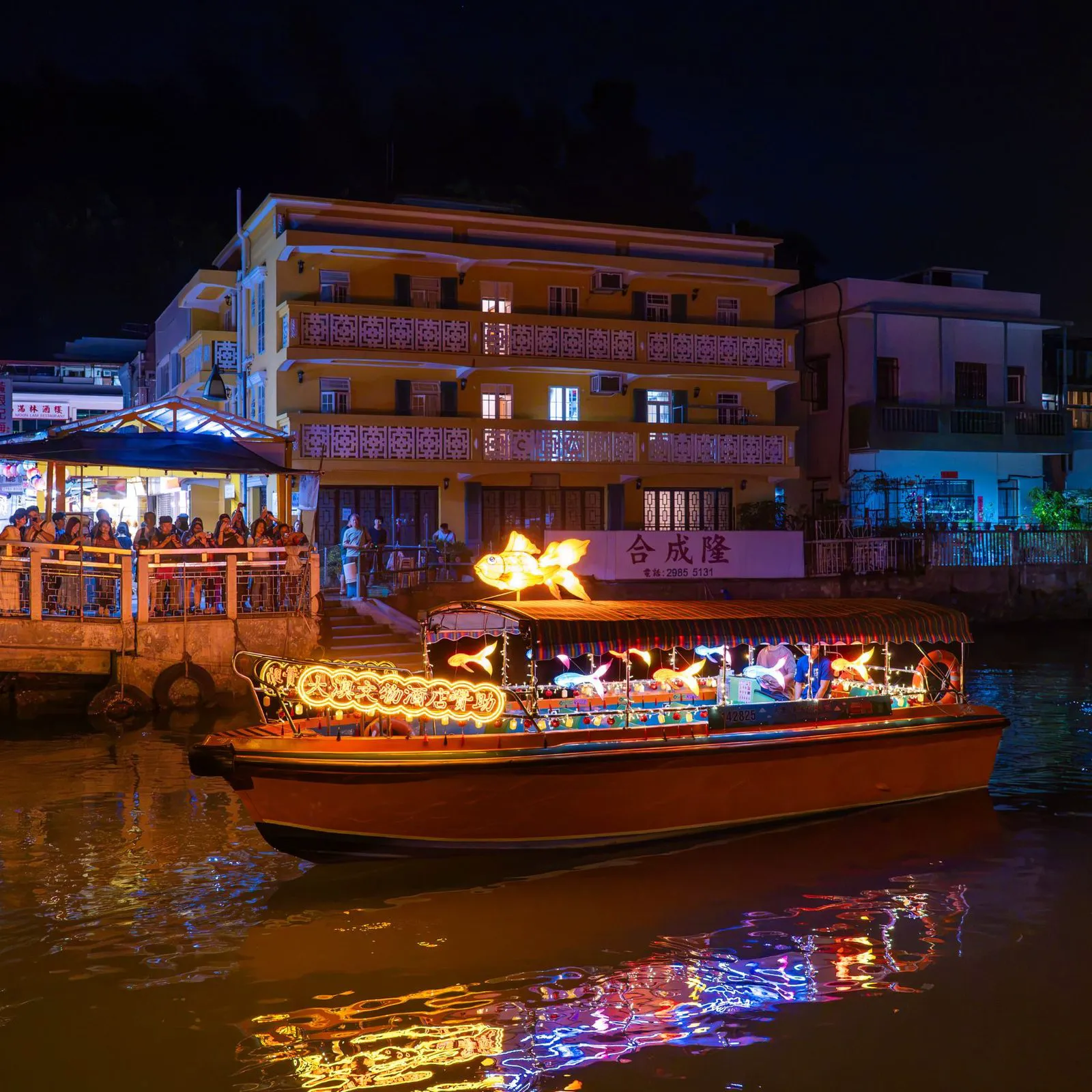
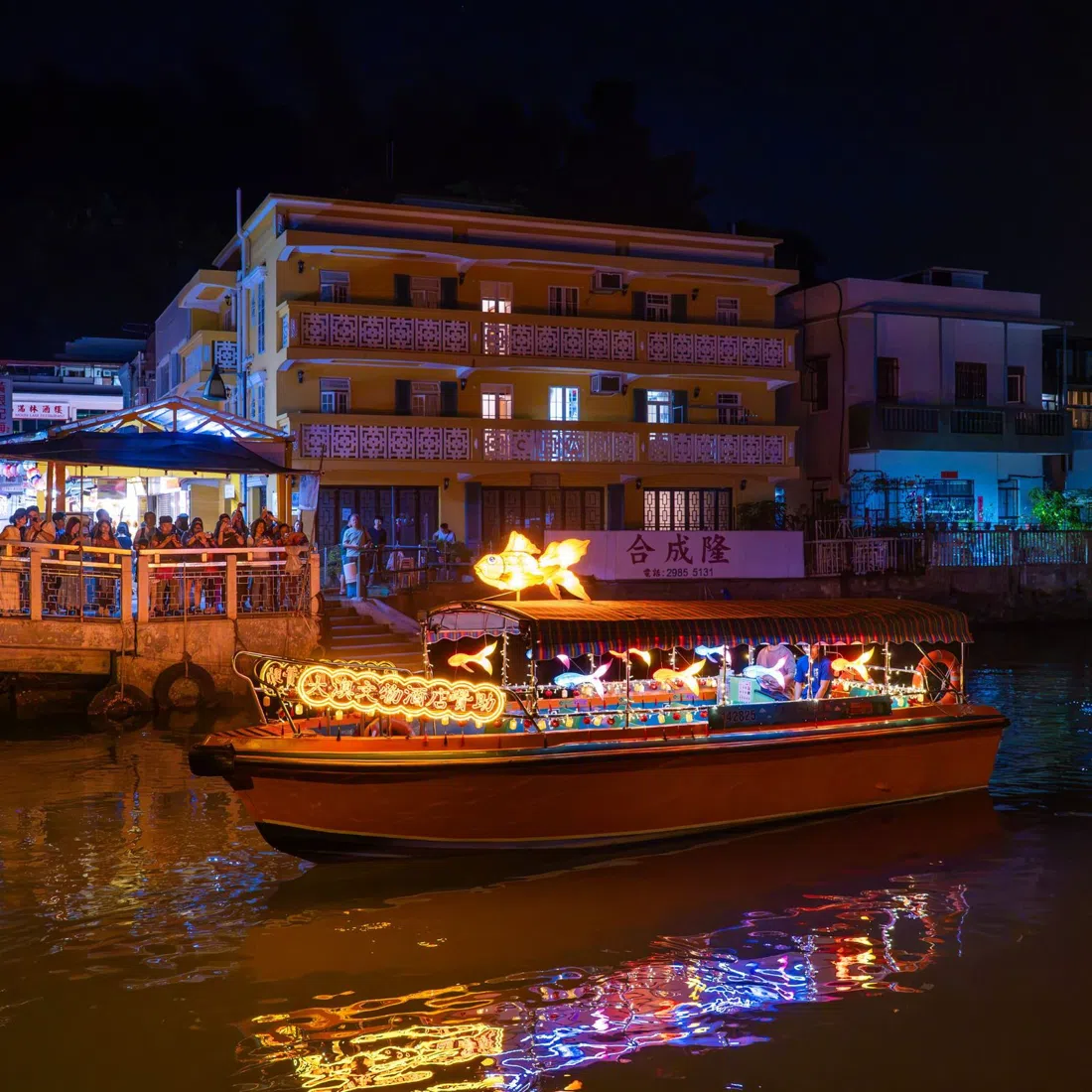
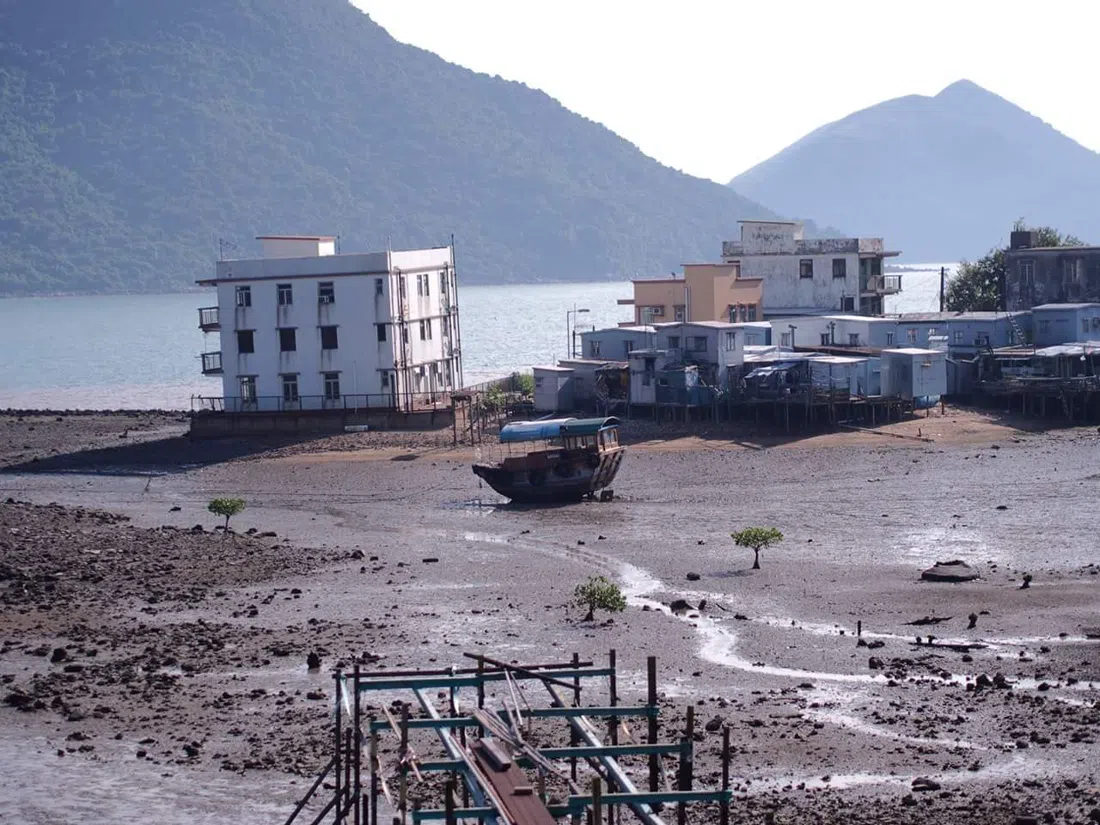
At 20A Wing On Street the sampans push off as soon as six people are aboard. At low water the ride shows you barnacled stilts and mudflat crab holes that the plank walkways cover for the rest of the day. On Shek Tsai Po Street, mauve-grey shrimp paste dries on flat bamboo sieves, raked by hand every 45 minutes from 7 a.m. until mid-afternoon.
The sampan through the stilt houses
Tai O Boat Excursion Limited (20A Wing On Street) keeps open wooden sampans with blue canvas canopies moored at the water's edge. The boat threads the tidal channel under the plank walkways of the stilt houses, then runs out past the Sun Ki Bridge to the estuary. Nobody takes a booking here. Boats leave when six to 10 people are aboard, so a party of that size departs at once and a larger one is split across two sampans.
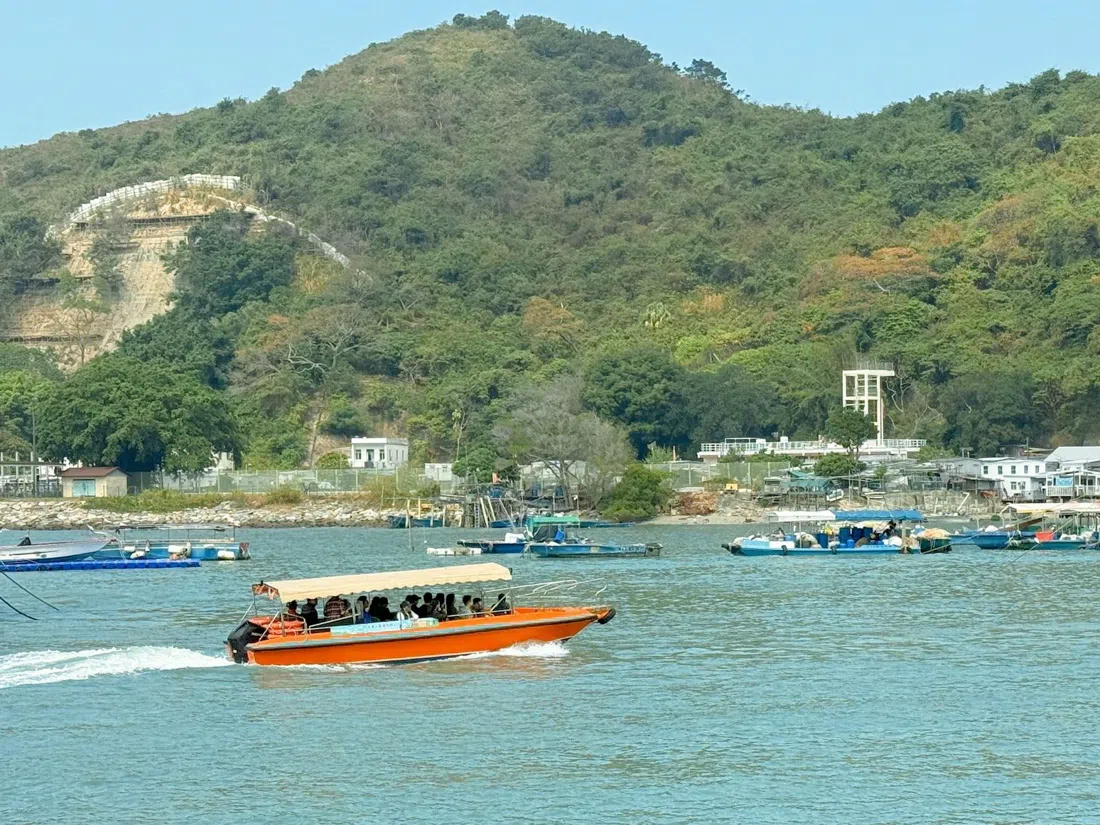
The fare is HK$20 to HK$40 per person for 20 to 30 minutes, and it is the cheapest way to read the tide. Chinese white dolphins sometimes appear, with no guarantee attached.
Shrimp paste on Shek Tsai Po Street
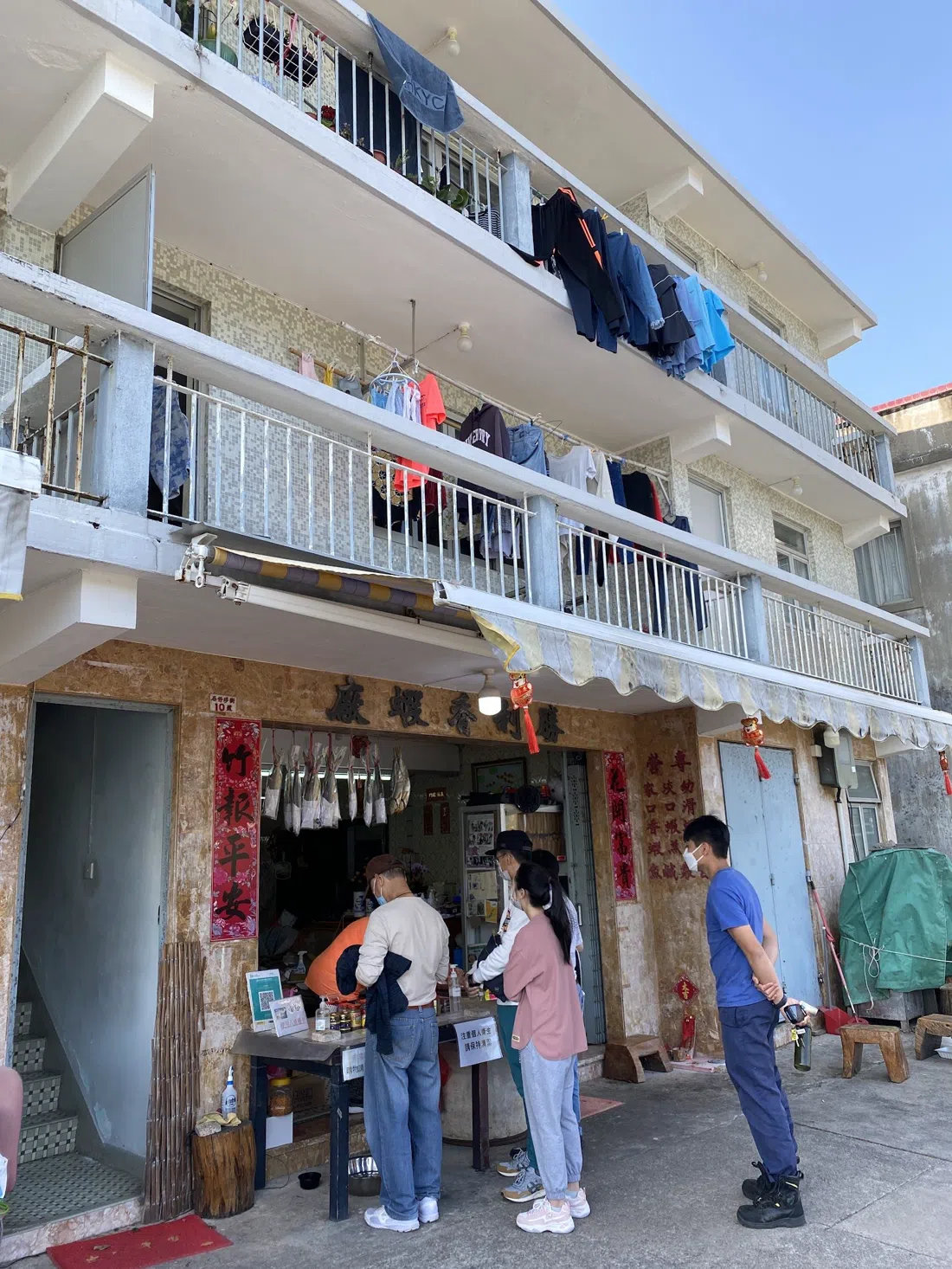
Cheng Cheung Hing Shrimp Paste Factory (17A Shek Tsai Po Street) is behind a rust-mottled decorative iron gate, with the flat round sieves of paste laid out on the street in front of it. Founded in 1920 and run now by the fourth generation, it is one of only two shrimp paste makers left in Tai O. This is a working family workshop rather than an attraction, and the hours are irregular, so phone 2985 7347 before you walk over. Buy a jar; it is the cheapest souvenir in the village. You will smell this stretch of street before you reach it.
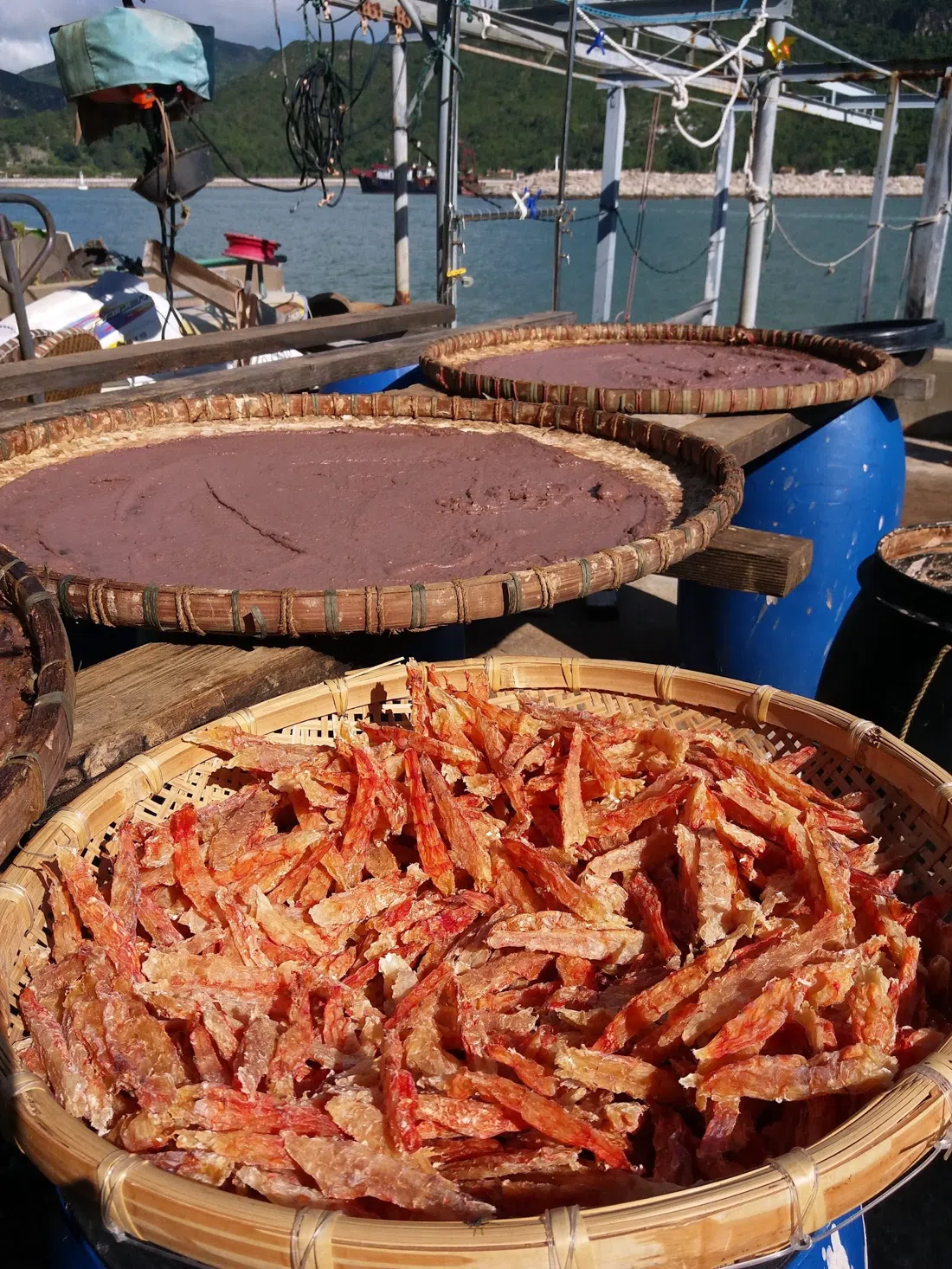
Sing Lee Shrimp Sauce & Paste Manufacturer (10 Shek Tsai Po Street) opens daily and is the more visitor-ready of the two. The shopfront is stacked with glass jars and ceramic urns. Behind it, silver shrimp ferment in salt vats and bamboo sieves tilt to the sun on the concrete apron. More than 80 years on, they still salt the local shrimp by hand. Sing Lee has run hands-on sessions where you press and bottle your own paste; arrange one in advance by message, and it costs extra on top of the jars. It is the one piece of Tai O's intangible heritage an outsider can actually take part in.
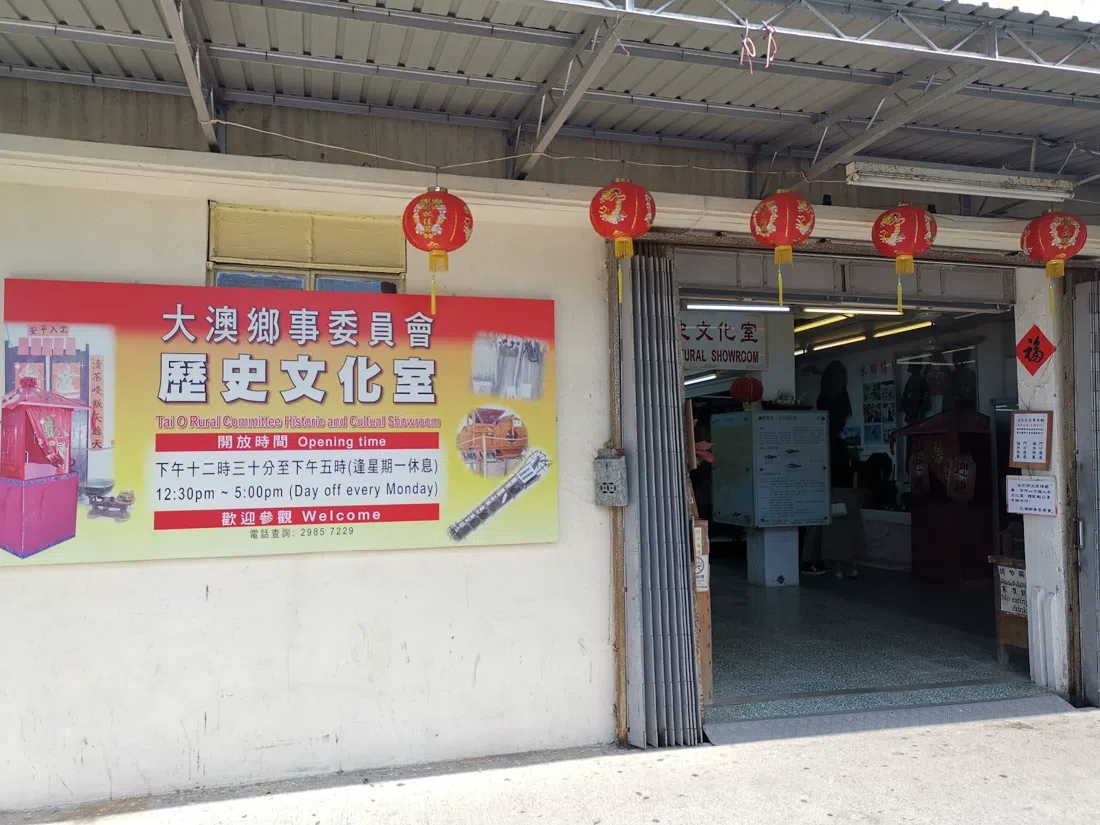
Kwan Tai, Yeung Hau and the village cultural room
Start at the Tai O Rural Committee Historic and Cultural Room (5 Wing On Street), before the boat ride rather than after it. Two cramped rooms hold donated village objects: fishing lamps, salt-pan tools, oilskin coats and rattan shrimp sieves, with old black-and-white photographs of the stilt village as it stood before the 2000 fire. Admission is free and the labels are mostly Chinese. The volunteers open it Tuesday to Sunday afternoons, irregularly. Twenty minutes in here explains the tools you are about to watch in use.
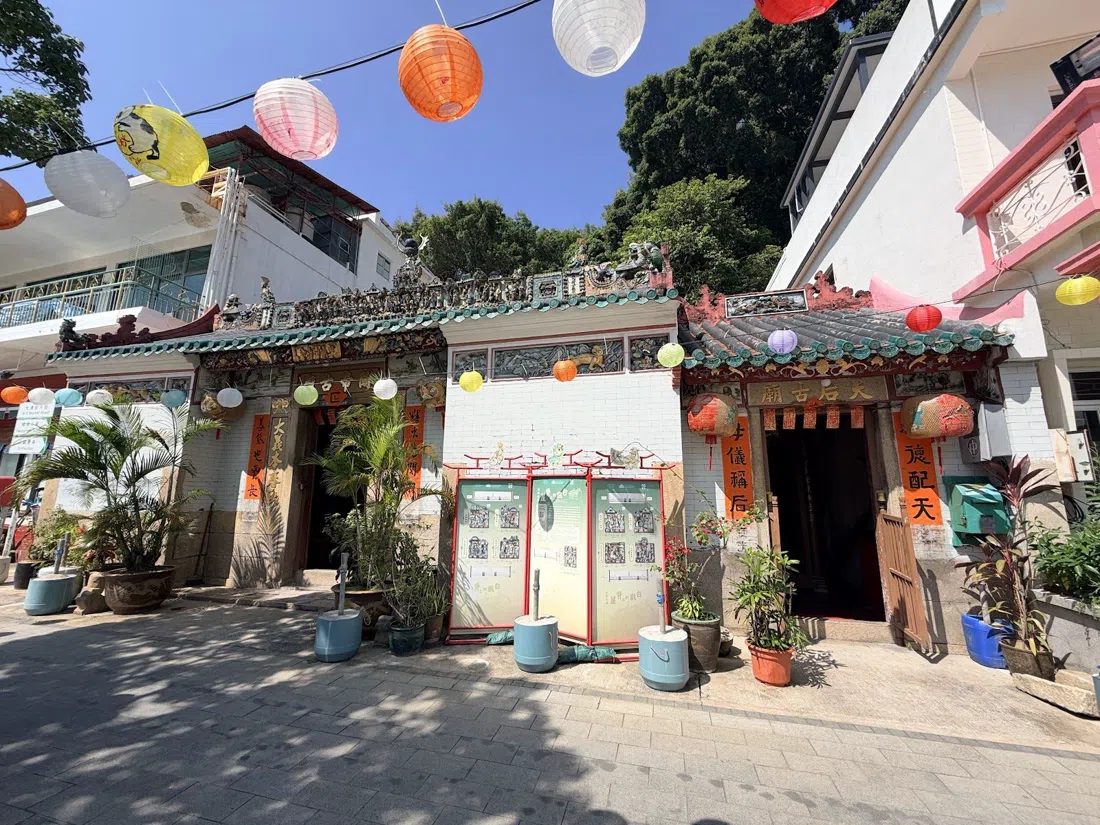
Kwan Tai Temple (29 Kat Hing Back Street) is the oldest temple on Lantau, built in the Ming dynasty, free and unticketed through the day. Under a green-glazed tile ridge and swallowtail eaves, a scarlet-faced Kwan Tai stands behind a smoke-blackened altar, with ceremonial halberds and a 1,000-pound cast bell in the side bay. A donation box covers incense. Worship carries on around you, so keep off the altar steps. Tai O was a garrison and a salt town long before anyone came to photograph it, and this is where you see that.
Yeung Hau Temple (Po Chue Tam, Kat Hing Back Street) faces the mudflats, a low grey-brick hall built in 1699 and declared a monument in 2017. Inside sit a dragon-boat prow and a whale bone, a 1699 bronze bell and tin offering vessels from 1860. The rituals of the Tai O Dragon Boat Water Parade centre on this hall, and that parade is the one village custom on Hong Kong's UNESCO-listed intangible heritage inventory. Entry is free, 7 a.m. to 5 p.m., and the single hall is small.
Street food on Wing On and Kat Hing streets
At Tai O Bakery (66 Kat Hing Street) a wok of oil bubbles at an open hatch onto the lane, turning out fist-sized sugar-crusted dough balls, with trays of mango mochi and coconut tarts beside them. More than 30 years in, the shop has a long-standing reputation for Hong Kong's best Chinese sugar doughnut, crisp-shelled and almost custardy inside. Eat it standing, within a minute of frying. The hatch has no seating, the weekend queue trails down the alley for 15 to 20 minutes, and the shop closes Wednesdays. Snacks run well under HK$30.
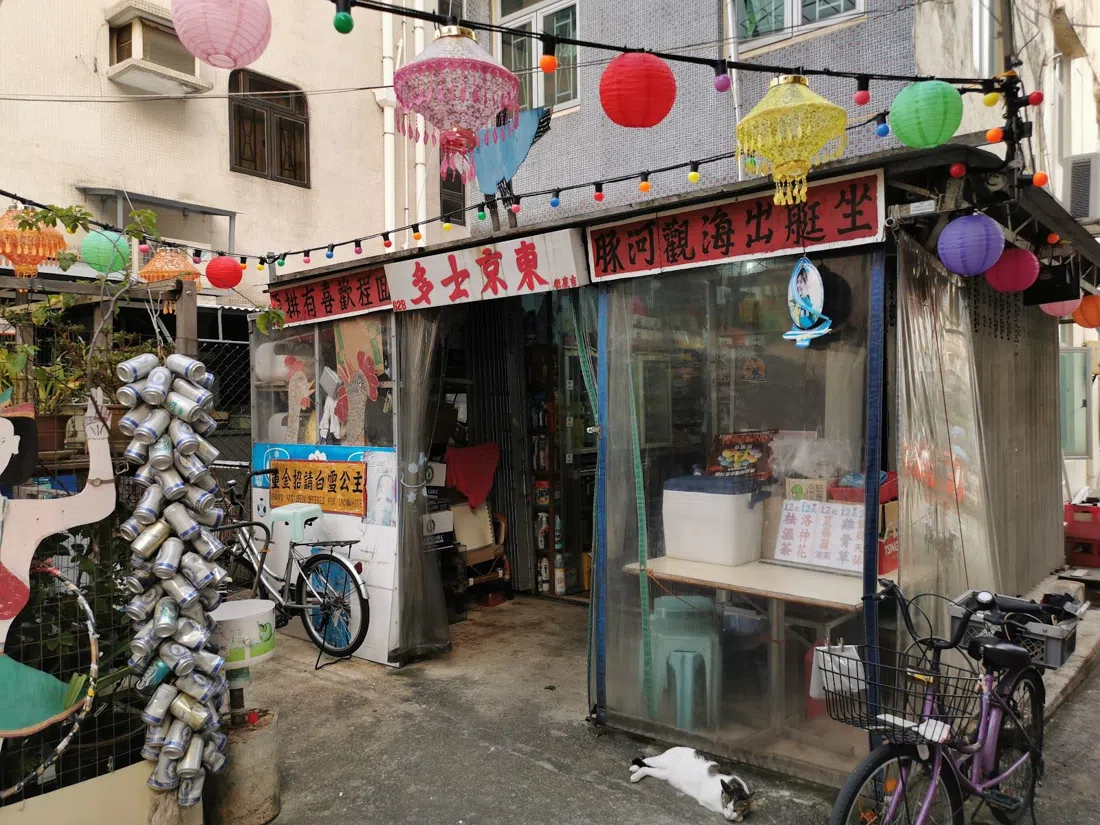
Tai O Store (69 Wing On Street) has a single charcoal brazier at the shopfront, with bamboo skewers of whole squid, scallops in the shell and dried mantis shrimp smoking over the coals. Order the pork belly glazed with Tai O shrimp paste, barbecue you will not find anywhere else in Hong Kong. Skewers run HK$20 to HK$60. Grease-spotted plastic stools on the lane are the seating.
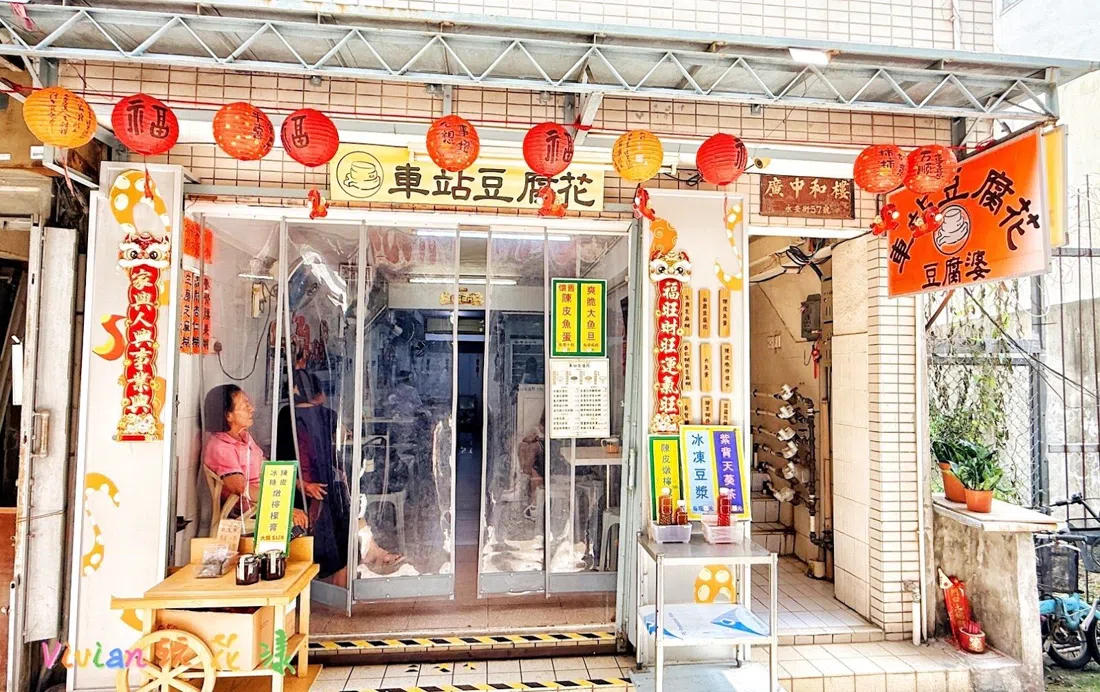
Station Tofu Pudding (57 Wing On Street) is beside the old bus-stop lane, aluminium buckets of warm tofu pudding behind a tiled counter. The woman who runs it has run it since she was a teenager. Bowls come under HK$30, topped with brown-sugar syrup, ground peanut and black sesame, and the tofu is set loose enough to wobble, which is the point. On a wet, grey tide day the black sesame soup is the better order. She works alone and there are a handful of stools, so order as one round and stand.
Decks over the creek at Kat Hing Street
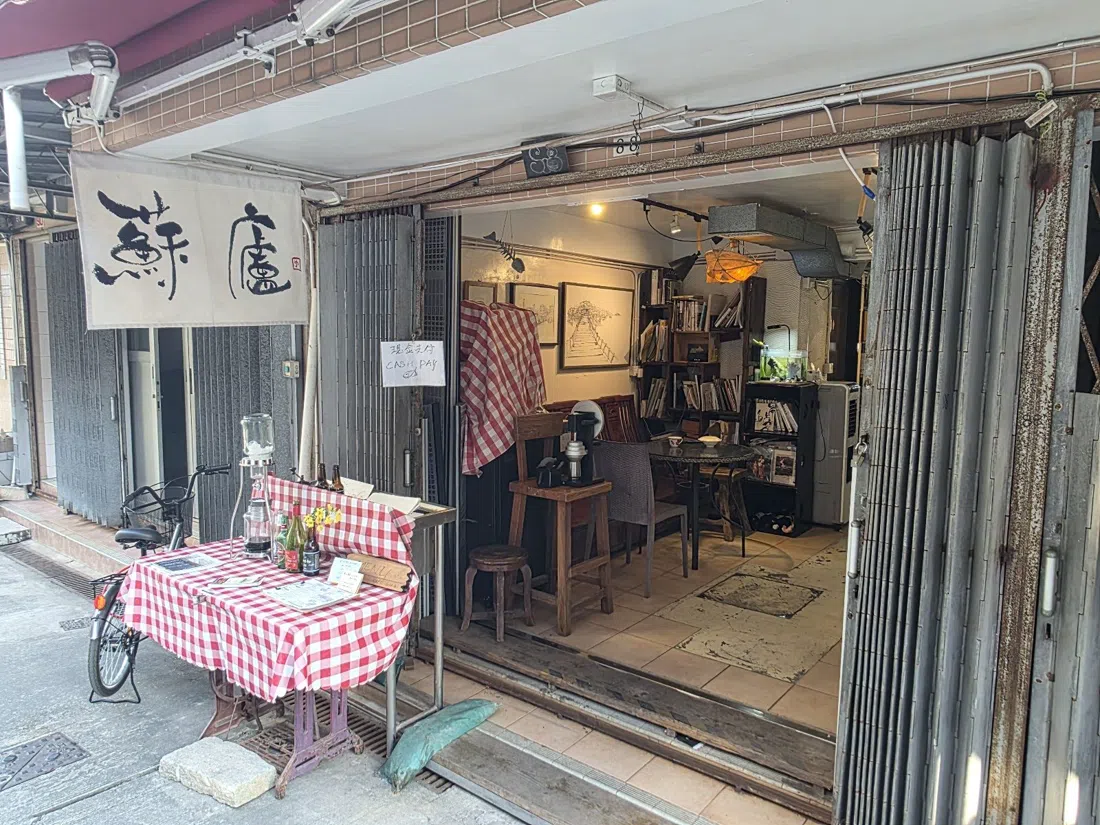
Solo Café (86-88 Kat Hing Street) opens from a narrow shophouse onto a timber deck cantilevered straight over the creek, mismatched wooden stools facing laundry and fishing floats on the tin-roofed stilt houses on the far bank. Sampans pass a metre below your feet. The coffee is roasted by hand, the tofu cheesecake is made here, and a drink-and-cake set is HK$98. The deck seats perhaps a dozen people, four sit easily and six becomes awkward. It closes Sundays. For watching the water drop, this is the best seat in the village.
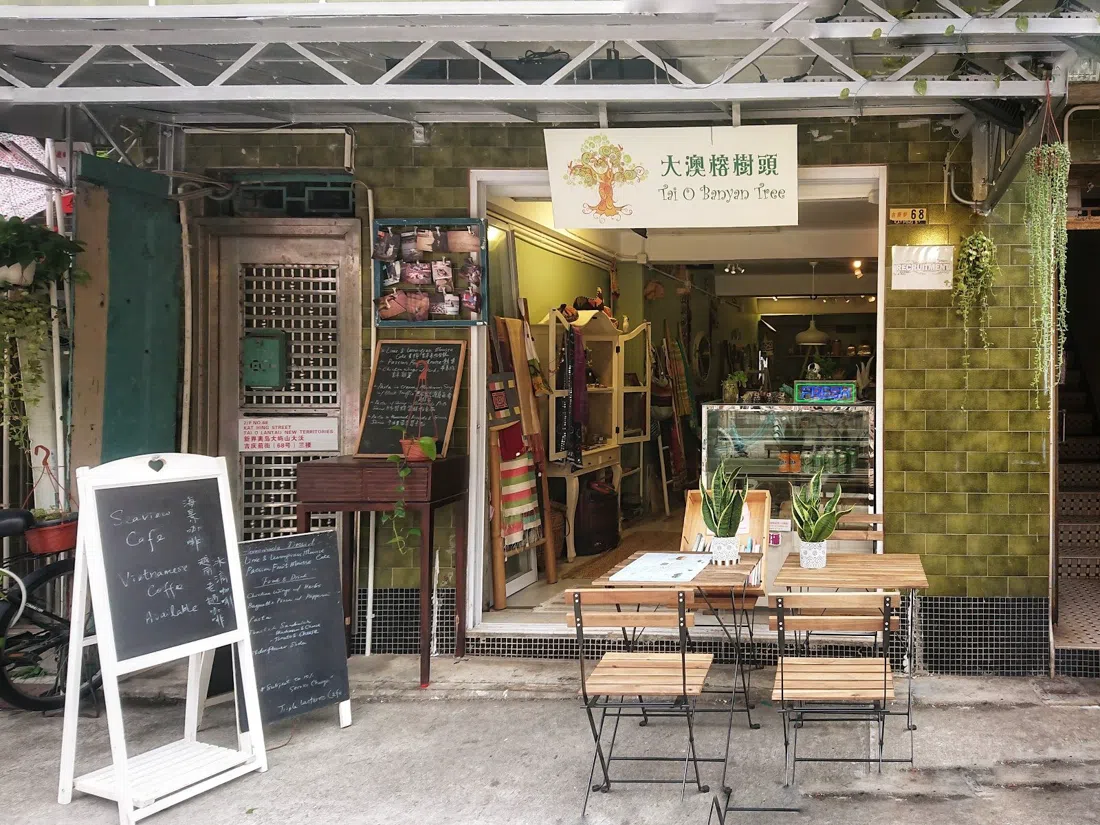
Tai O Banyan Tree (68 Kat Hing Street) is on the ground-floor corner under a spreading banyan, mint and timber inside from the makeover rebuilt on camera for Netflix's Restaurants on the Edge. Drinks and small plates go out to riverside benches, and shelves of local crafts double as the shop. It closes Tuesday to Thursday. Service slows once the day-trip crowd lands, which makes this a sit-down stop. Arrive early on a Saturday.
Sit-down meals over the water
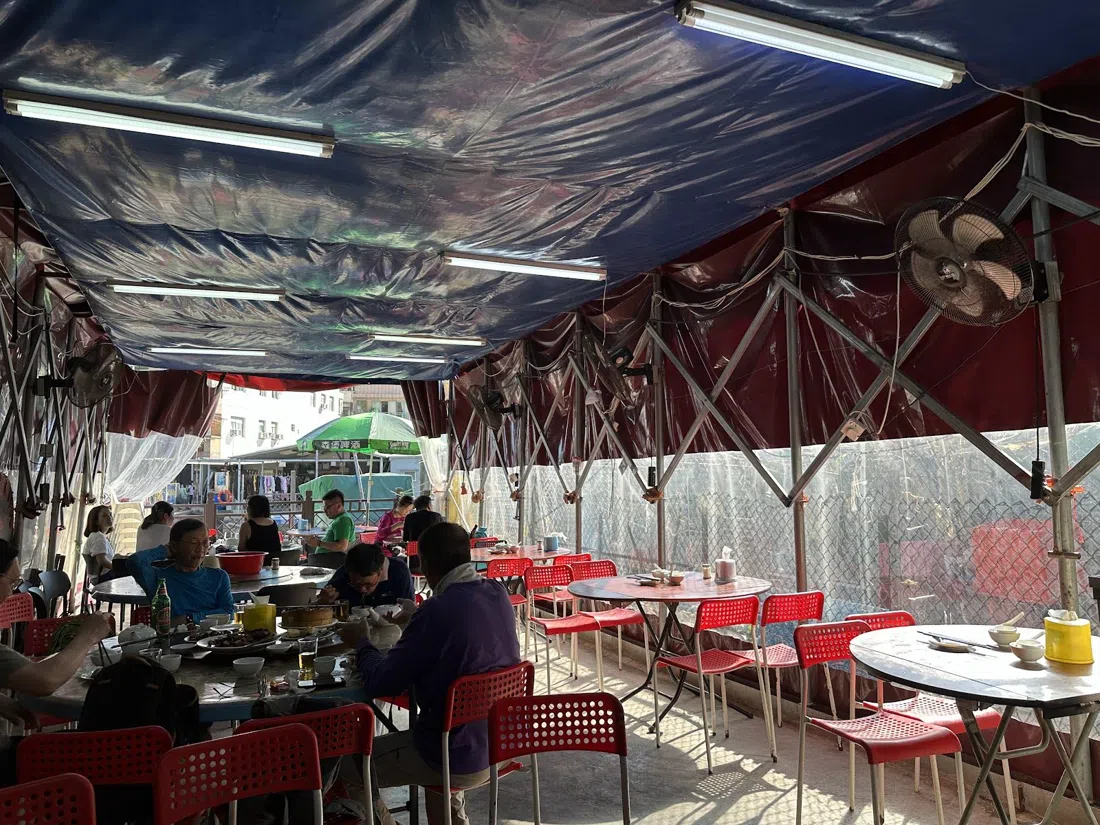
Tai O Crossing Boat Restaurant (33 Kat Hing Street) sets round tables on an awninged deck on stilts above the channel, with charcoal-roast goose hanging at the entrance. Order the goose, the cuttlefish patties and the lotus-leaf rice, which arrives steaming on tin trays. Portions are big and shared, and this is where a family of eight sits down to eat in Tai O. Payment is cash in Hong Kong dollars. Weekend hours run longer, and parties of eight or more should call 2985 8343. Service thins out when tour buses arrive, so order everything at once.
Tai O Heritage Hotel holds the low headland above the village, a whitewashed 1902 colonial marine police station with green shutters, two original cannons and a searchlight on the terrace. Nothing else in Tai O is built like it. Its restaurant, the Tai O Lookout, is a glass-roofed rooftop pavilion looking out to the South China Sea, and it is the one kitchen putting village ingredients, shrimp paste and salted fish, on a Western plate. Mains and afternoon tea sit mid-range. The Lookout takes walk-ups, the hotel books private events, and you book the restaurant separately if you are not staying upstairs.
The steps up to Fu Shan
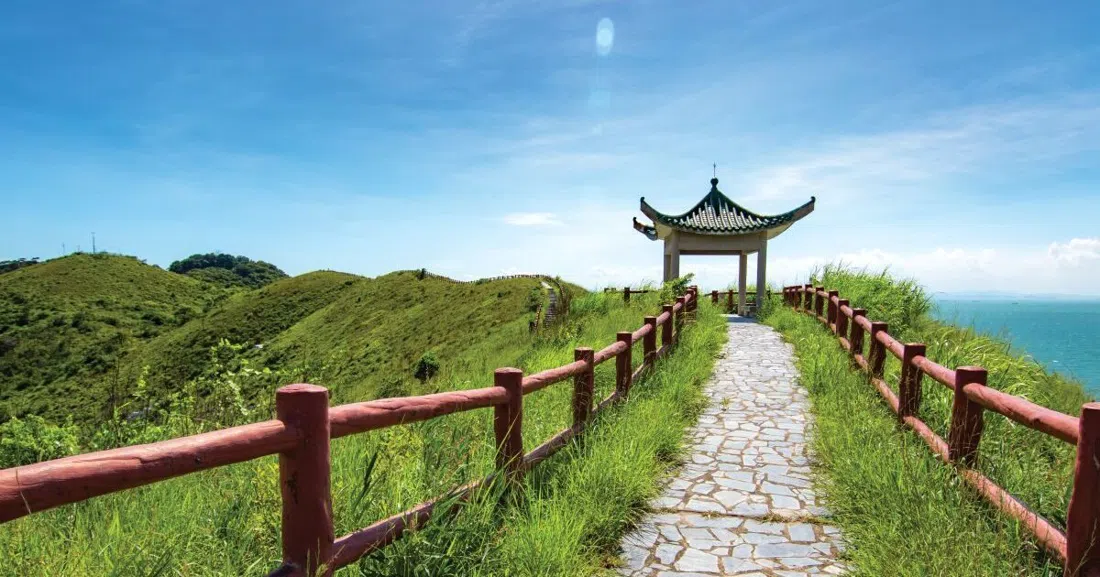
Fu Shan Viewing Point is a red-railed pavilion on a 75-metre scrub headland north of the village, reached on foot by a concrete stair path from the courtyard of the Shaolin martial arts centre. The climb is 15 to 20 minutes of easy steps, free, and open at any hour. From the railing the stilt houses lie below you and the world's longest sea bridge curves across the Pearl River estuary beyond. Dolphins are sometimes visible from here with no boat at all. Start up 1.5 hours before sunset for the light.
Rice paddies at Yi O
An hour's coastal walk south of the village, Yi O Agricultural Cooperative farms terraced green paddies in a sea-level valley, with abandoned village stone walls at the field edges, a mangrove creek and a small concrete landing pier. It is one of the last places in Hong Kong where rice is grown, and it supplies city restaurants. Tours require a minimum of 10 people and are booked by form or by phone. At weekends a boat transfer runs from Tai O Pier, and an organic vegetarian lunch is included. The price is HK$200 to HK$450 an adult, depending on the tour and on weekday or weekend. The three-hour version pairs the boat ride past the stilt houses with the paddies and the old salt fields.
Rooms for the dawn tide
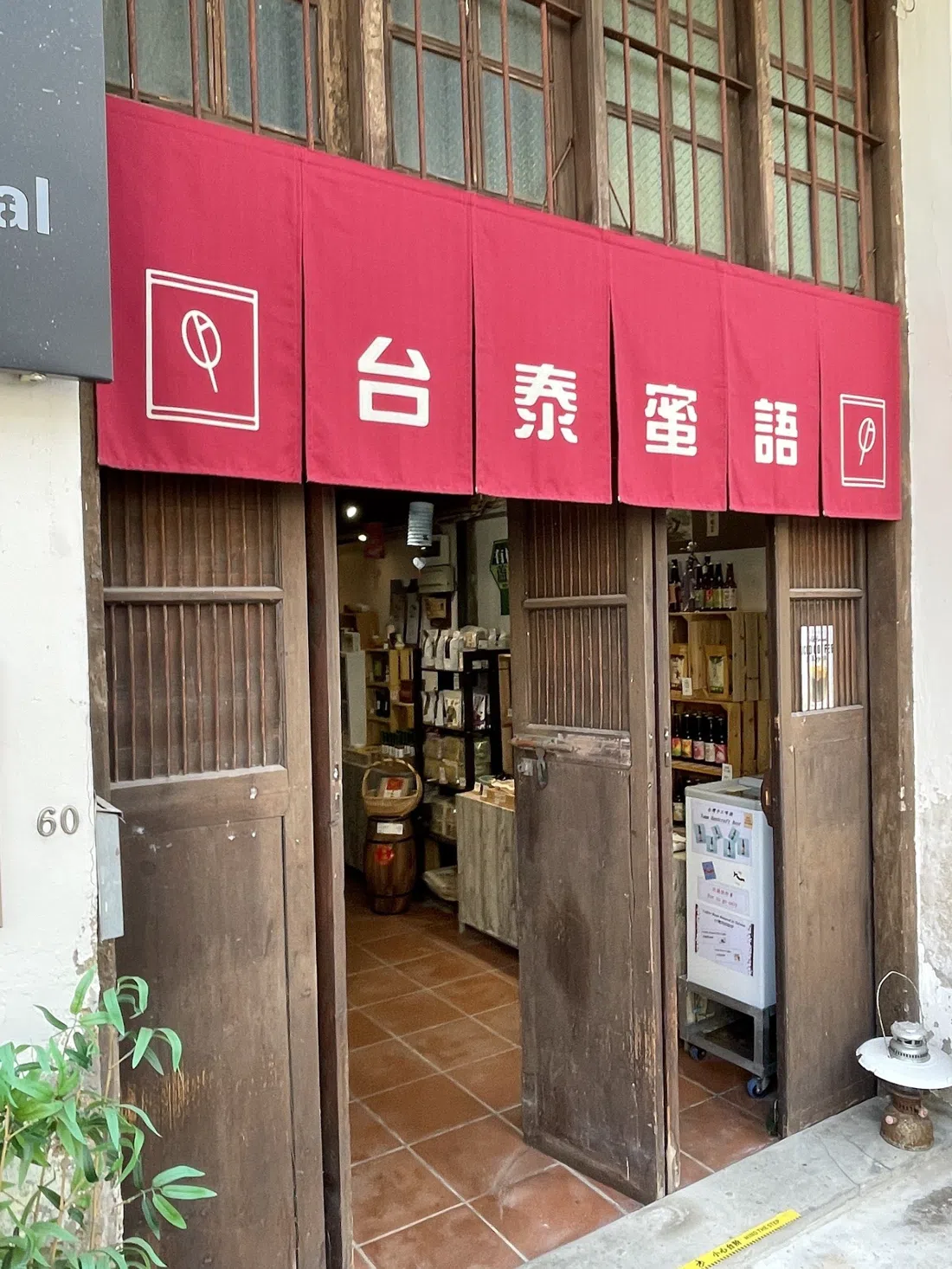
The last bus and the last ferry leave before dusk. A bed in the village is the way to see dawn low tide, and the lanes with the day-trippers gone.
The Heritage Hotel has nine rooms, so beds sell out, and they are the top price band in Tai O. Its free 20-minute heritage tour takes walk-up groups whether or not you are sleeping there.
Tai O Inn, by the Sea (Shek Tsai Po Street, vijf minuten voorbij de markt) hoort bij het budgetsegment, een stuk goedkoper dan het Heritage Hotel. De kamers met balkon kijken uit over de zee en de heuvelruggen van Lantau. Je hebt een gedeelde lounge en een open dakterras, waar mensen 's avonds naar de sterren kijken, plus een buitentafel met uitzicht over de paalhuizen. Er wordt geen ontbijt geserveerd en de receptieservice is beperkt.
Gesloten dagen en reserveren
Houd rekening met de woensdagen bij de bakkerij, de zondagen bij Solo Café en dinsdag tot en met donderdag bij de Banyan Tree, en reken er niet op dat de middagopeningstijden van de culturele ruimte kloppen. Bel Cheng Cheung Hing voordat je het dorp oversteekt, en boek een kamer in het Heritage Hotel en eventuele Yi O-tours van tevoren.
Bekijk de Hongkong-gids en de zoekpagina voor hotels in Hongkong.
Hotels in Hong Kong
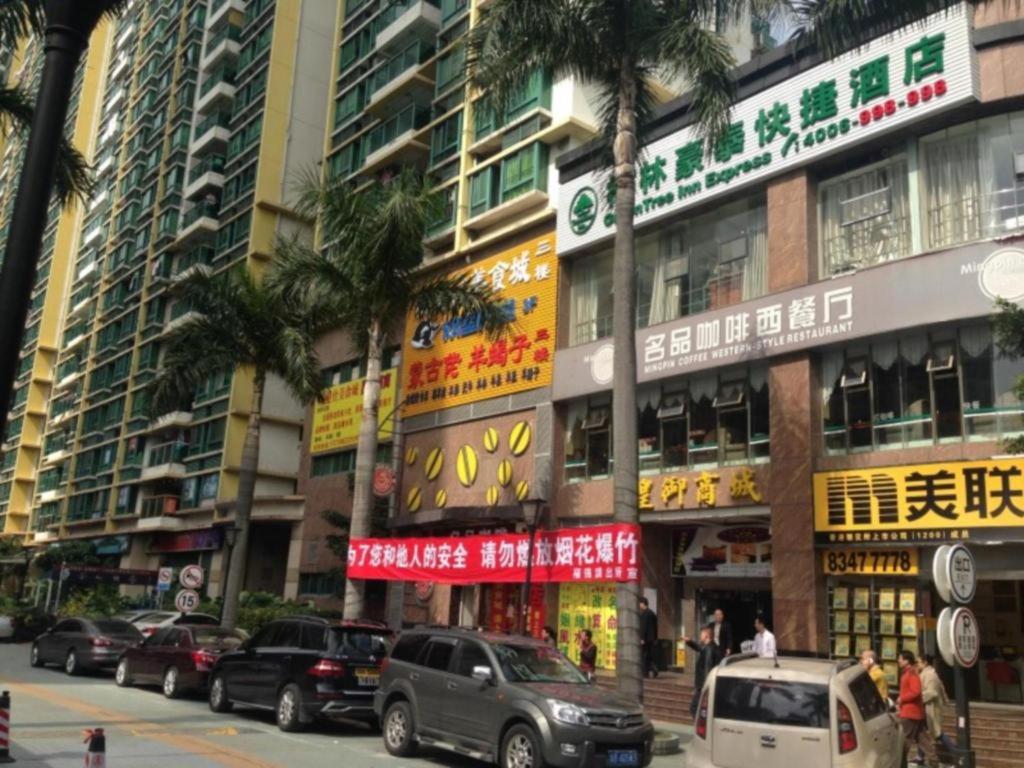
GreenTree Inn Shenzhen Guanggang Port Futian South Road Express Hotel
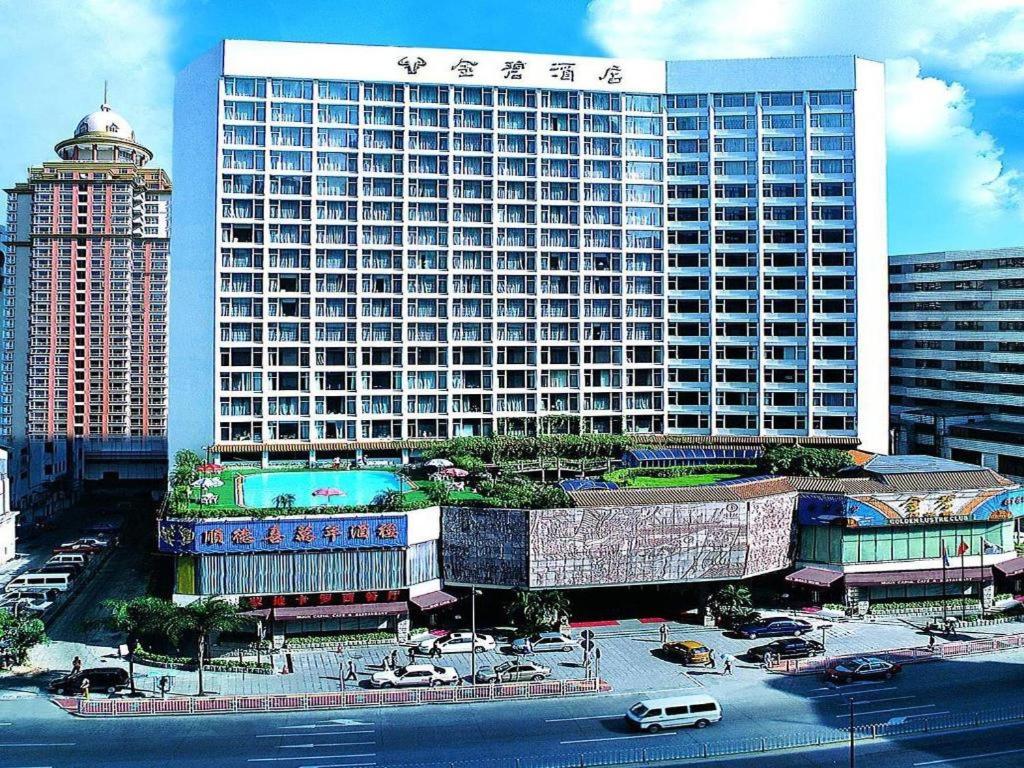
Golden Lustre Hotel
Veelgestelde vragen
Wanneer kun je Tai O het best bezoeken om de paalhuizen bij laagwater te zien?
Bij laagwater laat de sampanrit je de met schelpdieren begroeide palen zien en de krabbenholen in de slikvlakte, die op andere momenten onder de houten loopplanken liggen. De laatste bus en de laatste veerboot vertrekken vóór de schemering, dus een vroege ochtendlaagwater haal je alleen als je in het dorp slaapt, in het Tai O Heritage Hotel of in Tai O Inn, by the Sea.
Moet je de sampanrit langs de paalhuizen van tevoren boeken?
Nee. Tai O Boat Excursion Limited, op 20A Wing On Street, neemt geen reserveringen aan. Boten vertrekken zodra er zes tot tien mensen aan boord zijn, dus een groep van die grootte vertrekt meteen, en een grotere groep wordt over twee sampans verdeeld. Het tarief bedraagt HK$20 tot HK$40 per persoon voor 20 tot 30 minuten.
Kun je in Tai O chinese witte dolfijnen zien?
Soms, maar je kunt er niets zeker van verwachten. Ze duiken op tijdens de sampantocht naar de monding van de zee voorbij de Sun Ki Bridge, en af en toe kun je ze zien vanaf Fu Shan Viewing Point, zonder dat je een boot hoeft te nemen.
Kun je de garnalenpastafabrieken bezoeken, en kun je je eigen pasta maken?
Beide zitten aan Shek Tsai Po Street. Cheng Cheung Hing, op nummer 17A, is een werkende familiewerkplaats met onregelmatige openingstijden, dus bel eerst naar 2985 7347 en koop er meteen een potje. Sing Lee, op nummer 10, is dagelijks open en organiseert sessies waarin je je eigen pasta perst en in potjes doet. Die moet je vooraf per bericht regelen, en de kosten komen bovenop de prijs van de potjes.
Welke plekken in Tai O zijn op welke dagen gesloten?
Tai O Bakery is op woensdag gesloten, Solo Café op zondag en Tai O Banyan Tree van dinsdag tot en met donderdag. De Rural Committee Historic and Cultural Room is van dinsdag tot en met zondag open in de middag, maar de openingstijden zijn onregelmatig. Kwan Tai Temple is de hele dag open, en Yeung Hau Temple is open van 7 uur 's ochtends tot 17 uur.
Geschreven door
Inês Rocha
The city past the skyline, on foot and by ferry
Inês moved from Macau to Hong Kong a decade ago and writes about the city beyond its harbour view — Dragon's Back ridge walks, the Tai O stilt houses and the Star Ferry at dusk. She follows the Cantonese-Portuguese threads that tie the two territories together, from tile-work in old shophouses to egg-tart lineages.