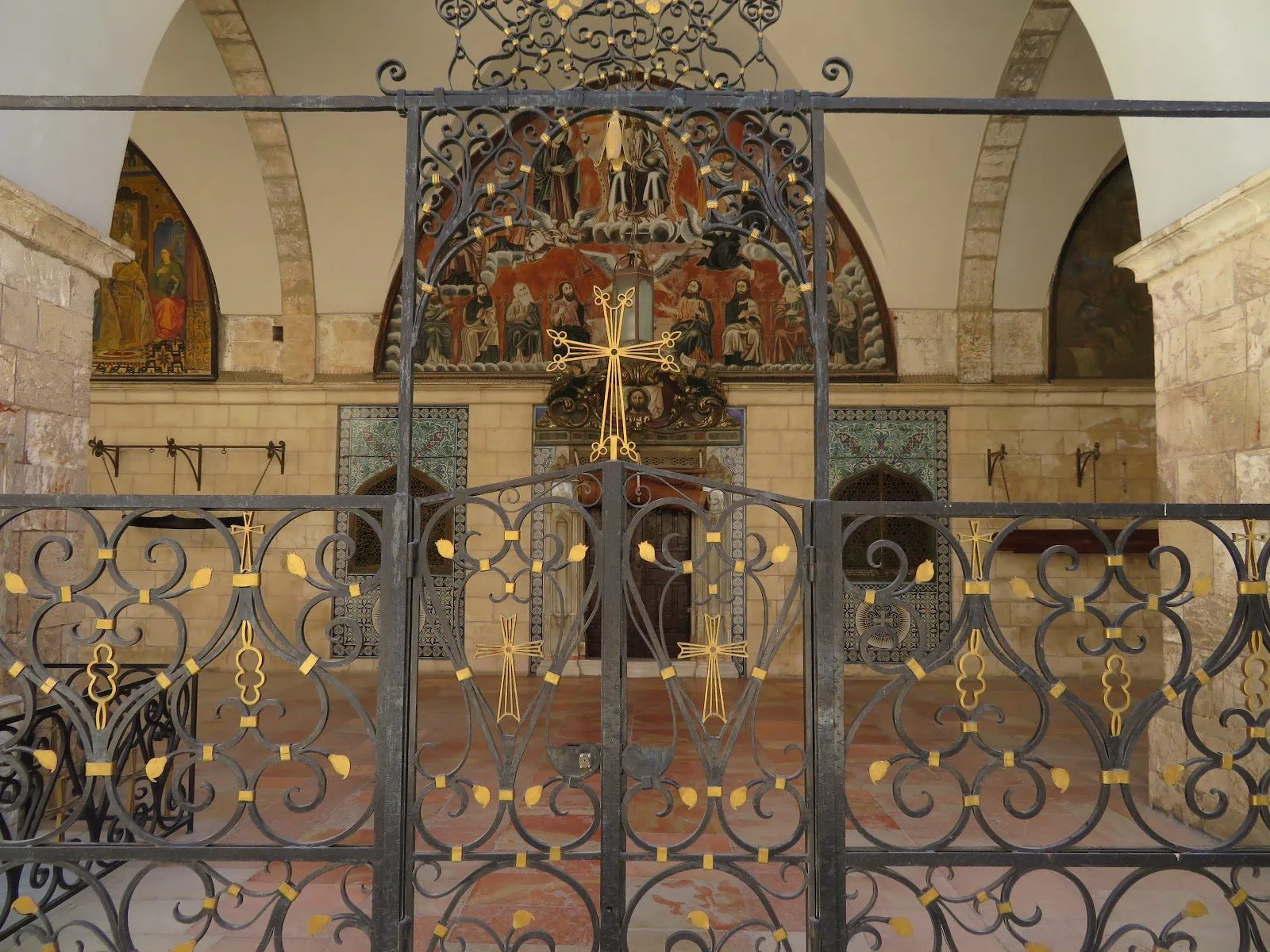
The Cathedral of St James (inside the St James Monastery compound) opens to outsiders for half an hour a day, at the 15:00 vespers, doors from 14:45. Almost everything else in Jerusalem's Armenian Quarter (Armenian Patriarchate Road) is free to walk, including the lane that rises from Jaffa Gate between blank honey-coloured walls hung with hand-painted street-name tiles in Armenian, Arabic, Hebrew and English. Come in the morning only and you will find the cathedral doors shut.
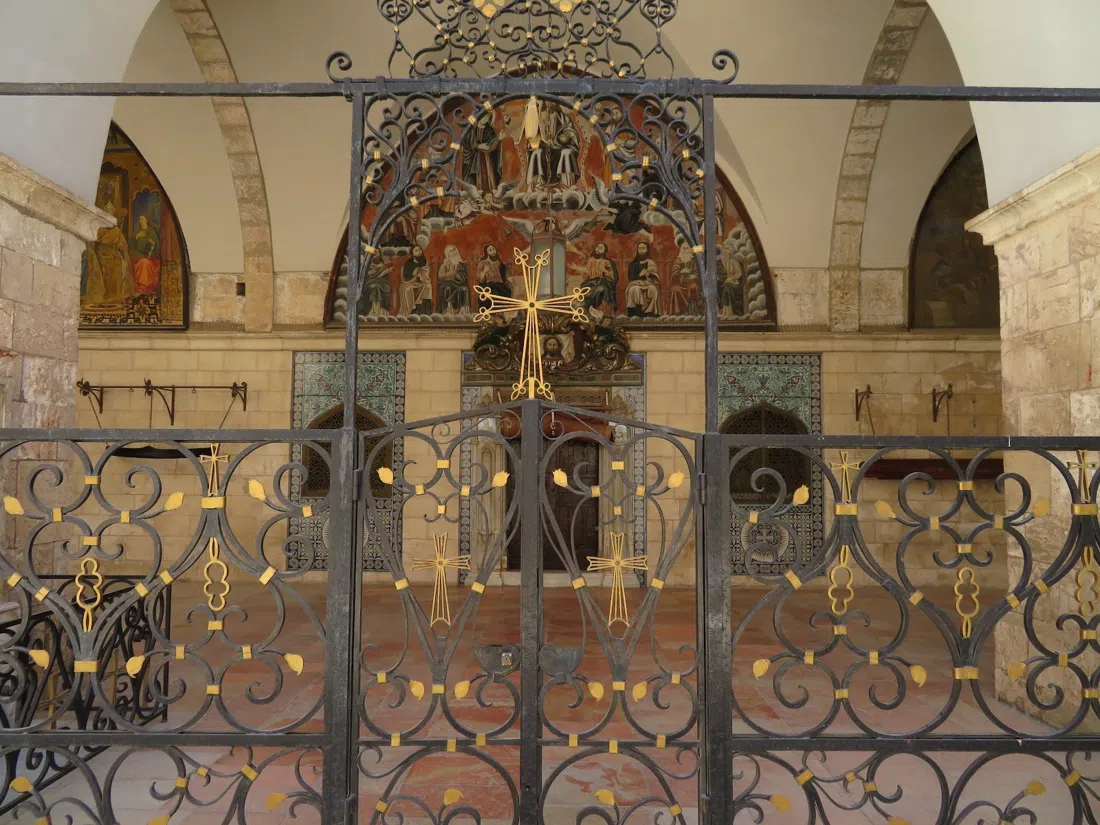
Armenian Patriarchate Road and the monastery gates
This is the smallest and quietest of the Old City's four quarters. The road carries almost no shopfronts and almost no crowd, and the ceramic street-name tiles are the clearest thing to read as you climb. Most of what you see costs nothing, and a guide's fee here buys explanation rather than admission.
The street is public and takes a walking group of any size. The monastery compound behind the gates is private. Keep voices down and stay out of residential doorways.
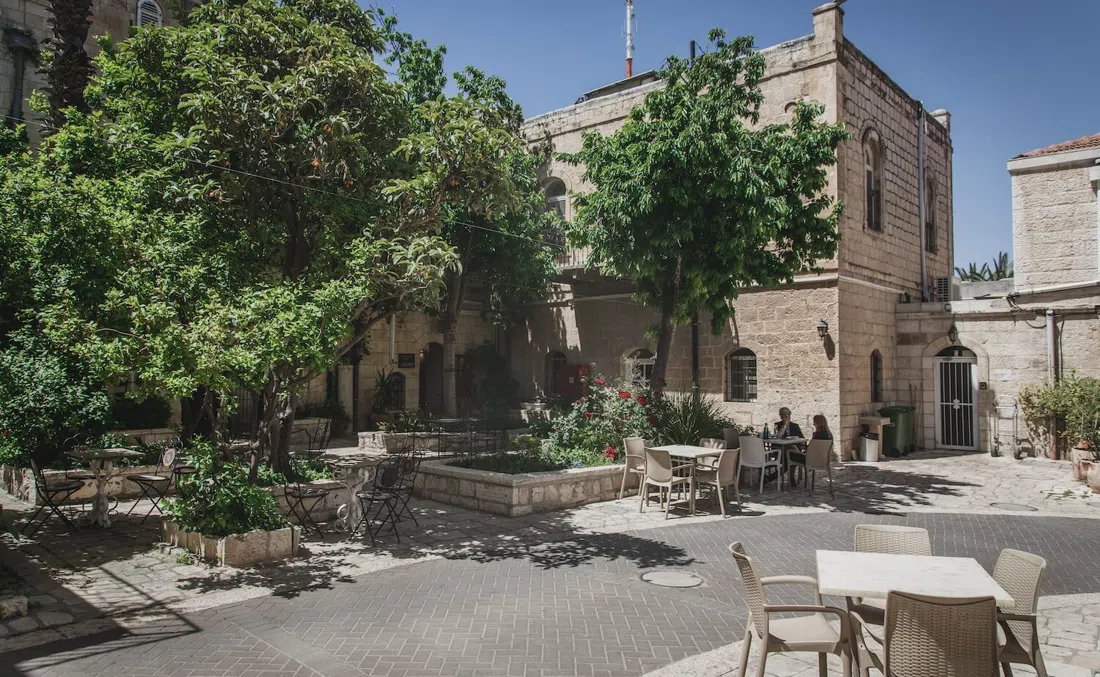
Christ Church Guest House & Coffee Shop (55 Armenian Patriarchate Street, just inside Jaffa Gate) sits at the top of the road, a walled stone courtyard with café tables under trees against the pale 19th-century façade and homemade cakes on the counter. The coffee shop opens daily 09:00 to 16:00, prices are ₪, and there is room in the courtyard for a group. This is the oldest Protestant church in the region; the church and its Heritage Centre keep their own narrower hours, and you book group visits there in advance.
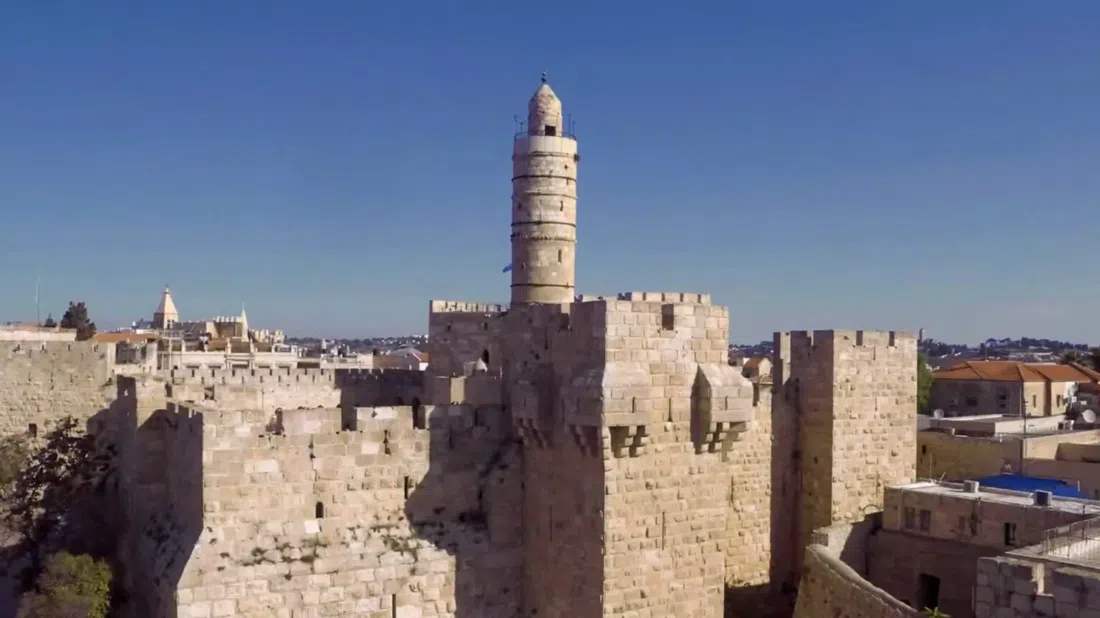
The Tower of David before you walk in
Tower of David Jerusalem Museum (the citadel at Jaffa Gate) is the orientation stop to use before you enter the quarter, reopened after a large renovation. The citadel has a deep dry moat and an archaeology garden in the inner courtyard, and the Phasael tower rooftop gives a 360-degree view over the Armenian Quarter rooftops to the Dome of the Rock. Entry is ₪55 for adults, ₪44 for students and ₪35 for children aged 5 to 18.
Hours swing by day. Sunday opens only at noon, and Friday and Saturday close at 15:00. Guided museum tours in English run daily, groups should book ahead, and the site is largely accessible since the renovation.
The southern ramparts walk
The southern Ramparts Walk (Jaffa Gate to Zion Gate and on to Dung Gate) is the one way to see over the quarter's walls into its private courtyards. You walk a narrow stone parapet with crenellations at hip height, looking straight down onto courtyards, washing lines and tiled roofs that the street never shows you. It takes 45 minutes.
Tickets are ₪25 for adults, ₪15 for children, students and seniors, and ₪18 a head in parties of 20 or more. The ticket office is at Jaffa Gate and tickets are valid all day. Walk it before the cathedral's afternoon window, because the route closes mid-afternoon and earlier on Fridays. The steps are uneven and the walk is not suitable for wheelchairs, prams or anyone unsteady.
Vespers at the Cathedral of St James
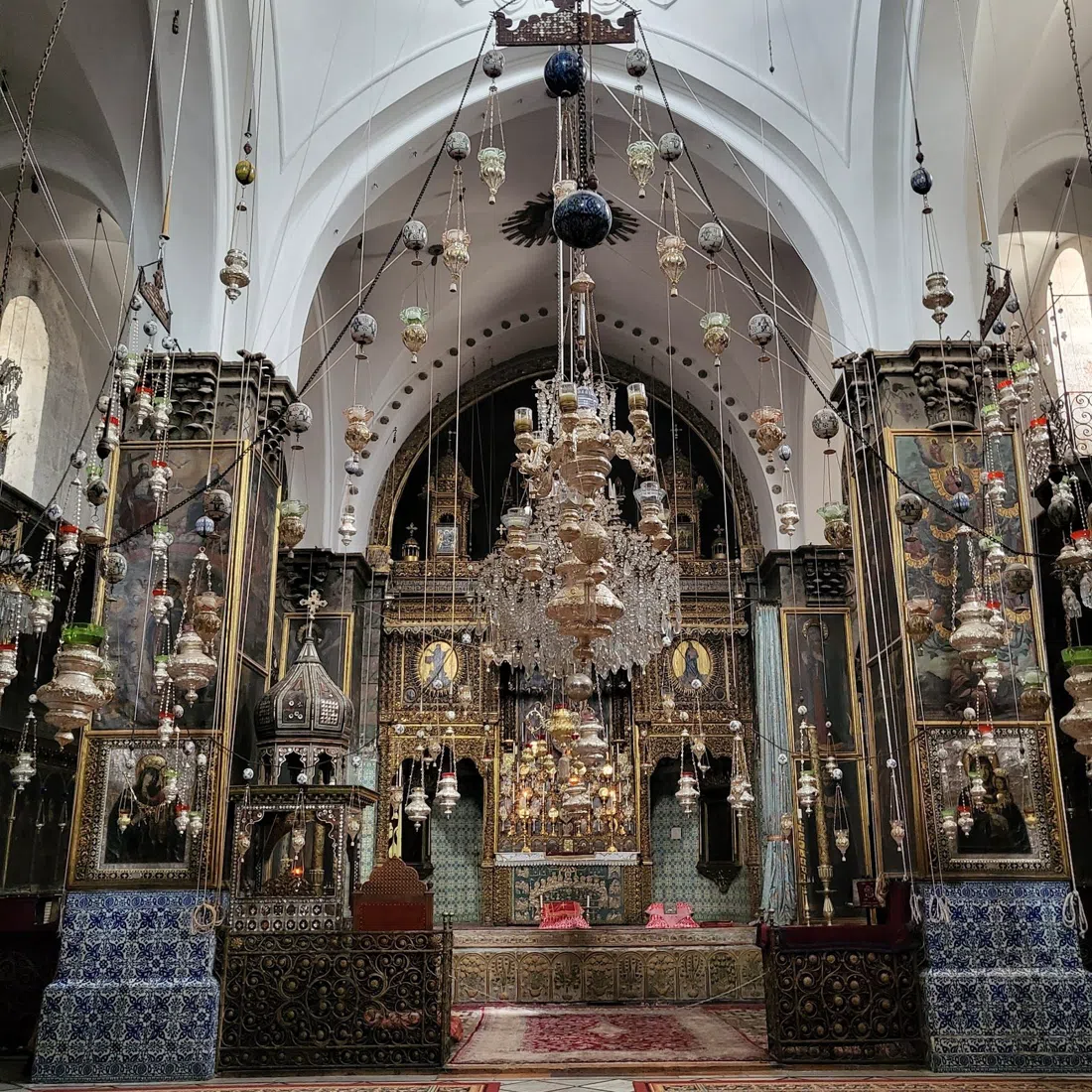
The 12th-century interior has no electric light. Hundreds of oil lamps and silver censers hang on chains over a stone floor laid with carpets, between floor-to-ceiling blue-and-white tile panels and dark carved wood. Published hours are Monday to Friday and Sunday 06:30 to 07:30, daily 15:00 to 15:30, and Saturday 06:30 to 09:20.
The 15:00 half hour is the window outsiders are given, and it is a service rather than a viewing slot. Modest dress is required and women cover their heads. Stand at the back and stay silent. A small group is fine on those terms; a coach party is not welcome.
Doors that need asking first
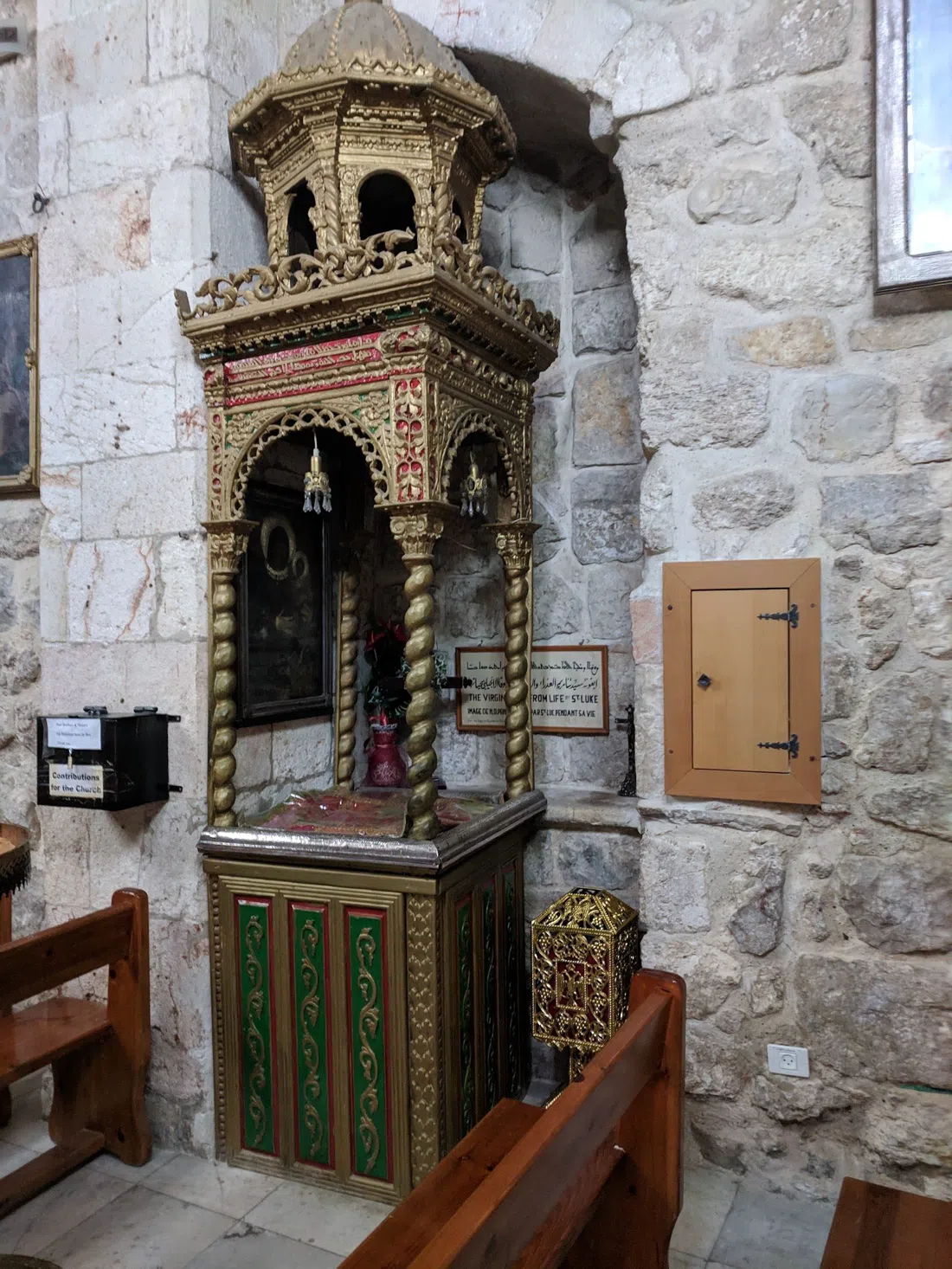
St Mark's Syriac Orthodox Church (up Ararat Street) is a tiny chapel behind a plain door, hard to find, with a dim nave half-screened by an embroidered curtain, a dark leather-painted icon of Mary and Jesus, and steps down to a stone crypt. A caretaker often gives the talk in person. Visiting hours run 08:30 to 15:30 on weekdays and shorter on Saturdays, and the doors close during the 07:00 daily mass. Entry is free and a donation is expected. The church sits inside the Armenian Quarter and belongs to the Syriac community, so this corner of the Old City holds more than one church.
Convent of the Olive Tree (Church of the Holy Archangels, Deir al-Zeitoun) is a small flagstoned courtyard behind an iron grille gate, with an ancient gnarled olive tree ringed by a low stone wall, whitewashed arches and a hanging lamp above the church door. Armenian tradition places the house of the high priest Annas here. You enter only by prior permission from the Armenian Patriarchate, and only in a small pre-arranged group. Without that permission you are standing at a locked door.
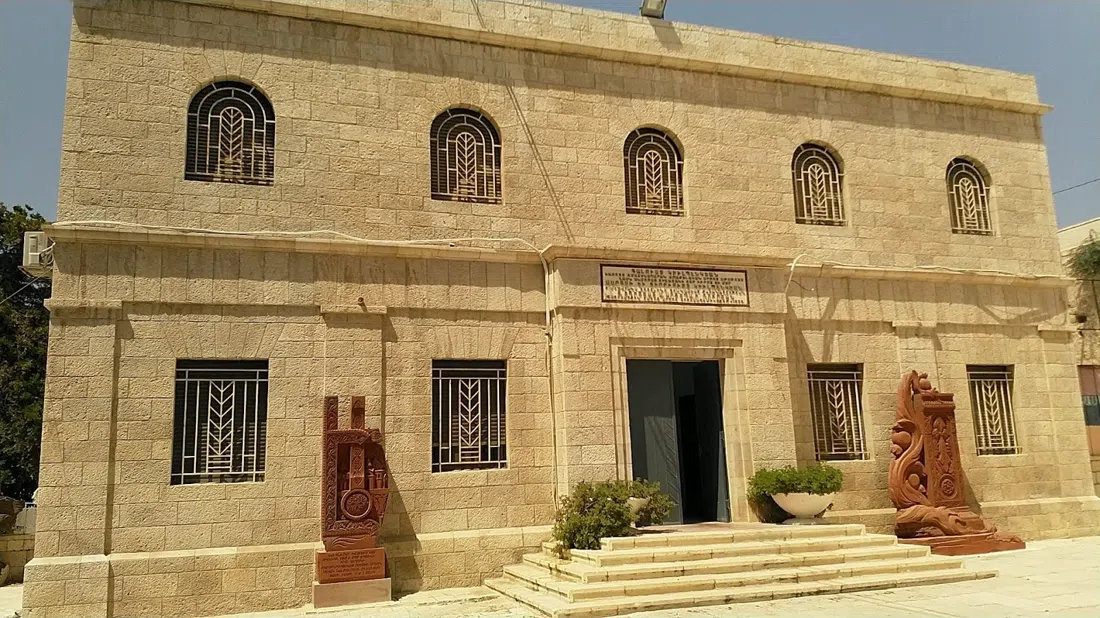
Calouste Gulbenkian Library (inside the Patriarchate compound) holds the largest Armenian manuscript collection outside Armenia, in a 1930s reading room of tall dark shelving packed with Armenian-script spines, long tables under pendant lamps and manuscript cases. It opens Monday to Friday 14:00 to 18:00 by appointment, arranged by email to [email protected], for researchers and very small groups. Leave it off a general sightseeing afternoon.
Goveroun Bardez and the lease dispute
Goveroun Bardez (the Cows' Garden, below the Patriarchate) is a large open gravel parking lot inside the walls, fenced with hoardings and makeshift barricades, hung with protest banners in Armenian and English, with residents keeping watch from plastic chairs. The 98-year lease signed over this ground is in open dispute, on land the community says covers a quarter of the quarter.
You can walk past at any hour and it costs nothing. Read the room before you bring anyone else. Residents are not an exhibit and filming them is not welcome.
Ceramics at Sandrouni and Jerusalem Pottery
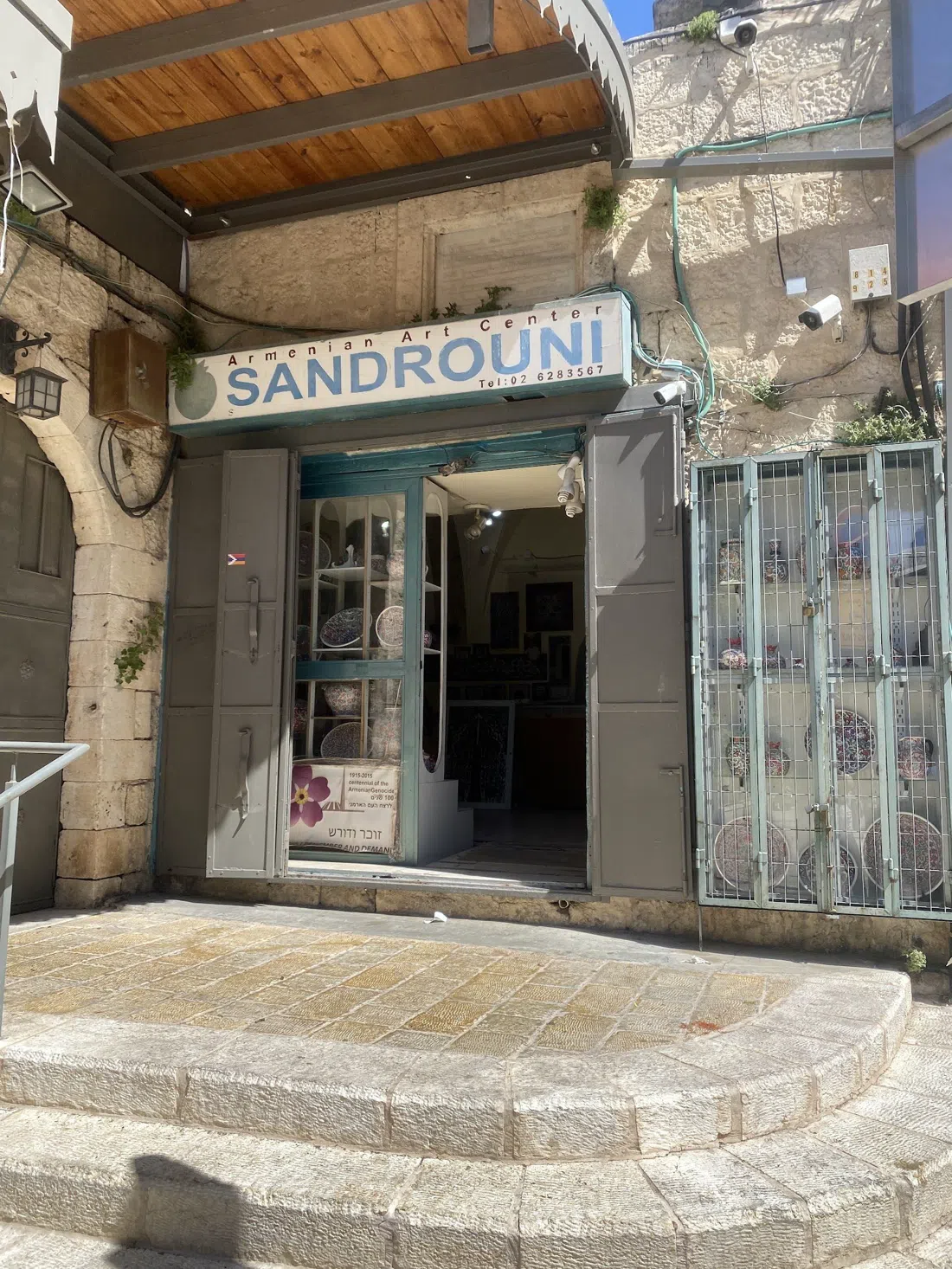
Garo and Sonia Sandrouni Armenian Art Center (87 Armenian Patriarchate Road) is a small vaulted room a few steps from St James, every wall tiled and shelved with hand-painted bowls, gazelles, pomegranates and blue-and-white Jerusalem street-name tiles, with paintbrushes and unfired blanks on the work bench. It is a working studio and you can walk in, Monday to Saturday 09:00 to 19:00, at ₪₪ to ₪₪₪. Staff will explain how the pieces are painted, though 20 people fill the single room.
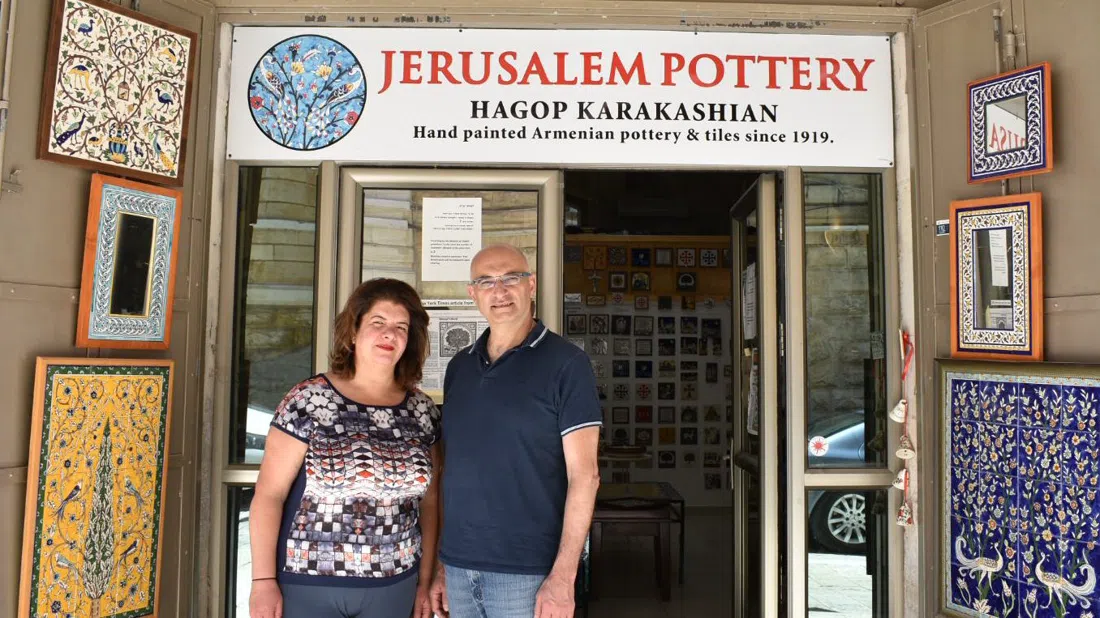
Jerusalem Pottery (3 Greek Orthodox Patriarchate Street, Christian Quarter) is run by the Karakashian family, the third generation of the potters who brought the craft to Jerusalem in 1919. Behind the green door are a kiln at the back, trays of tiles drying, and the original moulds for the Old City's 1960s Arabic-and-English street-name signs. Hands-on sessions trace how Armenian pottery reached the city; groups come by arrangement, and you phone ahead on +972 2 626 1587. It is a short detour out of the quarter.
Lunch at Bulghourji or the Armenian Tavern
Bulghourji (6 Armenian Patriarchate Street) is built into the inner face of the Old City wall in a former bulgur mill, with stone arches, Armenian embroidery, framed family photographs and shaded courtyard tables. The Kalajian family have run it since 2004 and it is the more dependable of the quarter's two Armenian kitchens. It opens Sunday to Thursday 10:00 to 22:00 and Friday until mid-afternoon, closed Saturday, at ₪₪. Groups are fine.
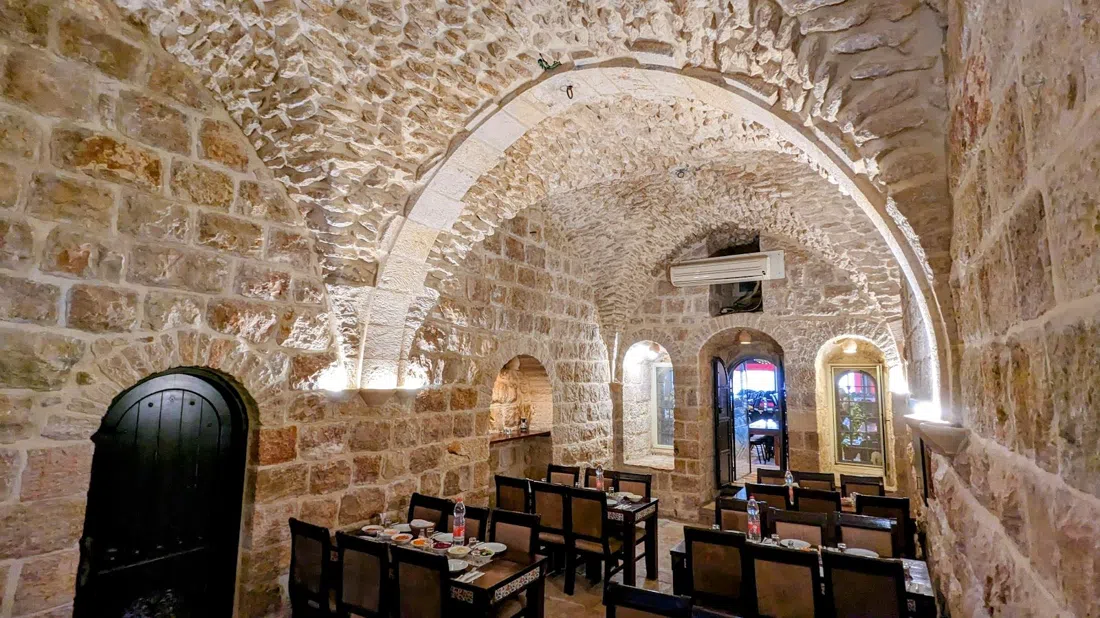
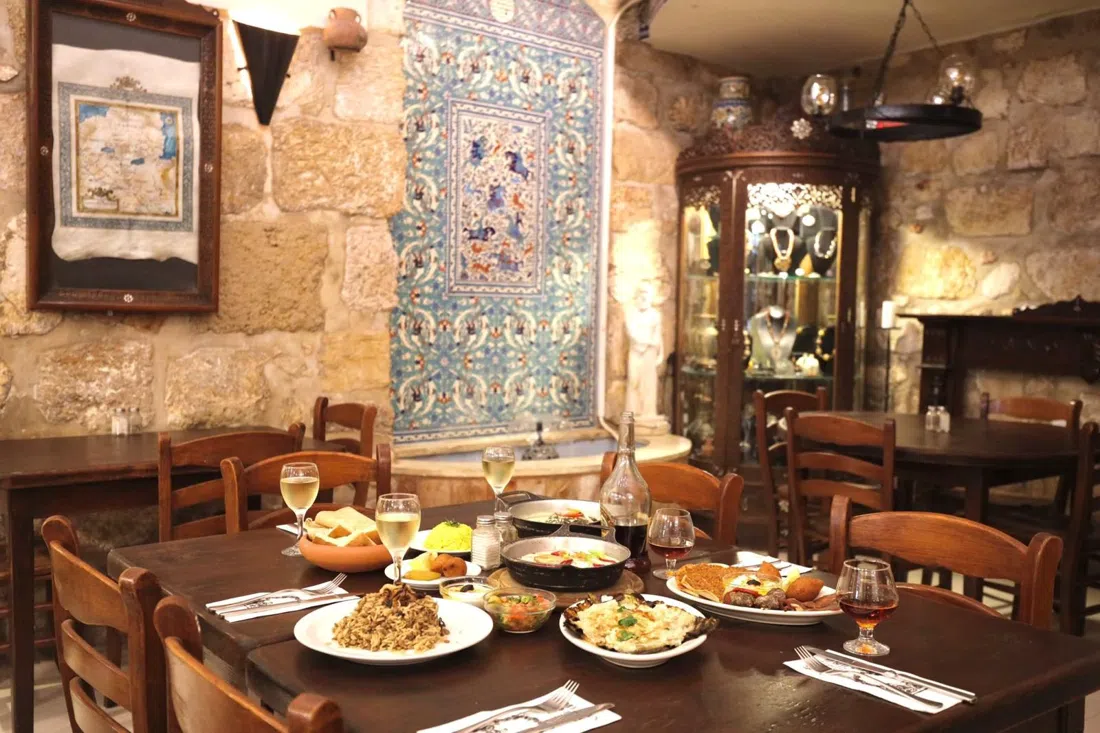
Armenian Tavern (79 Armenian Patriarchate Road) takes you down a steep flight of stone stairs into a Crusader-era vaulted cellar, where hand-painted Armenian tiles are set into the walls and a tiled fountain, copper pots, icons and antiques crowd every surface. It has been open since 1994 and costs ₪70 to ₪140 a head. Hours have been erratic in recent years and listings have shown temporary closures, though diners reported it serving in 2026. Ring the day before on +972 2 627 3854 rather than walking a party down those stairs on spec.
Zion Gate and Dormition Abbey
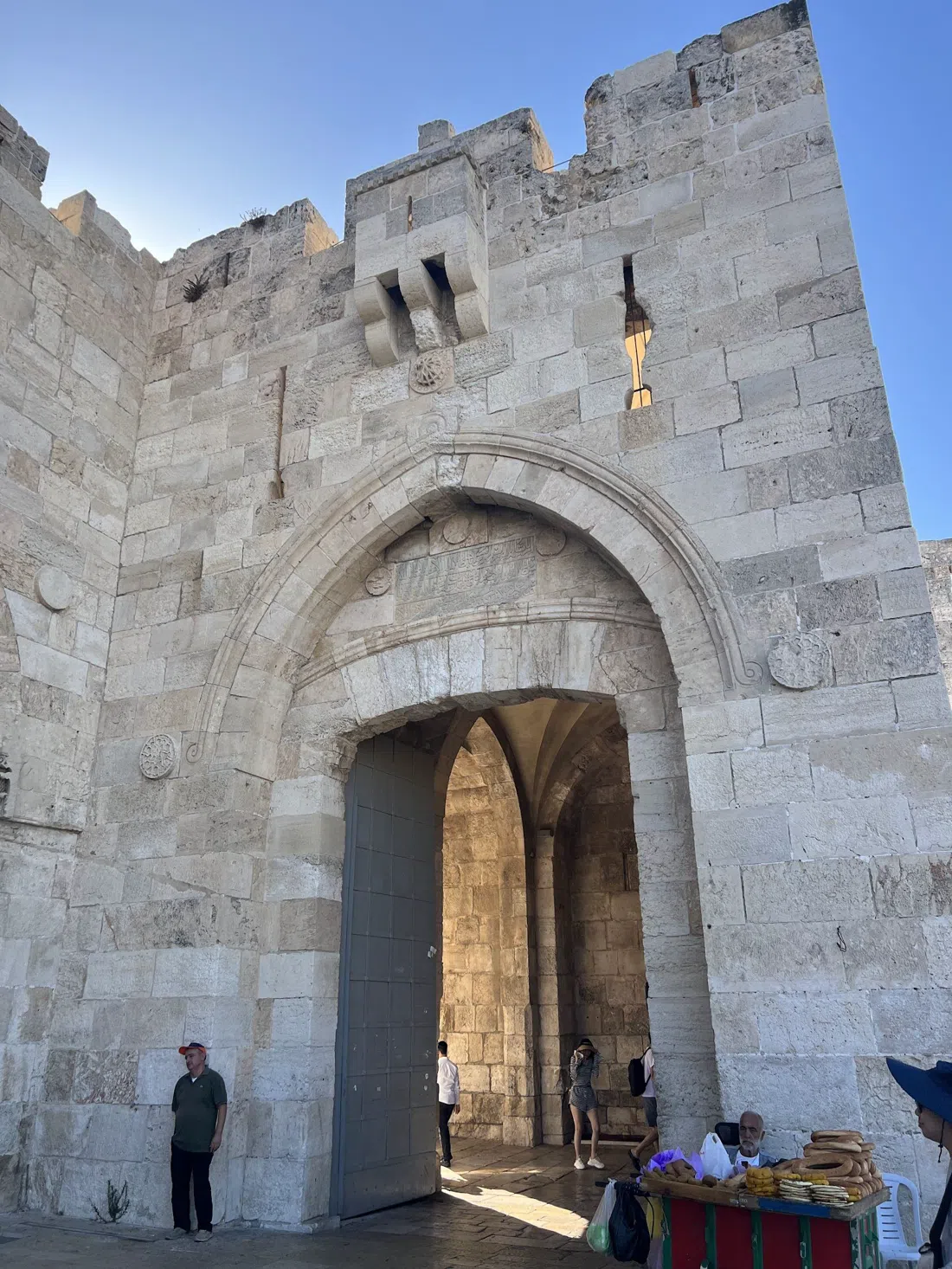
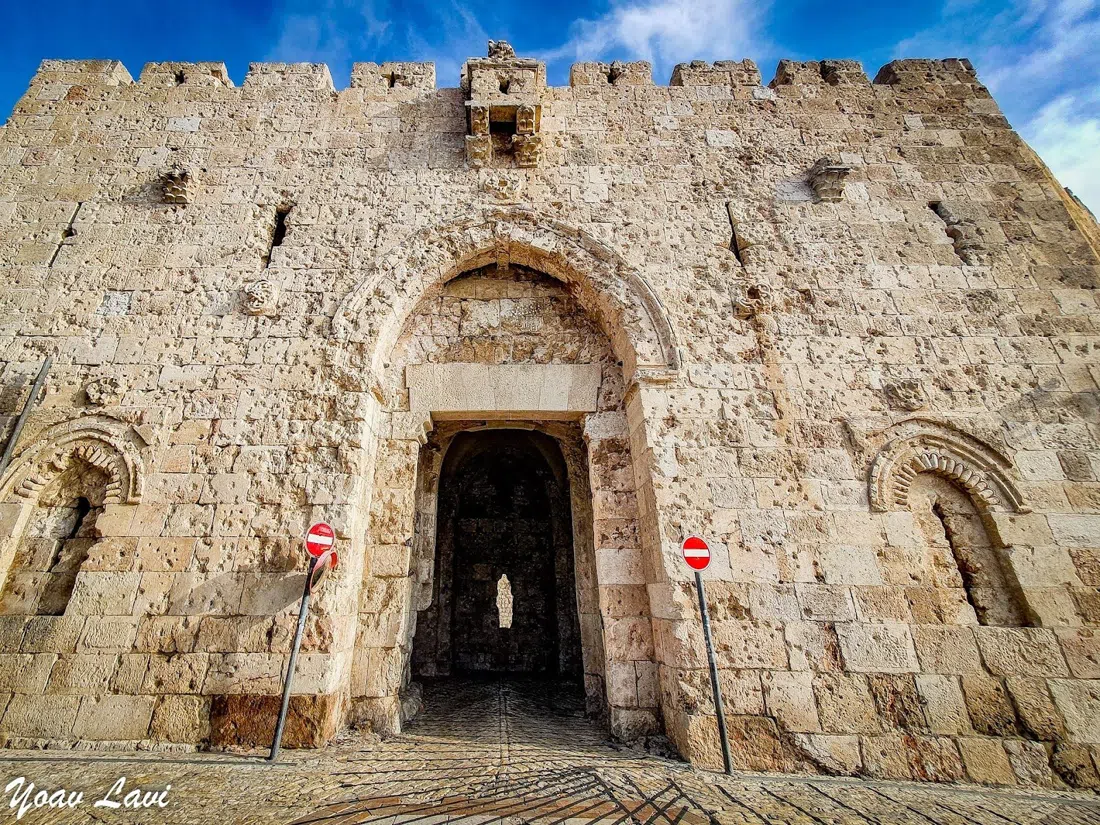
Zion Gate is the end of the walk, an L-shaped Ottoman gateway in honey limestone whose whole facade is pitted and cratered with 1948 bullet and shell scars, a crenellated parapet above and the Mount Zion road falling away outside. The damage sits at eye level. The gate is open at all hours, free, and the forecourt is wide enough to stand a group in while someone explains it.
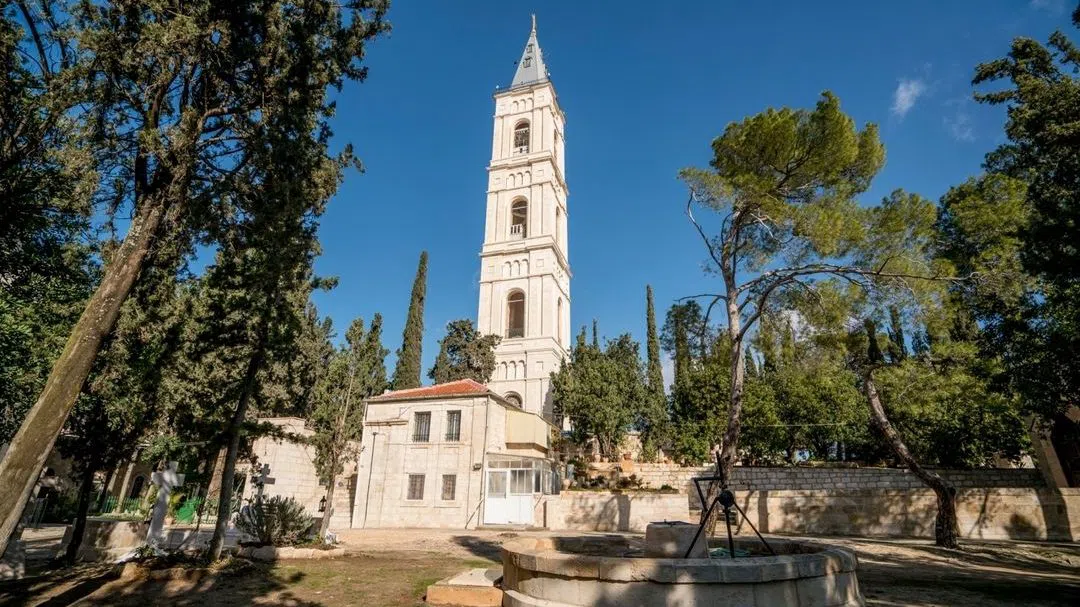
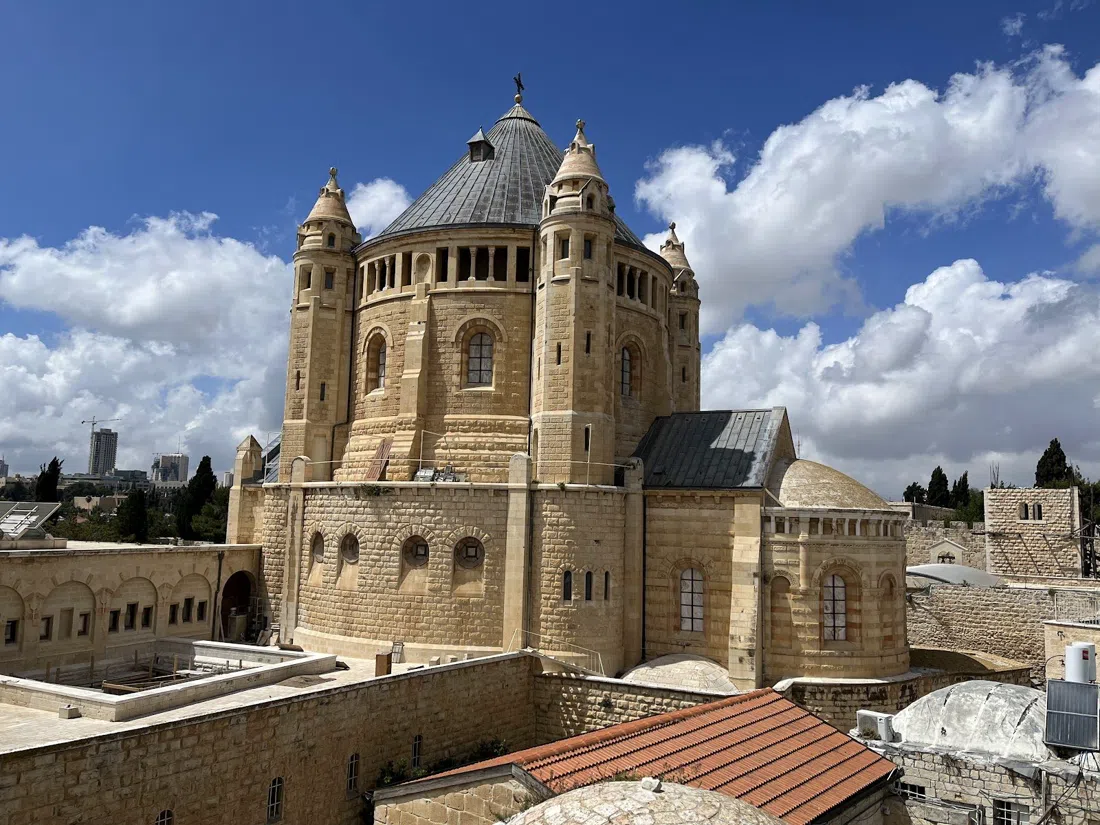
Dormition Abbey (Hagia Maria Sion, to minutter utenfor Zionsporten) er den naturlige forlengelsen: et grått klokketårn i tysk benediktinsk stil med kjegleformet tak på Sionsfjellet, over en rund kirke med en Madonna-mosaikk i gull og blått i apsis, og en krypt som rommer Marias liggende figur i stein og elfenben. Det er åpent mandag til lørdag 09:00 til 17:00 og søndag ettermiddag, med en middagspause enkelte perioder av året. Grupper tas imot gratis, gaver er velkomne, og du dekker skuldre og knær og holder stille inne.
Hvor lang tid det tar, og hva du bør bestille på forhånd
En halv dag er den ærlige rammen: murene, smuget, vinduet i katedralen og et måltid. Det faste tidspunktet er 15:00, og bymurene må komme før det. Det dannes ingen køer her, for de fleste dørene er gratis, og de to stedene som selger billetter, gjør det ved inngangen.
Dørene du ikke kan åpne samme dag, er biblioteket, som krever avtale på e-post, og klosteret, som krever tillatelse fra patriarkatet. Guidede halvdagsturer i Gamlebyen går seks dager i uken, mandag til fredag og søndag, og plattformen som selger den best vurderte turen, merker den som sannsynligvis blir utsolgt, så bestill i god tid når datoene dine er faste.
Beste tidspunkt å dra
Kom på ettermiddagen, og la vinduet for aftensangen bestemme timeplanen din. Start på murene, ta en tur inn i smuget, og spar kvartalets to spisesteder til etter gudstjenesten, når veien igjen tømmes for folk.
Fredag er den tettest pakkede dagen i uken: bymurene stenger tidligere, museet stenger midt på ettermiddagen, og Bulghourji slutter også å servere da. Lørdag tar Bulghourji helt ut av planen og forkorter St Mark's. Søndag gir deg ingen morgen på museet, så gå veien først og besøk citadellet senere. Rundt seremoniene på langfredag åpner Oliventreklosteret seg mer, og det er den ene datoen i året da det er fornuftig å planlegge rundt gården.
Hvem halvdagen passer for
Den passer for en besøkende som har en ettermiddag å bruke i ro, som vil kle seg tildekket, holde seg stille gjennom en gudstjeneste og godta at flere dører forblir stengt. Til gjengjeld får du et tomt smug av stein, utsikt ned i gårdsplasser som ingen fotograferer fra gaten, og 30 minutter i en katedral lyst opp av oljelamper.
Praktiske opplysninger
Bulghourji holder stengt på lørdag, museet stenger midt på ettermiddagen fredag og lørdag, og bymurene stenger før katedralen åpner. Send e-post til biblioteket, ordne klosteret gjennom patriarkatet, ring Armenian Tavern og keramikkverkstedet, og bestill museums- og kirkebesøk for grupper på forhånd. Se Jerusalem-guiden og hotellsøket for Jerusalem.
Hoteller i Jerusalem
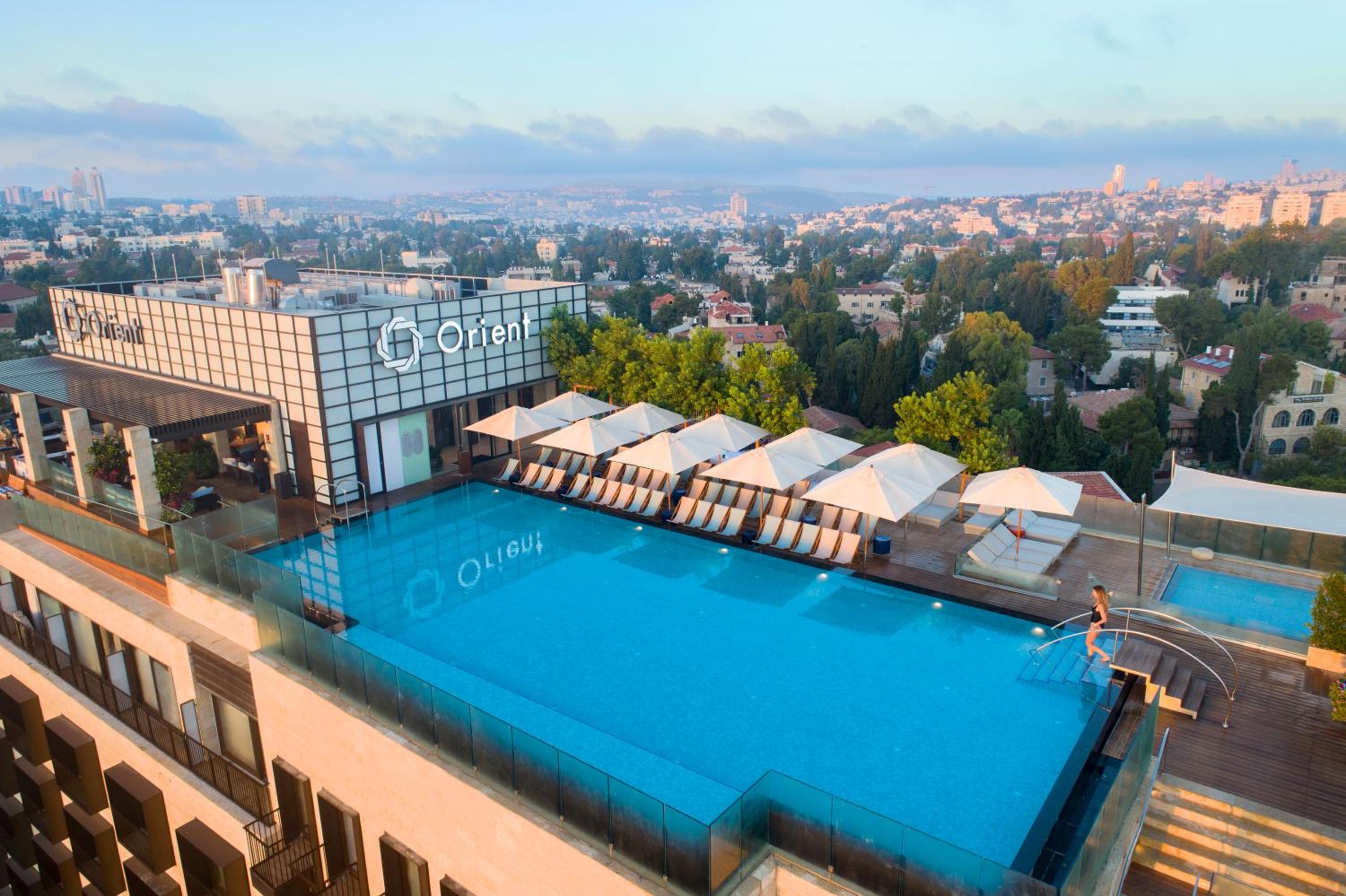
Orient by Isrotel Exclusive
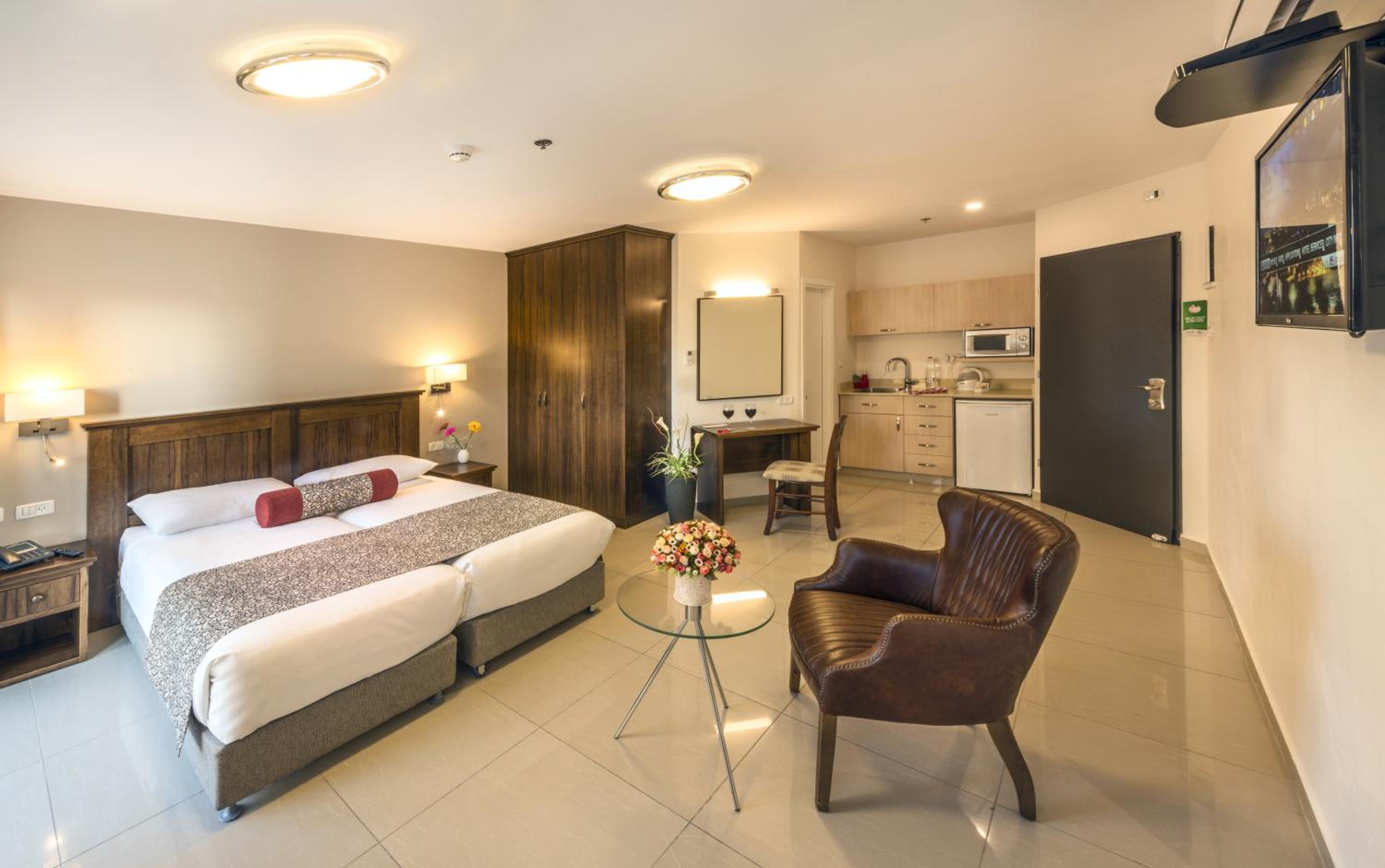
City Center Jerusalem
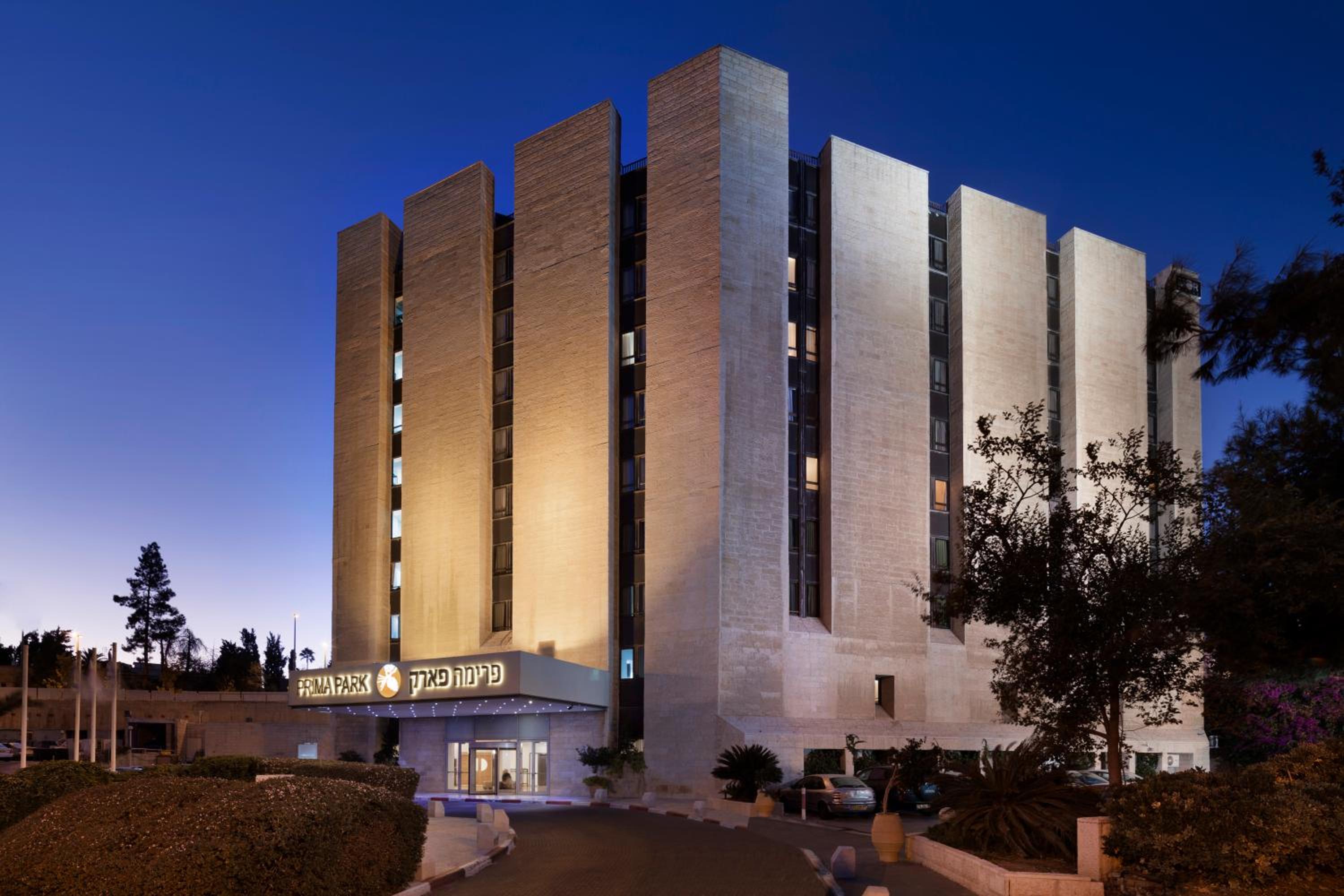
Prima Park Hotel Jerusalem
Vanlige spørsmål
Kan besøkende gå inn i katedralen St James?
Katedralen slipper utenforstående inn til aftensangen kl. 15:00, med dørene åpne fra 14:45 og gudstjenesten til 15:30. Publiserte åpningstider oppgir også mandag til fredag og søndag 06:30 til 07:30 og lørdag 06:30 til 09:20. Beskjeden kledning kreves, kvinner dekker hodet, og stillhet forventes. Små grupper er velkomne på disse vilkårene; bussgrupper er ikke ønsket.
Koster det noe å besøke det armenske kvarteret?
Armenian Patriarchate Road, katedralen St James under aftensangen, St Mark's, Zionsporten, Goveroun Bardez og Dormition Abbey koster ingenting, selv om St Mark's forventer en gave. Du betaler to steder: den søndre Ramparts Walk, ₪25 for voksne, ₪15 for barn, studenter og seniorer, og ₪18 per person i grupper på 20 eller flere; og Tower of David Jerusalem Museum, ₪55 for voksne, ₪44 for studenter og ₪35 for barn i alderen 5 til 18 år.
Hvor lang tid tar turen, og når bør jeg starte?
Ein halv dag. Vinduet i katedralen kl. 15:00 er det eneste faste punktet, så bygg ettermiddagen rundt det og gå på bymuren først; ruten tar 45 minutter og stenger midt på ettermiddagen, tidligere på fredager.
Må jeg bestille en guidet tur, eller kan jeg gå den alene?
Gatene er offentlige og gratis å gå i uten guide. Guidede halvdagsturer i Gamlebyen går seks dager i uken, mandag til fredag og søndag, og den best vurderte har en advarsel om at den sannsynligvis blir utsolgt, så bestill i god tid hvis datoene dine er faste. Du trenger også en guide for Oliventreklosteret, som krever forhåndstillatelse fra det armenske patriarkatet.
Er ruten tilgjengelig for rullestol eller barnevogn?
Ramparts Walk passer ikke for rullestol, barnevogn eller for den som er ustø på ujevne trappetrinn. Tower of David Jerusalem Museum er stort sett tilgjengelig etter renoveringen, mens Armenian Tavern ligger nede for en bratt steintrapp.
Skrevet av
Inês Almeida
One city, four quarters
Inês has led walking routes through all four quarters of the Old City and out to Ein Karem and the Mount of Olives for fifteen years. She writes about pacing a first visit — when to book the Western Wall tunnels, which Nachlaot lanes to get lost in, and how to fit Yad Vashem in without wrecking the rest of the day.