Colossi of Memnon
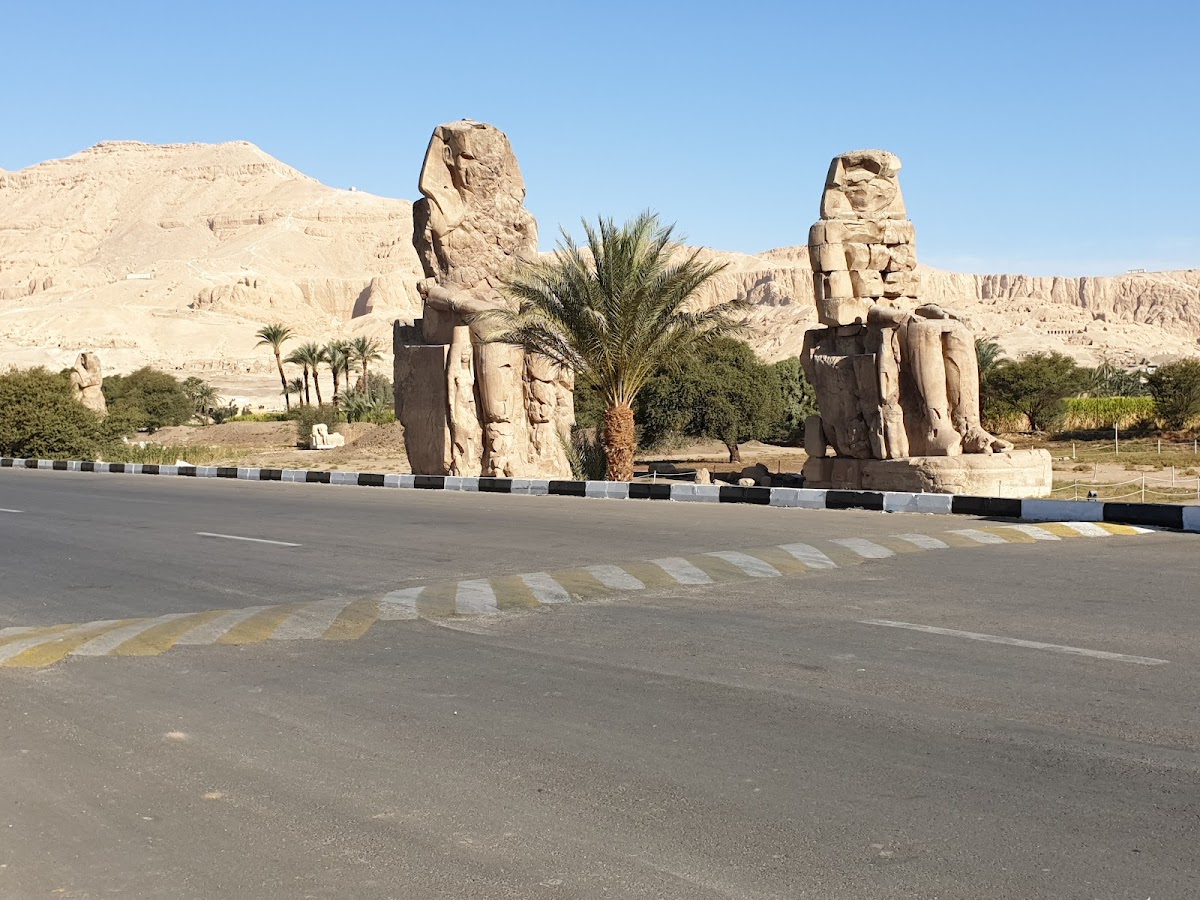
Duas estátuas de pedra monumentais do faraó Amenhotep III que estão de pé nos campos agrícolas da Margem Oeste há mais de 3.400 anos.
Entrada gratuita. Uma parada rápida e valiosa à beira da estrada, a caminho das tumbas.
Mais em Margem Oeste - Gurna
Marsam Restaurant
Instalado no pátio de um hotel histórico, serve legumes orgânicos colhidos diretamente em fazendas vizinhas da Margem Oeste.
O que pedir: Moussaka vegetariana de legumes assada lentamente
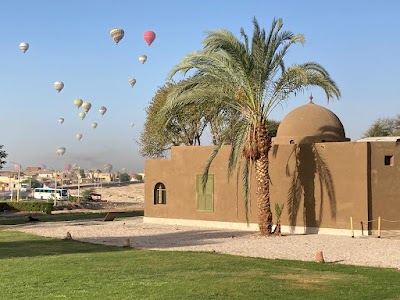
Carter's House
A residência de adobe com cúpula onde Howard Carter viveu durante sua busca pela tumba de Tutancâmon, preservada com seus móveis, ferramentas e câmara escura fotográfica originais.
Dica: Localizada perto da entrada do Vale dos Reis. Uma parada tranquila e evocativa.
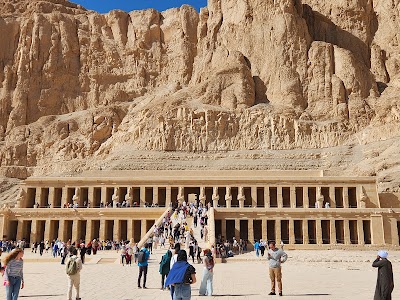
Valley of the Kings
O local de sepultamento dos faraós do Novo Reino do Egito, onde tumbas profundas escavadas na rocha exibem relevos pintados originais e incrivelmente vibrantes.
Dica: O ingresso padrão inclui a entrada em três tumbas. As tumbas de Tutancâmon, Seti I e Ramsés VI exigem ingressos extras.
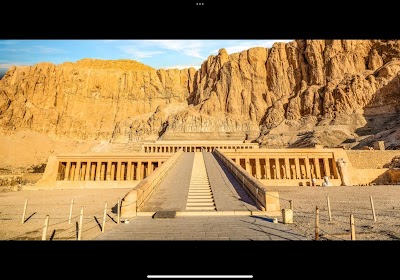
Temple of Hatshepsut
Um deslumbrante templo em três terraços, construído diretamente nas altas falésias de calcário de Deir el-Bahari.
Dica: Muito exposto ao sol; leve água e um chapéu.
Onde fica
Avaliações
One of the most striking places on the Western Bank of River Nile in Luxor in Upper Egypt is the ‘Colossi of Memnon.’ My partner and I visited it on December 20, 2025 (Saturday) while on our way from the ‘Mortuary Temple of Hatshepsut’ to the ‘Karnak Temple Complex.’ We got down from our vehicle and admired the twin statues of Pharaoh Amenhotep III. Although the ‘Mortuary Temple of Amenhotep III,’ which once used to be the largest temple in Luxor, is no longe existent, these statues tell the tale of a time long forgotten, and deeply buried in both history and folklore!
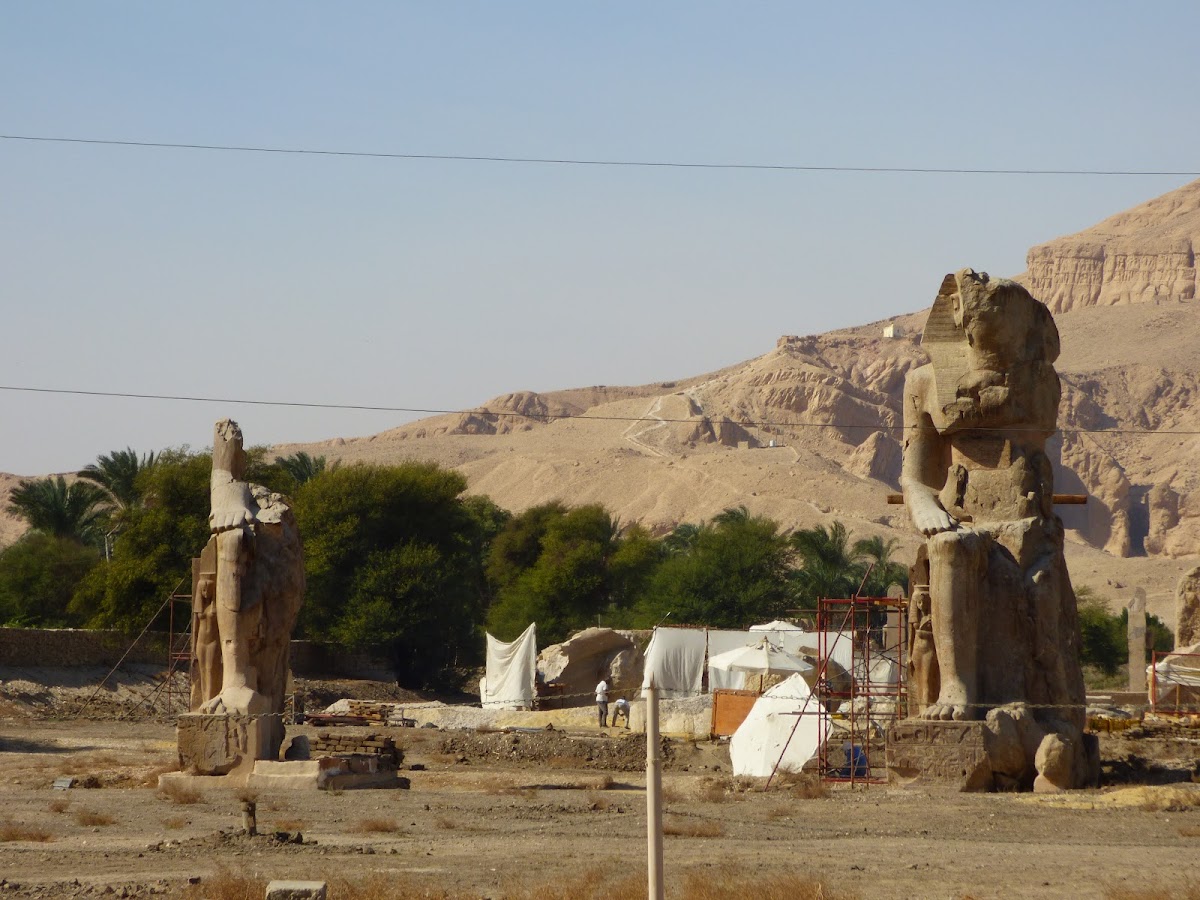
Quick stop on the way to the hotel air balloon rides. There was a bathroom across the road which was decent. Nice to see a statue in its original location with no tourist stuff around. Its also free to see. There's also an excavation currently going on behind the statues so that was cool to see in person.
The Colossi of Memnon are two monumental statues that stand as silent guardians on the west bank of the Nile near Luxor. Carved from quartzite sandstone around 1350 BCE, these statues originally flanked the entrance to the mortuary temple of Amenhotep III, one of Egypt’s most powerful pharaohs of the 18th Dynasty. Each statue rises about 18 meters (60 feet) high, depicting the seated king with his hands resting on his knees. These statues are in their original location and is free to visit. Currently there are some excavation nearby the statues.
The Colossi of Memnon stand in silent majesty, two ancient guardians watching over the desert for more than three thousand years.
As avaliações são do Google. Ver a ficha no Google Maps.