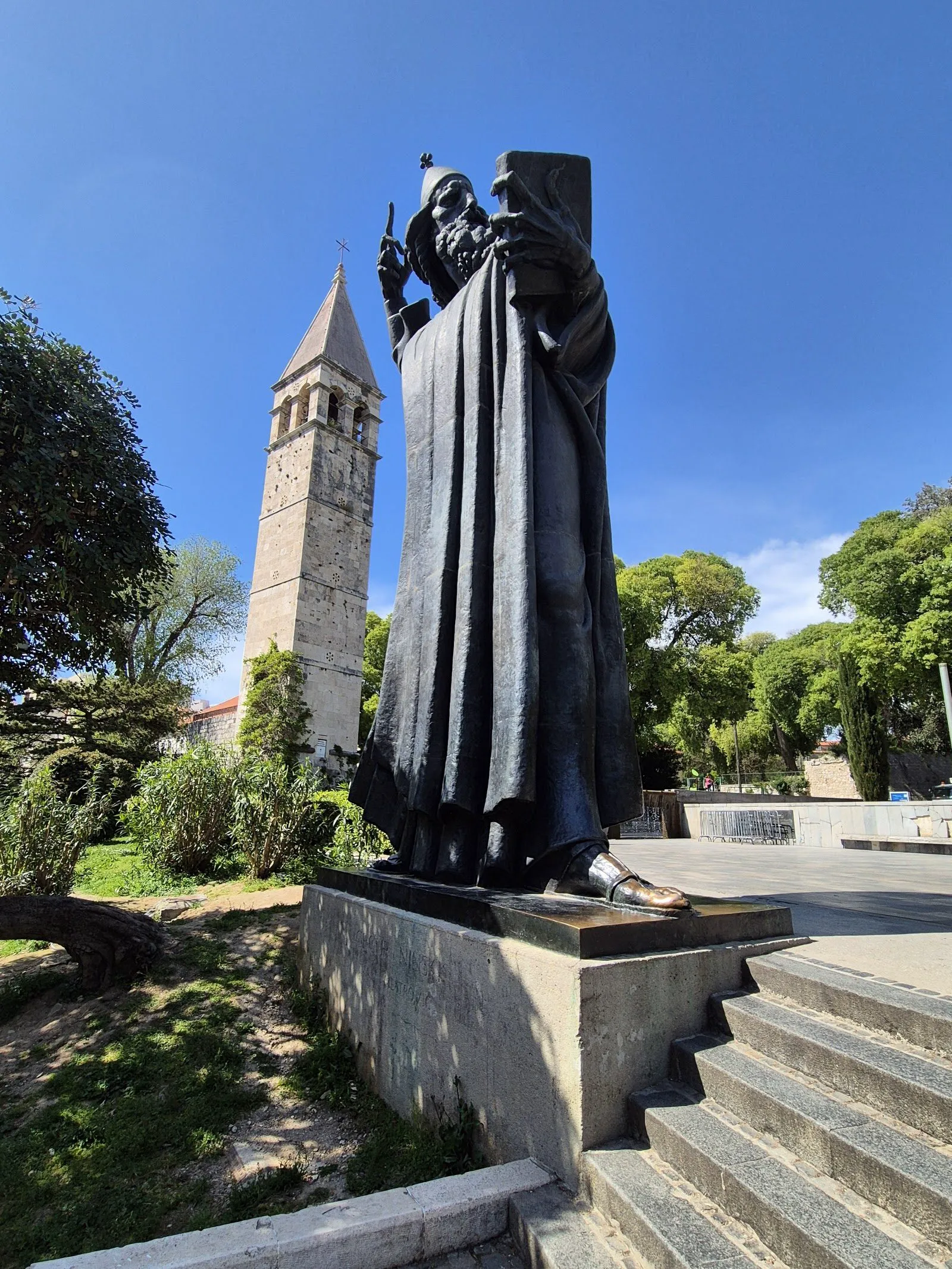
Gregory of Nin's left big toe sits at knee height on an 8.5-metre bronze bishop, rubbed to a bright gold shine by the hands that reach it. The figure stands in a small palm-and-pine park outside the Golden Gate, with the pale Roman limestone wall of Diocletian's Palace directly behind. Ivan Meštrović made it in 1929; it was moved here in 1954 and restored between 2013 and 2015.
What you see at the statue
The bronze has blackened everywhere except that one toe. Gregory of Nin Statue (Grgur Ninski, in the park outside the Golden Gate) shows the bishop in his mitre, one hand raised with a pointing finger, a book held in the other. He won the right to use Croatian in the liturgy, which is why Split stood him at the emperor's front door.
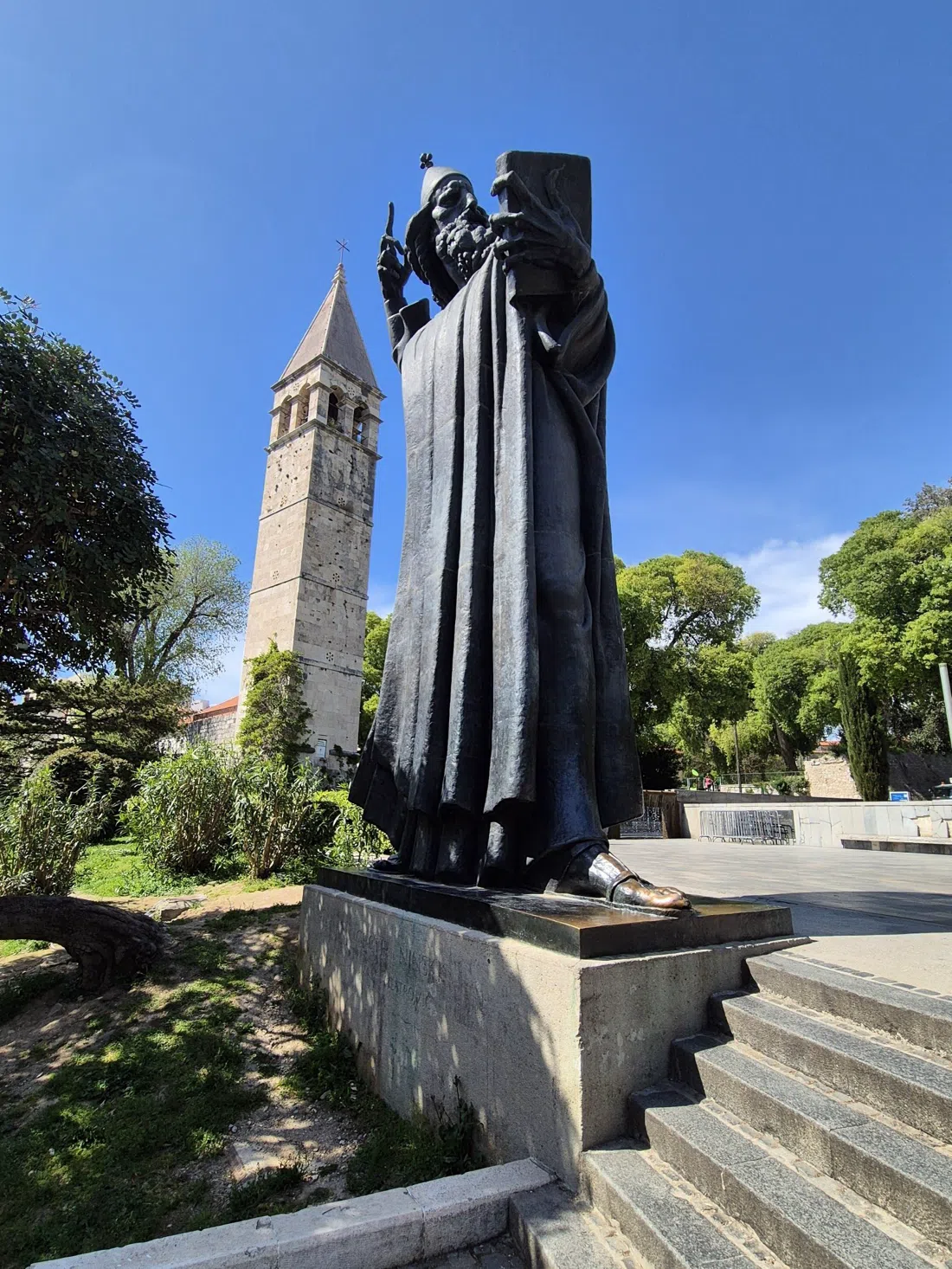
The park has no door and no ticket. Coach and walking groups assemble here constantly, and the toe itself is a single-file queue, so a large party bunches up while everyone takes a turn. Come back in 10 minutes if it is banked up; nothing closes behind you.
The Golden Gate and the chapel above it
Thirty seconds from the statue, the Golden Gate (Zlatna vrata, the palace's north wall) is a monumental arched Roman gateway in pale limestone. A row of empty statue niches and small brick relieving arches sit above the opening, and the stub foundations of two flanking octagonal towers remain at ground level. A cobbled lane runs through it into the old town. This was the emperor's ceremonial north gate. It is free and open 24 hours.
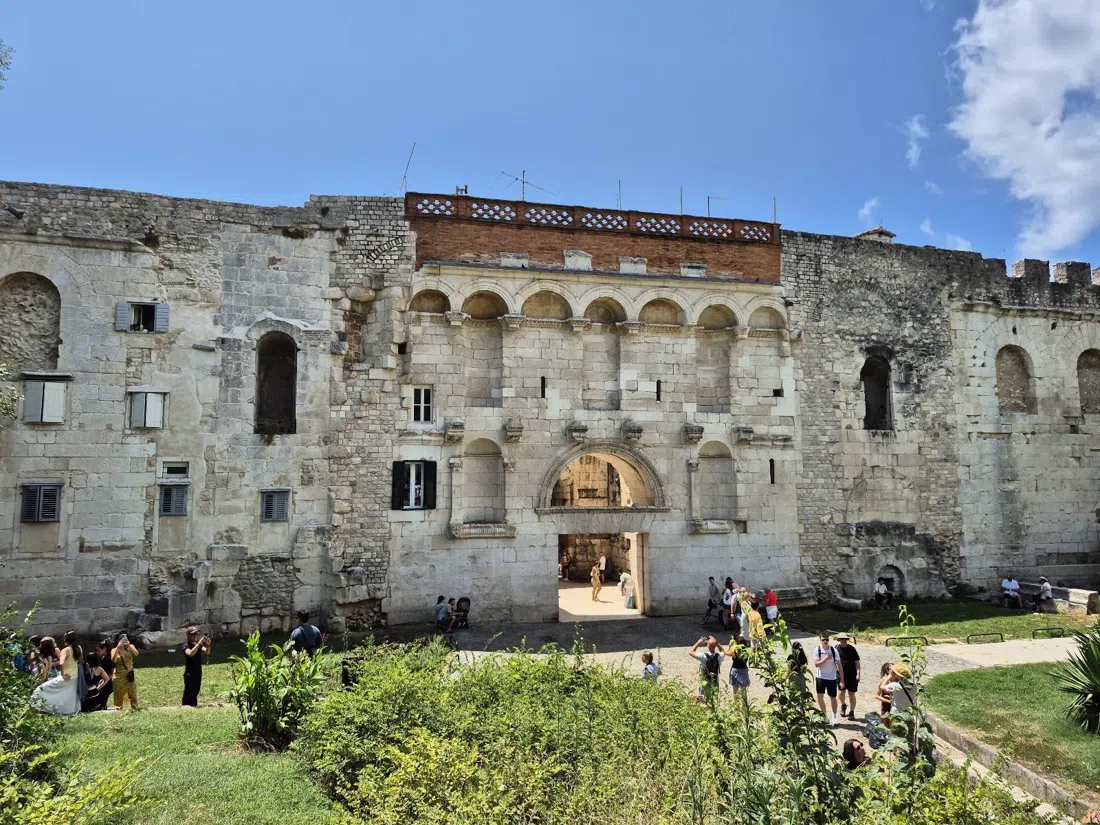
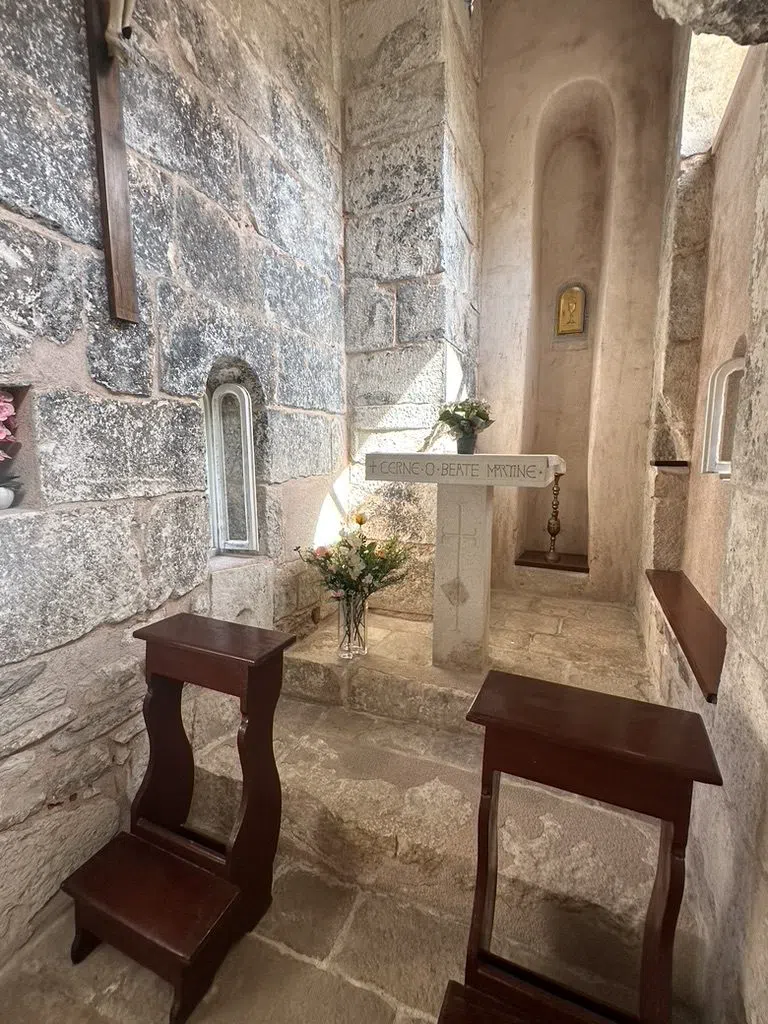
Directly above the gate, the Church of St Martin (Crkva svetog Martina, Majstora Jurja street) is a chapel 1.64 metres wide, carved out of the guards' walkway inside the palace wall. You enter through the Dominican sisters' convent and climb a staircase inside it. The altar screen is 9th-century, covered in plaited Croatian interlace carving, under a low barrel vault lit by narrow slit windows. Entry is €1 to €2. It holds only a handful of people at a time, so a group goes in shifts. Hours are short and depend on the nuns, mornings and mid-afternoon, which makes this a bonus rather than a fixture in your plan.
Kralja Tomislava, one minute away
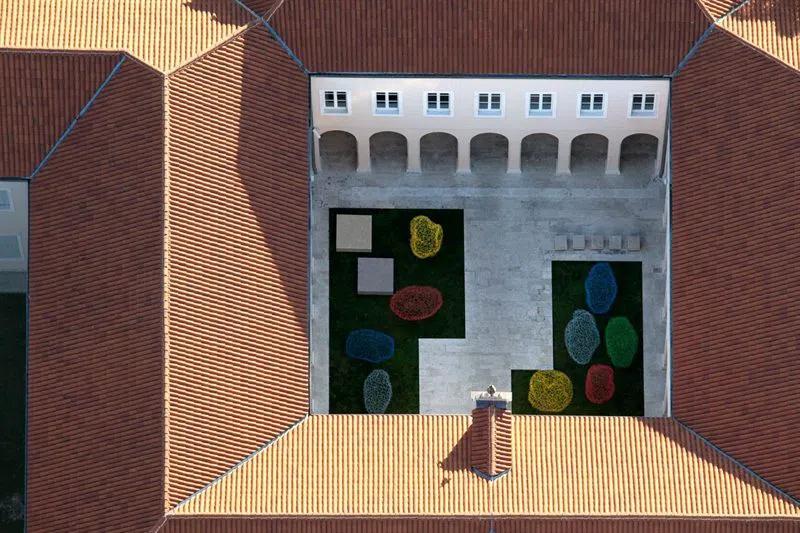
The Gallery of Fine Arts (Galerija umjetnina Split, Kralja Tomislava) is a minute's walk from the statue, in a converted 19th-century Austro-Hungarian hospital with a long stone facade. Inside are white modern halls holding work from the 14th century to the 1960s, an inner courtyard, and windows looking straight at the palace's north wall. Admission is €3 to €5, with a €3 rate for students, pupils and seniors. It closes on Saturdays and Sundays at 14:00.
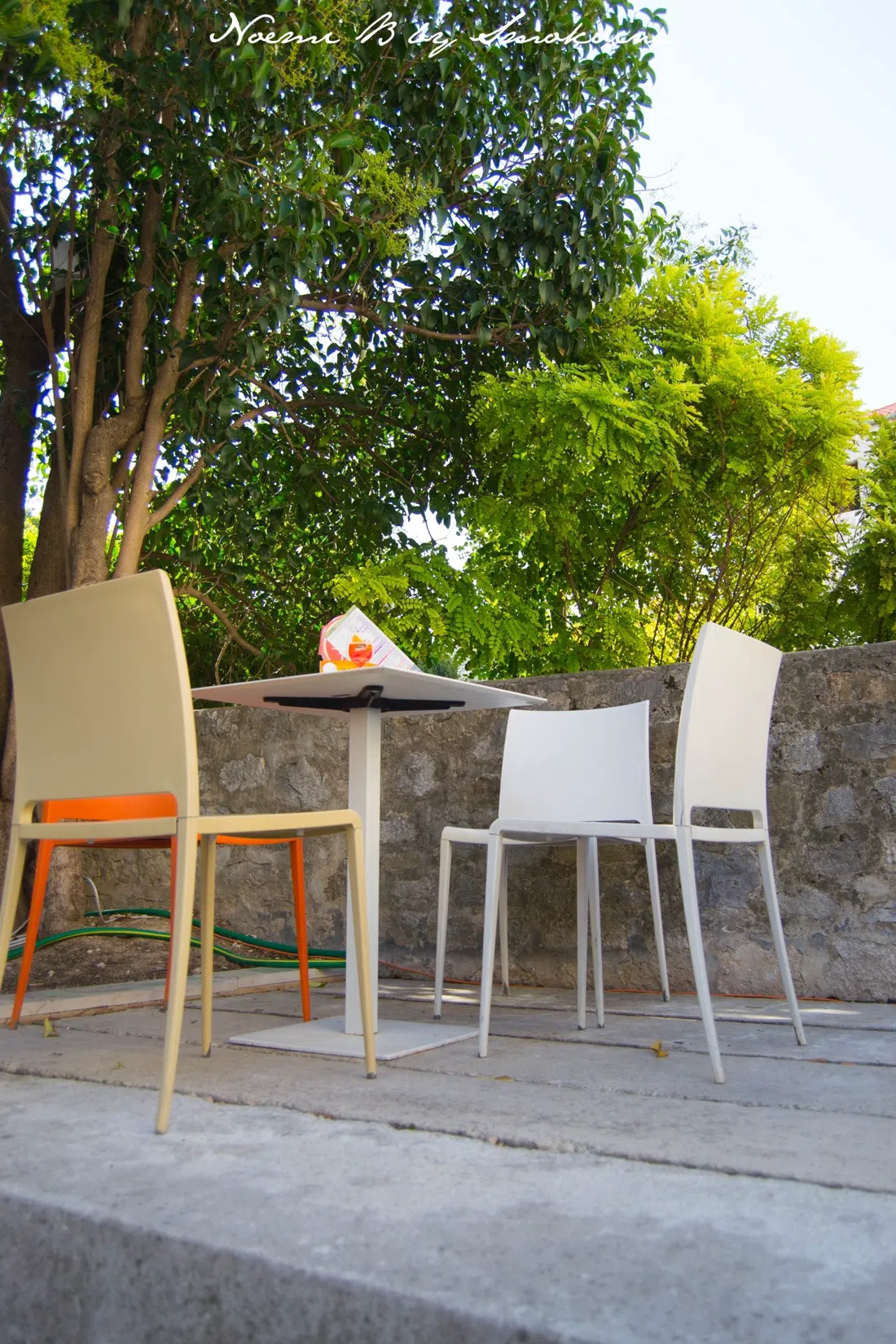
Art Gallery Caffe & Music Bar (Kralja Tomislava 15) sets its tables under a shaded awning along a narrow stone street facing the raw Roman north wall, with the St Domnius bell tower rising over the rooftops behind. It runs daily from 08:00 to 00:00 at €€, and turns to live bands and DJs after dark. The food is inconsistent. Order the coffee and sit with the wall you have just been reading about.
Froggyland (Kralja Tomislava 5) is almost next door to the statue. Behind the glass are 507 hundred-year-old taxidermy frogs in tiny waistcoats, posed across 21 dioramas. One is a schoolroom, one a barbershop shave, one a dentist pulling a tooth, one a gymnastics class. Entry is €13 to €15 and the rooms take 15 to 30 minutes, which is the right length for children who have had enough Roman stonework.
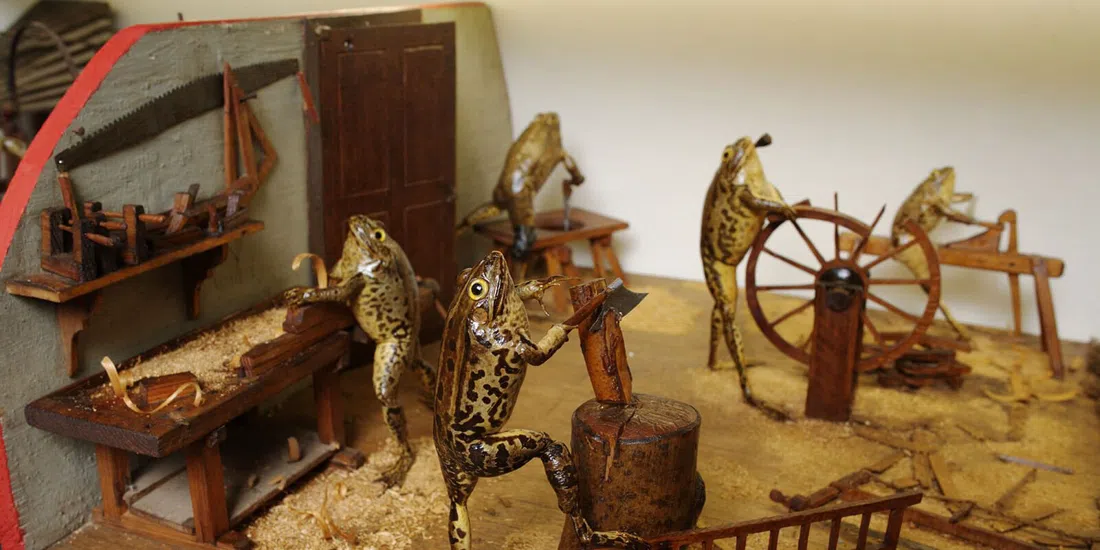
Inside the palace walls
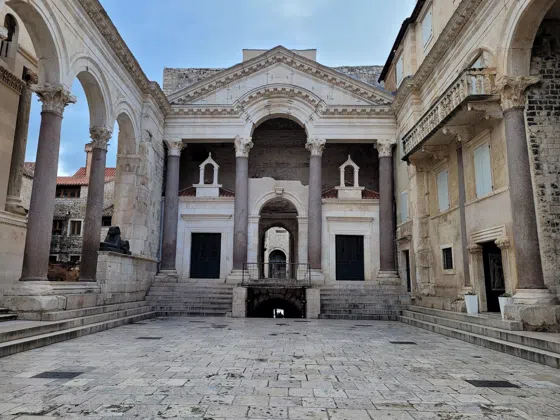
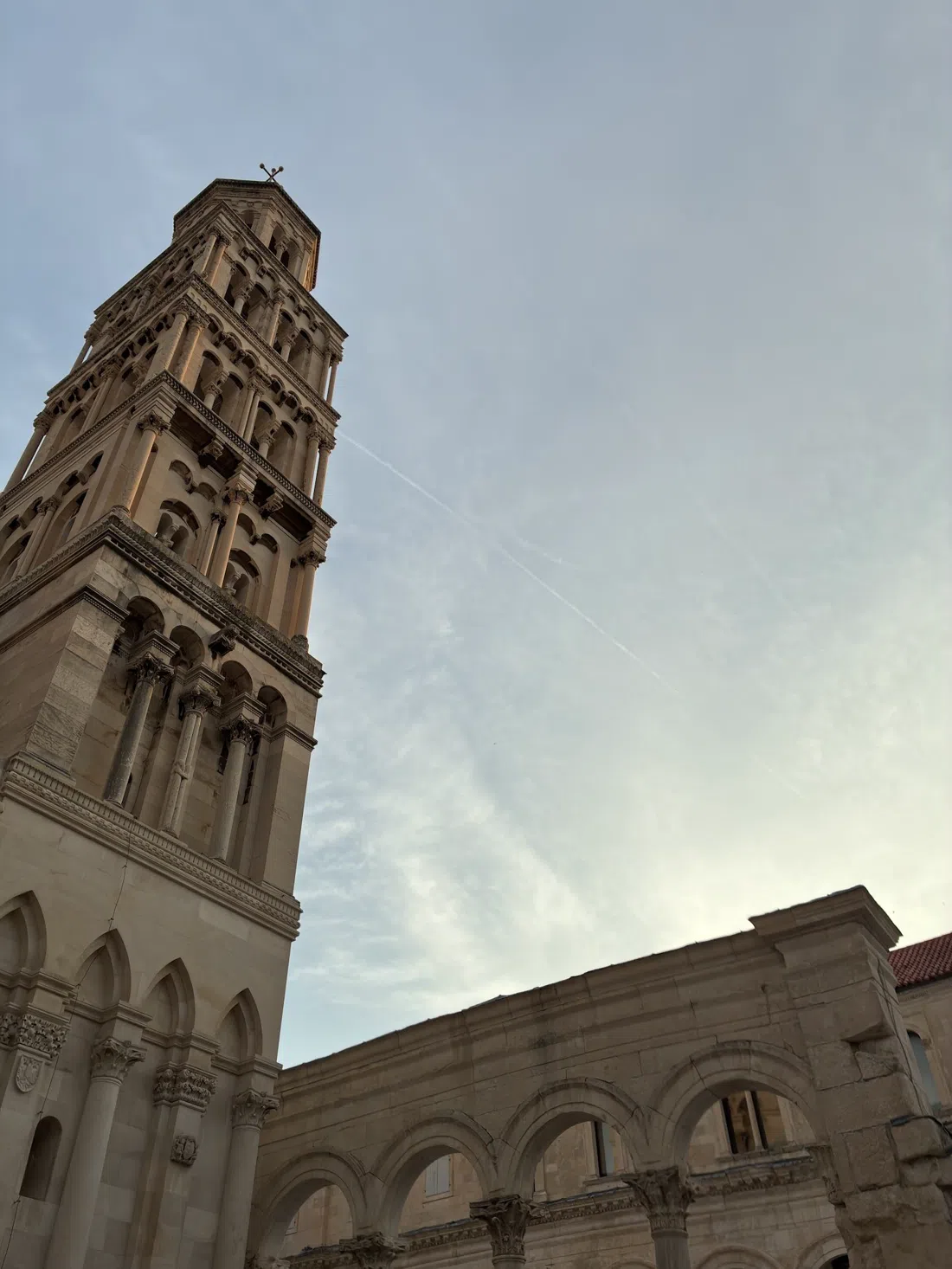
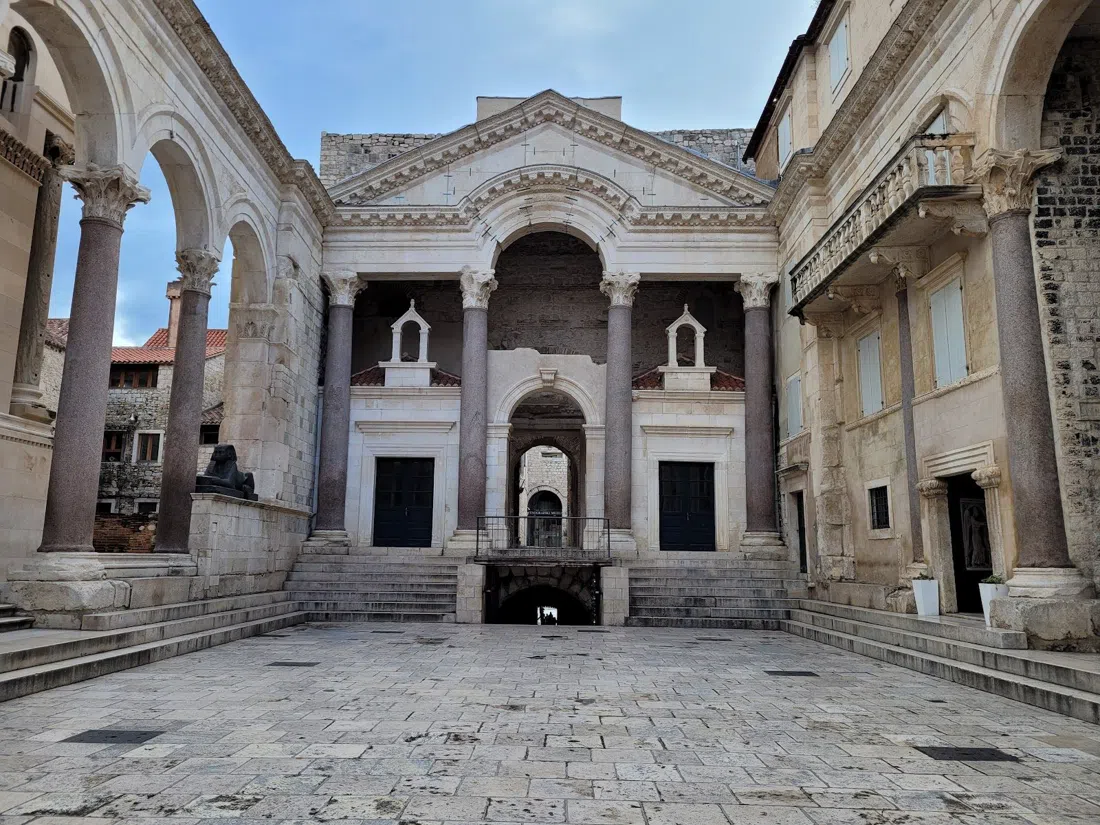
Walk through the gate and the lane brings you to the Peristyle (Peristil), the emperor's ceremonial courtyard, colonnaded in red Egyptian granite with a black granite sphinx from Egypt on a plinth and the cathedral's Romanesque bell tower filling the sky above. In summer red velvet cushions lie scattered on the ancient steps. Klapa a cappella singers work the stone acoustics and a tip of €1 to €2 is appreciated. It is free and open 24 hours, and several walking groups usually share it.
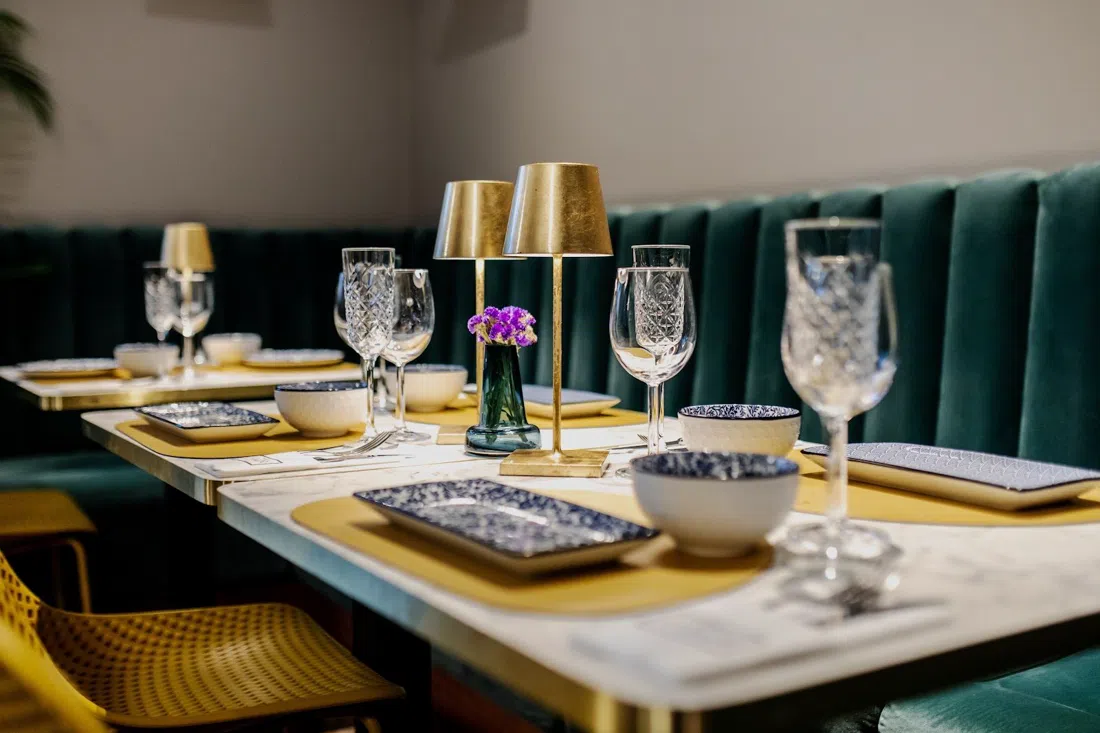
Café Lvxor (Lvxor Kavana, on the Peristyle) is the café whose seating is those red cushions laid directly on the worn Roman steps, facing the cathedral across the colonnade. Behind it sits a brass-and-dark-wood interior, with trays of coffee carried out across the stone. Coffee runs by day and wine after dark at €€, above Split's going rate per cup. Table service slows when the steps fill.
The Cathedral of St Domnius (at the west end of the Peristyle) is Diocletian's octagonal mausoleum turned into a church, ringed by columns, with the carved wooden Buvina doors at its entrance and a 57-metre Romanesque bell tower beside it. The tower is 173 steps of open stone-and-metal stair spiralling up to a railed belfry over terracotta rooftops. You buy tickets at the west end of the Peristyle. The bell tower alone is €7; cathedral, tower and treasury together are €12, and all five sights €15. Staff enforce modest dress at the door, shoulders and knees covered, no beachwear. Allow 30 minutes for the tower. The stair is single-file with two-way traffic, the climb is hot and exposed, and anyone shaky on stairs should stay below. This is the one real queue in the area.
A few paces on, the Vestibule of Diocletian's Palace (Vestibul) is the emperor's entrance hall, a circular domed rotunda stripped back to bare brick. Its roof is gone, leaving a clean round oculus of open sky overhead and four deep niches in the drum walls. Voices ring hard off the stone, and guides bring groups in precisely for that. It is free, open at all hours, and a two-minute stop that self-guided visitors walk straight past.
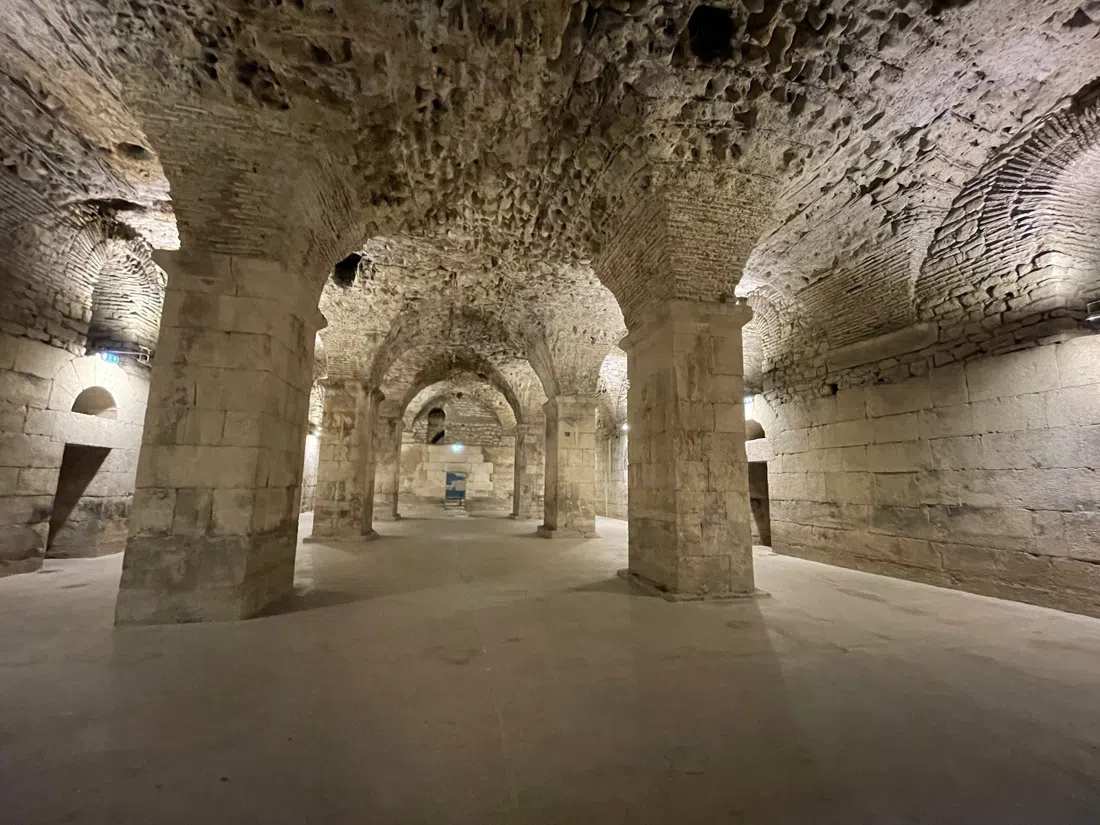
The Substructures of Diocletian's Palace (Podrumi) are vast vaulted underground halls of rough limestone, squat pillars and damp arches holding up the emperor's apartments above, with archaeological fragments laid out in the side wings. The ticketed eastern and western wings cost €10 and open 08:00 to 20:00 from April to October, with reduced winter hours. The central corridor that everyone walks through is free, lined with souvenir stalls and always busy. Be clear on the difference before you pay.
The two museums that explain the city
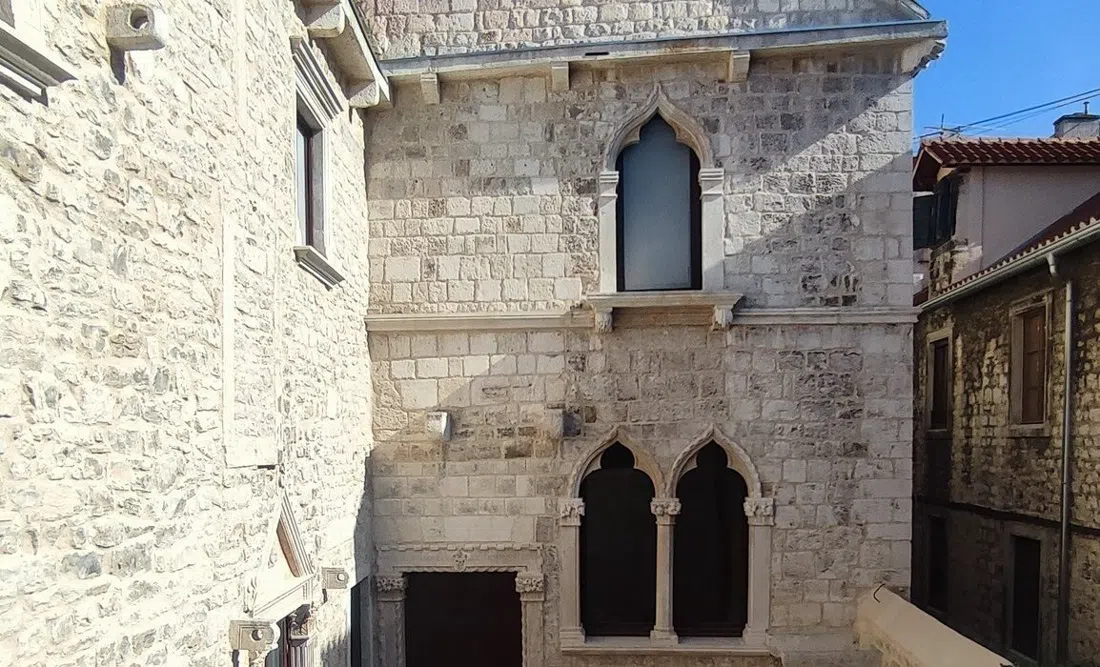
The Split City Museum (Muzej grada Splita, Papalićeva 1) fills the Grand Papalić Palace, a Gothic-Renaissance townhouse with a lacy carved Gothic triforium window on its facade and a small stone courtyard holding a well and an open loggia. Three floors carry stonework, weapons, paintings and ceramics. It answers the question every walking route raises, which is how a Roman retirement compound became a medieval city. Entry is €5, Tuesday to Sunday 10:00 to 18:00, last entry 30 minutes before close.
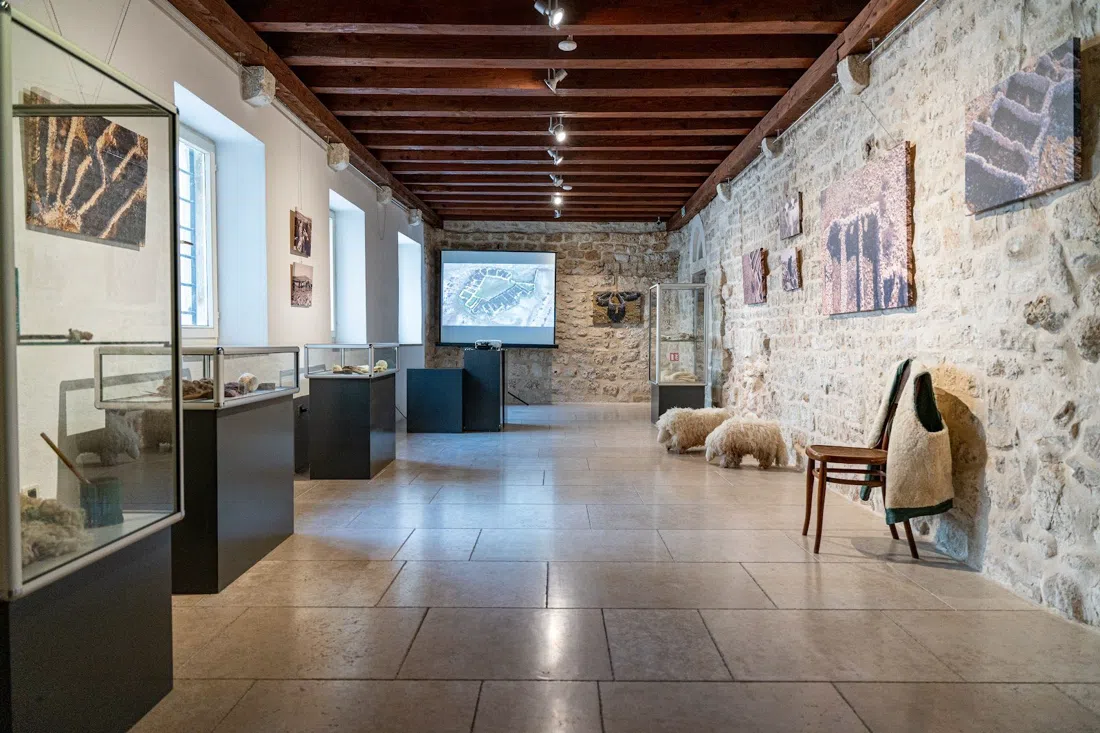
The Ethnographic Museum Split (Etnografski muzej Split, inside the palace) runs rooms of embroidered Dalmatian folk costume, gold-threaded headscarves and silver jewellery, then puts you on a reconstructed Roman staircase up to a Renaissance rooftop terrace. From there you look down on the open dome of the Vestibule, across at the bell tower and out to the sea. Entry is €7 and the Split Card covers it. The terrace is the cheapest rooftop view inside the palace and far fewer people queue for it than for the bell tower.
The market by the east wall and the Marjan terrace
Pazar (Split Green Market, against the palace's eastern wall) is five minutes from the statue, rows of open-air stalls under green and white umbrellas. Crates of figs and tomatoes, strings of garlic, jars of honey and bottles of olive oil fill them, and traders call across the aisles. Walking through costs nothing and the market trades daily from 06:00 to 14:00. The aisles are tight and stallholders prefer cash.
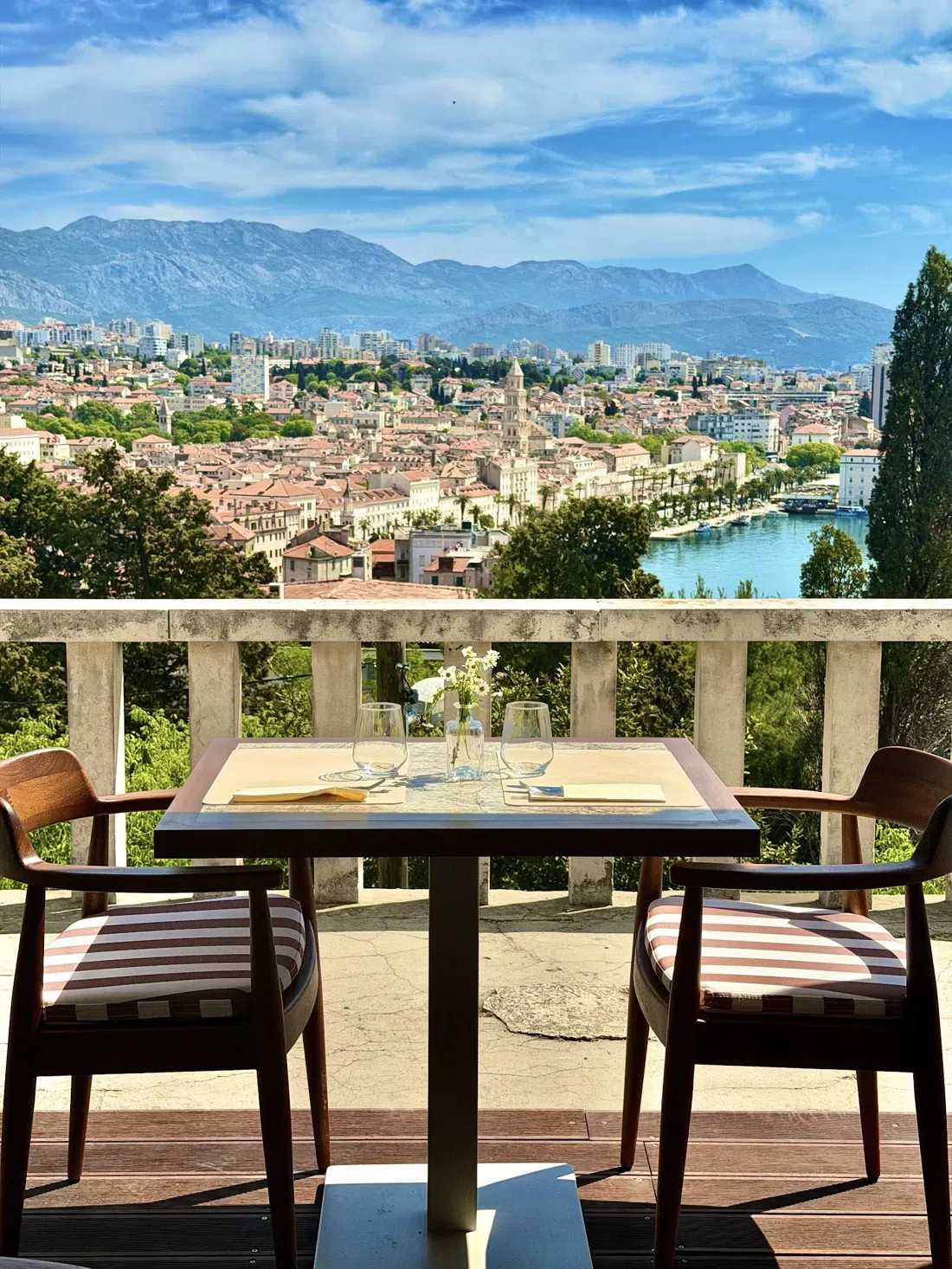
Teraca Vidilica (Prva vidilica na Marjanu, top of Marjan hill) is a stone terrace café under pine shade at the top of 295 steps. The whole old town spreads out below with the cathedral bell tower, the harbour and the islands beyond, and the 1573 Jewish cemetery sits on the slope just behind. Prices are €€. Reach it by the Marjan stairs from the Riva, or up Plinarska through the Varoš quarter. The climb takes five to 10 minutes and rules out anyone with mobility limits.
The sculptor's own house in Meje
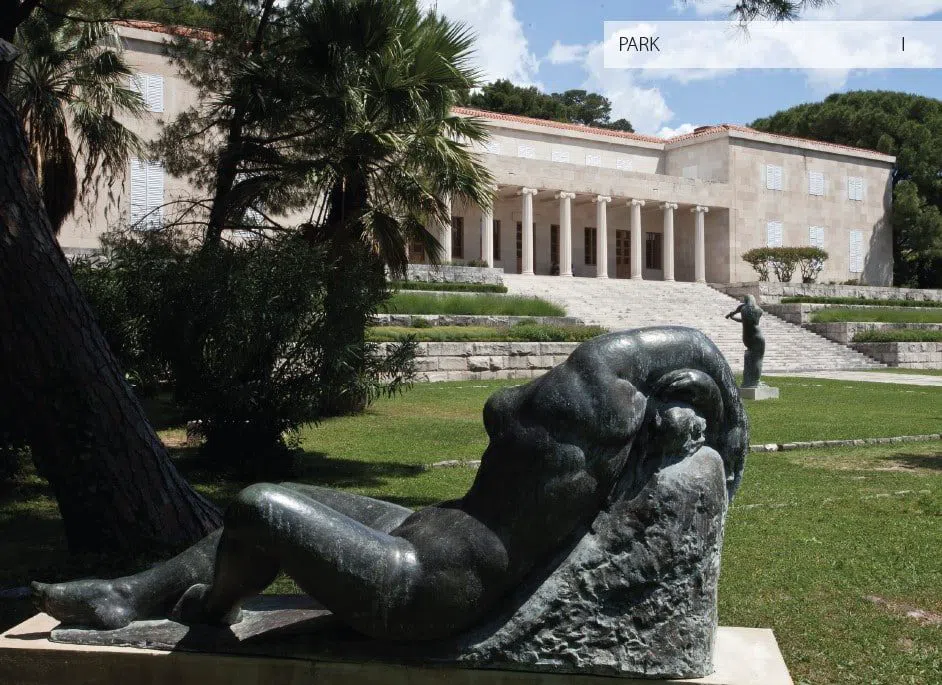
The Meštrović Gallery (Galerija Meštrović, on the Meje seafront) is the grand white villa the sculptor built for himself, tall Ionic columns across the front and a formal terraced garden studded with his bronze and stone figures, the sea beyond. Marble and wood sculptures stand in the light-filled halls inside. Entry is €12 and the same ticket covers his Crikvine-Kaštilac chapel up the road. A docent tour is €50 and a curator tour €120. It opens Tuesday to Sunday with last entry 30 minutes before close, and surcharges of 50 to 100 per cent apply outside hours or on holidays. The walk from the old town takes 25 to 30 minutes, or you can take a bus.
Walking tours and booking ahead
A estátua, o portão, o Peristilo e o Vestíbulo não custam nada, e você pode conectá-los sozinho em menos de 10 minutos de caminhada. Um guia lhe dá a explicação do que você está vendo, e as visitas guiadas daqui acontecem sete dias por semana. O passeio mais procurado tende a esgotar, e algumas saídas já estão esgotadas, inclusive as de 1 e 4 de novembro de 2026. As demais datas ainda têm vagas, então defina sua data e reserve com antecedência em vez de aparecer no dia.
Para quem é a estátua
Ela é ideal para quem entra na cidade velha pela muralha norte: é gratuita, de acesso livre, e o dedão fica na altura tanto de crianças quanto de adultos. As atrações pagas ao redor pedem meio dia, paciência para a fila de ingressos na catedral e disposição para escadas.
Melhor horário para ir
Comece no Pazar antes das 09:00, para encontrar os produtos de verdade e os preços de verdade, e depois vá à estátua enquanto os grupos de ônibus ainda estão se organizando. O canto klapa enche o Peristilo e o Vestíbulo do fim da manhã até o começo da tarde, e esse é o melhor momento para estar dentro do palácio. Suba à torre do sino no início do dia ou no fim da tarde, nunca no meio.
O calor do meio-dia pede refúgio no subsolo, nas substruções, que se mantêm frescas e sombreadas. Deixe a Galeria de Belas-Artes para dias de chuva ou para o pior do sol da tarde. Termine no terraço do Marjan, que é justamente para isso que serve a subida.
O inverno muda três coisas. O Froggyland é uma atração sazonal, fechada no inverno e reaberta na primavera de 2026, com horário diário das 10:00 às 21:00, então confirme se ele está em funcionamento antes de recomendá-lo a alguém. De novembro a maio, o Museu Etnográfico funciona de segunda a sexta das 09:00 às 16:00 e aos sábados das 10:00 às 14:00, fechado aos domingos. De novembro a abril, o terraço do Marjan serve apenas café, sem comida.
Informações práticas
Às segundas-feiras e em feriados nacionais ou públicos, fecham a Galeria de Belas-Artes, o Museu Municipal de Split, o Museu Etnográfico e a Galeria Meštrović, e a capela acima do Portão Dourado só abre quando as freiras estão presentes. Reserve sua visita guiada para uma data definida, com antecedência. Veja o guia de Split e a busca de hotéis em Split.
Hotéis em Split
Hotel Ambasador
AC Hotel by Marriott Split
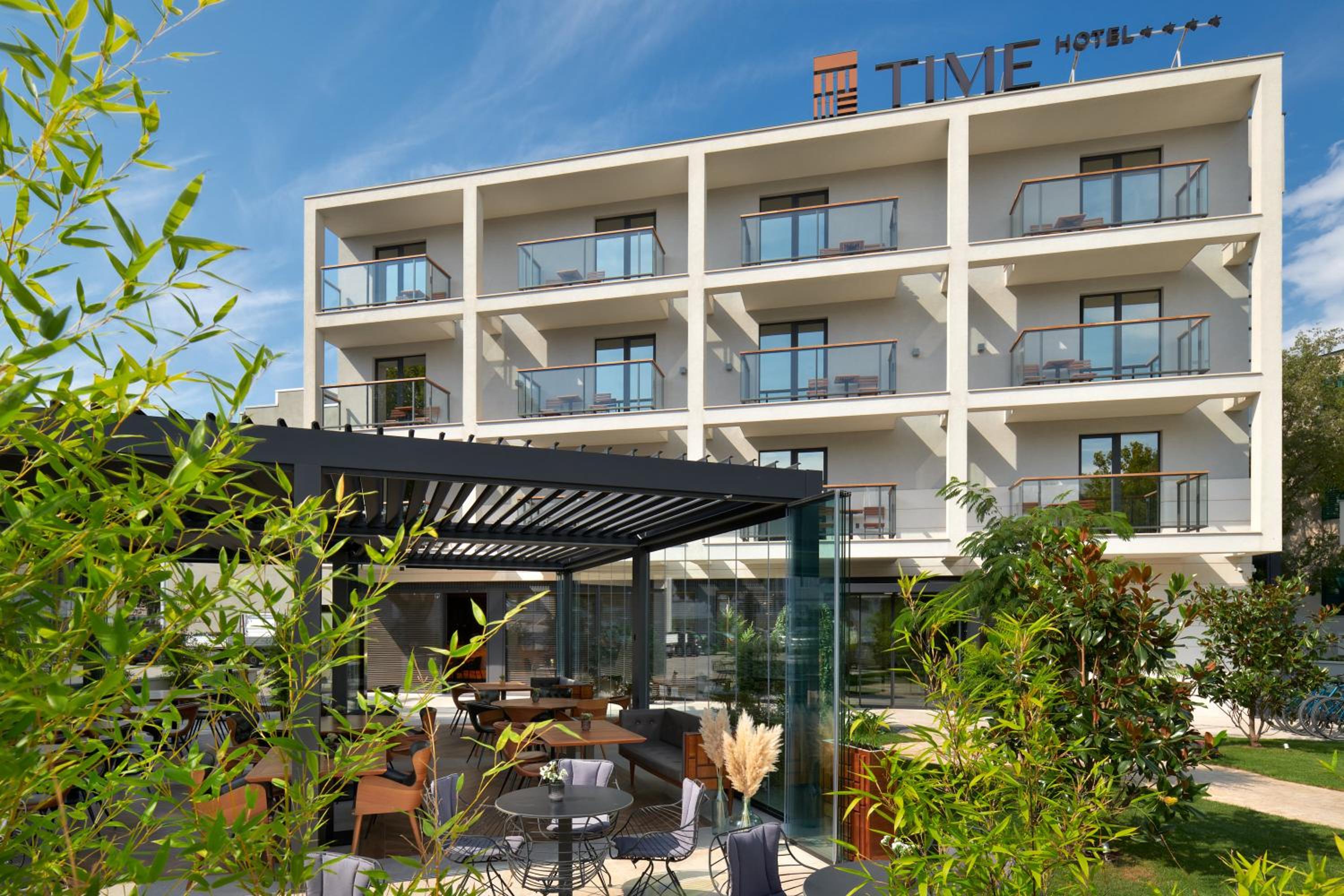
Time Boutique Hotel
Perguntas frequentes
Há ingresso ou fila para tocar o dedão?
Não há ingresso. A estátua fica em um parque público aberto, sem portão e sem nada a pagar. As pessoas formam fila indiana para chegar ao dedão, que fica na altura dos joelhos, e grupos de ônibus e de caminhantes se reúnem na estátua o tempo todo, então um grupo grande logo se aglomera. Se estiver cheio, faça primeiro o percurso pelo Portão Dourado e volte depois.
Quanto tempo devo reservar para a estátua?
Reserve minutos, não horas. Vale combinar a estátua com o que há ao redor: o Portão Dourado fica a 30 segundos, a Galeria de Belas-Artes a um minuto, e o mercado Pazar a cinco minutos. Acrescente a Igreja de São Martinho, logo acima do portão, se os horários curtos da manhã ou do meio da tarde coincidirem.
Preciso fazer uma visita guiada a pé ou posso fazer isso sozinho?
Você pode fazer as paradas gratuitas por conta própria: a estátua, o Portão Dourado, o Peristilo e o Vestíbulo não custam nada e ficam a poucos minutos uma da outra. Um guia lhe conta a história enquanto você está bem ali, diante dela. As visitas guiadas acontecem sete dias por semana, a mais procurada está marcada como provavelmente esgotada, e algumas saídas já estão totalmente lotadas, inclusive as de 1 e 4 de novembro de 2026.
Quem fez a estátua, e onde posso ver mais obras dele?
Ivan Meštrović, em 1929. Sua villa na orla de Meje é hoje a Galeria Meštrović: ingresso de €12, com um jardim em socalcos repleto de suas esculturas em bronze e pedra, além de obras em mármore e madeira no interior. Fica a 25 a 30 minutos a pé da cidade velha, ou a uma viagem de ônibus, e o ingresso também dá acesso à sua capela de Crikvine-Kaštilac.
O que combinar com a estátua se chover ou se o calor estiver forte?
A Galeria de Belas-Artes fica a um minuto de distância, custa entre €3 e €5 e fecha às 14:00 nos sábados e domingos. As alas com ingresso das substruções custam €10 e são frescas e sombreadas. Por €7 você pode subir ao terraço do Museu Etnográfico, onde a fila é bem menor do que na torre do sino da catedral.
Escrito por
Rasmus Holt
City breaks, sights and day trips around Split
Rasmus has spent fifteen years writing Adriatic city breaks and now bases himself in Split between assignments. He covers Diocletian's Palace, the quieter Marjan hill trails most visitors skip, and day trips out to Trogir and the Cetina canyon.