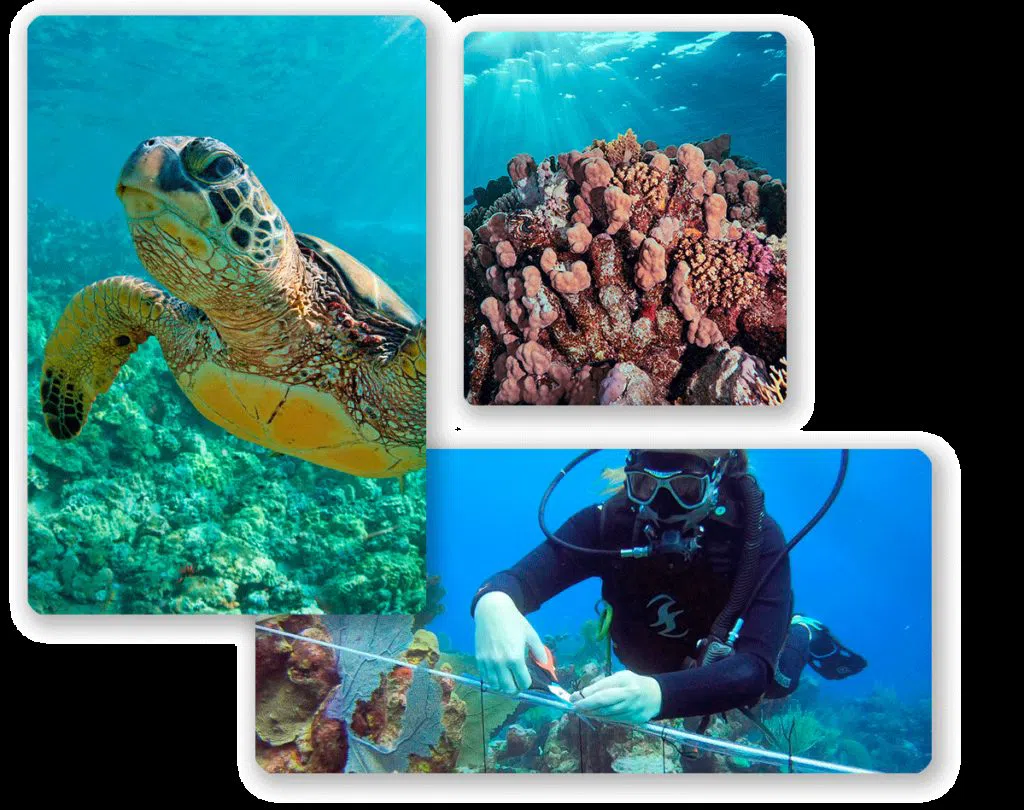
Green turtles graze the seagrass in Akumal bay in 2 to 4 m of water, and the clearest hour is the first one after the beach gate opens. By mid-morning other people's fins have stirred the silt and visibility drops. Cenote Dos Ojos holds its temperature and its visibility across the whole year.
What a cenote and turtle half-day involves
The trip has three parts: a freshwater swim in a cenote, a snorkel over the seagrass where the turtles feed, and lunch on the sand. Each part is a separate place with its own gate and its own ticket. You can assemble it yourself or buy it packaged with a transfer.
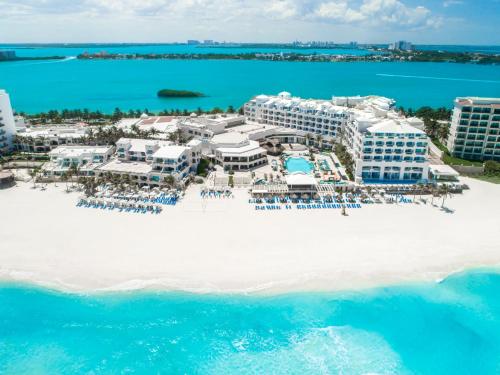
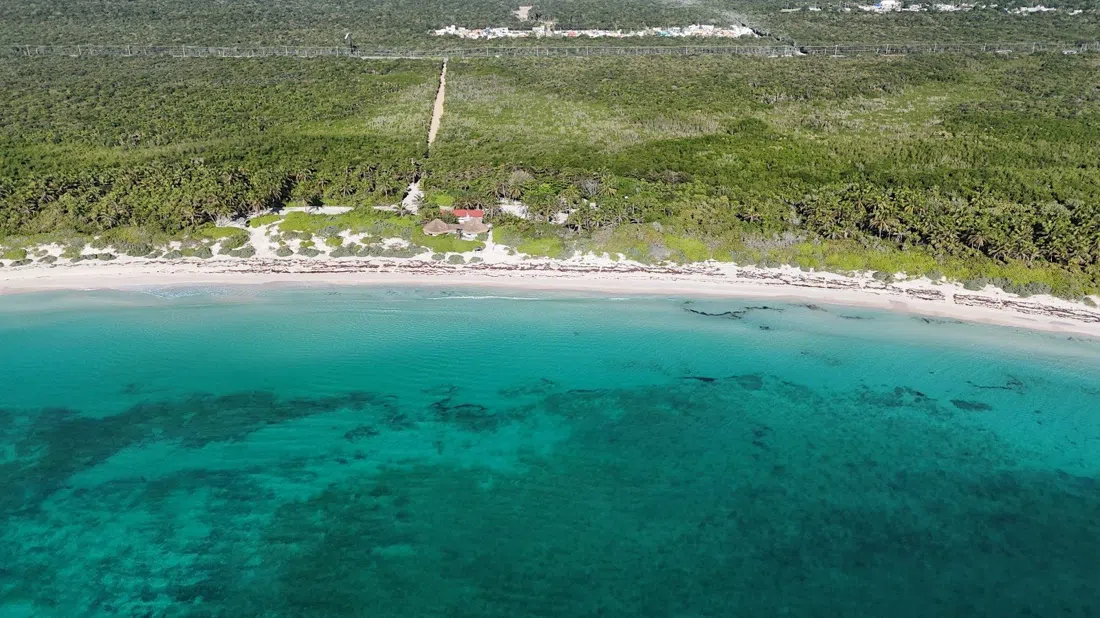
The turtle part happens at Akumal Bay Turtle Snorkel Zone (Bahía de Akumal), a shallow crescent of white sand and clear turquoise water with dark seagrass patches showing through it. An orange buoy line marks the turtle zone. You float the circuit inside that line in a bright life vest, in a cluster of other snorkelers, with low palms and palapa roofs along the shore behind you. The animals are green turtles feeding on the grass, in water shallow enough that you can follow every movement from the surface.
Guides work the buoyed circuit in pods of six snorkelers, and coach parties get split and staggered across the morning. A guided circuit with a vest runs 200 to 350 MXN. The beach gate charges bay and environmental access separately.
Who puts you in the water at Akumal
Centro Ecológico Akumal (Akumal) is the bay's research centre and has no commercial stake in it. The low white-and-turquoise building sits behind the beach under hand-painted turtle murals, with outdoor interpretation panels on seagrass and nesting, staff at a shaded kiosk and sea-turtle shell casts on display. Walking up is free, and a donation box takes what you want to give. The centre runs the nesting monitoring and certifies the bay's guides. It neither sells nor runs snorkel tours, and its own site corrects the sales line that a guide and a vest are legally compulsory for independent snorkelers. Talks and programmes happen by arrangement.
Kan du bara dyka upp, eller behöver du boka i förväg?
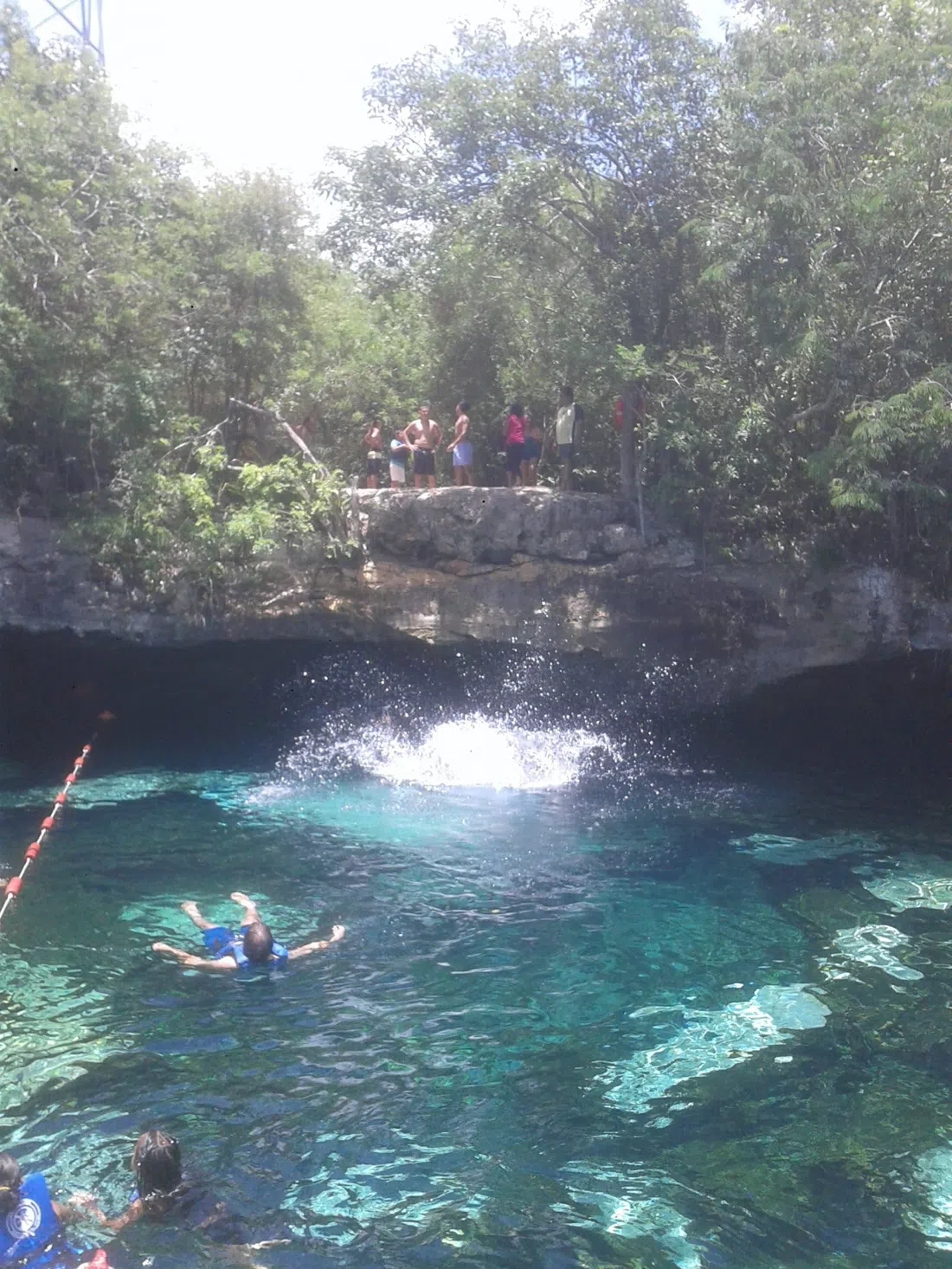
Cenote Azul is a chain of shallow terraced pools over pale limestone, with a cliff ledge and a jumping platform at one end and jungle pressing in on all sides. Shoals of tiny fish nibble at your ankles in the blue-green shallows. Adult entry is 180 MXN, 120 MXN for ages 4 to 7 and free under 4. The water is shallow enough for small children. It opens 8:30 a.m.
Chikin Ha Cenote Park holds three linked cenotes (an open pool, a cavern and a dark chamber), with zip-line cables overhead and timber decks and stairways between them. Basic entry to all three with a vest is 350 MXN, and the package with ziplining, bikes, snorkel gear and a Mayan ceremony is 650 MXN. The park bans sunscreen, creams and repellent, and the outdoor shower stalls at the entrance are compulsory before you get in the water. It opens 8 a.m. and absorbs a coachload without feeling crushed.
Breakfast and lunch on Akumal sand
Turtle Bay Café & Bakery (Plaza Ukana, Akumal pueblo) opens at 7 a.m., early enough to eat and still reach the buoys when the bay opens rather than after the first wave of vans. The courtyard is small and shaded, with bright painted walls, a pastry counter of sticky buns under glass, ceiling fans, potted plants and bicycles leaning outside. Breakfast, pastries and coffee come to 120 to 300 MXN. The rush runs 7 a.m. to noon and the courtyard is compact, so a dozen of you should expect a wait.
Lol-Ha (Akumal main bay) is the large open palapa on the sand, a long thatched roof on timber posts over white plastic chairs and wooden tables facing the water. It opens early for breakfast and stands right where the snorkel ends, which is also why it is busiest at the moment every morning circuit comes out of the water. Food runs 250 to 600 MXN a head, and the snack bar and pizzeria side is cheaper. It has the biggest sit-down capacity on the main bay, and snorkelers dry off at the edge of the terrace.
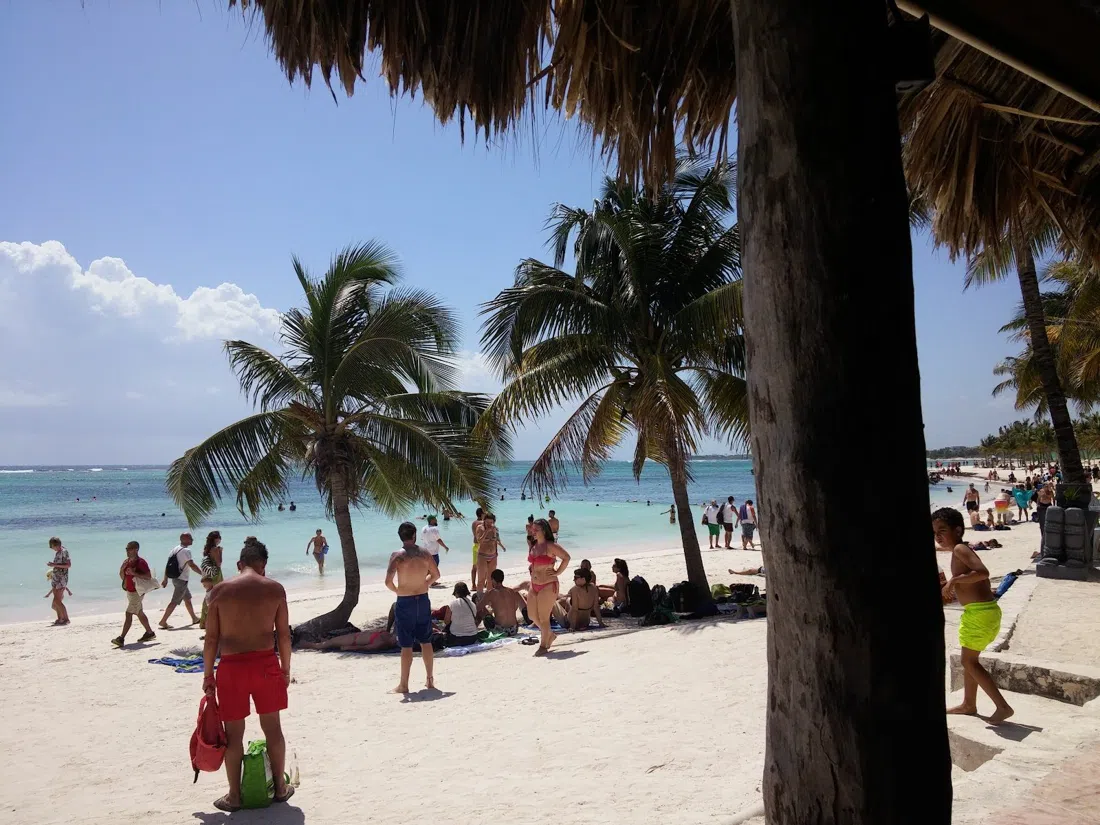
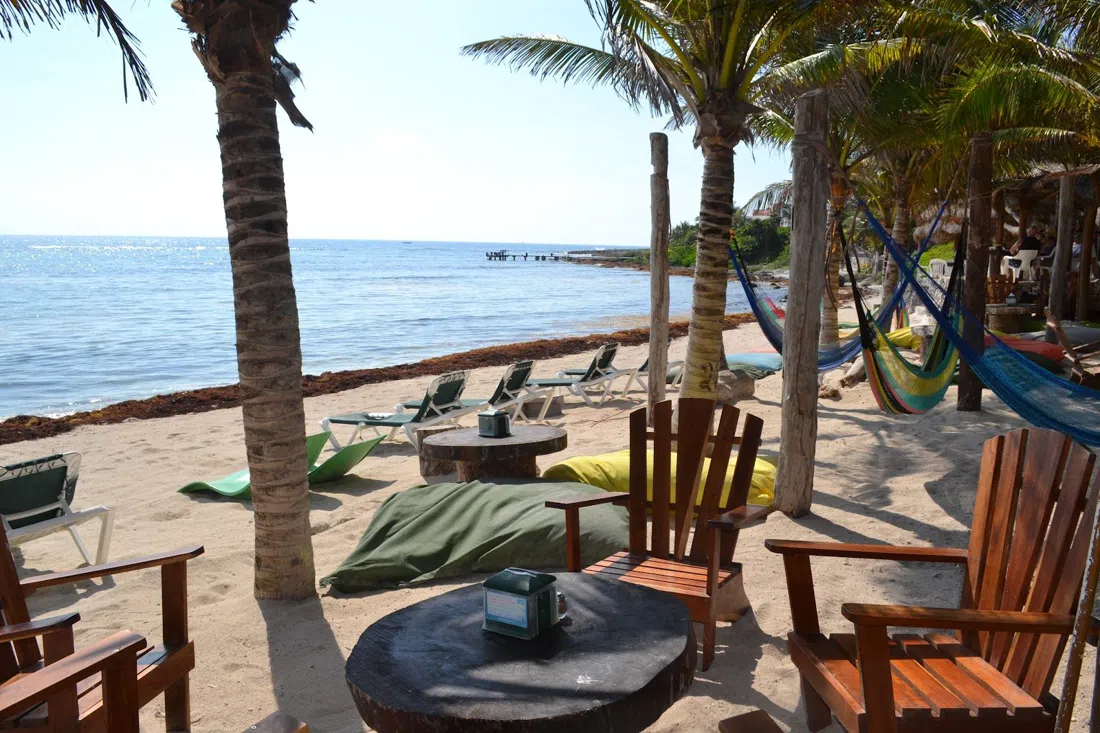
La Buena Vida (Half Moon Bay) has a sand floor, swings in place of bar stools, a treehouse-style upper deck on stilts and hammocks strung between the posts. Tacos, bowls or burgers with a drink come to 250 to 600 MXN a head. Parties sit under the beach palapas, and children are welcome. It trades Monday to Saturday from morning until late. It is easy to end up rating the afternoon here above the snorkel that preceded it.
Calmer water when wind or sargassum shuts the bay
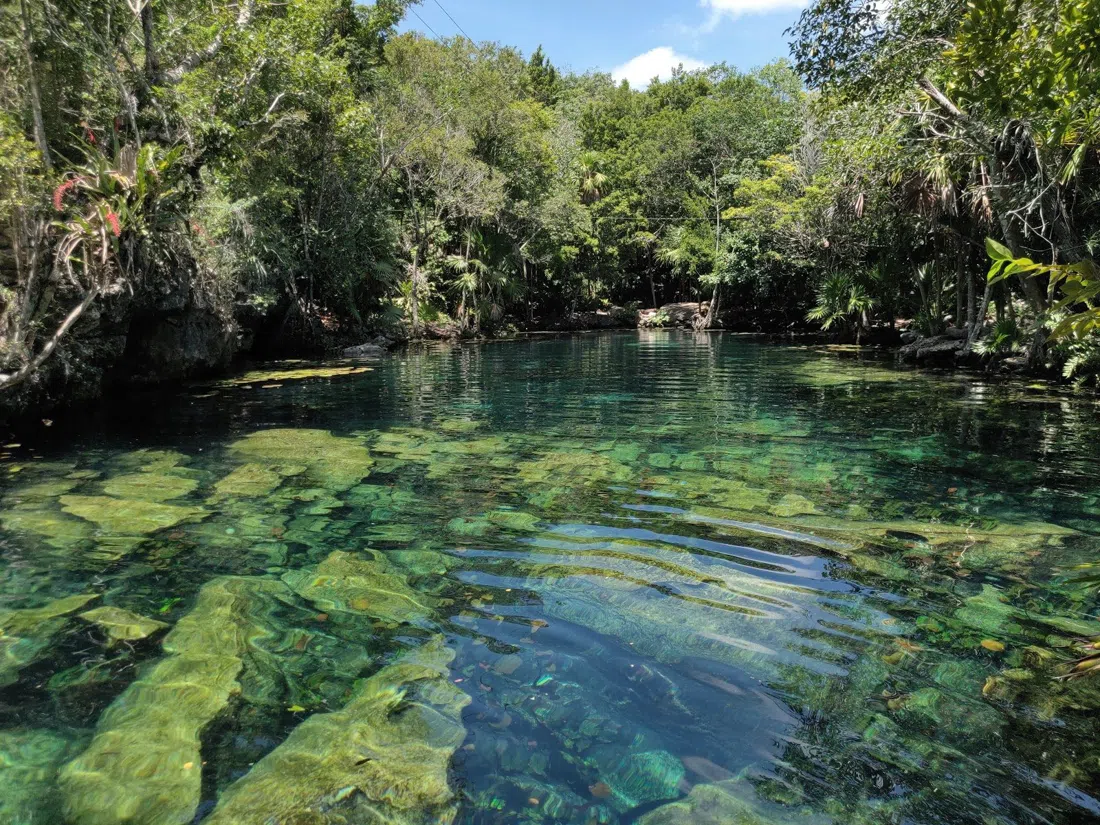
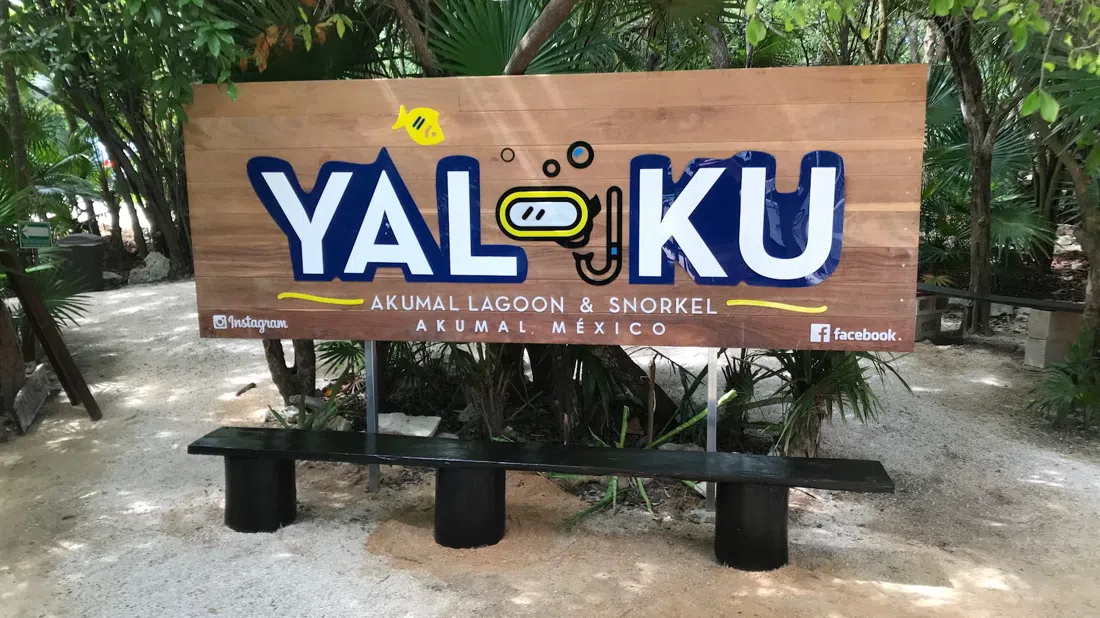
Yal-Kú Lagoon (Laguna Yal-Kú) is a narrow rocky inlet where fresh water meets the sea, with jagged black limestone edges, jade-green water carrying a hazy halocline shimmer, stone sculptures dotted along the shoreline path and a mangrove and palm fringe. The brackish water is shallow to 4 m and calm enough for a nervous swimmer. Two gates sit under different management and charge differently, so agree the entrance before you arrive. The original blue-sign gate is 300 MXN and the second gate runs higher.
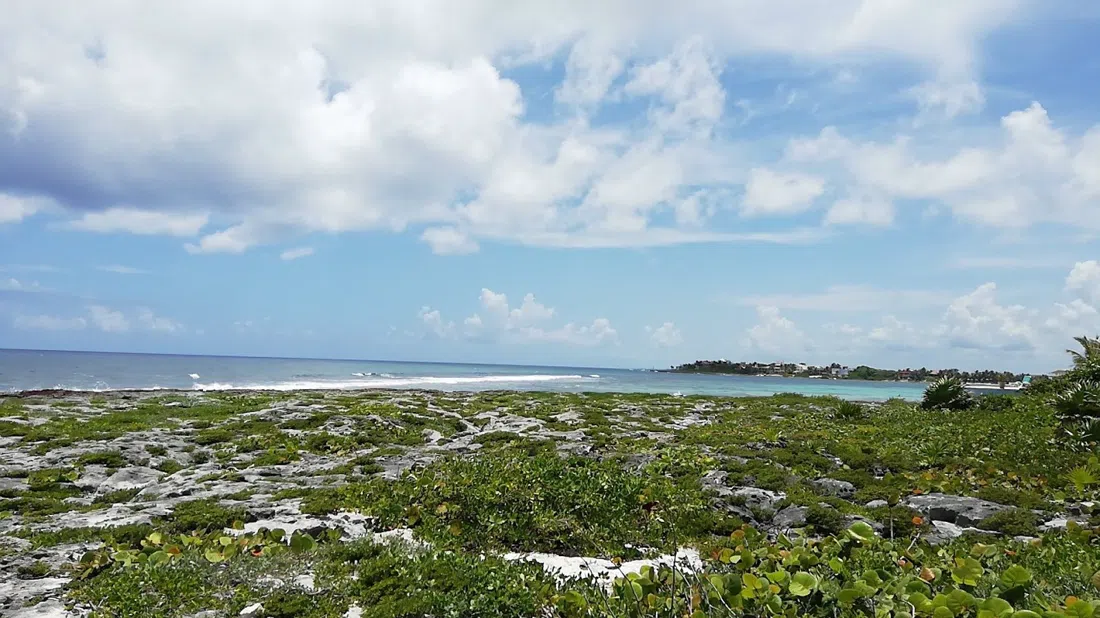
Half Moon Bay (Bahía Media Luna) is 700 m north of the turtle zone. The seabed is rocky and coral close in, the water is calmer than the main bay, and the swim-out reef shows as dark patches under pale turquoise with low-rise condos and palms at the sand line. Access is free and unregulated, mostly through the restaurant frontage, and you pay only for food, drinks or gear hire. Turtles are fewer here and the coral and reef fish are better. The frontage suits a small party.
Nesting beach and a wet-weather swap
Xcacel-Xcacelito Sea Turtle Sanctuary is 362 hectares of protected coast where the turtles nest instead of feed. The bay is undeveloped white sand backed by raw jungle with no hotels in sight, roped-off nesting plots on the dunes and a wooden boardwalk through low scrub. Foreign visitors pay 97 to 114 MXN, with lower rates for Mexican nationals and Quintana Roo residents. A small freshwater cenote sits inland from the beach and takes six people at a time. A large party waits on the sand. It opens 10 a.m. to 4 p.m.
Akumal Monkey Sanctuary & Rescued Animals is five minutes from the bay and houses 200 rescued animals. Guided tours run 9 a.m. to 5 p.m. on set timings, along jungle walkways under dense canopy with spider monkeys and capuchins moving through the trees above you, past large open enclosures, starting from a shaded palapa briefing area. Adults pay 1,400 MXN and ages 5 to 11 pay 1,000 MXN. VIP and ATV options run considerably higher, and children must be five or older. The price sits well above a cenote ticket, so give it the whole afternoon if you go.
Biljetter vid grinden eller bokade i förväg
Inträdet till cenoten och Akumal-rundan betalas båda vid grinden samma dag, och priserna vid grinden är de som anges ovan. Ett paketerat halvdagsprogram med transfer och lunch är ett separat köp, och de guidade avgångarna går alla dagar i veckan. Vissa avgångar är redan fullbokade den 8, 15, 22 och 29 november 2026 och den 6 och 13 december 2026, samt på 26 ytterligare datum; andra datum går fortfarande att boka. Boka i förväg när din dag är bestämd.
Bästa tid att åka
Var vid strandgrinden när den öppnar om sköldpaddorna är anledningen till att du kom. Jardín del Edén stänger varje lördag för att låta ekosystemet vila, så den dagen ska inte finnas med i en helgplan. Xcacel stänger på måndagar. Cenote Azuls parkering och bassänger fylls snabbt på helger och på mexikanska helgdagar, så förlägg besöket till en vardagsmorgon.
Är det värt det
Det passar en simmare som vill ha sötvatten och saltvatten under samma förmiddag och som gärna kliver upp för att hinna till öppningen. Du betalar en separat avgift vid varje grind, och sköldpaddssimningen är den kortaste delen av dagen.
Innan du åker
Ta med pesos: Casa Cenote, Cenote Azul och Xcacel tar emot kontanter, Jardín del Edén vill ha kontanter för västar och utrustning, Chikin Ha föredrar kontanter, och Cenote Azul har ingen bankomat på plats. Se Cancun-guiden och hotellsökningen för Cancun.