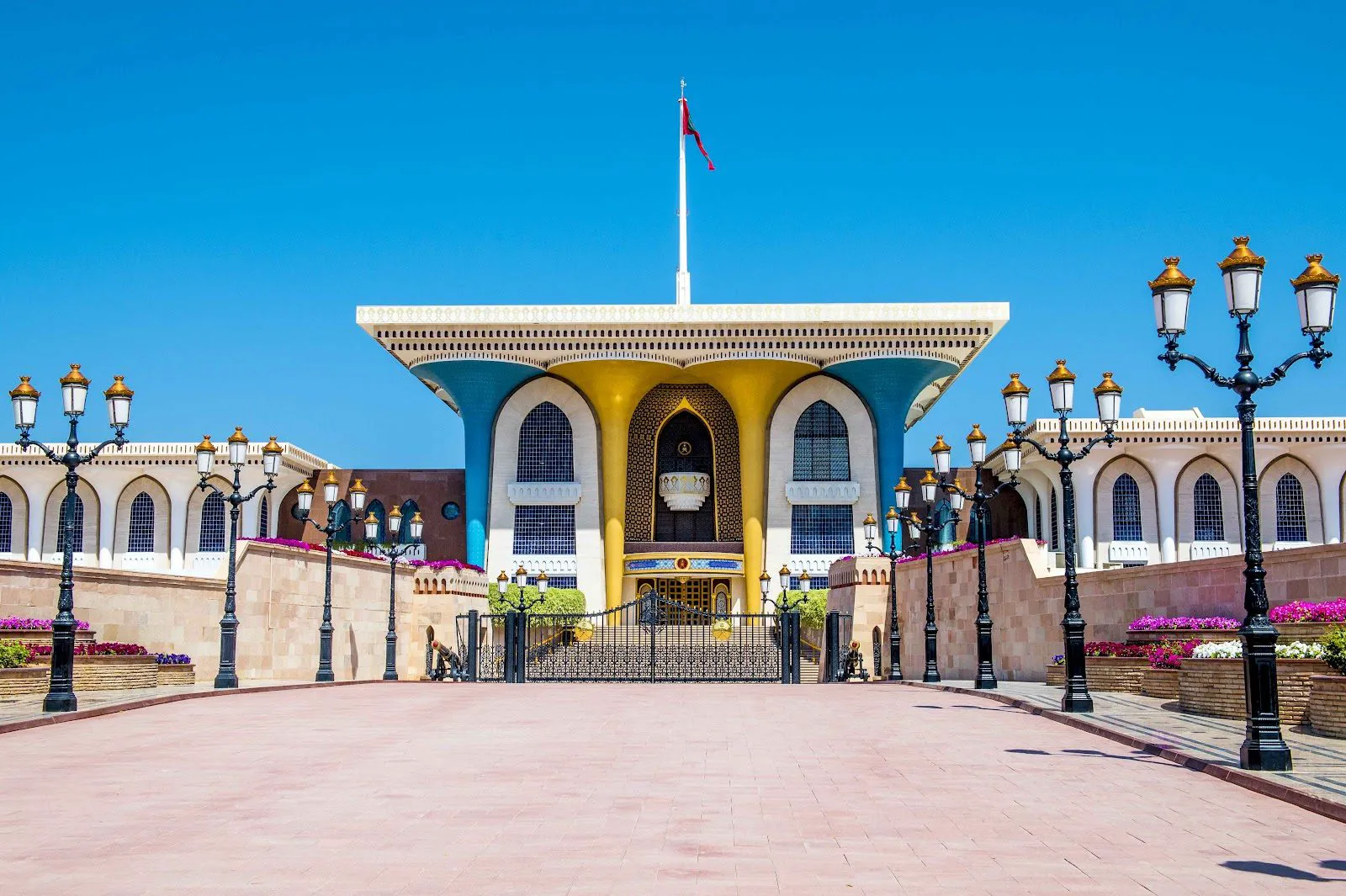
Nobody gets inside Al Alam Palace, the ceremonial palace of Sultan Haitham bin Tarik in Old Muscat. The boulevard and the gate plaza in front of it are public and free, with no permit and no booking. The stop takes 15 to 20 minutes.
What you see from the gate plaza
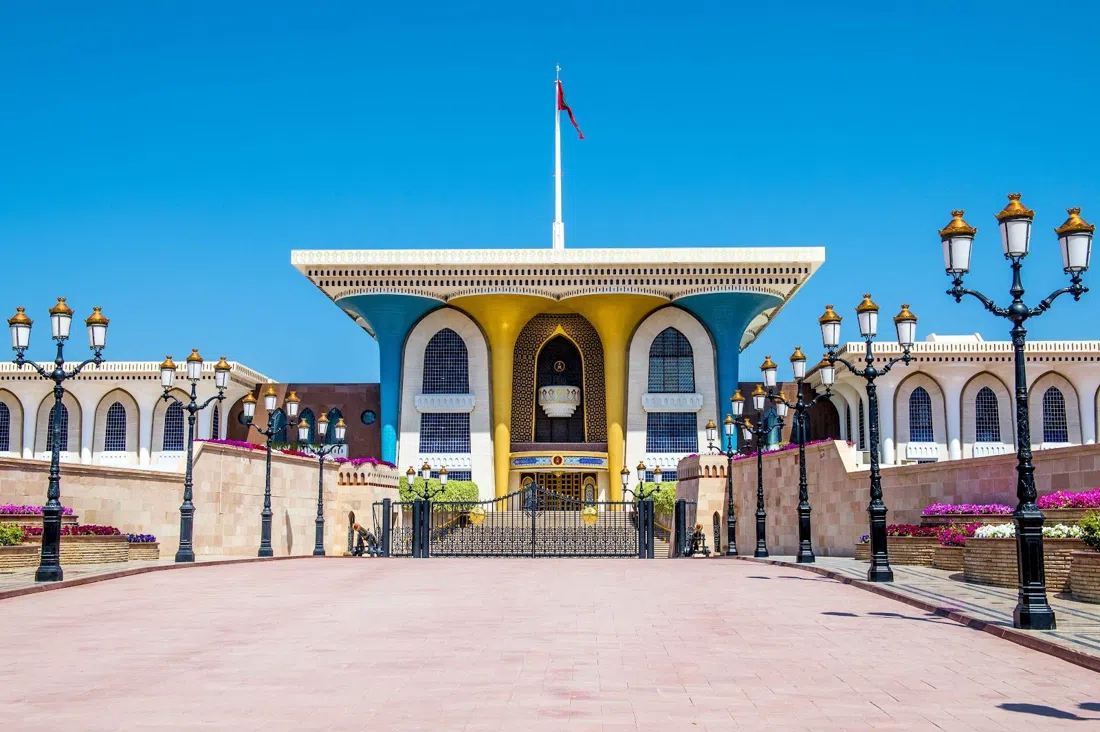
The facade is a ceremonial white arcade fronted by flared blue-and-gold trumpet columns with gold mushroom capitals. A royal flagpole flies above it, a manicured palm boulevard runs down to the gates, and bare brown cliffs and fort walls rise behind the roofline.
You photograph the facade from the street and leave. Treat it as one stop inside a wider Old Muscat circuit. The plaza takes full coach groups without a permit or a booking.
Al Jalali Fort guards the palace's eastern flank in Old Muscat, a squat Portuguese fort welded to a sheer black rock headland above the old harbour. Crenellated round towers carry a flag over the battlements, and a long exposed stone stairway climbs the cliff face. It is the shot that makes the palace photograph work.
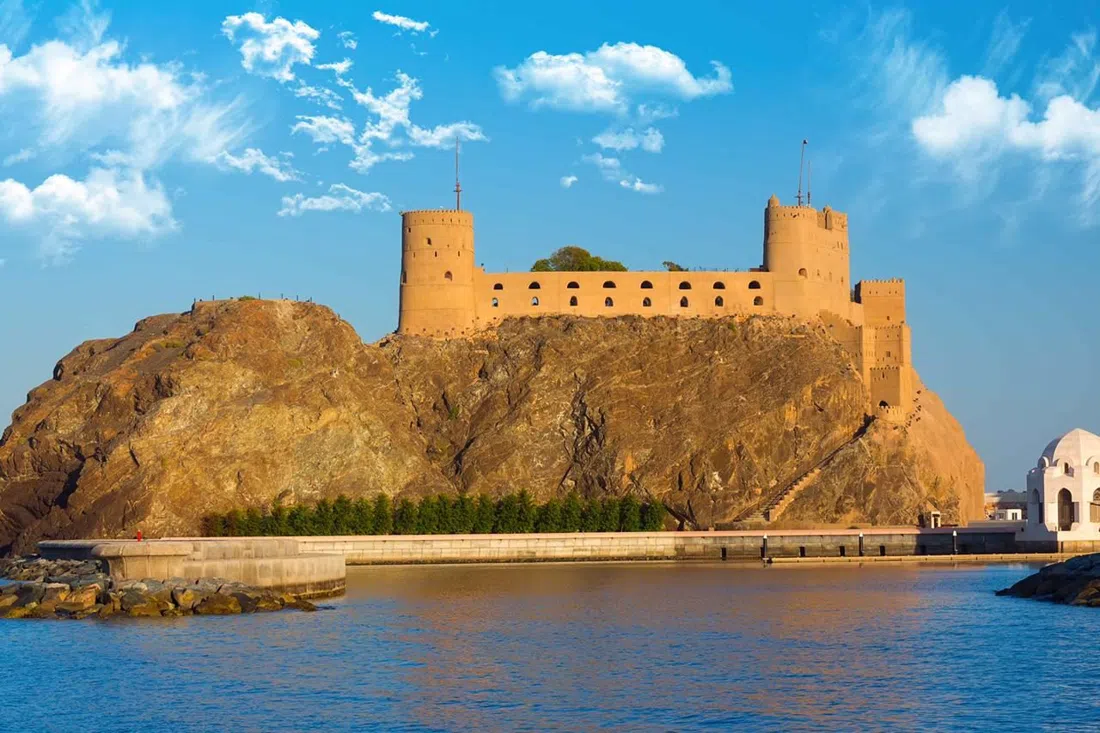
The interior is permit-only through the Ministry of Heritage and Tourism and effectively unavailable to tourists. Do not book anything that promises you inside it. The viewpoints you shoot it from are public and unrestricted.
Across the square from the gates
National Museum of Oman is directly opposite the palace gates in Old Muscat, a pale limestone cube with deep-cut geometric timber screens and oversized brass-studded Omani doors. Galleries are lit low around maritime instruments, and an open-storage restoration lab sits behind glass. It is the single best reason the trip to Old Muscat is worth making.
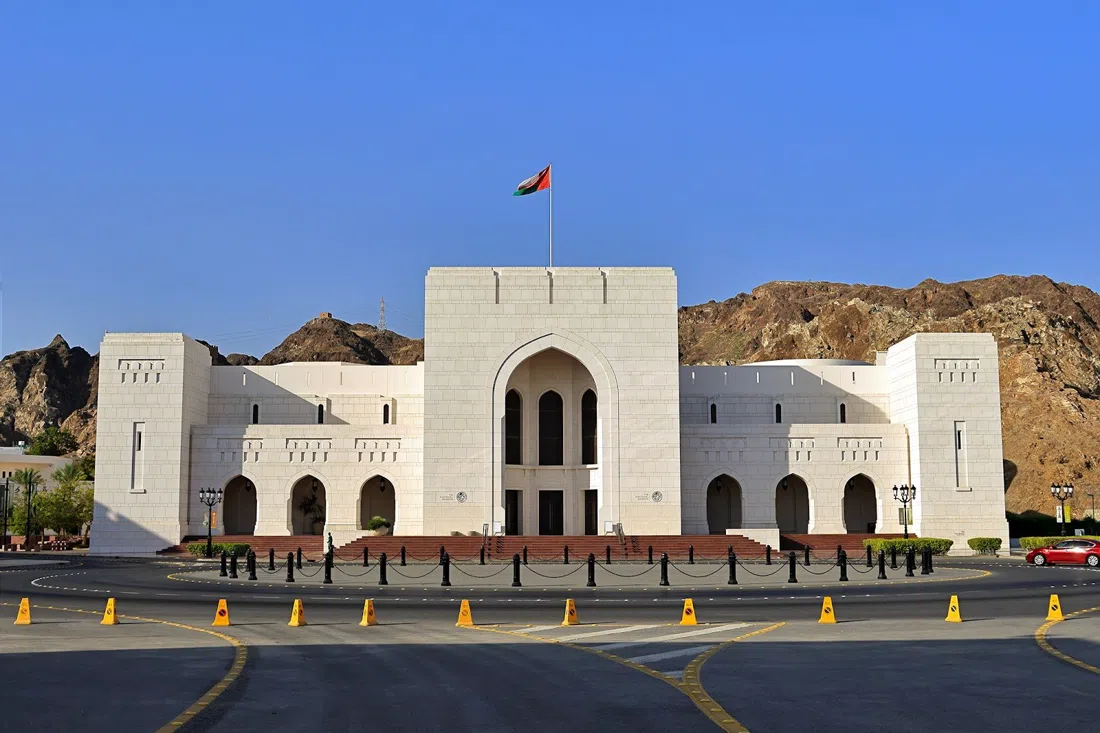
Entry is RO 5 for a non-resident adult and RO 2 for a resident. Omani and GCC nationals pay RO 1. Students and visitors with disabilities enter free, as do certified tour guides. Guided tours in several languages assemble in the Land and the People gallery, and private family tours can be arranged.
The museum is the only air-conditioned refuge on the square, with lifts, Arabic Braille and prayer rooms.
Bait Al Zubair Museum is a five-minute walk from the palace: five whitewashed Omani townhouses around a courtyard garden with a running falaj channel and a miniature mud-brick village model. Indoors, wall racks hold silver khanjar daggers and embroidered regional dress. It is the best place in the country to understand Omani dress, jewellery and weaponry.
需要购票或参团才能参观吗?
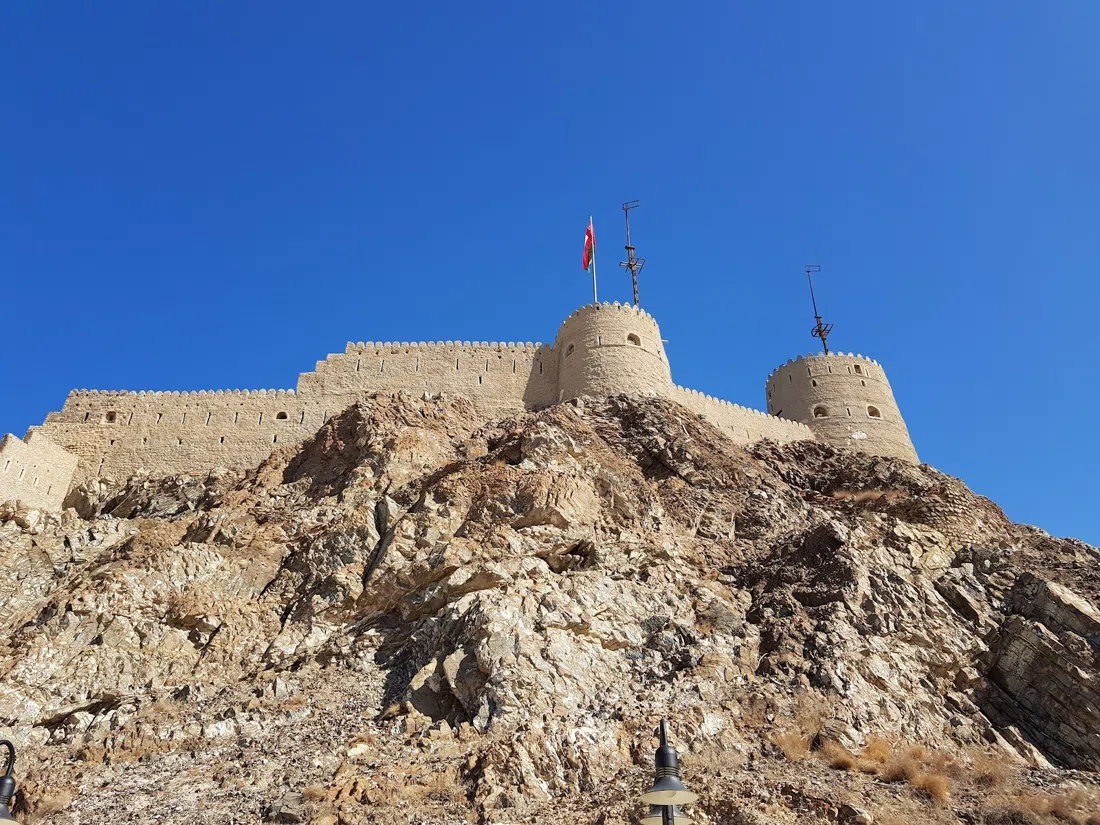
Muttrah Fort is the restored fort you can go inside: three whitewashed circular towers stepping up a rocky spur above Muttrah harbour, cannon platforms and narrow stone passages, cruise ships and dhows laid out directly below. It holds the best elevated harbour view in Muscat, and a small Fort Cafe sits at the top. Tickets are sold at the gate, RO 3 for a non-resident adult and RO 2 for a non-resident child. Resident adults pay RO 1. Guided tours come on request, and the stairs and passages force single file.
Ghalya's Museum of Modern Art occupies a traditional Mutrah merchant house in a lane directly below the fort, and it is routinely missed. Rooms are dressed as a 1950s Omani family home with period furniture and mannequins, and contemporary Omani canvases hang through the upper floors. Entry is RO 1, an hour covers it, and it closes Fridays.
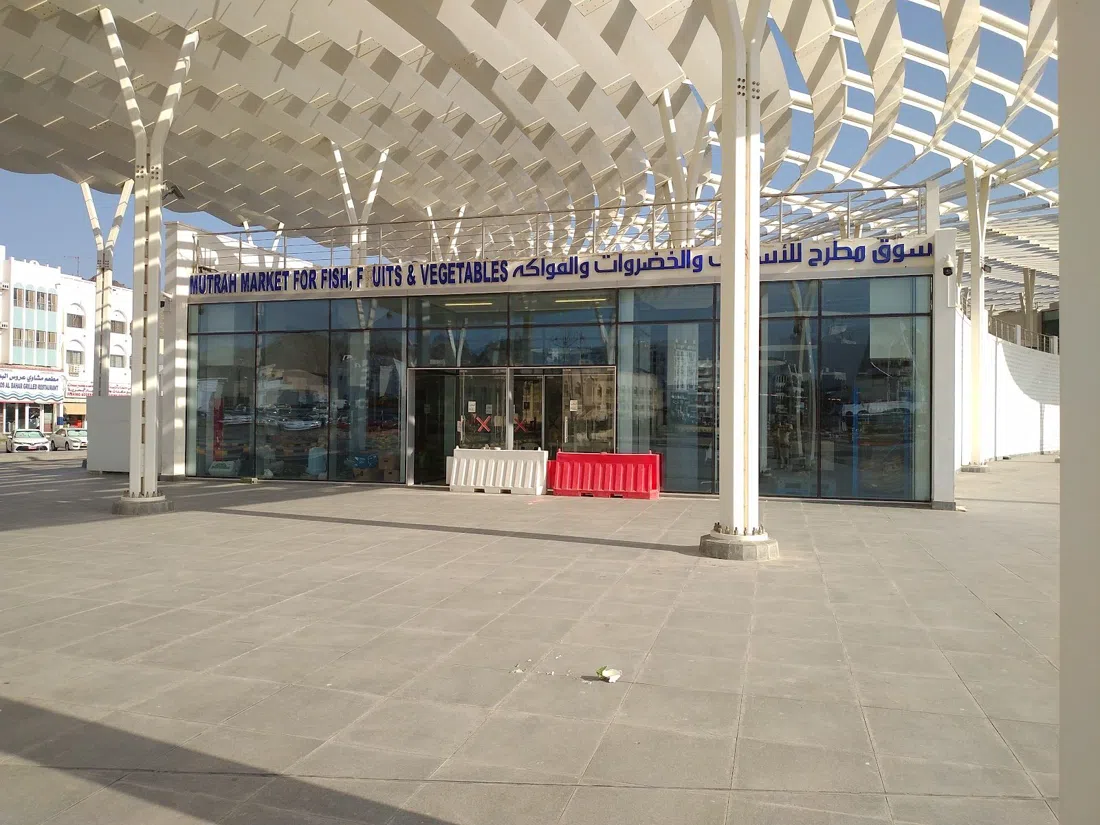
Muttrah Fish Market is a piece of modern architecture on the corniche, a sweeping perforated aluminium canopy curling over the quayside with a mirror-finish underside that reflects the water. Under it runs an open concrete hall of steel slabs, kingfish and tuna laid in rows and cutters working at the back. More than 100 sellers trade here, with coffee shops and a rooftop restaurant above. The building is public and free to walk through at any time, and the fish and the rooftop restaurant are priced separately.
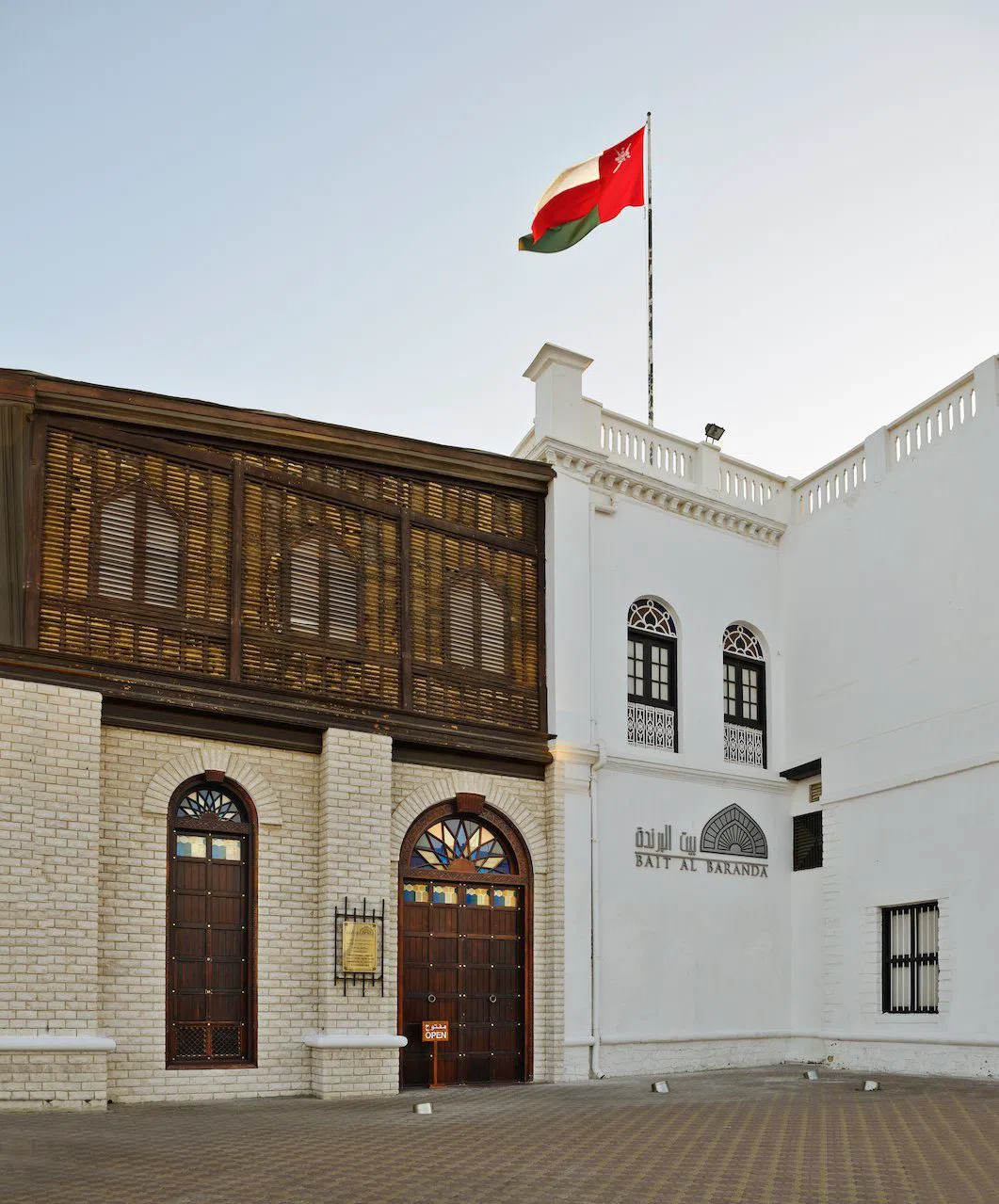
Bait Al Baranda on Al Mina Street in Mutrah is the clearest short explainer of how Muscat came to be, geology upwards. The house is a restored early 20th-century veranda building in ochre and white, and the interior runs 3D dioramas and touchscreens around a reconstructed dinosaur skeleton. Allow 60 to 90 minutes. Adult entry is RO 1, less for children and student groups. It closes Fridays and public holidays.
Where to eat between the palace and the harbour
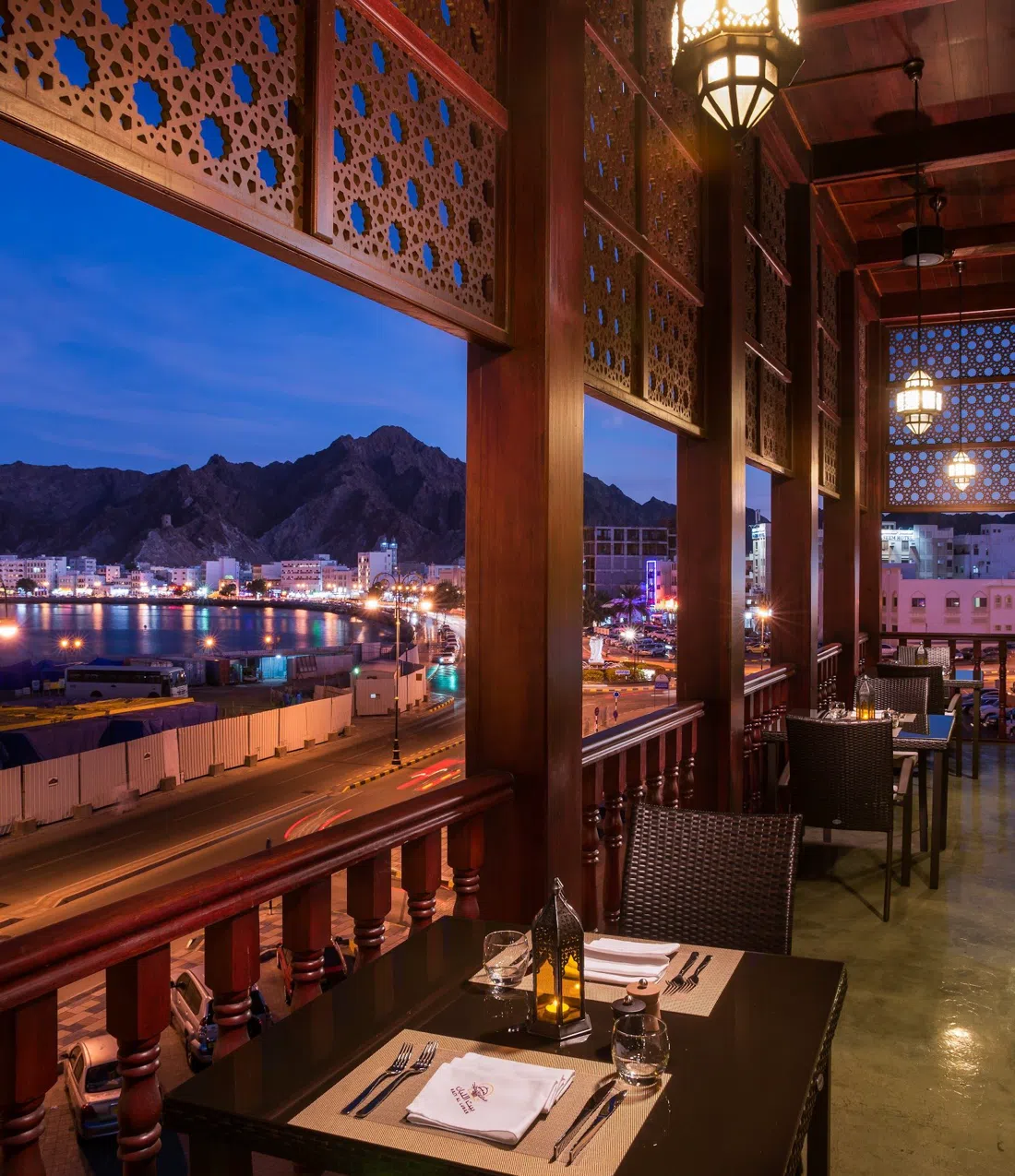
Bait Al Luban fills a restored stone warehouse at the north end of the corniche in Mutrah. Upstairs majlis rooms are low cushioned seating in vivid reds and oranges, and rooftop tables look across the harbour lights. Shuwa lamb and grilled kingfish carry the menu, and the kitchen opens daily from midday. The price band is RO RO RO. Reserve by phone, especially for the rooftop, because waits run long.
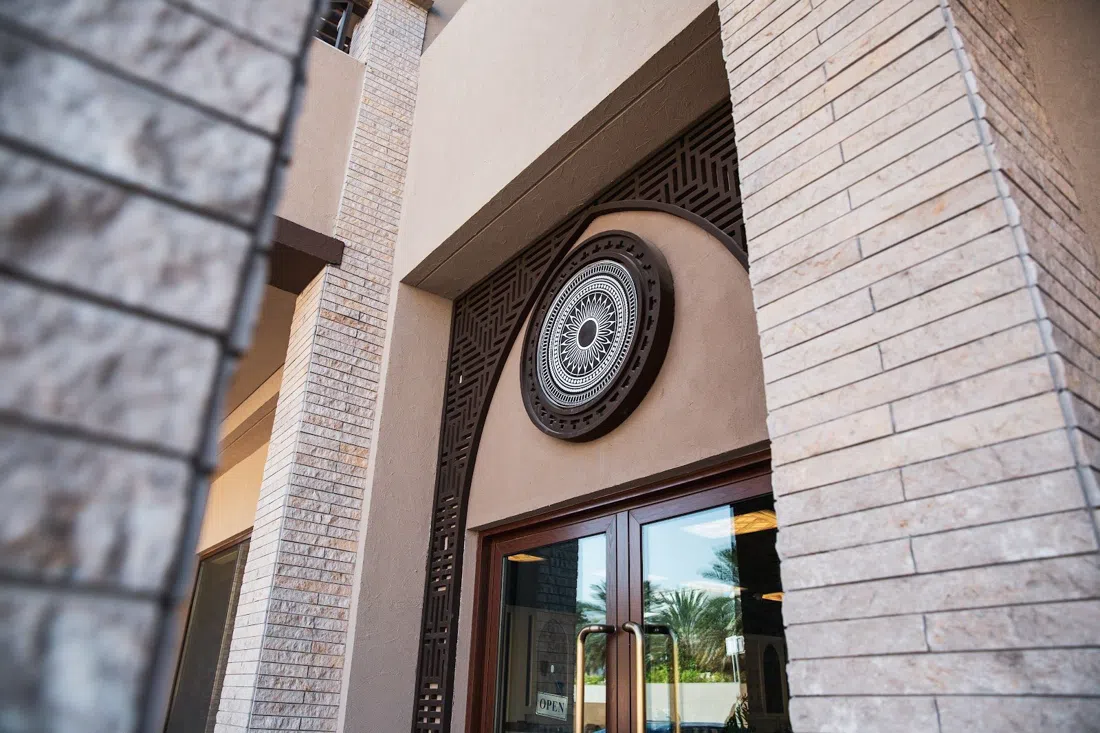
Anna Café sits at street level beneath the Naseem Hotel in the middle of Mutrah, plain tables behind a glass front looking straight out over the bay. Coffee, cake and light meals are cheap and unpretentious. The price band is RO. It is the handiest place to wait out the souq's midday closure.
The palace from the water
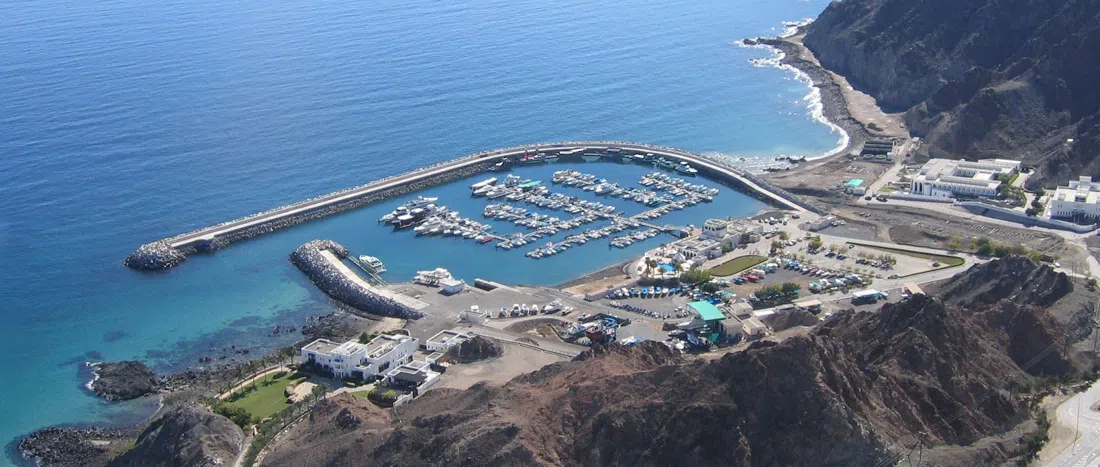
Marina Bandar Al Rowdha lies in a cove ringed by sharp brown cliffs south of the old city, pontoons of white boats and the departure point for most Muscat boat operators. A shared two-hour dolphin trip costs RO 10 to RO 17 per adult, and private charters run from the same pontoons. Book at least a day ahead. Spinner dolphins are present year-round and sightings are not guaranteed.
From the water you get the palace and its two cliff forts at the angle the Portuguese built them to face. The neighbouring Al Bustan Palace hotel is shut for renovation until 2028.
Best time to go
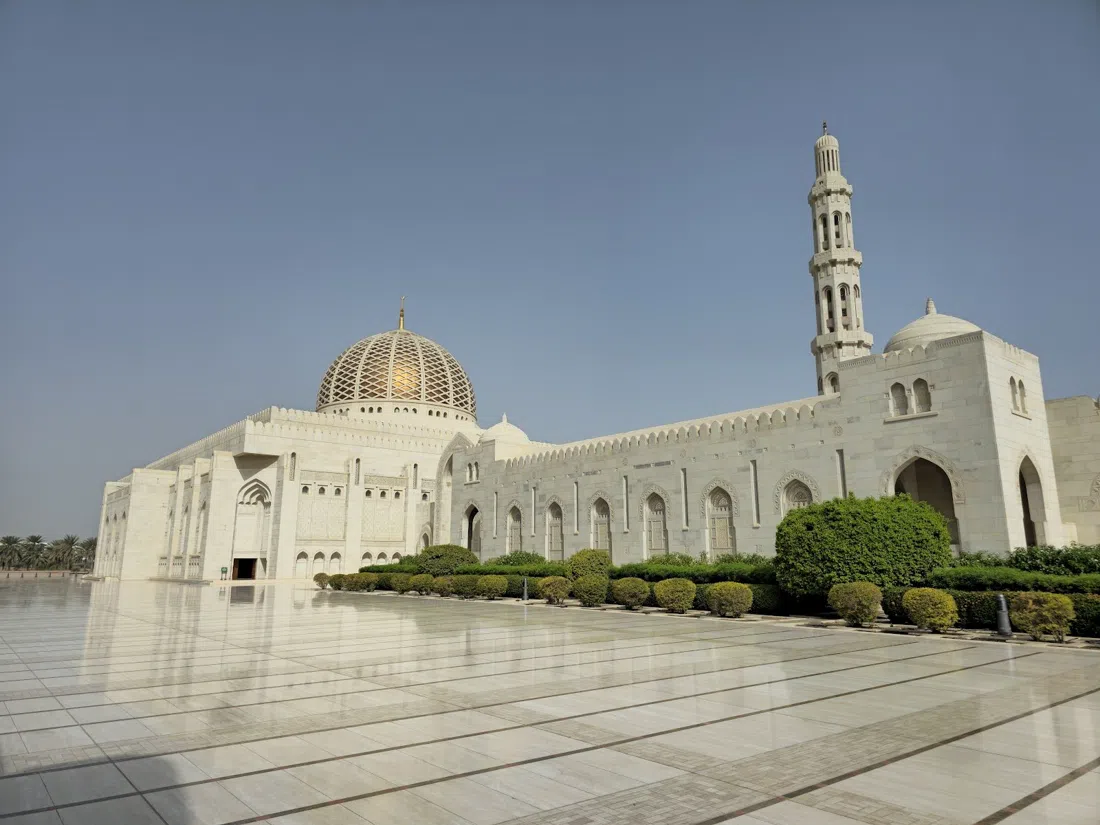
Sultan Qaboos Grand Mosque has to lead the day. Non-Muslim visitors are admitted Saturday to Thursday, 08:00 to 11:00, and never on Fridays, so it cannot be bolted on after the palace. Entry is free and no booking is needed. The dress code is enforced at the door: women need a headscarf and full-length covering, men long trousers and sleeves. Loan fabric is not guaranteed. White Indian sandstone arcades run around vast courtyards under a 50-metre main dome and tall minarets, and the prayer hall holds one enormous hand-knotted Persian carpet and a crystal chandelier.
The palace plaza and the National Museum take the rest of the morning. Muttrah Fort is almost entirely unshaded. Go early or late, not midday.
The souq shuts for a long midday break, and afternoon arrivals should aim for after 16:00. The corniche is fully exposed to the sun earlier in the day, and Muscat comes out to walk it after 16:00. Al Riyam Park carries the shade the fort and the corniche lack, and the monument is floodlit after dark. At the fish market the catch looks best early morning, and Fridays are the busiest.
Tickets at the door and what to book
The palace needs no ticket and no permit, and the gate plaza is open to anyone who walks up. The museums and Muttrah Fort sell at the desk or the gate, and the opera house sells at its box office. Only the boat and the table need booking: a day ahead for the marina, a phone call for the rooftop. Private guided city tours of these landmarks run seven days a week, which is useful when a cruise call or a single free morning fixes your date.
Is it worth it
这座宫殿只提供外观,别无其他可看。它适合希望在同一个半天内游览国家博物馆、峭壁上的古堡和穆图拉的游客,把宫门当作这条路线中的一个取景点即可。
实用提示
Bait Al Zubair 博物馆、Ghalya 现代艺术博物馆和 Bait Al Baranda 都在周五闭馆,Bait Al Baranda 在公共假日也闭馆;歌剧院周六至周四提供参观导览。游船和 Bait Al Luban 屋顶露台请在抵达前电话预订。详见 马斯喀特指南 和 马斯喀特酒店搜索。
Muscat的酒店
常见问题
可以进入阿勒阿拉姆宫参观吗?
不能。任何人都无法入内。宫前大道和门前广场都是对公众开放的免费场所,无需许可或预约,你可以在街上拍摄宫殿外观。
参观这座宫殿应预留多长时间?
15至20分钟。它是老马斯喀特环游路线中的一站,而非独立的目的地;阿曼国家博物馆就在宫门正对面。
要看它,需要买票或参团吗?
无需门票,也无需许可。广场可供整团大巴游客入内,无需预约。若希望由车辆载着游览周边地标并听取讲解,可以考虑私人导览城市游,此类行程每周七天均有。
能进入宫殿旁边的 Al Jalali 堡垒参观吗?
不能。内部需经文化与旅游部批准方可进入,实际上不对游客开放,因此请勿预订任何声称可入内参观的行程。你可以入内参观的是穆图拉堡,非居民成人票价为3阿曼里亚尔(RO 3)。
一天中什么时候去最好?
建议先前往苏丹卡布斯大清真寺,周六至周四08:00至11:00对非穆斯林游客开放,之后在上午晚些时候参观宫殿和博物馆。若下午抵达,可将穆图拉市集安排在16:00之后前往。
作者
Bram Visser
Forts, wadis and the long way round
Bram walks Muscat's Corniche, forts and old quarters for a living, timing Al Alam Palace and the Grand Mosque around prayer hours and cruise-ship crowds. He covers the day trips too, from Bimmah Sinkhole to the terraced villages of Jebel Akhdar and the edge of the Wahiba Sands.