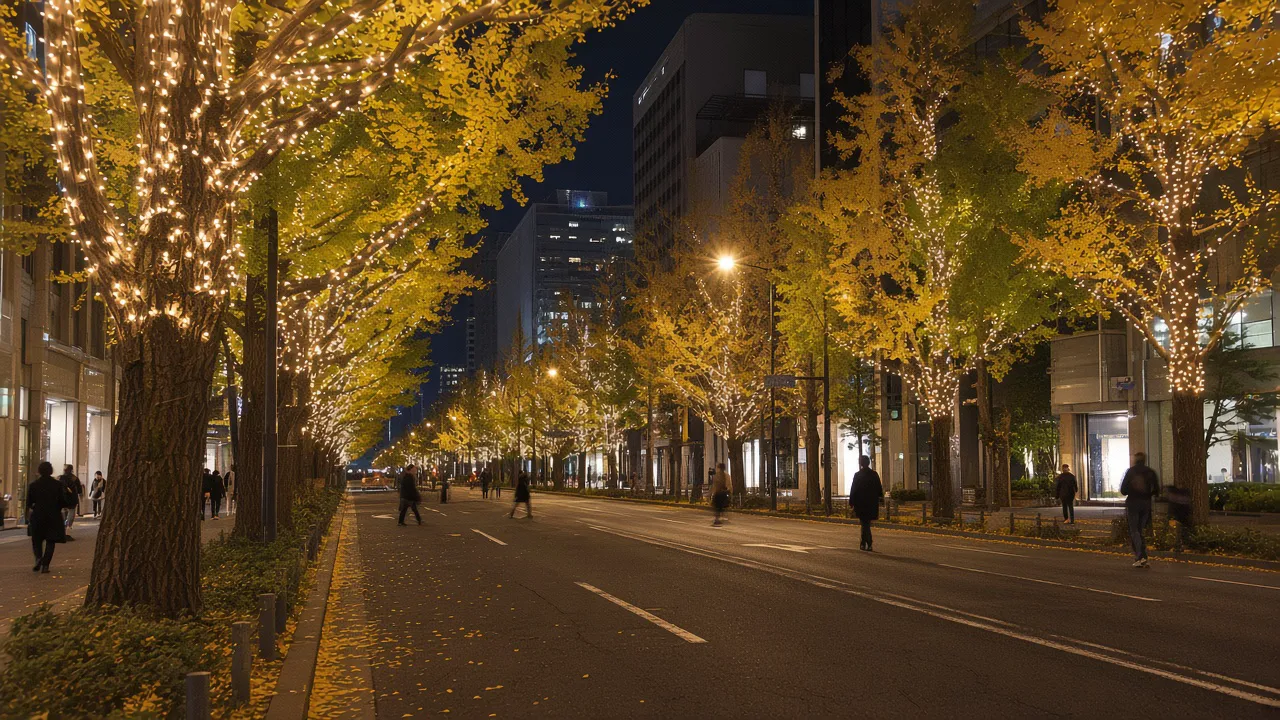
Every ginkgo on Midosuji is wrapped to the crown in white-gold LED, 4km of them from Hanshin-mae down to Namba Nishiguchi. The lights come on at 17:00 and stay on until 01:00. The food stalls that turn them into a night out keep a much shorter season, 11 to 25 December, on Nakanoshima.
The Midosuji walk
Midosuji Illumination (Umeda to Namba) is the main run of the Festival of the Lights in Osaka, free and unticketed. Six lanes of boulevard, office towers either side, every trunk lit from pavement to crown. The wide pavements take a walking party of 20.
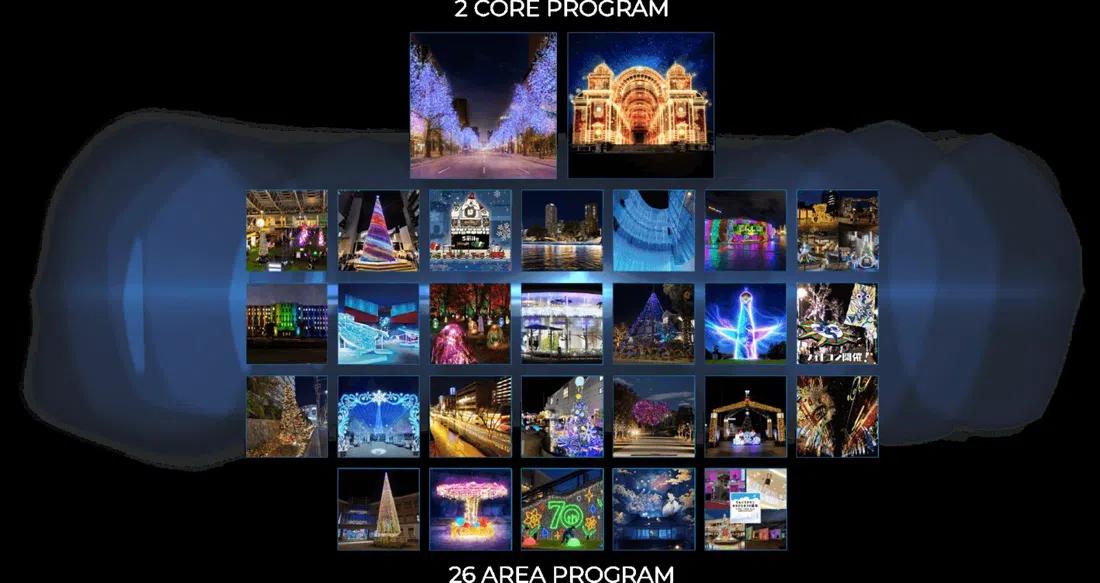
Treat it as the walk between districts. It links Umeda, Shinsaibashi and Namba, and the eating happens in the side streets a block either side. The lighting runs 3 November to 31 December 2026 and stops there. Compare rooms along the route in the Osaka hotel search.
Nakanoshima and the Hikari no Marche
OSAKA Hikari no Renaissance 2026 (Nakanoshima) puts a 7-minute projection mapping on the neo-Renaissance red brick of the Osaka City Central Public Hall, then runs a 150m tunnel of LED-wrapped zelkova trees along the Miotsukushi promenade. A giant snowman stands at Naniwabashi. The park is public and entry is free.
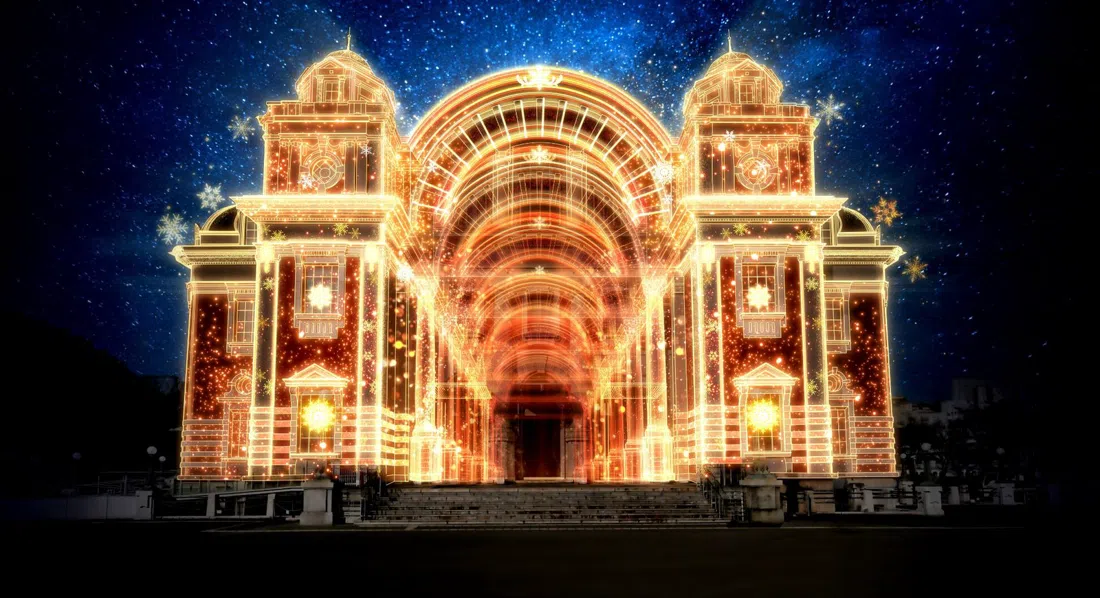
The food sits at the Naniwabashi end, where the Hikari no Marche strings stalls along the dark river channel from 16:00 to 22:00. Stalls are standing-room and take no bookings. Mulled wine and a stall plate run ¥500 to ¥1,200 an item.
Time this one. The mapping and the Marche run 11 to 25 December 2026 only. The tree-lit street and the City Hall facade are lit 3 November to 31 December. This is the best illumination-and-food walk in the city, and outside those two December weeks you get the lights without the stalls.
Umekita, the station and the Sky Building
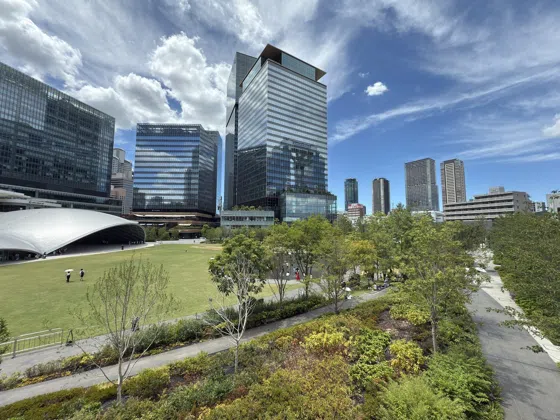
Champagne Gold Illumination in UMEKITA (Grand Front Osaka and Grand Green Osaka) hangs 510,000 champagne-gold bulbs on 156 trees, a tunnel down the Grand Front plaza with the gold doubled in the still canal water and the new Umekita Park lawn opening behind it. It runs 4 November 2026 to 28 February 2027, the longest season of any of them. Lights are on 17:00 to 00:00.

如果我在1月或2月前往,还有灯光可看吗?
Two programmes run here under the Minami Hikari Masse umbrella, between 13 November 2026 and 14 February 2027. Light and Water Wonderland holds the winter, then the Dotonbori River Lantern Festival takes New Year. The takoyaki and okonomiyaki stands on the street above are standing-only at ¥500 to ¥900 a portion. Eat as you go.
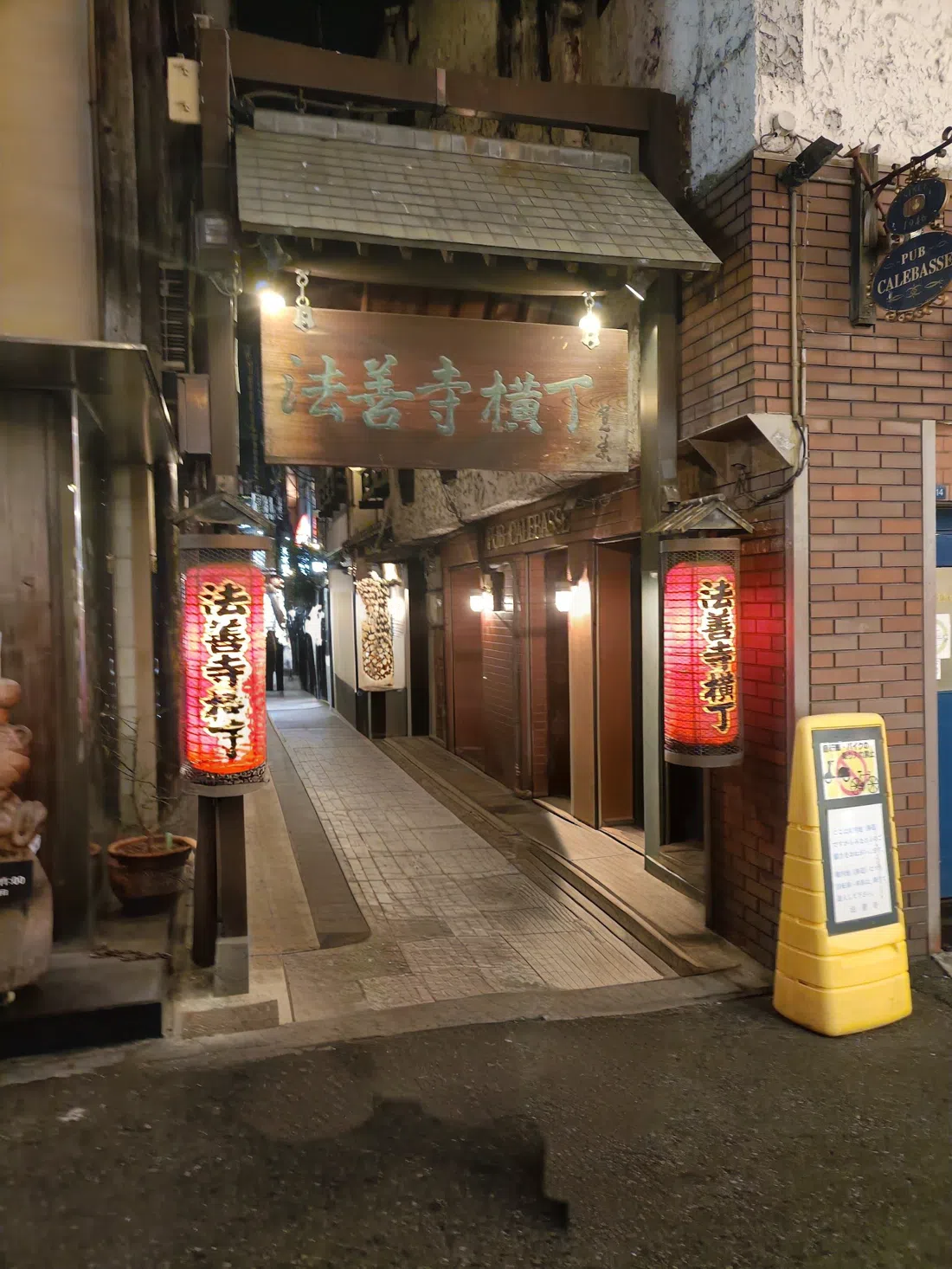
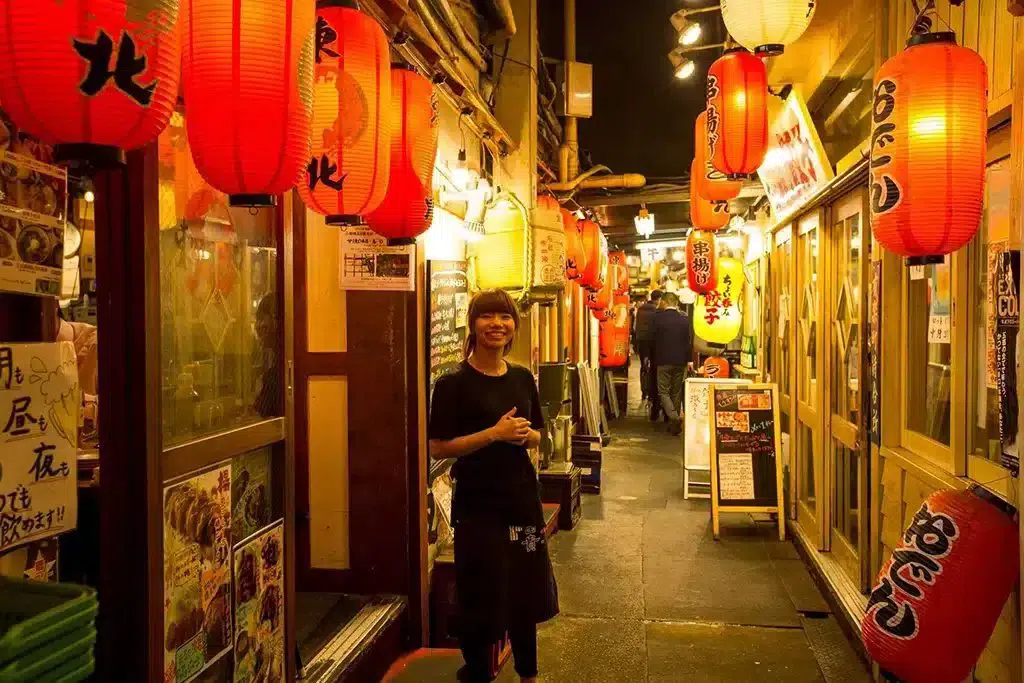
Hozenji Yokocho (Minami) sits 60 seconds off the Dotonbori crush and opens year-round. The alley runs 80m and is barely 3m wide, stone-flagged, with paper lanterns down both walls, ending at a Buddhist statue so thickly mossed by visitors ladling water over it that the stone has disappeared. The counters seat six to 10 each. A party of more than six splits across two of them or reserves ahead, and most places take cash only. Dinner runs ¥2,500 to ¥6,000 a head depending on the counter.
Namba Hikari Tabi 2026 (Namba Parks) pours an 18m waterfall of light down the terraced sandstone canyon of the rooftop-garden mall, and projects moving stars across a new 9F grass plaza. The 15th edition lights a million bulbs. It runs 13 November 2026 to 14 February 2027, 17:00 to 00:00. It closes 31 December and 1 January, which catches New Year visitors out. The Parks Garden restaurant terraces take bookings and are the easiest sit-down option in Namba at ¥1,500 to ¥3,500 a head.
Shinsekai under a lit tower
Skewers come out of the fryer from ¥150 each in Shinsekai (Tsutenkaku), and a full stand-up feed lands at ¥1,500 to ¥2,500. A 1950s steel tower ringed with advertising neon closes off the street, with blowfish lanterns, Billiken signs and skewer-shop frontages along it. There is one rule at the counters: nobody double-dips the communal sauce.
Tsutenkaku joins the Namba Hikari Tabi lighting for the first time this season, lit as a 108m Christmas tree in Christmas colours. That runs 13 November to 25 December, and it finally gives this food district a real illumination. The kushikatsu shops are counter-heavy. A party of more than six should phone ahead, though a few places near the tower run 24 hours and absorb walk-ins.
Tenshiba Christmas market
Christmas Market in Osaka at Tenshiba (Tennoji Park) sets wooden chalet huts with pitched roofs on an open lawn around a lit central tree, the 300m glass slab of Abeno Harukas rising directly behind. The market trades 24 stalls, three of them first-timers, and the benches are communal. This is the proper German-gourmet market in the city now.

Entry is free and unticketed, and sausage and gluhwein plates run ¥800 to ¥1,500, with a mug deposit on top. It opens 20 November to 25 December 2026. Stalls close at 21:00, and from 19 December they trade until 21:30. Between 19:00 and 21:00 on December weekends it is shoulder to shoulder.
Nishinomaru Garden lanterns at Osaka Castle
Osaka Castle Illuminage (Nishinomaru Garden) is the ticketed one and the strongest pure spectacle. A corridor of 66 glowing lanterns leads past light-sculpture samurai to a walk-through treasure ship set out on the garden lawn, the floodlit castle keep standing behind. Entry is ¥2,000 for adults and ¥1,000 for children. Under 1 goes free. Another ¥500 buys priority entry, which is worth paying on a December weekend.
The season is the longest of the paid ones, 20 November 2026 to 14 February 2027. Doors run 17:00 to 22:00 and the lights go off at 21:30. On-site catering is not confirmed this season. Treat it as the lights half of the evening and eat afterwards in Kyobashi or Tanimachi.
Kyobashi standing bars
Kyobashi Park and Coms Garden Winter Illumination 2026 (Kyobashi) puts an oversized illuminated bear on a small park lawn, then a separate light scheme down inside the Coms Garden underground mall. All around it, Kyobashi's lantern-lit standing bars and horumon joints are packed into the railway arches.
This is the first year it has been part of the official Festival of the Lights, which is why the crowd is local drinkers rather than tour groups. A crawl of three standing bars comes to ¥2,000 to ¥3,500 a head, cheaper than anywhere in Minami. Few of the bars take bookings. The park section is lit 1 to 25 December, 17:00 to 23:00. The underground section runs 17 November to 25 December.
Guided night food walks
Hungry Osaka is the best value of the guided evenings. A walk starts at ¥13,000 a head and covers 15 tastings and three drinks. Groups cap at eight, private bookings are available, and evening departures leave daily from 18:00. A bilingual guide steers the eight of you between five stops in Shinsekai: street stalls, a tiled-counter izakaya and back-lane eateries under the lit tower. The slot lands squarely in the Shinsekai and Minami lighting window, and booking direct costs less than going through a resale platform.

MagicalTrip严格限制每团最多7人,以保证步行时可以边走边聊。晚间行程每人15,000日元,时长三小时。人数较多的团体可以单独安排私人出发。这是步行游览南区灯光最全面的一个选择:路线从新世界的串烤小巷一路穿到道顿堀的霓虹峡谷,或是在难波三家狭窄的居酒屋吧台之间穿梭,点餐全由导游代劳。这里要特别注意费用包含的内容:在逐店小酌的版本中,价格只包含第一家店的餐饮。
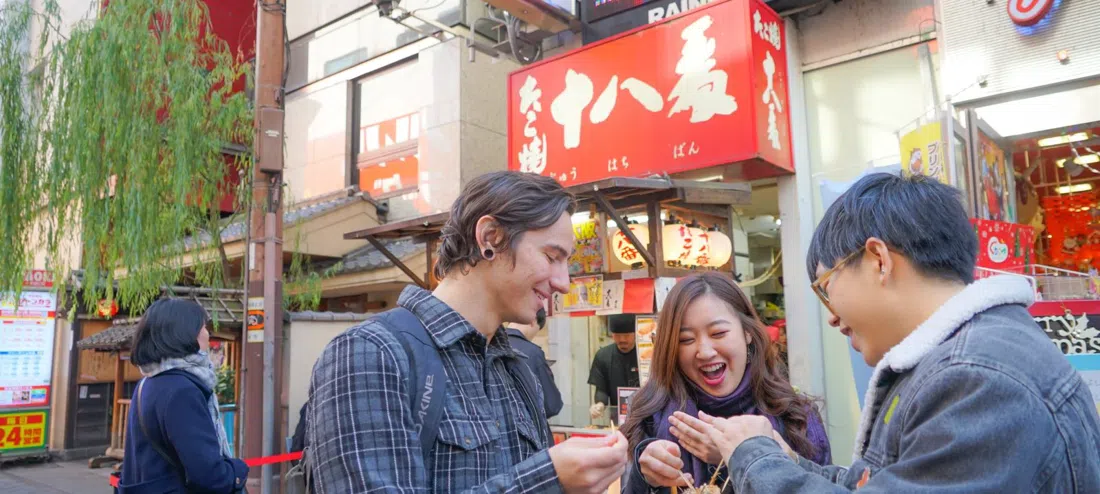
Arigato Japan Food Tours是最为精致也最昂贵的选择,三小时行程每人20,000至25,000日元。每团最多10人,也提供私人及完全定制的出发安排。十人在戎桥(Ebisubashi)路口集合,然后从主街悄悄拐入后巷,前往隐秘的神社,途中会在一家获米其林推荐的章鱼烧摊停留。他们的旗舰道顿堀步行游是白天的产品。如果你的主要目的是欣赏灯光,请务必特意要求安排晚间出发的行程。
日期、休业与预订
有两处需要提前购票,分别是大阪城庭园和蓝天大厦展望台,两者均为限时入场。前往法善寺的柜台时请备好现金;参加导览行程前请先确认费用包含的内容;如果你是来过新年的,需避开难波公园的两个休园日。更多大阪信息请参阅大阪指南。
Osaka的酒店

常见问题
2026年大阪的冬季灯光秀何时举行?
御堂筋灯饰照明时间为2026年11月3日至12月31日。大阪站城的Twilight Fantasy于11月11日至12月25日举行,天满桥圣诞市集为11月20日至12月25日,梅田蓝天大厦的Wonder Christmas Marche则为11月13日至12月25日。难波光之旅及道顿堀河滨步道项目将持续至2027年2月14日,UMEKITA的香槟金色灯光秀则持续至2027年2月28日。
哪个灯光秀真正设有美食摊位?
中之岛。OSAKA Hikari no Renaissance 2026中的光之市集(Hikari no Marche)在河道沿岸的浪花桥一端设有餐饮摊位,营业时间为16:00至22:00,每件商品500至1,200日元。摊位仅于2026年12月11日至25日营业,而树木灯饰街道与市政厅投影映射则持续更久。
如果我在1月或2月前往,还有灯光可看吗?
是的。梅北(UMEKITA)的香槟金色灯光秀将持续至2027年2月28日,难波光之旅、道顿堀河滨步道上的Minami Hikari Masse项目以及大阪城灯光秀,都将持续至2027年2月14日。圣诞市集则于12月25日结束。
哪些需要付费?
大阪城灯光秀成人票价2,000日元,儿童1,000日元,另加500日元优先入场费。梅田蓝天大厦空中展望台每人2,000日元,需预约固定时段入场。其余景点均可免费步行游览,包括御堂筋、中之岛、UMEKITA、大阪站城、难波公园、Tenshiba、京桥和道顿堀河滨步道。
八人团能在法善寺横丁用餐吗?
不能全部挤在同一个柜台。小巷里的柜台每家可坐6至10人,因此超过6人的团体需要分开在两家店就座,或提前预约。大多数店铺只收现金,晚餐人均2,500至6,000日元。
作者
Rina Fukuda
Osaka's kitchens, counter by counter
Rina grew up above her family's okonomiyaki counter in Fukushima-ku and has spent a decade reviewing Osaka kitchens from Kuromon Market stalls to Michelin kappo counters. She tracks which kissaten still roast their own beans and which kushikatsu spots locals actually queue for.