Cairo stories
28 stories from thecairoguide.com, newest first.

Grand Egyptian Museum After Year One: New $35 Ticket, Late Nights and the Eternal Sun Show
A year in, the Grand Egyptian Museum costs more and sells only booked slots. Timing the visit around the Eternal Sun show takes planning, and other Cairo museums are still worth a morning.

Cairo's Egyptian Museum on a December Morning
What Tahrir still holds after the gold moved to Giza, and how to build a December day around it.

Inside the Great Pyramid of Giza and Across the Plateau
What plateau entry costs, how the capped Khufu ticket works, why Khafre's chamber is the better-preserved one, and where to sit with the pyramids in front of you.

A Cairo Morning Beneath the Step Pyramid at Saqqara in October
What there is to see inside Djoser's pyramid, what the gate charges in EGP, and why arriving at eight changes the rest of the day.

Meeting the Great Sphinx Face to Face in Cairo
What you actually see at the Sphinx, the hour its face is lit, how the new Giza gate has changed the whole day, and where to hide when the heat or the sand wins.

Cairo's Real Night Starts When the Pyramids Close
The coaches leave the plateau at closing time and most visitors go with them. Here is what the city does with the nine hours after that, including a Zamalek terrace and a Wednesday zar sitting in Mounira.

Walk Islamic Cairo from Bab al-Futuh to the Citadel
A minaret-by-minaret route through medieval Cairo: what the doors cost, which stairs you can actually climb, when prayer times shut things, and whether to bother with a guide.

Cairo's Grand Egyptian Museum and the Pyramids Beyond It
How to split a Giza day between the new museum, the plateau's relocated gate and the quieter pyramids to the south.

Cairo Seen from Its Towers, Minarets and Rooftops
A dozen places to get above Cairo: a lattice tower, two minaret stairs, a hilltop park, five river rooftops and the tables that face the pyramids, with what each costs, when it opens and who it suits.

Eating Cairo from the Koshary Counter to the Juice Window
One day of eating in Cairo, beginning at the morning foul counters and ending at a mango juice window, with the price, the queue and the door to expect at every stop.

Three Days in Cairo at a Walking Pace
A workable first-visit plan for Cairo, built around one anchor sight a day, with the opening hours, booking rules and gate changes that catch people out.

How a Shi'a Caliphate Shaped Cairo's Historic Core
A myth-vs-reality walk through the mosques, gates and shrines the Fatimids left behind, and the market and sultan's dynasty that grew over what they lost.

Follow the Cannon Fire: Cairo's Ramadan Iftar Trail
A door-by-door trail through Cairo's Ramadan iftar scene — from a 1773 tea house to a Nile-view splurge — with real prices, booking rules and who each table actually suits.

The Pigeon Towers of Cairo: The Rooftop Hamam Tradition
Above Cairo's rooftops, wooden dovecotes still hold working flocks — here's where to watch them fly, where their keepers buy and sell birds, and where hamam mahshi ends up on the plate.

The Nile felucca at dusk — Cairo's lateen-rigged sailboats and the captains who've worked the river for generations
An hour on the water at golden hour, from the flag-it-down Corniche docks to the fixed-price operators and the one crossing that isn't a tourist product at all.

The City of the Dead: Living Among the Tombs in Cairo's Necropolis
Inside Cairo's Northern and Southern Cemeteries, where Mamluk sultans built tombs meant to be lived in - and generations of Cairenes still do.

Parliament of the Ahwa: Inside Cairo's Coffeehouse Life
From Naguib Mahfouz's 18th-century alley to the downtown passages where revolutions were argued into being — how to read, order and belong in Cairo's coffeehouses in 2026.

The Art of the Haggle: A Local's Guide to Khan el-Khalili
How to read Cairo's 700-year-old bazaar, price a copper lantern, and know which stalls reward a hard bargain and which don't — with the tea stops, kebab houses and timings to plan a full day around.

The Best Desert Adventures in Cairo
From quad convoys below the Great Pyramid to the White Desert's chalk under the stars — a calm, honest map of every desert trip worth taking from Cairo in 2026.

Zamalek, Cairo: the Nile Island Where the City Lowers Its Voice
On Gezira island, Cairo trades traffic for plane trees, galleries and Nile-view dinners — a polished, walkable quarter where the evening can still feel civilised.

Maadi, Cairo: the garden suburb that learned to move at its own pace
A leafy, walkable Cairo district of numbered roads, serious coffee and sunset Nile walks, Maadi trades noise for shade without losing the city’s pulse.

Islamic Cairo, Cairo: walking the medieval city that never emptied out
A living maze of Fatimid gates, Mamluk stonework, bazaar smoke and floodlit evenings, where Cairo’s medieval quarter still hammers, prays, shops and strolls in the same breath.
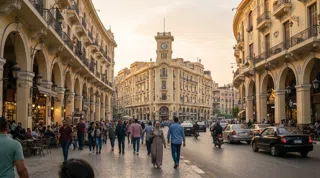
Heliopolis, Cairo: Belle-Époque Calm at the Edge of the Airport
A planned desert suburb turned polished Cairo enclave, Heliopolis pairs the Baron’s palace and El-Korba arcades with café terraces, villa bars and the city’s easiest airport access.
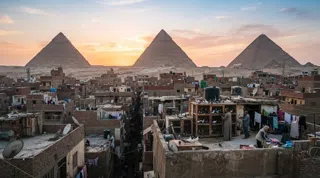
Giza, Cairo: the pyramids at your doorstep
A neighbourhood feature on Giza, where the plateau, the Grand Egyptian Museum and the everyday sprawl of Al Haram Street collide under the same impossible skyline.

Garden City, Cairo: the quiet Nile-side maze of embassies, villas and hotel terraces
A curving, embassy-lined pocket south of Tahrir, Garden City is Cairo at its most hushed: belle-époque streets, riverfront five-stars, sunset feluccas and a walkable path to the Egyptian Museum.

Downtown Cairo: Wust El-Balad’s Beating Heart
A walk through Cairo’s Khedivial quarter, where Belle Époque facades, koshari counters, old bars and literary cafes keep the city’s pulse stubbornly alive.
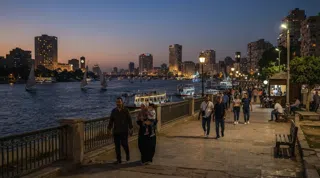
Dokki & Agouza, Cairo: the west bank where ordinary life meets the Nile
Across from Zamalek, Dokki and Agouza offer Cairo at street level: metro access, seafood institutions, riverfront walks and a working-city rhythm that feels lived-in rather than staged.
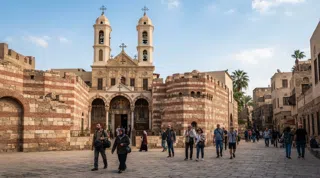
Coptic Cairo, Cairo: A Walk Through Egypt’s Oldest Christian Quarter
A car-free pocket of Roman towers, sunken lanes and candlelit churches where Cairo’s Christian, Jewish and Islamic histories sit within a few hundred metres of one another.