Casablanca stories
25 stories from casablancaholidays.com, newest first.

Derb Ghallef, Casablanca's 4,000-trader market quarter
Four thousand traders work under corrugated iron. Gabriel Loire's stained glass is 1.9 km north, and two rooftops are within a tram ride. The guide covers all of it, street by street.

Casablanca's Quartier des Hôpitaux, street by street
Gabriel Loire's 1954 glass wall, a Russian onion dome, a parakeet park from 1907 and the best cooking in the hospitals streets are all inside one walk.

Walking Casablanca Marina from Casa-Port to the mosque
The walk from Casa-Port station to the Hassan II Mosque is flat and all seafront: the medina ramparts, the marina terrace deck, an oyster bar in the fishing port.

Walking the Hassan II Mosque Waterfront in Casablanca
Tour times at the mosque, the 1770s ramparts next door, the fish tables inside the port, and where to sleep on this stretch of Atlantic seafront.

Eight Days From Casablanca Through the Imperial Cities
An eight-day route out of Casablanca built around a guided mosque tour, a Roman hillside, a cash-only granary and one night on the dunes.

Pigeons, Palms and Art Deco at Casablanca's Place Mohammed V
Casablanca's central plaza is free and has no gate: what you can walk into, what you pay for nearby, and when the fountain is worth waiting for.

Fish, Figs and Mint Tea Inside Casablanca Central Market
How to buy a fish by weight, have it grilled ten metres away and eat for under 100 dirhams in the middle of downtown Casablanca, with the renovation works, the dust and the closed days all accounted for.

Three Hours Inside Casablanca's Ancienne Medina
What there is to see inside Casablanca's walled old quarter, how long a visit takes, which gate to use, and whether a guide earns its fee.

Tracing Jewish Casablanca From the Mellah to Beth-El
A workable route through what is left of Casablanca's Jewish quarter: the museum in Oasis, two cemeteries, the synagogues that still hold services, and the phone calls that get you through the door.

Where the Atlantic Breaks Under Casablanca's Hassan II Mosque
What the guided hour inside Morocco's seaside mosque shows you, how the fixed-time slots work, and what else fits into the half-day around it.

How the Hassan II Mosque Redrew Casablanca's Skyline
The story of the mosque built into the Atlantic tide, and the ramparts, lighthouse, cathedral and rooftop bars that let you read the skyline around it.

The Hammam Hour: Casablanca's Public Bathhouses and the Ritual That Outlasted the French
From a 70-dirham workers' bathhouse in Gauthier to a concierge-booked spa in Anfa, Casablanca's hammams are the one daily ritual the city never let anyone modernise away.

Mauresque: Casablanca's Art Deco City Hiding in Plain Sight
Skip the airport transfer and walk the 1920s new town — Casablanca is one of the world's great, least-visited open-air museums of Art Deco and its Moroccan hybrid, the Mauresque.

The City That Talks Over Coffee: Casablanca's Café Culture and the Art of the Afternoon
From third-wave roasteries in Maarif to a walled garden café in the old medina, a considered guide to where Casablanca actually sits down, orders slowly, and lets the afternoon unspool.

The Port at Dawn: Casablanca's Fish Market and the Grill Stalls That Follow
Follow the catch from Marché Central's dawn stalls to the working port and the Corniche — the honest, price-by-price guide to eating Casablanca's freshest fish in 2026.

The White City in Deco: Casablanca's Forgotten Architecture Trail
Casablanca hides one of the world's densest Art Deco quarters in plain sight — here is how to walk it, read it, eat in it, and sleep inside it.

Oasis, Casablanca: the quiet quarter that keeps its own rhythm
A residential Casablanca of station platforms, villa streets and a cooperative market, Oasis is the city at rest — practical, leafy and knowingly unshowy.

Maârif, Casablanca: the city’s working centre of shopping, cafés and late-night life
In Maârif, Casablanca stops posing and gets on with itself: shopping grids, serious coffee, good tagines, rooftop views and the everyday bustle locals actually use.

Habous, Casablanca: Morocco’s Calm New Medina
A 1920s medina of arcades, pastries and brasswork, Habous is Casablanca at its most orderly, photogenic and quietly revealing.

Gauthier, Casablanca: the walkable quarter where the city goes out
A slow, street-level feature on Casablanca’s most compact dining-and-drinking district, from Neapolitan pizza and vegan paella to rooftop cocktails and Art Deco culture.

Centre Ville, Casablanca: Art Deco, tram bells and the city’s working heart
Casablanca’s Ville Nouvelle is grand, faded and unmistakably alive — a place to walk under arcades, eat with office workers, and read the city in its buildings.

Bourgogne, Casablanca: the ordinary neighbourhood that holds the city together
Between the Twin Center and the Atlantic, Bourgogne is Casablanca at street level: lived-in, good-value, and full of the small rituals that make a city feel inhabited.
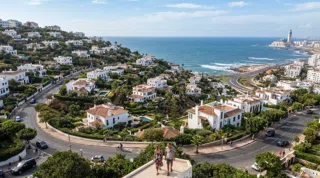
Anfa, Casablanca: the city’s quiet hill of villas, parks and sea air
A calm, green plateau above Casablanca’s noise, Anfa folds modernist villas, a racecourse, a finance district and Atlantic air into the city’s smartest residential address.

Ancienne Medina, Casablanca: the city’s oldest quarter still at work
Casablanca’s original walled town is not a postcard medina but a living one — compact, scruffy, salt-brushed and full of the ordinary commerce that still keeps the city moving.

Ain Diab / La Corniche, Casablanca: where the city goes to breathe, eat fish and stay up late
On Casablanca’s Atlantic edge, Ain Diab / La Corniche shifts from beach-club daylight to the city’s loudest after-dark strip, with seafood, sea views and a salty wind that changes the mood of the whole metropolis.