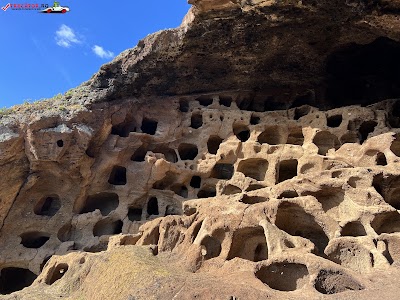

Cenobio de Valerón
A pre-Hispanic collective granary carved into a cliff face with close to 300 individual storage chambers, built and used by the Guanches for grain storage for centuries before the conquest.
modest entry fee; allow 45 minutes to an hour; limited access some days, check ahead
More landmarks & architecture in Gran Canaria

Roque Nublo
An 80-metre basalt monolith near the island's highest point, named for the clouds that frequently wreathe its summit and visible from much of the southern half of the island.
Tip: best reached via the La Goleta trailhead; a short, moderate walk to the base viewpoint; go early to beat both heat and cloud cover

Dunas de Maspalomas
A protected nature reserve combining living sand dunes, a palm grove and a saltwater lagoon, directly behind the resort strip but under full environmental protection.
Tip: free to walk; respect marked paths, as off-path walking damages the dune ecosystem and is discouraged
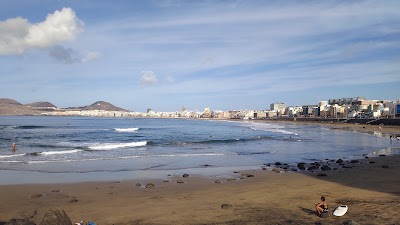
Playa de Las Canteras
A three-kilometre city beach protected along most of its length by La Barra, a limestone reef over 100,000 years old that keeps the water calm enough to swim year-round.
Tip: free and open; the reef end is better for swimming, the northern end better for surfing

Church of San Juan Bautista (Arucas Cathedral)
A Neo-Gothic basilica built from local volcanic stone over nearly seven decades, the architectural centrepiece of the island's rum-producing north.
Tip: free to enter; allow 30 minutes; pair with a visit to the nearby Arehucas distillery
Where it is
Reviews
Good morning! I highly recommend this place — it was an amazing experience with truly breathtaking views. The museum is very well designed, with the opportunity to see the life of the indigenous people of the island (although the exhibits cannot be touched). We would also like to thank the administrator, Andrey. He was very friendly, welcoming, and shared many valuable tips and interesting facts. It was also a very pleasant and unexpected surprise to learn that he is originally from Belarus, just like us. He is a true professional who inspires you to visit the museum again and continue learning about the history of the Canary Islands.
If you are interested in human history and how things begun in Gran Canaria, then you will enjoy this place located in the north of Gran Canaria. If you don't have a car, then with the bus and a 40min walk its also possible. The mountains and gorges all around are fantastic
Nice place to visit. You buy the tickets at the entrance and there is free parking. The entry fee is €3, or €2 if you are a student like me 😉. At the ticket office there is a very friendly guy who speaks loads of languages, even Polish.Long history here, but I won’t go into too much detail. This place is very old and important. It was used by the ancient people of Gran Canaria as a grain storage around 800 years ago. The caves were carved by hand into volcanic rock and there are more than 300 small chambers inside where they kept food safe. The car park is quite small, so depending on the time and the day, it can be hard to find a space. The visit itself takes about 30 minutes if you read all the information boards. I think it’s worth a stop if you are nearby.
The caves can be reached via an adventurous mountain road - as basicly all the places in Gran Canaria :). Parking is free, and tickets can be purchased at the entrance. It was very interesting to see this place and learn about its history, and how people used to live here in the past. It’s not a long visit (we spent about an hour here), but it’s definitely worth seeing.
Reviews are from Google. See the listing on Google Maps.