97 city guides · 2,846 stories, new content daily
21 stories from thejerusalemguide.com, newest first.
Non-Muslims can enter the gold-domed esplanade in only two short windows a day, and how long you queue at the Western Wall decides whether you make the first one.
Most of the Old City's quietest quarter is free to walk; what needs timing is a 30-minute cathedral window and a ramparts walk that shuts before vespers begins.
Sunrise and the Friday hour before Shabbat are when to be on the plaza, and the tunnels underneath need booking ahead. Prices, rules and timings for an Old City morning.
The citadel just inside Jaffa Gate is the one museum that arranges Jerusalem in your head before you walk into it. Here is how to time it, what to skip, and what the climb is really like.
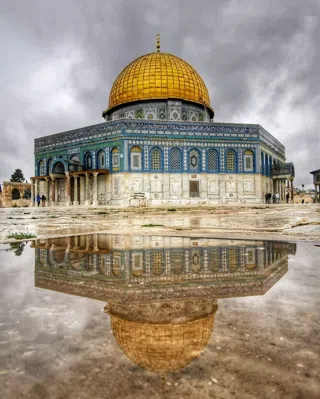
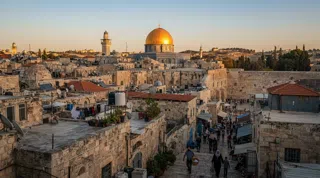
Non-Muslims can't go inside the Dome of the Rock, but you can stand beside it. Here is the gate to use, the two narrow windows, the dress code and the rooftops that show you the gold.
Twenty-five quiet hours in Jerusalem, walked properly: when to stand at the Kotel, which synagogue can take a whole group, and what actually opens on Saturday.
A half day on foot inside the walls: what to book before you fly, what costs nothing, and the hours and dress rules that decide whether you get in.
Jerusalem's only light rail line runs the length of the city's oldest arguments in under an hour, and riding it end to end is the calmest, cheapest way to actually see the whole place.
A walled garden behind an ophthalmologist's clinic once gathered the painters, poets and officials who shaped Mandate-era Jerusalem — and the houses, bars, cafés and archives nearby still trace that circle today.
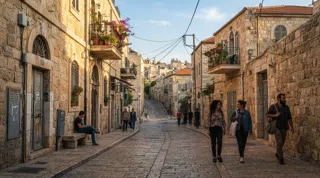
A calm, hour-by-hour guide to walking the Old City's Jewish, Muslim, Christian and Armenian quarters — with honest door policies, prayer-time realities and what actually suits couples versus groups in 2026.
A calm, early-rising walk through the holiest few hundred metres on earth — where six denominations, three faiths and three thousand years share the same worn limestone, and how to see it with respect and good timing.
Ten terraces, bars and café roofs — from a ₪5 Old City parapet to a Waldorf cocktail deck — and exactly how to time, book and read each one.
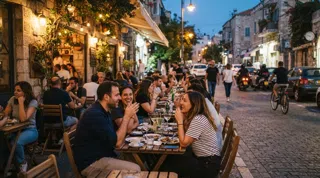
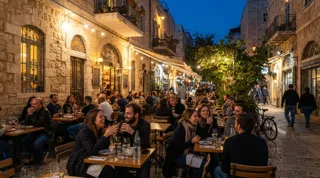
How the same covered lanes of Jerusalem's great shuk shift from Iraqi kubbeh at noon to craft beer and Sephardic hookah by midnight — and exactly where to eat, drink, and book.
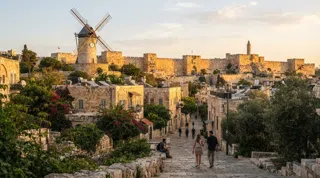
A quiet hillside quarter of bougainvillea, windmills and Old City views, Yemin Moshe is Jerusalem at its most photogenic and most hushed.
A leafy 1920s garden suburb where Jerusalem’s old political class, academic life and a surprisingly lively food street still share the same quiet, curved lanes.
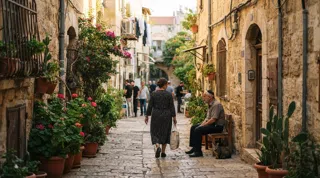
Inside one square kilometre of Ottoman stone, Jerusalem’s Old City compresses three faiths, four quarters and centuries of trade into a walk that is as moving as it is crowded.
A walk through Jerusalem’s most lived-in maze, where Mahane Yehuda’s noise spills into old courtyard lanes, synagogues, bars and bakeries all share the same few blocks, and Friday evening turns the whole quarter to candlelight.
A quiet, steep quarter between Damascus Gate and downtown, Musrara turns Jerusalem’s history into a walkable palimpsest of mansions, murals, art schools and memory.
A slow, green Jerusalem neighbourhood where Templer stone houses, kosher cafés and an old railway line shape a walkable, Anglo-friendly life.
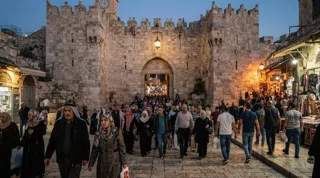
From Damascus Gate to Sheikh Jarrah, East Jerusalem moves to its own rhythm: Palestinian food, serious pilgrimage sites, bookshops, old hotels and a street life that feels local rather than polished.
Jerusalem’s most walkable, late-night neighbourhood is a compact wedge of pedestrian streets where cafes, falafel counters and hidden bars spill from Jaffa Road into Nachalat Shiva.