Melbourne stories
23 stories from melbournecitybreak.com, newest first.

Australian Open 2027: Ground Pass Deals, Opening Week and How to Plan a Melbourne Trip
The Australian Open runs for three weeks at Melbourne Park, and a Ground Pass covers most of it. The ticket does more than people expect, and the hours it leaves you are easy to fill.

Melbourne's Puffing Billy steam run to Gembrook in November
A 24 km narrow-gauge line from Belgrave to Gembrook, the rules for sitting on the window sill, and what else is open across the Dandenongs this November.

Walking Into Mr Moon at Luna Park Melbourne in November
The 1912 Scenic Railway runs weekends only through November 2026, and the rest of St Kilda is a 10-minute walk from the gates.

October Lantern Nights at Moonlit Sanctuary Near Melbourne
You walk the boardwalk by lantern for 1.5 to two hours and see Pearcedale's nocturnal animals while they are awake, and the free wetlands and sculpture parks nearby cover the daylight hours before you go.

Walking Loch Ard Gorge on an October 2026 Melbourne Day Trip
A straight account of what you can walk to at Loch Ard Gorge in October 2026, including the beach stairs that may or may not be open and the new booking rule next door.

Penguins and Palms in Melbourne's St Kilda This November
How to time a November evening in St Kilda around the little penguin colony, the palms on the foreshore and the cake shops on Acland Street, plus when a private guide actually earns its fee.

The Quiet Courtyards Behind Melbourne's Busiest Laneways
A walking route through the CBD's arcades, cottage distilleries and container courtyards, with notes on which ones will seat a group and which will turn six people away at the door.

Melbourne Racing on Twenty Dollars and a Train Ticket
Melbourne has fourteen racecourses within a train ride of the CBD, nobody checks what you're wearing, entry runs AU$15 to AU$35, and plenty of the 2026 racing happens on the cheapest lawns.

Winter in Melbourne Means Football, Full Stop
From the roar inside the MCG to the fence-line quiet of suburban training grounds, how to spend an AFL Saturday in Melbourne the way the city actually spends it.
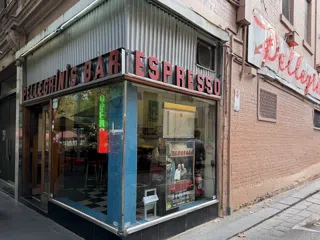
Melbourne's Coffee Obsession: Where the Flat White Was Born
From a 1954 Bourke Street espresso bar to warehouse roasteries in Fitzroy, Melbourne didn't just adopt coffee culture — it built its own, and this is the route through it.

The Roof of the City: Melbourne's Rooftop Bars and the Culture That Learned to Look Up
Melbourne has no harbour to build a view around, so it built one on top of its car parks and office blocks instead — here's how to find the right one, current as of 2026.
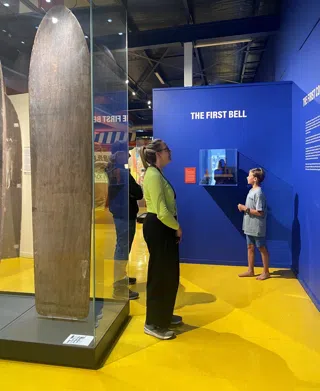
Salt, Wax and Shipwrecks: The Great Ocean Road's Surf-Coast Subculture
From the boardshort factories of Torquay to the cliffs where the ocean is still eating the road, this is the Great Ocean Road told through the surf towns and shipwrecks that actually built it.
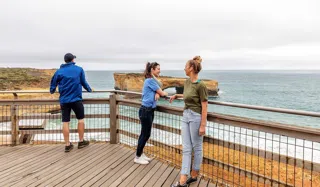
The Great Ocean Road's Wild, Windswept Edge
A stop-by-stop, honest guide to Victoria's signature coastal drive — who each stretch suits, what it costs, and why the wind never really stops.

The City Written in Its Lanes: Inside Melbourne's Laneway Culture
A walk-by-walk guide to Melbourne's laneways — where to find the street art, the coffee, and the after-dark bars, and which ones actually suit your group.

St Kilda, Melbourne: cake shops, penguins and the old seaside swagger
Melbourne’s bayside contradiction still works because it refuses to tidy itself up: Luna Park rattles, the penguins come in at dusk, and Acland Street keeps feeding everyone cake.

Southbank, Melbourne: riverfront gloss, galleries and skyline drinks
Across the Yarra from Flinders Street, Southbank trades laneway grit for river views, gallery halls, rooftop bars and the kind of polished Melbourne that knows exactly how to pose.

South Yarra, Melbourne: gloss, gardens and the long walk between them
A polished inner suburb where the Tan feeds the cafés, Chapel Street feeds the nights, and the Botanic Gardens keep everyone honest.

Richmond, Melbourne: where Little Saigon meets the MCG
A walkable inner suburb of banh mi queues, live-music pubs and match-day scarves, Richmond is Melbourne at its most useful and least polished.

Fitzroy, Melbourne: where the city’s rebel heart still beats
Melbourne’s first suburb is still the one that feels most alive at street level, where murals, bars, galleries and late-night food all crowd the same few blocks.

Collingwood, Melbourne: breweries, murals and train-carriage burgers on Smith Street
A walk through Melbourne’s rough-edged inner-north suburb, where warehouse bones, Keith Haring, rooftop burgers and serious beer all jostle for space.
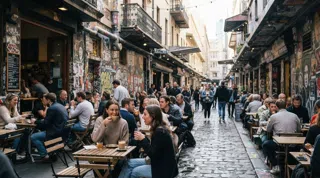
Melbourne CBD: laneways, trams and the city’s edible centre
A walkable grid of espresso bars, arcades, hidden cocktail rooms and old-school institutions, Melbourne’s CBD is still the city’s most efficient way to eat, drink and understand itself.

Carlton, Melbourne: espresso heritage, gardens and Little Italy
A walk through Carlton’s old espresso counters, leafy terraces and museum lawns, where Melbourne’s Italian heart still beats beside campus life and UNESCO grandeur.

Brunswick, Melbourne: Sydney Road’s lived-in inner north
A walk through Brunswick, where Melbourne’s migrant bakeries, pub bands, vintage racks and tram clatter still make the suburb feel gloriously unpolished.