Prague stories
21 stories from praguecitybreaks.com, newest first.

Holesovice, Prague: Galleries, Lager Bars and Brunch in the City's Creative District
Holesovice is worth a full day. Plan it around brunch, a gallery visit timed to what's showing, and an evening at either the circus in the old slaughterhouse or the scrap-metal club.

Where to Stand for the Prague Orloj in November 2026
The apostle procession is free, runs on the hour and is over inside a minute. What November 2026 changes is which towers, windows and terraces around it are open.
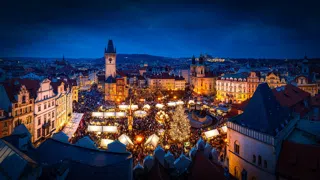
Prague Christmas Markets 2026: Dates, Prices and a Day-by-Day Plan
Fourteen Prague markets, their 2026 dates and their prices, laid out as a three-day walk with the Advent Saturdays and the one-weekend fairs.

How to Climb Prague's Petřín Tower in October Without a Queue
Arrive in the first hour after opening and entry is half price. The funicular was rebuilt in September 2026, and on the hill itself everything except the tickets is free.

Walking Charles Bridge Before Prague's Crowds Arrive
The crowds on Prague's most famous bridge run to a timetable, which means you can plan around them: cross in near-silence, pick the right tower to climb, and eat two minutes from either end.

Finding the Quiet Side of Prague's Wenceslas Square
Prague's busiest boulevard still holds pockets of quiet, a walled garden, a cupola, a bunker and a passage balcony, each about thirty seconds off the pavement.

Walking Prague's Nové Město in September
Charles IV's New Town of 1348, in September 2026: what the Wenceslas Square works actually change, which museums earn their ninety minutes, and where the cheap views are.

Prague's Habit of Throwing People Out of Windows
A walking history that connects three defenestrations across six centuries, from a Hussite riot on Charles Square to the still-disputed death that ended any illusion of a soft Communist takeover.

Walking Kafka's Prague: From Birth-House to Grave
A block-by-block trail through the streets, cafés, and courtyards that shaped Franz Kafka's fiction — and the strange modern monuments that keep reinventing him.

Prague's Communist-Era Metro Art
A self-guided crawl through sixteen stations across all three lines, from a vertigo-inducing escalator to a scrapped Olympic memorial, before one of them disappears behind scaffolding in 2027.

The Other Pour: Prague's Beer Spas and the City's Weirdest Wellness Ritual
In Prague you don't just drink the beer — you bathe in it, and the ritual is older and stranger than it first looks.

The City That Built in Angles: Prague's Cubist Architecture
For a few years before the First World War, Prague's architects did something no other city dared — they built cubism into concrete and stone, and much of it still stands.
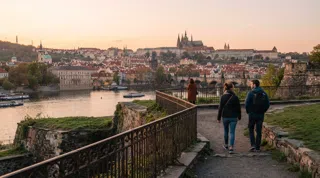
Vyšehrad, Prague: the quiet fortress above the Vltava
Prague’s clifftop afterthought is really its calmest great hit: a free fortress park with the city’s oldest building, a national cemetery, and a sunset that makes the rest of Prague look slightly overbooked.
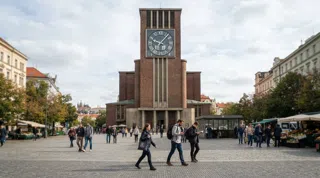
Vinohrady, Prague: Belle-Époque Streets, Beer Gardens and the Best Local Table in Town
Prague’s Vinohrady is where the city loosens its tie: a residential belle-époque grid of parks, markets, microbreweries and long dinners, only a few metro stops from the centre.

Staré Město, Prague: the old core that still knows how to misbehave
Prague’s Old Town is the city’s medieval postcard, but the real story starts one street back, where tank beer, serious cooking and late-night noise still share the same stones.

Smíchov, Prague: beer, transit and the city at street level
A left-bank district of brewery chimneys, fast trams and proper neighbourhood life, where Prague feels lived in rather than posed.

Nové Město, Prague: the city’s working centre with grand cafés and river nights
Charles IV’s New Town is Prague at full volume: a practical, architectural, café-lined district where you walk from Wenceslas Square to the river, with room for museums, markets, theatres and a late drink if you know where to stand.

Malá Strana, Prague: baroque calm below the castle
A walk through Prague’s Lesser Town, where castle views, garden walls, and the last decent lunch before the bridge crowd make the city slow down.

Karlín, Prague: where the city eats, drinks and quietly reinvents itself
A post-flood Prague neighbourhood of bakeries, taprooms and restored industry, Karlín is where locals go to eat well without the Old Town theatre.

Žižkov, Prague: the city’s scruffier, livelier uphill quarter
A walk through Prague’s beer-soaked, hill-climbing district of TV towers, wartime memory, late kitchens and pubs that keep the lights on long after the centre has gone polite.

Holešovice, Prague: the city’s rough-edged creative quarter
A post-industrial Prague 7 district where slaughterhouses became markets, factories became galleries, and the night still belongs to bass, beer and the occasional good carbonara.