Shanghai stories
18 stories from shanghaicitybreak.com, newest first.

Shanghai's Bund by Luxury Car
A private car day on the Bund: the stone promenade is free, the bank lobby dates from 1923, Yu Garden sits inland, and a 14th-floor terrace looks over the Huangpu.

Shanghai's Pudong from river level to the 118th floor
Four paid decks, two free viewpoints and a 45-minute sailing in Lujiazui, with the prices, hours and queues for each.

Walking Into the Shanghai Museum Without a Queue
Entry is free and you can walk in. The star bronzes have moved across the river to Pudong, and while a special exhibition is on, the reservation rule is back.

Walking Shanghai's Nanjing Road End to End
A straight, stop-by-stop read on Shanghai's one-kilometre neon shopping mile: what is worth your time between People's Square and the Bund, and what to skip.

What the Ride Up Shanghai Tower Actually Feels Like
What ¥180 actually buys at 562 metres above Lujiazui, and how the lifts, the queues and the passport rule work.

How Shanghai Went From Pre-War Sedans to Driverless Cabs
One district on the far end of Line 11 holds a century of Chinese driving: museum sedans, a Grand Prix circuit, a kart track and a robotaxi that pulls over with nobody at the wheel.

The Old Jazz Band at the Peace Hotel: Shanghai's 1930s Soundtrack, Still Playing
Six musicians in their eighties still play Glenn Miller nightly on the Bund — the living thread that runs from Jazz Age Shanghai to the city's restless present, and the nine rooms where you can hear it.

Behind the Stone Gates: Life in Shanghai's Vanishing Longtang Lanes
A calm, honest walking guide to the shikumen lane neighbourhoods that made Shanghai — from the sanitised showpieces to the lanes where people still hang out their laundry as you pass.

The Best Food Tours in Shanghai for Authentic Local Eats
From dawn wet-market crawls to chef-led deep dives and a bike through the backstreets — the food tours worth your money in Shanghai in 2026, honestly ranked.
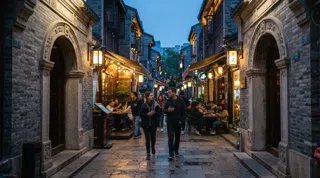
Xintiandi, Shanghai: polished lanes, real history, and a very good night out
A walk through Shanghai’s most manicured few blocks, where restored shikumen lanes, founding-era history and wine-bar evenings share the same pedestrian grid.
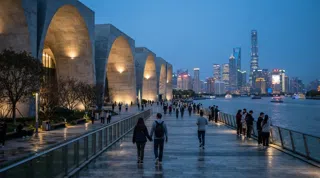
West Bund, Shanghai: the riverfront where art took over the factory edge
Shanghai’s West Bund turns a former industrial bank of the Huangpu into a calm, design-literate promenade of museums, silos, and long afternoon walks.
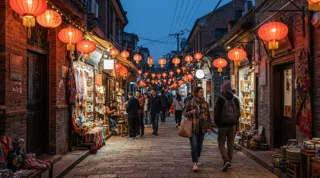
Tianzifang, Shanghai: a lane-by-lane walk through old shikumen life
A cramped, photogenic maze of 1930s shikumen lanes where laundry, coffee, craft shops and resident life still rub against the tourist flow.
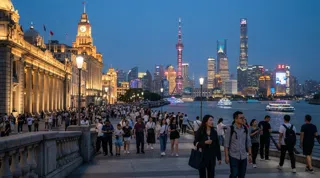
The Bund, Shanghai: where the city stages its skyline
A walk along Shanghai’s most famous waterfront, where bank facades, river light and rooftop tables turn the Huangpu into theatre.
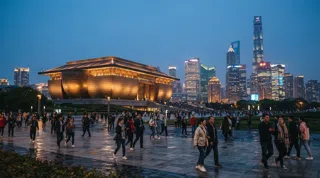
People's Square, Shanghai: the city's civic bullseye
A walk through Shanghai’s most central square, where museums, metro tunnels and marriage-market rituals share the same patch of paving.
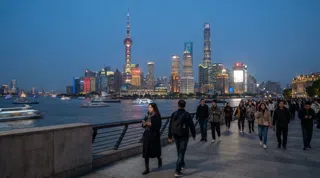
Lujiazui, Shanghai: the skyline district that learned to look back
Shanghai's most vertical neighbourhood is all towers, decks and river views — a polished financial quarter where the city goes up to be seen.
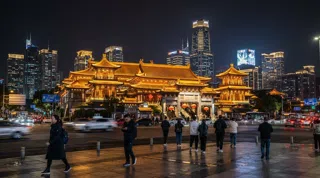
Jing'an, Shanghai: temple bells, luxury malls and lane-life on one block
In Jing'an, Shanghai, a 1,700-year-old temple and a Louis Vuitton flagship face each other across West Nanjing Road, setting the tone for a district where old Shanghai, new money and everyday lane life share the same walkable grid.
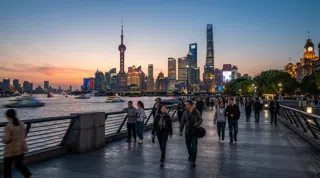
Hongkou, Shanghai: where the city keeps its memory by the river
A walk through Hongkou moves from wartime refuge and literary lanes to a newly polished North Bund, with noodle shops, museums and skyline views stitched together by ordinary street life.
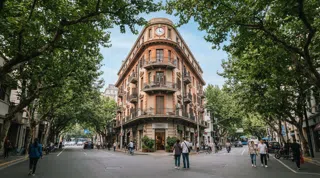
Former French Concession, Shanghai: plane trees, villas and bars
Shanghai’s most walkable quarter is a slow-burn of plane trees, garden villas, coffee counters and hidden cocktail doors, best read one lane at a time.