Split stories
18 stories from splitcitybreak.com, newest first.

Rubbing Gregory of Nin's Bronze Toe in Split
The toe is free to touch, it sits at knee height, and everything worth pairing with it is within a few minutes of the Golden Gate.

Split's Blue Lagoon Day Boat to Krknjaši Bay in October
Croatia's Blue Lagoon is free to swim and 14 NM from Split by boat. In October the water still holds up after the kitchens on the shore have closed.

Split's Cathedral of St Domnius and the Bell Tower Climb
Diocletian's own tomb became the church of the martyr he killed, and the 57m tower beside it is open again. This guide covers what the ticket buys, when to go and whether the climb earns the queue.

Walking Split's Old Town Before Nine in October 2026
The Roman precinct is free, the interiors are not, and in October the whole thing is yours for two hours at either end of the day. Those two hours are the ones to plan around.

How to Do Zlatni Rat Beach as a Day Trip from Split
The Golden Horn is an hour's boat ride from the city, and its tip swings round with the wind, so the hour you stand on it decides most of what you get.
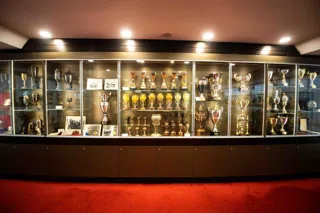
Following Torcida Through Split on a Hajduk Matchday
Split's terrace culture predates most of Europe's ultras groups and grew out of the city's working-class, anti-fascist past. Here is how to see it properly, from Poljud to the third-half bars, without turning it into a spectacle.

The 48 Hours in Split That Start After the Tour Boats Leave
When the cruise crowds clear the Riva by evening, Split hands itself over to rakija cellars, a Roman-arch tavern, and a beach club that runs till dawn. Here's how to spend the two days that belong to the city, not the day trip.
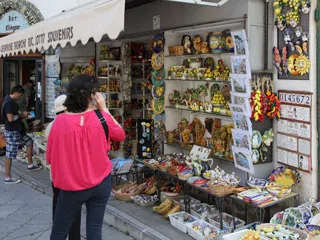
From Pazar to Peka: A Day of Eating Your Way Through Split
A single-day route through Split's market stalls, fish trattorias, wine bars and konobas, built around exactly what the Adriatic and the Dalmatian hinterland put on the table each morning.

The Riva, Split: Split's Stage for the Daily Passeggiata
From an 8am espresso at Lvxor to a bottle-service table at Central, here's how to read Split's marble promenade the way locals actually walk it.

Marjan: Split's Forested Peninsula and the Hill That Keeps the City Sane
How to walk Split's pine-forested hill — its cliff hermitages, hidden beaches, sculptor's villa and summit café — the way locals actually do it.

Chasing the Jadrolinija Timetable: A Split Island-Hopping Story
From the €6 public ferry to a crewed yacht that costs more per day than most people's holiday — how to island-hop out of Split without wasting a single morning on the wrong boat.
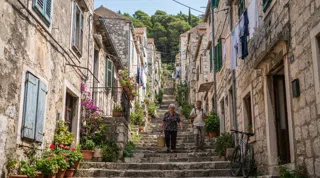
Varos, Split: the stone quarter where the city still eats at home
A walk through Split’s old fishermen’s quarter, where steep lanes, family konobas and Marjan’s first steps keep the pace stubbornly local.
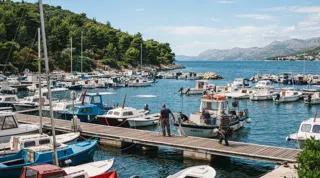
Spinut, Split: Marjan Pines, Poljud Nights and the Marina Between Them
A local, low-key Split quarter where the stadium, the sea and Marjan forest meet, Spinut is the city with its shoes off: practical, green and quietly proud of itself.

Radunica & Lucac, Split: the city’s quietest old neighbourhood
A crooked, lived-in slice of Split where the palace gives way to family lanes, konobas, and a June street feast that still belongs to locals.
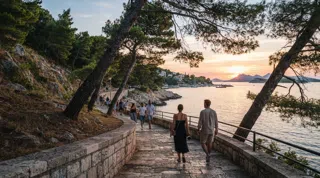
Meje, Split: the quiet seafront where Split loosens its collar
A slow, sea-facing stretch under Marjan hill where sculptor’s villas, pebble coves and sunset walks beat the Old Town crush every time.
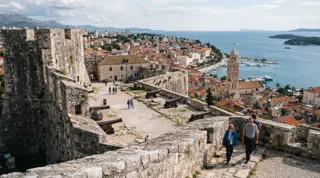
Gripe, Split: the quiet district with a fortress, markets and a proper local pulse
A lived-in Split neighbourhood of fortress walls, market mornings and residential calm, Gripe is where you come for the museum, the shopping and a quieter night’s sleep.

Grad, Split: Living Inside Diocletian’s Palace
Split’s Old Town is not a preserved ruin but a lived-in Roman palace, where the day starts with cathedral bells, ends with wine glasses on limestone, and rewards anyone who slips one lane off the main drag.
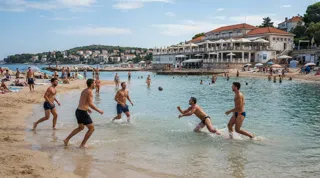
Bacvice, Split: sand, picigin and late nights by the Adriatic
Split’s sandy city beach is a rare mix of shallow water, heritage picigin and a club strip that runs long after the Old Town has gone quiet.