A data-driven guide — where to stay, what to eat, and what not to miss.
Share
Guests & rooms
The Tenerife guide
An insider’s read on Tenerife
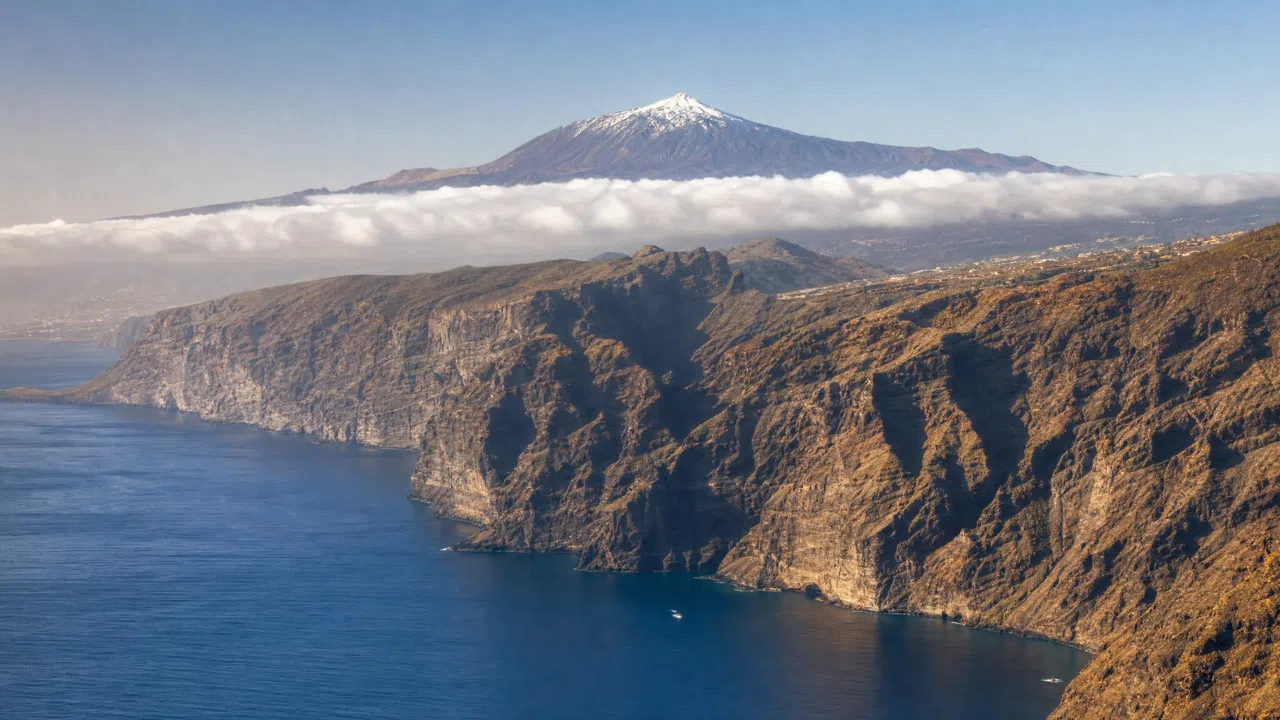
Mount Teide sits in the middle of all this, visible from almost every town on the island
Fly into Tenerife South and the plane banks low over scorched, terraced hillsides before the resort strips appear: swimming pools cut into black volcanic rock, English breakfasts advertised in neon two minutes from a square where old men play dominoes in Spanish. That tension, package tourism pressed up against a working Canarian island, is the whole story of the place, and it runs sharper here than anywhere else in the archipelago because Tenerife is large enough to hold both sides at once without either really noticing the other.
Drive forty minutes north from the clubs of Playa de las Américas and the climate flips. Cloud catches on pine forest, the coast turns to black sand, and Santa Cruz goes about its business as a working port city that has never needed tourists to validate it. Mount Teide sits in the middle of all this, visible from almost every town on the island, a standing reminder that the ground under the resorts is volcanic and the island is, geologically, still finishing itself.
What Tenerife rewards is contrast rather than consistency: a morning on a beach built from imported golden sand, an afternoon in a UNESCO-listed grid of sixteenth-century streets, an evening at a family bodega pouring its own wine two tables from the kitchen. Treat it as one destination and it disappoints; treat it as several, loosely stitched together by a ring road, and it delivers.
Where you sleep shapes the trip. Here’s the honest orientation, area by area.
via Google
Costa Adeje
For Good for couples and travellers who want reliable sun and comfort and are willing to pay resort prices for it; there's very little independent local life outside the hotel grounds.
The island's polished southwest coast: sheltered beaches, a seafront promenade running for kilometres, and the highest concentration of Michelin-starred kitchens in the Canary Islands, nearly all of them tucked inside five-star hotels.
Where to sleepBeachfront five-star hotels around Playa del Duque and La Caleta for a splurge; smaller aparthotels set further back from the water for less.
Playa del Duque
La Caleta promenade
Siam Park
via Google
Los Cristianos & Playa de las Américas
For Good for families at the Los Cristianos end and for a big night out at the Las Américas end; not the place for anyone chasing an authentic Canarian atmosphere.
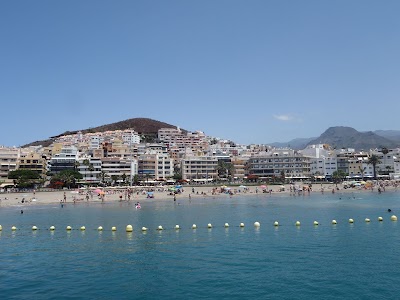
The island's purpose-built package-holiday engine, blurring into one long strip from the harbour at Los Cristianos to the clubs of Veronicas Strip in Las Américas — loud, built for volume, and unapologetic about it.
Where to sleepLos Cristianos for a quieter, more family-geared base near the ferry port; Las Américas if the nightlife is the actual point of the trip.
Los Cristianos harbour and ferry port
Veronicas Strip
Playa de Troya
via Google
Puerto de la Cruz
For Good for travellers who want character and real streets over an all-inclusive strip, and who don't mind a cooler, cloudier north-coast climate than the south.
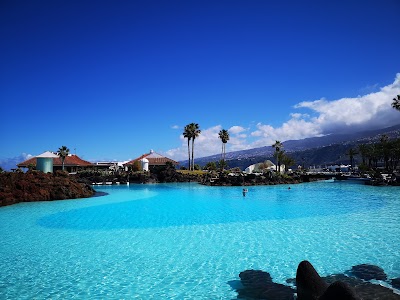
The oldest resort on the island and still a real town: a working fishing harbour, the Plaza del Charco for an evening beer, and a black-sand municipal beach built into volcanic rock rather than trucked-in sand.
Where to sleepFamily-run hotels around Plaza del Charco or near Playa Jardín keep you in the old town on foot, away from the larger package hotels on the edges.
Playa Jardín
Plaza del Charco
Loro Parque
via Google
Santa Cruz de Tenerife
For Good for travellers who want a functioning Spanish city rather than a beach strip, and don't mind a tram or bus ride to reach any beach at all.
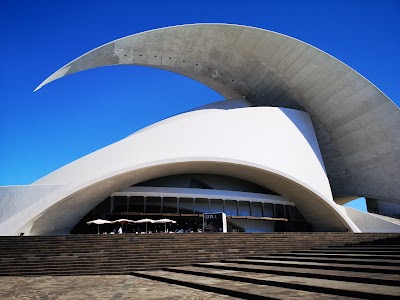
The island's working capital: a real port city with container cranes and rush-hour traffic, not a resort. Calatrava's Auditorio and the volcanic-concrete TEA arts centre sit a few streets from the cruise terminal, and Carnival every February turns the whole city inside out.
Where to sleepCity hotels near Plaza de España or La Rambla put you within walking distance of the tram line to La Laguna and both of the city's museums.
Auditorio de Tenerife
Mercado de Nuestra Señora de África
TEA Tenerife Espacio de las Artes
via Google
La Laguna
For Suits travellers who want nightlife with history attached and don't need a beach on the doorstep; the coast is a tram-and-bus ride away.
A UNESCO-listed former capital a few tram stops uphill from Santa Cruz, built on a grid of sixteenth-century streets, kept loud on weeknights by its university, and noticeably cooler and cloudier than the coast below it.
Where to sleepBoutique conversions of old merchant houses inside the historic grid put you walking distance from the best tapas bars in town.
Plaza del Adelantado and the historic grid
Iglesia de la Concepción
Tapas bars around San Cristóbal
via Google
Los Gigantes
For Good for travellers who want dramatic scenery and boat trips without full-strip nightlife; there's little to do after dark beyond a sunset drink.
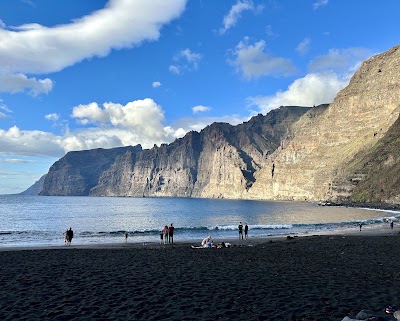
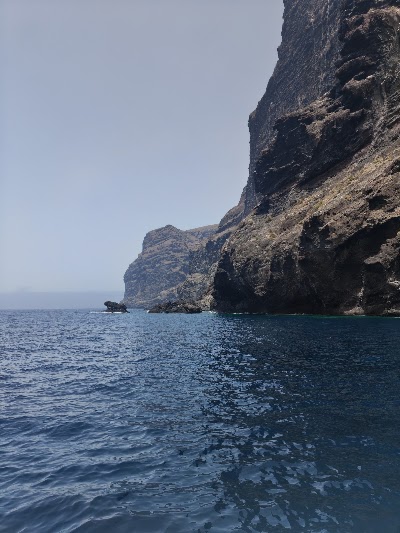
A small marina town dwarfed by the 600-metre basalt cliffs it's named for, with whale-watching boats leaving most mornings and a noticeably calmer pace than the resorts further east.
Where to sleepApartments and small hotels along the cliff-top promenade, most with sea views given the local topography.
The Los Gigantes cliffs
Whale and dolphin watching boats
Playa de la Arena nearby
via Google
El Médano
For Good for wind-sport travellers and anyone who wants a real small-town feel this close to the airport; the wind that makes it great for sport can make sunbathing bracing.
A windsurfing and kitesurfing town at the island's southern tip, five minutes from Tenerife South airport, with a laid-back, sporty crowd that skews local and long-stay rather than package-holiday.
Where to sleepSmall hotels and surf hostels right on the Playa del Médano beachfront, walkable to everything in town.
Playa del Médano and Playa de la Jaquita
Montaña Roja nature reserve
Windsurf and kitesurf schools along the front
via Google
Garachico
For Good for a quiet overnight or a day trip for history and a swim; there's no real nightlife and limited beach beyond the lava pools.
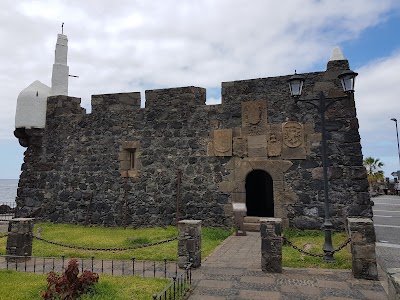
A north-coast town largely rebuilt after a 1706 volcanic eruption buried its original harbour in lava, with white-and-green colonial houses, a fortress that survived the flow, and natural seawater pools formed by the same lava field.
Where to sleepA handful of small guesthouses in the old centre, best suited to travellers who want one quiet night away from the resorts.
El Caletón natural pools
Castillo de San Miguel
The colonial old town
via Google
Candelaria
For Good as a quiet, cheaper base between the north and south, or a half-day stop for the basilica; it isn't a beach destination in its own right.
A working east-coast town south of Santa Cruz, known across the islands for the basilica housing the statue of the Virgin of Candelaria, patron saint of the whole archipelago, and for the pilgrimage that fills the seafront every August.
Where to sleepA small number of mid-range hotels near the seafront square, mainly used by travellers who want to be outside the main resort price zone.
Basílica de Candelaria
The nine bronze mencey statues on the seafront
Playa de la Viuda
Eat & drink
Where to eat in Tenerife
Real tables, by category — from seafood and grills to the budget classics locals actually queue for.
Fine dining
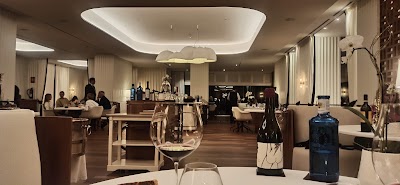
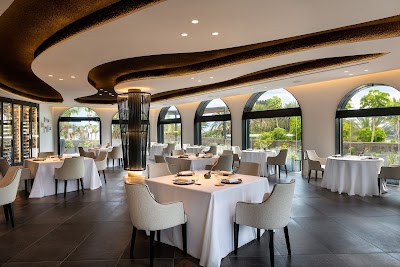
Tenerife carries more Michelin stars than anywhere else in the Canary Islands, nearly all of them stacked inside the five-star hotels of the southwest coast. The kitchens run from imported mainland technique to Canarian produce cooked by chefs who grew up eating guachinche food themselves.
The best fish on the island comes off small boats into harbour towns, not onto resort buffets. Puerto de la Cruz's fishing fleet still supplies several of its own restaurants directly.
A guachinche is a family-run bodega that started serving simple food alongside its own wine, mostly in the wine towns of the north, and the best of them are still unmarked and open only seasonally. In the cities, the Canarian tasca does the same job year-round.
A fixed-price weekday lunch menu — starter, main, dessert and a drink for not much money — is standard at ordinary Canarian restaurants, and the tapas bars of the old towns do the same job in smaller bites.
Vegan and vegetarian cooking in Tenerife is a recent, mostly resort-town development, built around plant-based reworkings of brunch staples rather than any long local tradition.
Argentinian grills cluster in the southern resorts, feeding a package-holiday appetite for red meat that the island's own cuisine doesn't really supply.
Where the night goes — clubs, rooftop cocktails and the rooms with the best live music.
Nightclubs
Playa de las Américas is the island's nightlife engine, built around Veronicas Strip, where the clubs run until sunrise and the crowd is almost entirely visiting rather than local.
The rooftop scene is mostly stacked on top of city and marina hotels, trading the resort pool view for the capital's working-port skyline or the north coast's cliffs.
Museums, landmarks and galleries worth structuring a day around.
Museums
Tenerife's two serious museums both sit in Santa Cruz, a few tram stops from each other, and between them cover the island from Guanche mummies to Canarian painting.
Tenerife's landmarks run from a Calatrava concert hall to a 3,718-metre volcano, and the volcano is the one that actually explains the rest of the island's geography.
The cable car covers most of the 3,718-metre climb in minutes, leaving a short, high-altitude walk to a viewpoint over the rest of the archipelago.
via Google
Walk down through the Masca gorge to the sea
Mascafull day★★★★★★★★★★4.2(501)
A steep descent through a rock gorge ending at a black-sand cove reachable only on foot or by boat, now run through a paid, limited-numbers booking system.
via Google
Take a whale and dolphin watching boat trip from Los Gigantes
Los Gigantesa few hours★★★★★★★★★★4.8(20)
Resident pods of pilot whales live in the deep water off the southwest coast year-round, and licensed boats run daily trips that keep a respectful distance.
via Google
Walk the laurel forest trails of Anaga
Anagahalf day★★★★★★★★★★4.6(133)
Cloud-forest trails through some of the oldest terrain on the island, cooler and greener than anywhere else in Tenerife.
via Google
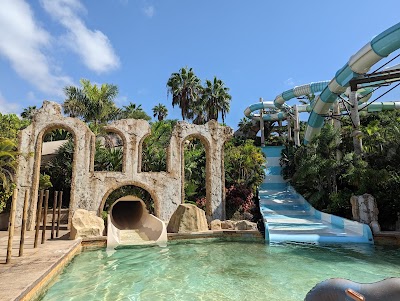
Spend a day at Siam Park
Costa Adejefull day★★★★★★★★★★4.4(75,447)
A water park built around a single Thai theme that has repeatedly topped international water-park rankings, with a wave pool and slides steep enough to need a height check.
via Google
Eat breakfast at the Mercado de Nuestra Señora de África
Santa Cruz de Tenerifea couple of hours★★★★★★★★★★4.6(17,431)
The capital's working produce and fish market, still supplying Santa Cruz kitchens directly rather than existing for tourists.
via Google
Beyond the city
Day trips
La Gomera
★★★★★★★★★★4.7(1,597)
A smaller, steeper, far less developed island visible from the southwest coast on a clear day, with its own laurel-forest national park.
Getting thereHigh-speed ferry from Los Cristianos to San Sebastián de la Gomera, under an hour
via Google
La Palma
★★★★★★★★★★4.7(2,170)
A greener, more dramatically volcanic island, with a landscape shaped by the 2021 Cumbre Vieja eruption still visible in places.
Getting thereShort inter-island flight from Tenerife North airport, or a longer ferry from Los Cristianos
via Google
Gran Canaria
★★★★★★★★★★4.7(6,095)
The capital, Las Palmas, has an old town and a city beach that make a contrasting day out from Tenerife's smaller towns.
Getting thereHigh-speed ferry from Santa Cruz de Tenerife to Las Palmas, roughly a couple of hours
via Google
Book ahead
Things to do in Tenerife
Top-rated tours, tickets and experiences — book in seconds, skip the line.
These are affiliate links. We may earn a commission when you book — at no extra cost to you. Tours are sold and operated by our partner, who is the merchant of record.
What it costs
Budgeting
Costs swing hard between the resort coast and everywhere else. A fixed-price lunch menu or a guachinche meal inland costs a fraction of a seafront restaurant in Costa Adeje, and bus travel is cheap enough that transport rarely dents a budget unless a hire car is involved.
Travel style
Per day
Backpacker
€40-60
Mid-range
€90-150
Luxury
€250-450
Timing
When to visit
Tenerife's coastal climate barely shifts across the year, which flips the usual idea of a season on its head: winter, not summer, is when the island is busiest, because that's when northern Europe wants the warmth most. Inland and at altitude the weather behaves far more conventionally, with a genuinely cold winter on Teide.
Winter (December-February)Peak season despite the name. Mild coastal temperatures draw the year's biggest crowds and highest prices, this is also the rainiest stretch, and February brings Carnival, which fills Santa Cruz and its hotels well beyond the city's usual capacity.
Spring (March-May)Reliably warm and dry with thinner crowds and better prices than winter. Wildflowers come out across the Orotava valley and the lower slopes of Teide.
Summer (June-August)The hottest, driest stretch of the year, when the south coast resorts fill with European school-holiday visitors. Occasional calima dust clouds blow in from the Sahara and can cut visibility and air quality for a few days at a time.
Autumn (September-November)Warm sea temperatures carry over from summer while the crowds thin out, making September and October two of the better-value months on the island. By November the rains are picking up again.
Tenerife has two airports split by coast. Tenerife South (TFS) serves the southern resorts — Costa Adeje, Los Cristianos, El Médano — with TITSA buses taking roughly half an hour to the nearest resorts and closer to an hour to the furthest. Tenerife North (TFN, Los Rodeos) serves Santa Cruz, La Laguna and Puerto de la Cruz, with buses and taxis covering those shorter distances in well under an hour. A direct express bus links the two airports for anyone flying into one and basing themselves near the other, though it's a long ride either way.
Public transit
TITSA runs the island's bus network, and it's extensive enough to reach nearly every town without a car, though frequency drops sharply on the rural west-coast routes. The Metrotenerife tram covers only the short run between Santa Cruz and La Laguna; it doesn't reach the south coast or Puerto de la Cruz at all.
Passes & tickets
A rechargeable Ten+ card knocks a meaningful discount off every bus and tram fare and pays for itself within a handful of rides. A multi-day bono-bus pass is worth it for anyone covering a lot of ground by bus in a short trip.
On foot
Santa Cruz, La Laguna and Puerto de la Cruz are walkable, compact old towns. Costa Adeje and Los Cristianos are walkable along their seafront promenades but spread out inland. The smaller north and west coast villages are walkable in themselves but not to each other — the roads between them are narrow, winding, and built for cars rather than pedestrians.
1
Choose your airport by where you're staying, not by which has cheaper flights — the overland transfer between TFS and TFN takes over an hour.
2
Hire a car for at least part of the trip if the north or west coast villages are on the plan; bus frequency there drops to a handful of services a day.
3
Buy a Ten+ card at the airport or any bus station on arrival rather than paying cash fares across a multi-day trip.
4
Keep a jacket within reach even on a hot coastal day — temperatures at Teide's summit can run twenty degrees colder.
Travel smart
Safety & etiquette
Tenerife is safe by any ordinary measure, and violent crime against tourists is rare, but petty theft and tourist-targeted scams cluster hard around the nightlife strips. Pickpocketing and bag-snatching are the real risk around Veronicas Strip and the harbour bars in Los Cristianos late at night, and the San Isidro area near the south airport has a reputation for higher crime and little reason for a visitor to be there after dark. Timeshare touts and fake-charity collectors work the beachfront promenades in the south; a flat no and walking on is all that's needed.
Local etiquette
A taxi should run on the meter; agree a price upfront if it doesn't, especially from the airport or late at night.
Many small shops and some restaurants outside the resorts still close for a few hours in the early afternoon — don't expect everything to be open all day in the smaller towns.
Dress modestly to visit the Basílica de Candelaria or any working church; swimwear belongs on the beach or by the pool, not in town.
A kiss on each cheek is the standard greeting between people who know each other, including casual acquaintances, not just close friends.
From the ground
Practical tips
1
Book the Teide cable car and any Masca gorge permit several days ahead — both run on fixed daily quotas that sell out, especially around weekends and holidays.
2
Pick your airport by your hotel's coast, not by flight price — Tenerife South serves the southern resorts, Tenerife North serves the capital and Puerto de la Cruz, and the transfer between them takes over an hour.
3
Hire a car for at least part of the trip if the north or west coast villages are on the plan — bus coverage thins out fast once you're off the main resort routes.
4
Carry a light jacket even in summer if heading up to Teide — the summit runs twenty degrees or more colder than the coast.
5
Buy a Ten+ travel card at the airport or any bus station if taking more than a couple of bus rides — it cuts the fare noticeably over paying cash each time.
6
Keep to the meter in taxis, or agree a fare before getting in, particularly from the airport or late at night.
7
Avoid the San Isidro area near the south airport after dark, and keep bags zipped and in sight around Veronicas Strip and the harbour bars at night.
Book direct
Book a hotel in Tenerife
Loading live availability and real-time prices…
Good to know
Tenerife FAQs
Do I need a hire car in Tenerife?
Not if staying on one resort coast and sticking to beaches and buses, but a car is close to essential for the north and west coast villages, where bus services run only a few times a day.
Should I fly into Tenerife North or Tenerife South?
Fly into whichever airport is closer to where you're staying — South for Costa Adeje, Los Cristianos and El Médano, North for Santa Cruz, La Laguna and Puerto de la Cruz — since the transfer between the two airports takes over an hour.
Is the north or south of the island better to stay in?
The south has the reliable sun, the beaches and the resort infrastructure; the north is cooler, greener and has the island's real towns and history, including the capital and the UNESCO old town of La Laguna.
Do I need to book the Teide cable car or the Masca hike in advance?
Yes to both — the cable car sells out on clear days, and the Masca gorge trail now runs on a paid, limited daily quota that has to be booked online ahead of time.
What language is spoken, and is English widely understood?
Spanish, with a distinct Canarian accent, is the local language, and English is widely understood in the resort areas but far less so once you're inland or in smaller north-coast towns.
Is Tenerife safe for a solo traveller?
Yes, with the same precautions as any busy tourist destination — avoid walking alone late at night around the main nightlife strips and keep an eye on bags in crowded markets and beaches.
When is the best time to visit Tenerife?
April, May, September and October give warm, reliable weather without the August crowds or prices; winter is actually the busiest season despite the time of year, because the island's climate barely changes and northern Europeans come for exactly that.