Toronto stories
23 stories from torontocitybreaks.com, newest first.

Winterlicious 2027: Toronto's Prix-Fixe Restaurant Festival, Dates, Prices and Booking
Winterlicious tables go fast and the menus always land late, so it helps to know which Toronto dining rooms are worth the fixed price and how early each one takes bookings.

Walking King West Through Toronto's Entertainment District
Between John Street and Spadina Avenue is a 45-minute walk, and the theatres, timed-entry towers, ballpark tours and rooftops are all on it.
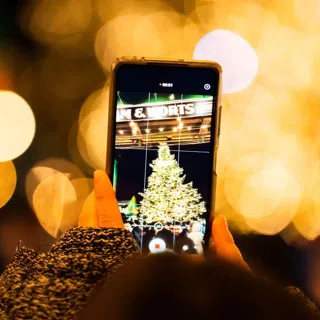
Toronto for the Holidays: Christmas Markets and Winter Things to Do
Dates for the markets, prices for the light trails, and the rinks you can skate for free, including the cabins in the Distillery District and a figure-eight under the Gardiner Expressway.

Inside Toronto's Royal Ontario Museum in October 2026
Timed slots, the Weston door while Bloor Street is shut, and where to walk, which museums to add and where to eat in Yorkville around the ROM in October 2026.
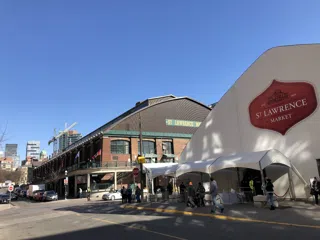
A Hungry Morning Inside Toronto's St. Lawrence Market
Two market halls, 120-plus vendors and one famous pork sandwich. What to eat, when to arrive, and the closure that wastes more trips than anything else in Old Town.

Toronto's Financial District Towers and Tunnels in October
A free, eight-block architecture walk through Bay Street's bank towers, the banking halls you can sometimes get into, and the PATH tunnels that make it work in October rain.

Standing Above Toronto at the CN Tower Without the Queue
What the ride up gets you, which ticket tier is worth paying for, and how to spend the hour before and after your timed slot.

How the Raptors Rewired a Night Out in Toronto
Seven years after the championship, the basketball calendar still decides where Toronto drinks: an app-ballot fan zone one night, a 4:30am plate of nachos the next.

The Creeks Still Running Under Toronto's Pavement
A walking route through the valleys, quarry craters and buried bridges left by the hundred-odd streams Toronto piped away, plus the one river mouth it is now digging back out.

The Scarborough Bluffs: Toronto's White Cliffs and the Beach the City Keeps to Itself
A walking guide to the 15km of pale cliffs east of downtown Toronto — the lookouts, the beach beneath them, the trails, the marina, and where to eat with the lake in view.

The Aga Khan Museum: Toronto's Quietest Masterpiece and the Islamic Art That Found a Home Here
Inside Toronto's Aga Khan Museum — the 1,000-year Islamic art collection, Fumihiko Maki's light-tuned building, the park and Ismaili Centre next door, and exactly how to plan the visit in 2026.

Island Time: Toronto's Ferry Ride to Another Country
A calm, walk-it-in-order guide to the Toronto Islands — the fifteen-minute crossing, the car-free lanes, the beaches, and the skyline you came for.

No Car Required: The Hidden City Under Toronto's Streets
A calm, end-to-end walk through Toronto's PATH — 29 kilometres of underground walkway linking malls, food halls, a hockey shrine, an arena and Union Station, no coat and no car required.

Into the Ravines: Toronto's Wild Country Below Street Level
A calm, walkable guide to the wooded river valleys that run beneath Toronto's street grid — where to start, how to link them by transit, and which suit a crowd versus a quiet pair.
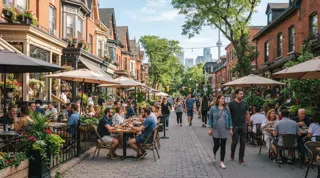
Yorkville, Toronto: the city’s plushest square kilometre
A walk through Toronto’s most polished postcode, where Victorian houses, designer flagships, rooftop patios and old folk-music ghosts share the same few blocks.
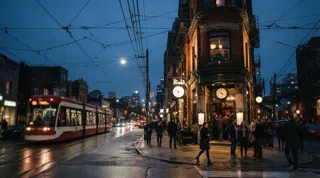
West Queen West, Toronto: Art, Appetite and After-Hours on Queen Street
Toronto’s West Queen West stretches from Bathurst to Gladstone as a walkable Art + Design District where galleries, indie shops, destination restaurants and late-night bars all share the same few blocks.
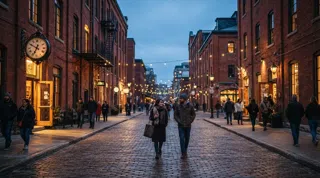
The Distillery District, Toronto: cobblestones, cocktails and Victorian brick
Toronto’s car-free heritage quarter turns a former whisky empire into a walkable pocket of galleries, patios, theatre and winter lights.
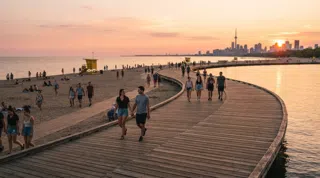
The Beaches, Toronto: a lakeside neighbourhood that still feels like a day trip
At the eastern edge of Queen Street East, Toronto trades its skyline swagger for sand, boardwalk, and a slower rhythm that feels borrowed from a summer town.
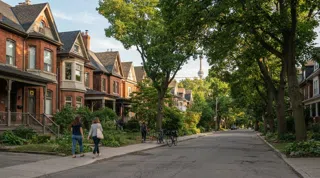
The Annex, Toronto: Bloor’s Brainy, Scruffy Heart
A walk west from Spadina reveals Toronto’s classic student quarter at its most lived-in: culture on Bloor, pints in Victorian mansions, and bookshops that make you stay longer than planned.
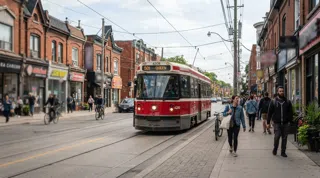
Leslieville, Toronto: brunch streets, vintage racks and the east-end life
Toronto’s east-end village of brick storefronts, big brunch queues and owner-run everything, where the 501 Queen streetcar drops you into the city’s most local-feeling food-and-coffee strip.
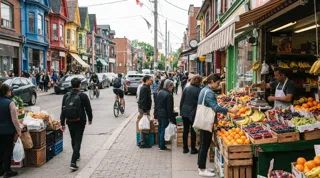
Kensington Market, Toronto: four streets, a hundred kitchens, and the city at its scruffiest
A walk through Toronto’s most wonderfully unruly neighbourhood, where immigrant food, vintage racks, and street art spill across four short blocks that still feel lived-in, not staged.
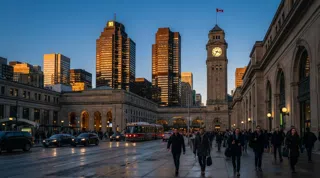
Financial District, Toronto: glass towers, sky-high tables and the city’s most connected base
Toronto’s corporate core is polished, vertical and surprisingly practical — a district where Union Station, the PATH, landmark hotels and headline attractions all sit within a few walkable blocks.
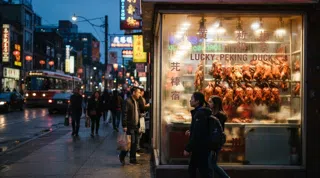
Chinatown, Toronto: Spadina’s loudest, cheapest, most delicious block
A street-level walk through Toronto’s Chinatown West, where roast ducks swing in the windows, dim sum runs late, and Kensington Market is only a few steps away.