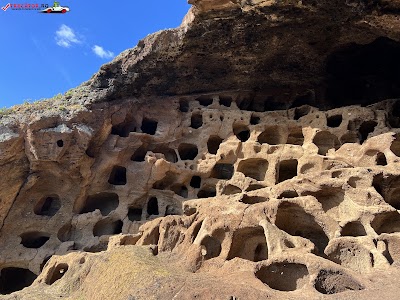
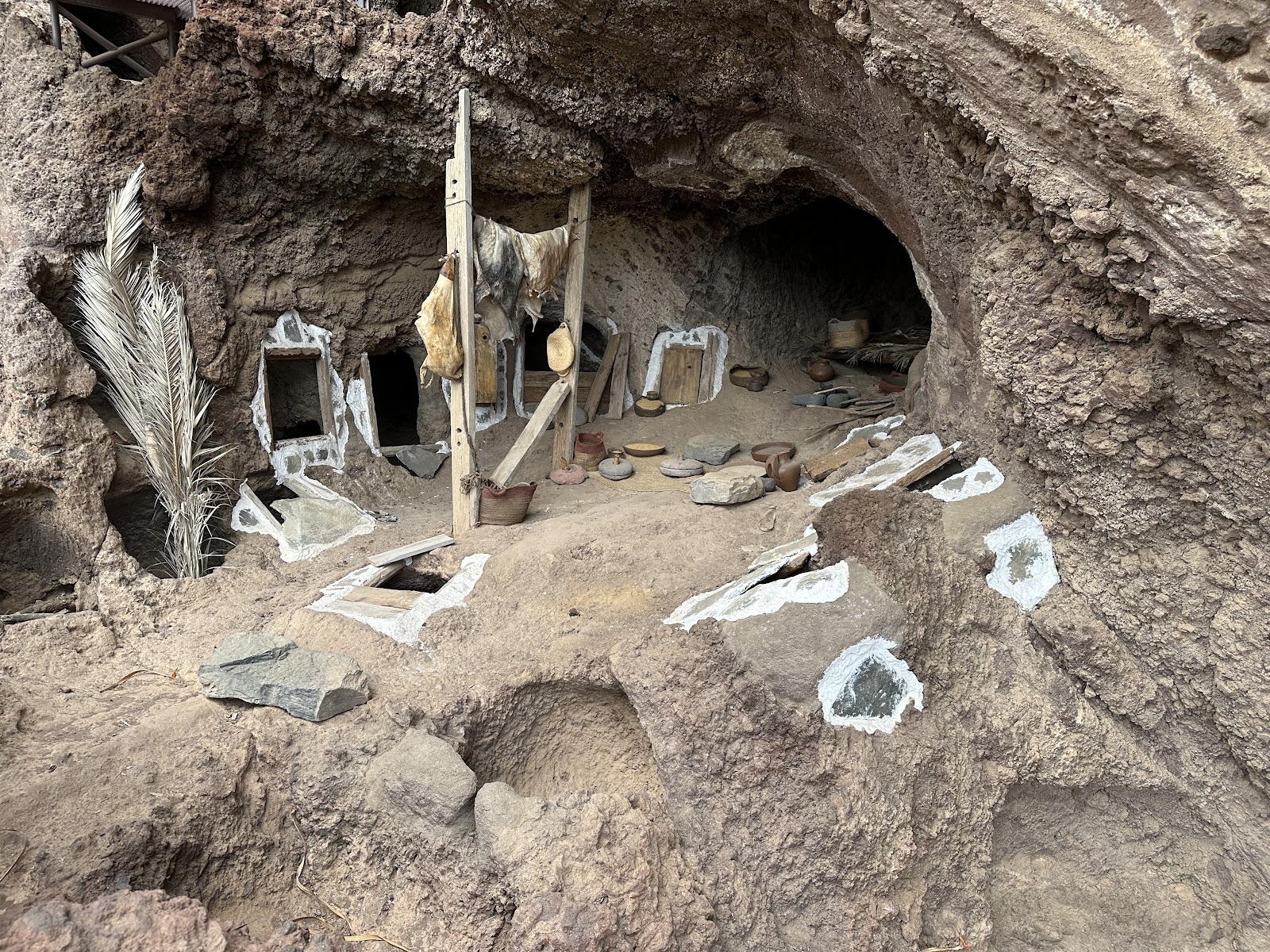
Cenobio de Valerón
Un grenier collectif préhispanique creusé dans une falaise, avec près de 300 chambres de stockage individuelles, construit et utilisé par les Guanches pour stocker les céréales pendant des siècles avant la conquête.
droit d'entrée modique ; comptez 45 minutes à une heure ; accès parfois limité, renseignez-vous avant
Plus de landmarks & architecture à Gran Canaria
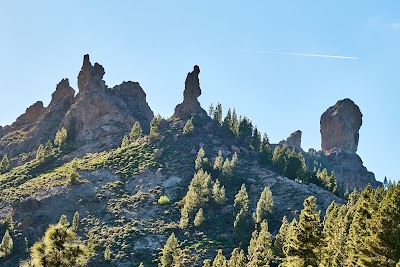
Roque Nublo
Un monolithe de basalte haut de 80 mètres, près du point culminant de l'île, baptisé d'après les nuages qui enveloppent souvent son sommet et visible depuis une grande partie de la moitié sud de l'île.
Conseil: on y accède au mieux depuis le sentier de La Goleta ; une marche courte et modérée jusqu'au belvédère de base ; partez tôt pour éviter à la fois la chaleur et la couverture nuageuse
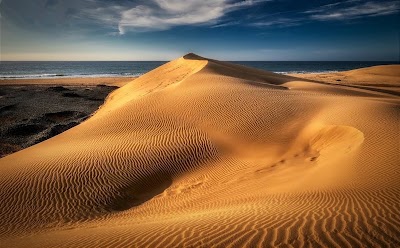
Dunas de Maspalomas
Une réserve naturelle protégée qui associe dunes de sable vivantes, palmeraie et lagune d'eau salée, juste derrière la rangée d'hôtels, mais placée sous une protection environnementale complète.
Conseil: accès libre ; respectez les sentiers balisés, car marcher hors des sentiers endommage l'écosystème des dunes et est déconseillé
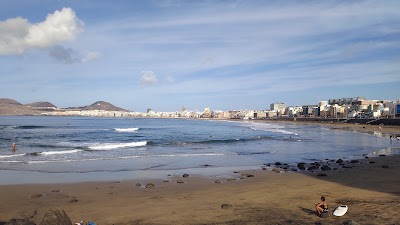
Playa de Las Canteras
Une plage urbaine de trois kilomètres, protégée sur la majeure partie de sa longueur par La Barra, un récif calcaire vieux de plus de 100 000 ans qui maintient une eau assez calme pour nager toute l'année.
Conseil: accès libre ; l'extrémité proche du récif est préférable pour la baignade, la partie nord pour le surf
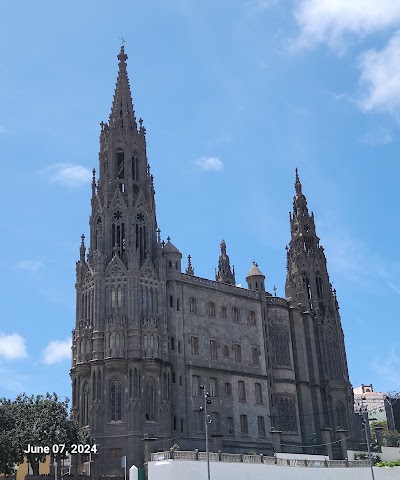
Church of San Juan Bautista (Arucas Cathedral)
Une basilique néogothique construite en pierre volcanique locale pendant près de sept décennies, joyau architectural du nord de l'île, productrice de rhum.
Conseil: entrée gratuite ; comptez 30 minutes ; associez la visite à celle de la distillerie Arehucas toute proche
Où c’est
Avis
Good morning! I highly recommend this place — it was an amazing experience with truly breathtaking views. The museum is very well designed, with the opportunity to see the life of the indigenous people of the island (although the exhibits cannot be touched). We would also like to thank the administrator, Andrey. He was very friendly, welcoming, and shared many valuable tips and interesting facts. It was also a very pleasant and unexpected surprise to learn that he is originally from Belarus, just like us. He is a true professional who inspires you to visit the museum again and continue learning about the history of the Canary Islands.
If you are interested in human history and how things begun in Gran Canaria, then you will enjoy this place located in the north of Gran Canaria. If you don't have a car, then with the bus and a 40min walk its also possible. The mountains and gorges all around are fantastic
Nice place to visit. You buy the tickets at the entrance and there is free parking. The entry fee is €3, or €2 if you are a student like me 😉. At the ticket office there is a very friendly guy who speaks loads of languages, even Polish.Long history here, but I won’t go into too much detail. This place is very old and important. It was used by the ancient people of Gran Canaria as a grain storage around 800 years ago. The caves were carved by hand into volcanic rock and there are more than 300 small chambers inside where they kept food safe. The car park is quite small, so depending on the time and the day, it can be hard to find a space. The visit itself takes about 30 minutes if you read all the information boards. I think it’s worth a stop if you are nearby.
The caves can be reached via an adventurous mountain road - as basicly all the places in Gran Canaria :). Parking is free, and tickets can be purchased at the entrance. It was very interesting to see this place and learn about its history, and how people used to live here in the past. It’s not a long visit (we spent about an hour here), but it’s definitely worth seeing.
Les avis viennent de Google. Voir la fiche sur Google Maps.