The esplanade costs nothing to walk, and non-Muslim visitors have one way in: the wooden Mughrabi Gate ramp beside the Western Wall. That ramp opens Sunday to Thursday in two short windows and stays shut on Fridays, Saturdays and Muslim holidays. The compound also closed to visitors for stretches during 2026, so check the position on the morning you plan to go.
What you see up on the platform
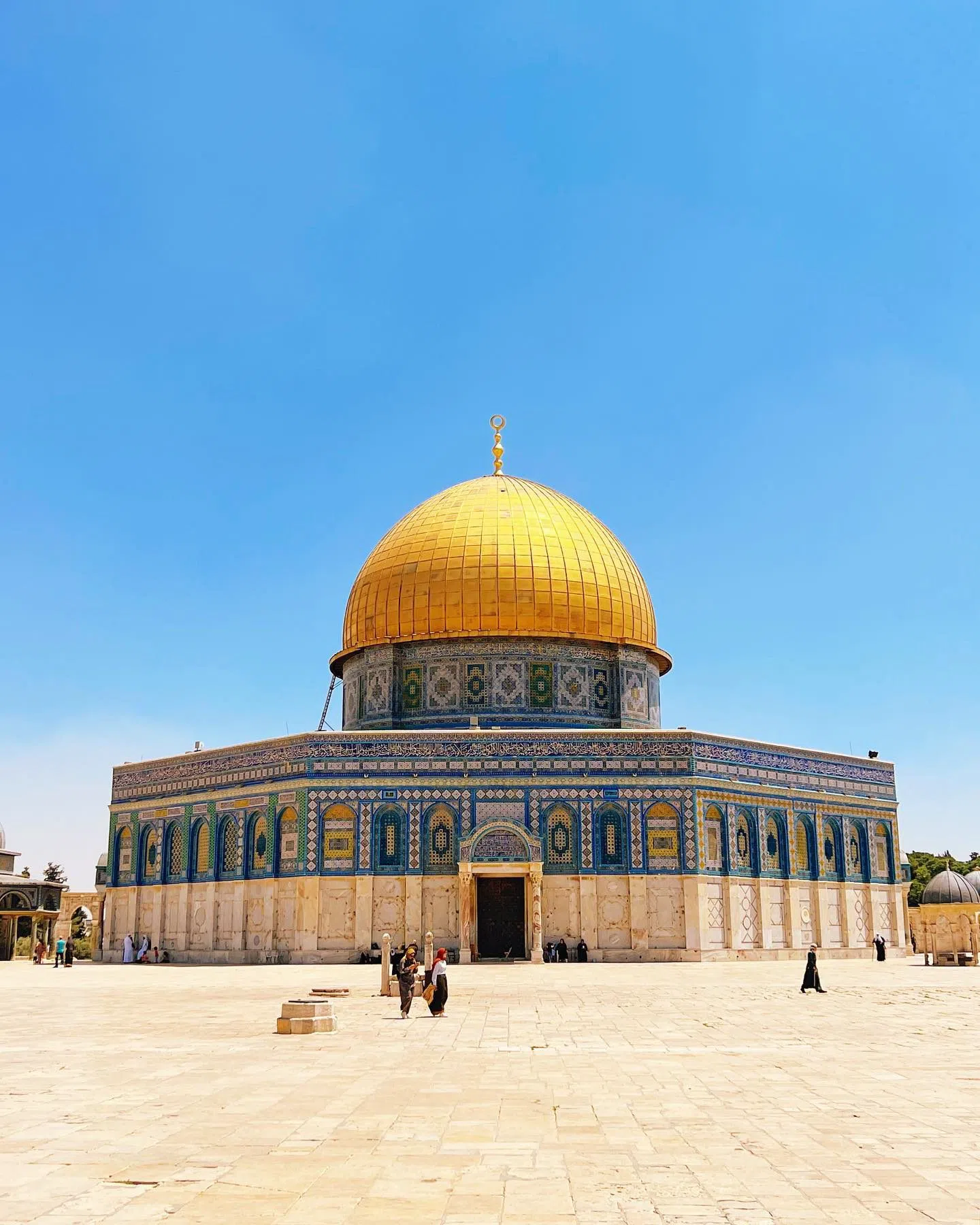
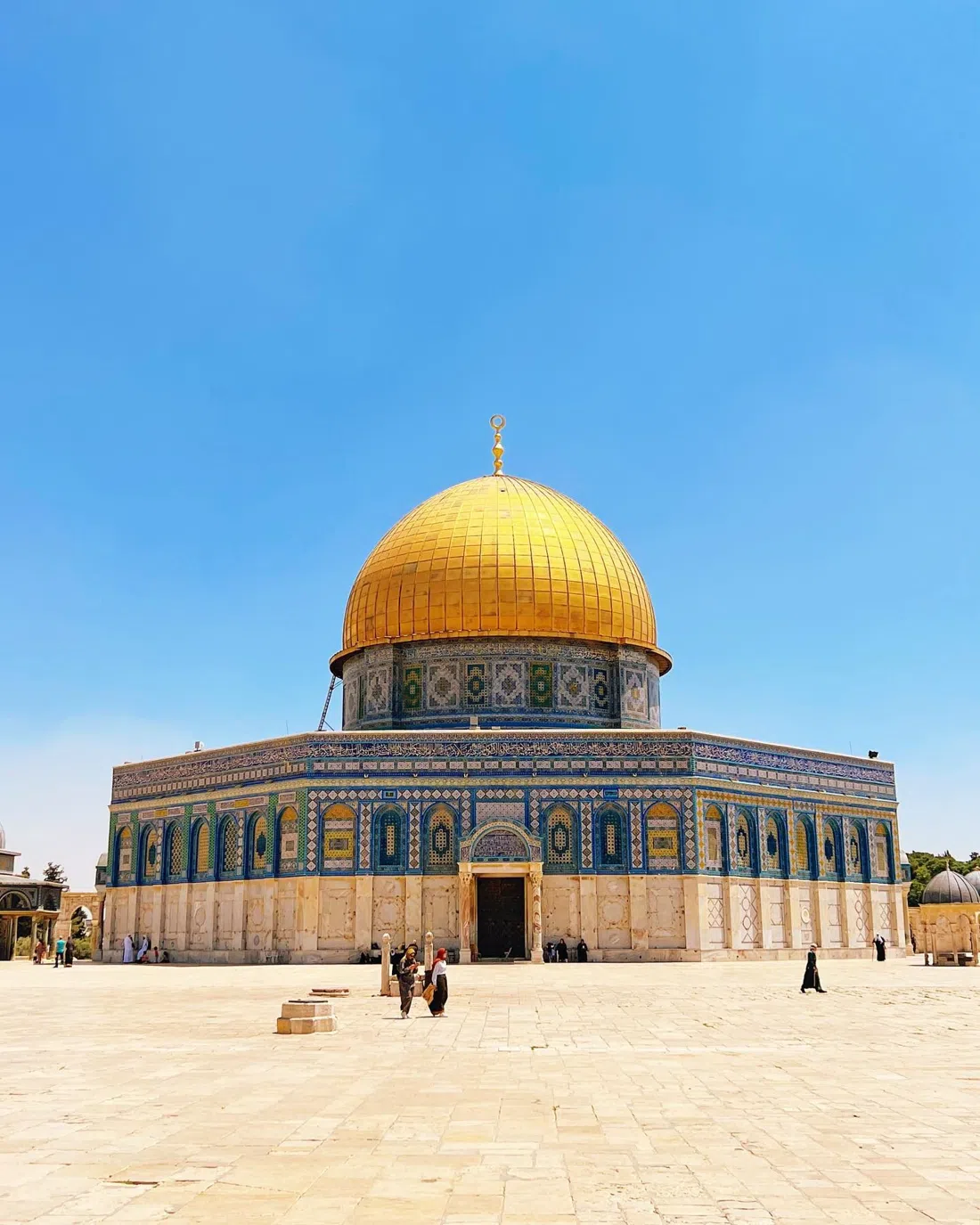
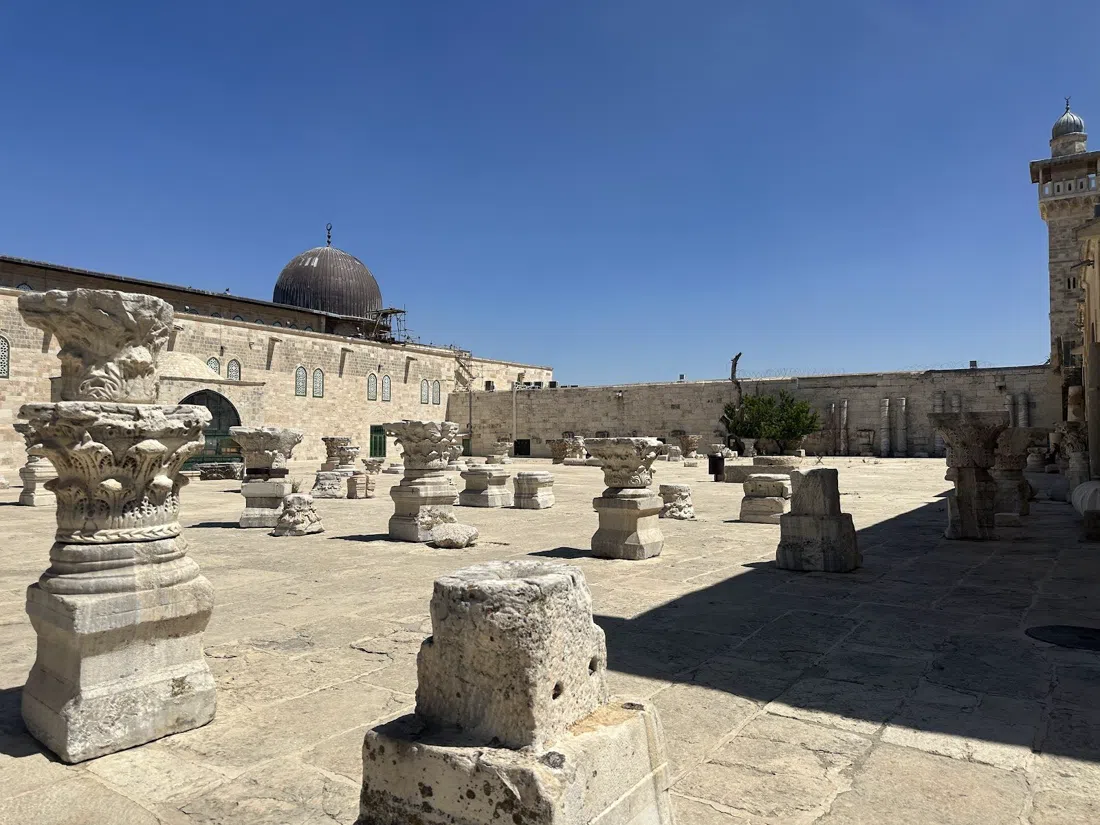
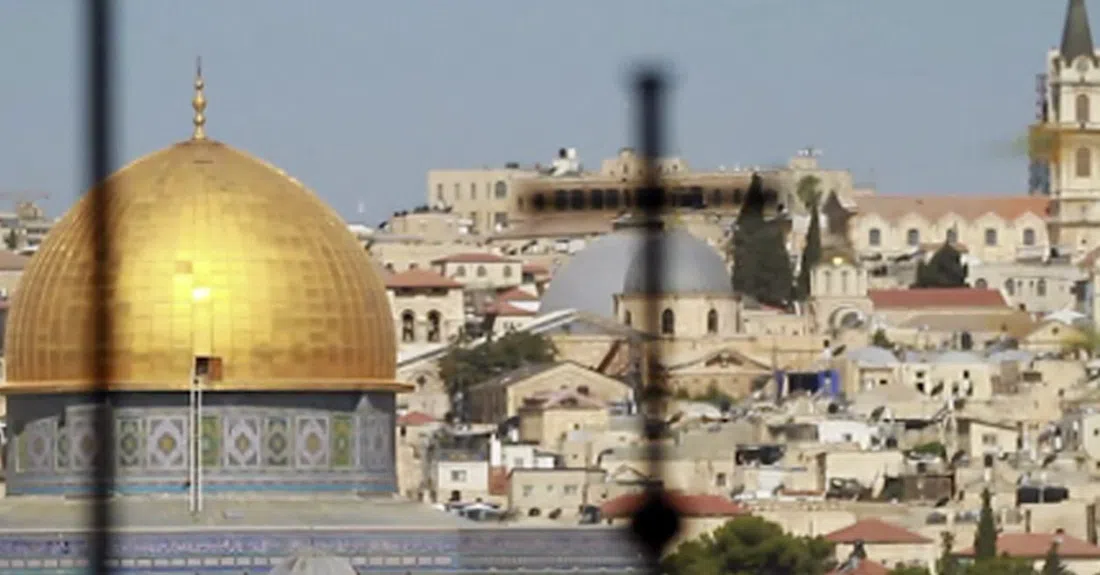
Temple Mount / al-Haram al-Sharif (the Old City esplanade) reads first as space. A vast floor of flagstones opens out at the top of the ramp, the gold-leaf Dome of the Rock raised on its own platform in the middle of it, the free-standing Qanatir arches holding nothing up. Dark cypresses and olive trees mark the edges. The lead-grey dome of the Qibli Mosque closes the southern end.
Entry is free at the door. The mosques stay closed to non-Muslims, and a guide who walks you up the ramp cannot enter them with you. The whole visit happens outdoors, in a compound where people come to pray rather than to look. An hour covers the length of the platform and a slow circuit of the Dome of the Rock's raised terrace, which is more time than the shorter winter windows will give you.
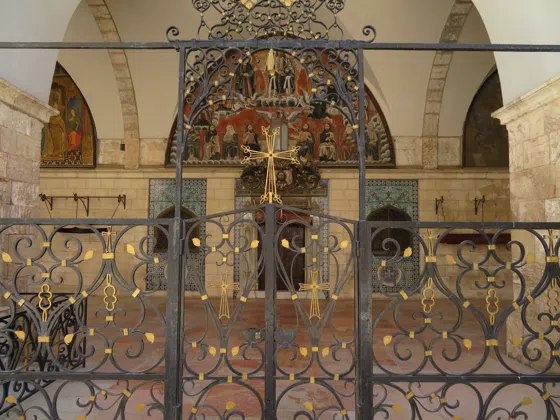
The Islamic Museum, al-Haram al-Sharif, in the compound's south-west corner, occupies the old Mosque of the Moors, a low vaulted stone hall. The cases hold Qur'an manuscripts and Mamluk inlaid metalwork, and the wrought-iron grille that once ringed the rock stands inside. It is the one interior on the compound usually open to a non-Muslim. Opening has been inconsistent for years, and the door shuts when prayer traffic is heavy. Walk to the corner and try the handle, but plan nothing around it.
Starting at the Western Wall Plaza
Western Wall Plaza (the Kotel), the plaza under the compound's western wall, is free and open 24 hours. Colossal Herodian ashlars with drafted margins carry folded paper notes jammed into the joints, a mechitza divides the men's and women's sections, and the wooden Mughrabi ramp climbs the wall at its right-hand end. Every walk up to the esplanade begins down here.
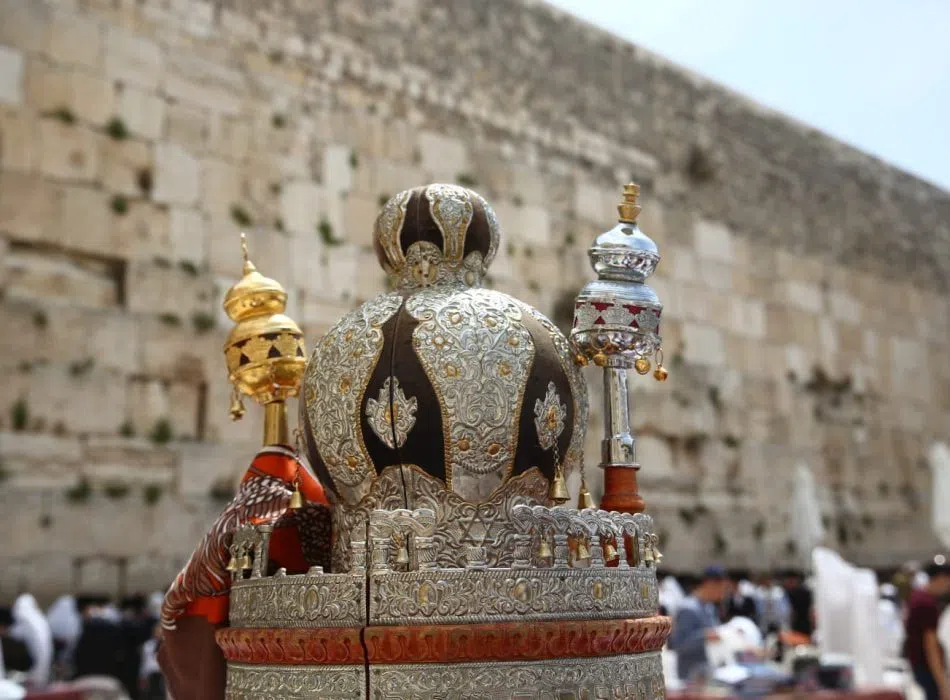
The security queue for the compound forms at the plaza's south end. Arrive by 07:00 to 07:15 and you are near the front of it, which is the most useful thing you can do with the morning. Large tour parties assemble on the plaza all day, and police at the ramp move them through in blocks, so a big group climbs when its block climbs and not before.
The Mount of Olives and the Tower of David first
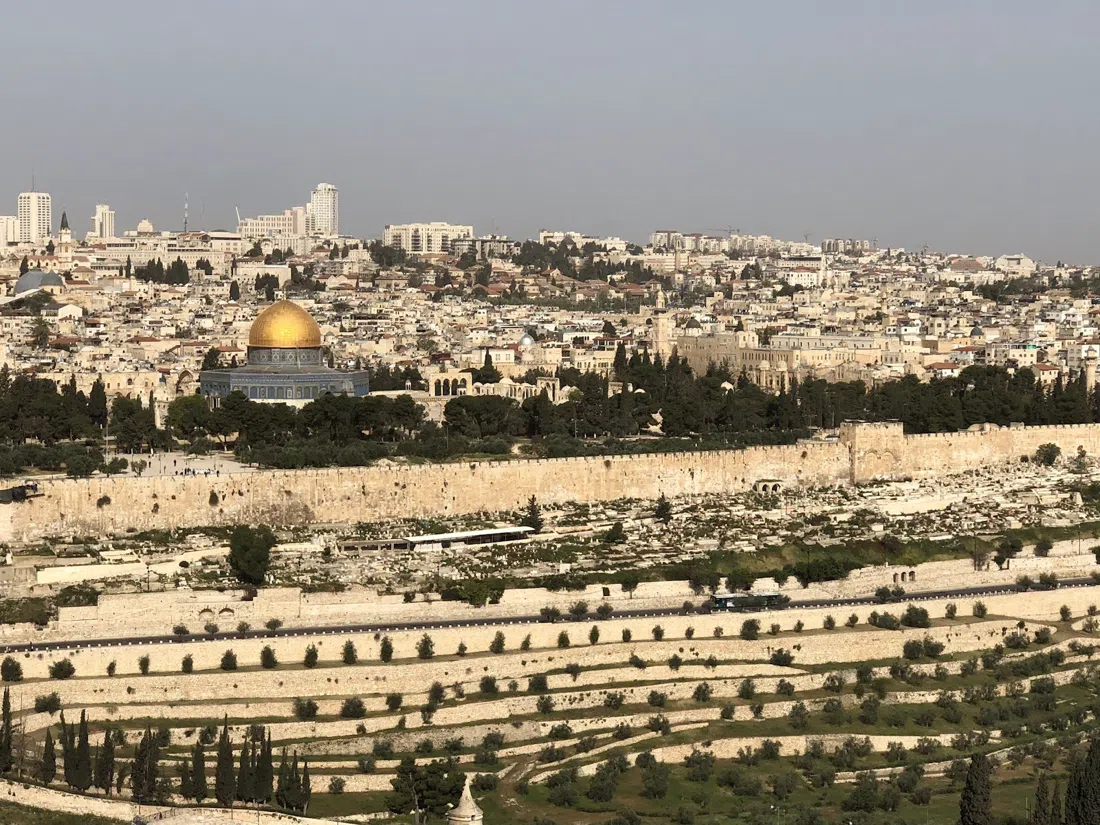
Mount of Olives Observation Point (Seven Arches viewpoint) is free and open at all hours. From a stone balustrade terrace above a hillside of white Jewish tombs, the whole walled Old City lies below you with the gold dome at the centre of it, and decorated camels wait on the terrace for photographs. Spend 15 minutes here before you queue and the layout of the compound makes sense once you are standing on it. Morning light falls behind you, so come early for the photograph.
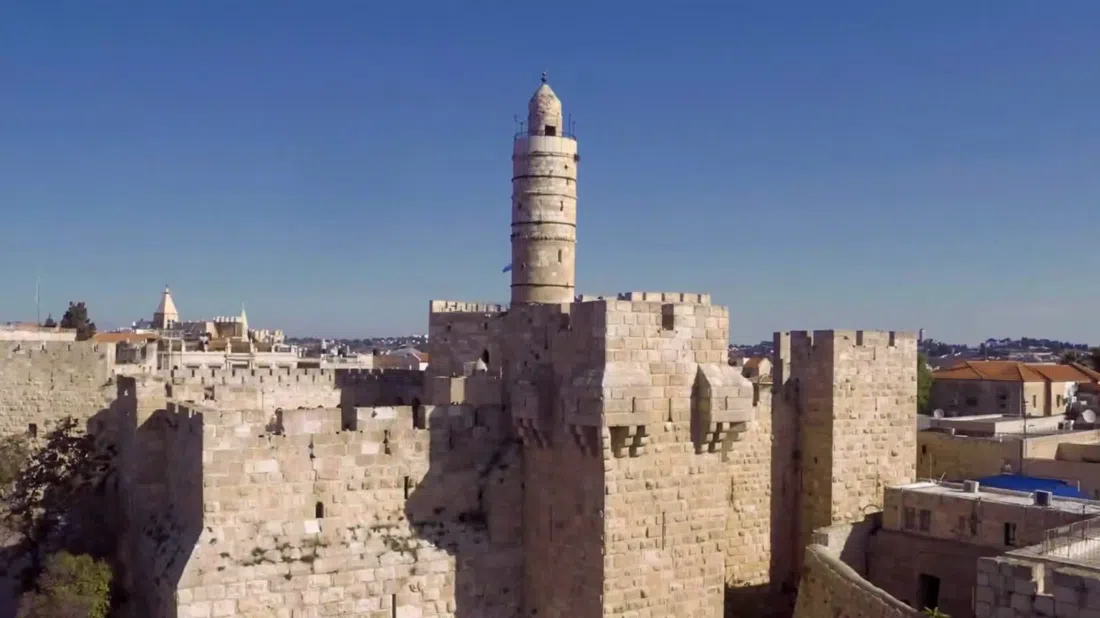
Tower of David Jerusalem Museum, beside Jaffa Gate, wraps an Ottoman citadel around a dry moat, over the massive Herodian base of the Phasael tower, with a minaret rising above a courtyard of excavated ruins. Admission runs ₪28 to ₪55 and English guided tours run daily. It opens Sunday 12:00 to 17:00, Monday, Wednesday and Thursday 09:00 to 17:00, Tuesday to 20:00, and Friday and Saturday 09:00 to 15:00. Do the renovated galleries before the compound. They set out who built, destroyed and rebuilt the platform, so you arrive on the esplanade able to read it.
Souq al-Qattanin on the way in
Souq al-Qattanin (Cotton Merchants' Market), a public street off the Muslim Quarter, is a fourteenth-century Mamluk barrel-vaulted arcade pierced by round skylights that drop shafts of light onto the flagstones. Two rows of small shops run its length, and it ends at the carved Bab al-Qattanin gate. The shops are tiny and shut early, so walk it early in the day if you want them open.
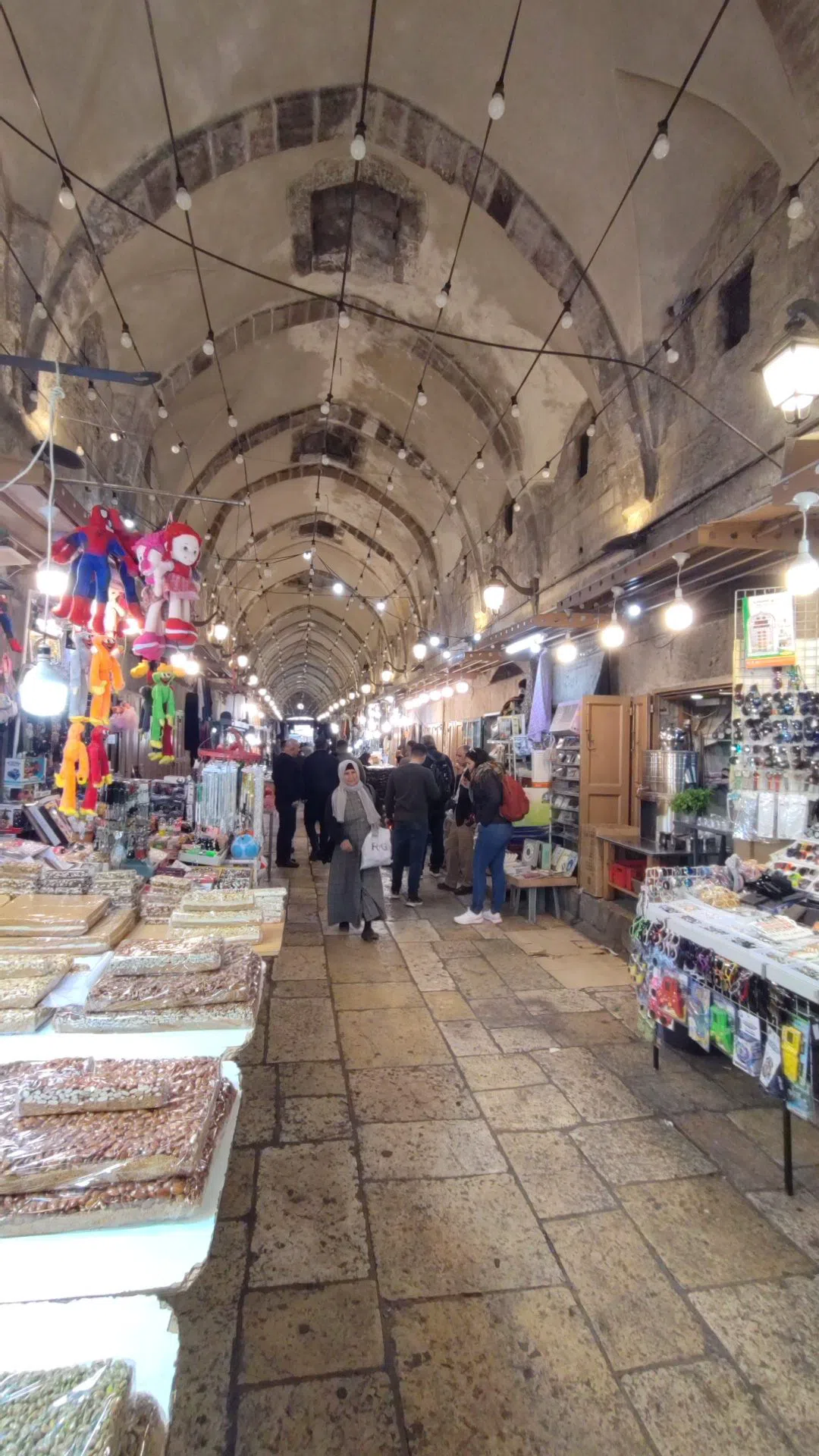
Non-Muslims cannot use the Cotton Gate at the end. You walk the arcade, look through the gate at the compound's western edge, and double back towards the plaza and the ramp. It is the finest surviving Mamluk market in the city and worth the dead end.
Views from the ramparts and two rooftops
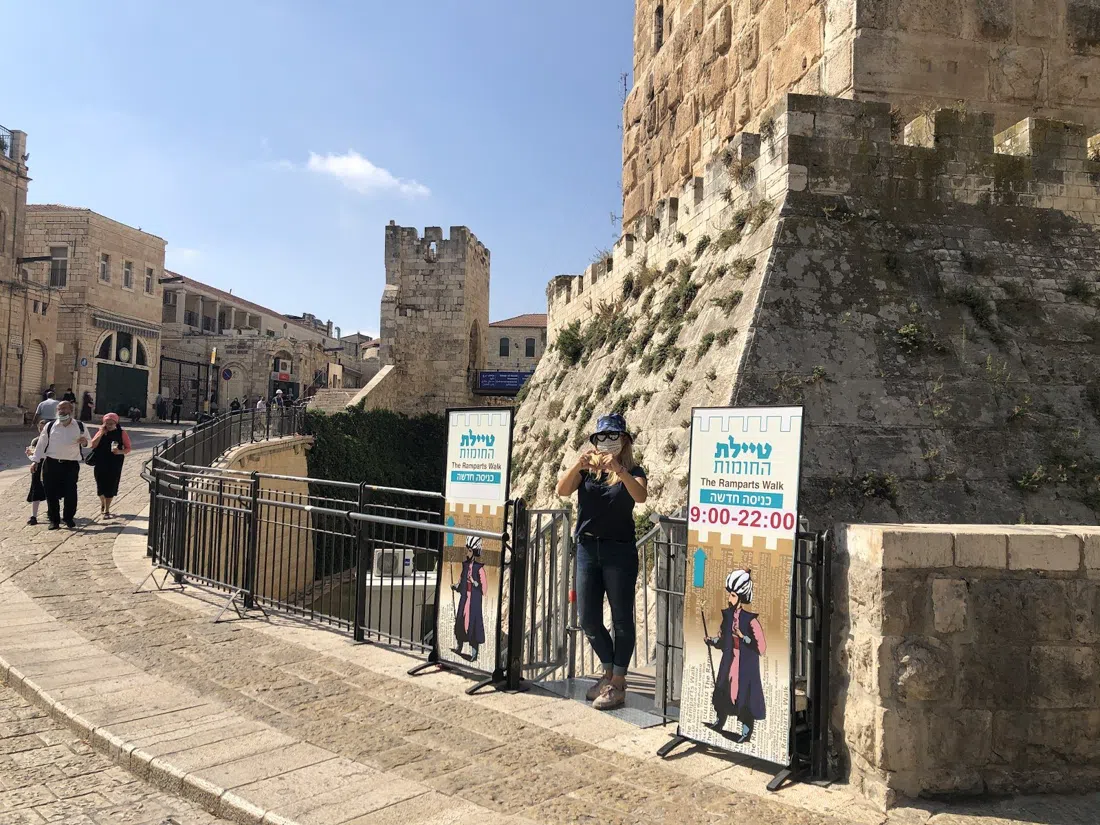
Ramparts Walk, Jaffa Gate to Lions' Gate, costs ₪25 for an adult, and the ticket covers both routes for two days. The northern stretch looks straight down into Muslim Quarter courtyards and satellite dishes, with the gold dome floating above the rooftops. The parapet path narrows to single file in places between the crenellations. It opens Saturday to Thursday 09:00 to 16:00 in winter and to 17:00 in summer, and Friday to 14:00.
The Lutheran Church of the Redeemer bell tower, in the Old City, charges ₪10 to ₪15 and costs you 178 steps of tight spiral stair. From the top the twin domes of the Church of the Holy Sepulchre sit almost beneath your feet with the Dome of the Rock behind them, the one view that makes the geography of the Old City clear in a single look. The church is open Monday to Saturday 10:00 to 17:00, and the stair takes small batches at a time. The archaeological park beneath the church is closed. Come for the tower alone.
The Austrian Hospice (Café Triest and the rooftop terrace) on the Via Dolorosa is a Viennese palazzo with a walled garden café, where apple strudel and coffee come to marble tables and a bill runs ₪20 to ₪45. The flat roof terrace above is a separate ₪5 add-on, looking over a sea of pale stone domes, and it fills up with parties. Save it for after the ramp and the platform, when you want to sit down.
Under the compound's walls
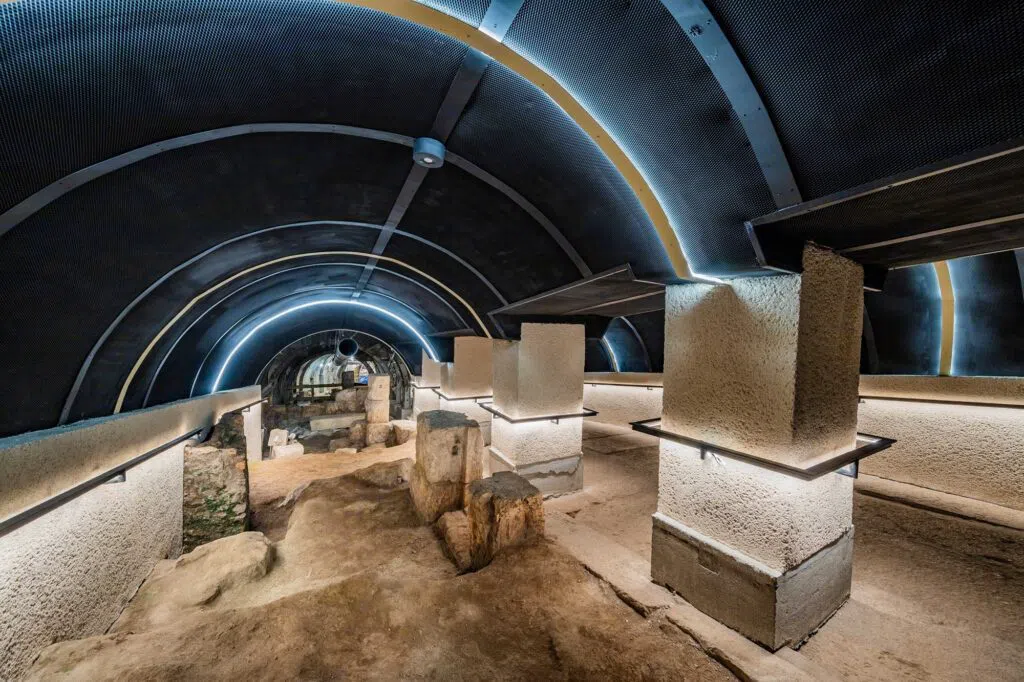
Western Wall Tunnels, under the Muslim Quarter, run 70 minutes through a narrow lamp-lit passage along the buried continuation of the wall, past the 570-tonne Western Stone, a Herodian flagstone street and a Second Temple-period water channel. Tickets are ₪38 for an adult and ₪25 concession. Visits are guided only and capped at 35 people, booked through the Western Wall Heritage Foundation, and English slots go a week or more ahead in spring and autumn. An independent group needs a minimum of 18 people and prior arrangement, so a party of 10 joins a public tour instead.
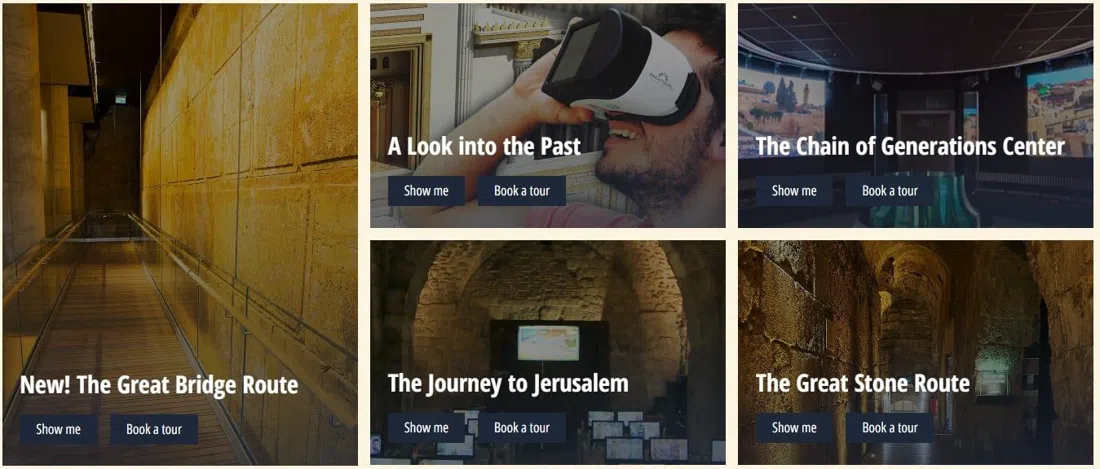
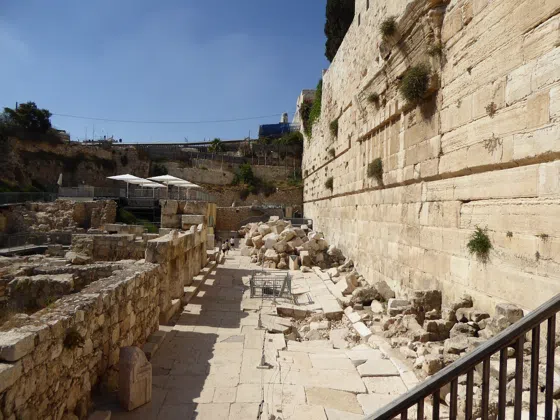
Jerusalem Archaeological Park – Davidson Center, at the foot of the compound's southern and western walls, costs ₪29 for an adult and ₪16 for a child, or ₪45 and ₪35 with a guide. Toppled Herodian megaliths lie where they fell on the original paved street, the stub of Robinson's Arch springs from the wall above them, and the broad southern steps climb to the blocked Hulda Gates. It opens Sunday to Thursday 08:00 to 17:00 and Friday to 14:00, and closes Saturday. This is where a Friday morning goes when the ramp will not open at all. Standing at the base of the Mount's own retaining wall, reading the destruction layer, is the closest thing to an interior the compound offers a visitor.
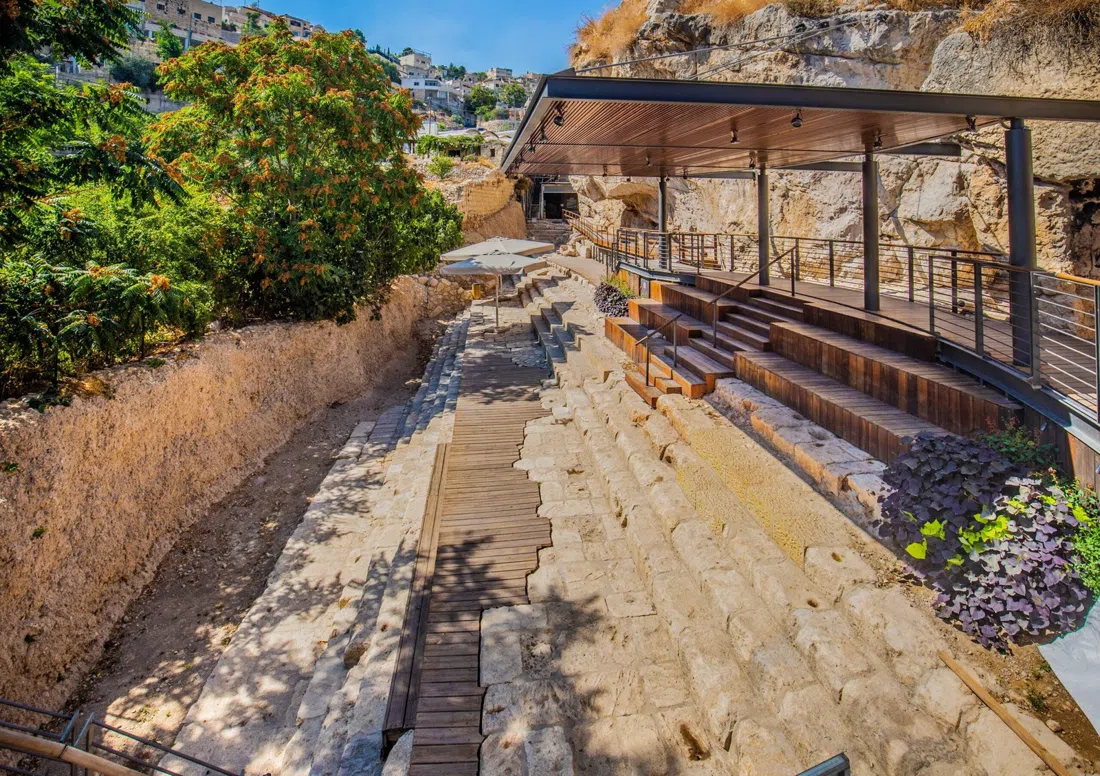
Pilgrimage Road (City of David), beneath Silwan and running up from the Pool of Siloam, opened along its full length to the public in January 2026 after 13 years of digging. You climb 600 metres of broad stepped limestone street under a lattice of steel props and work lamps, on the road pilgrims used to reach the Mount. Self-guided entry is ₪28, guided ₪45, and a guided slot is worth booking in advance.
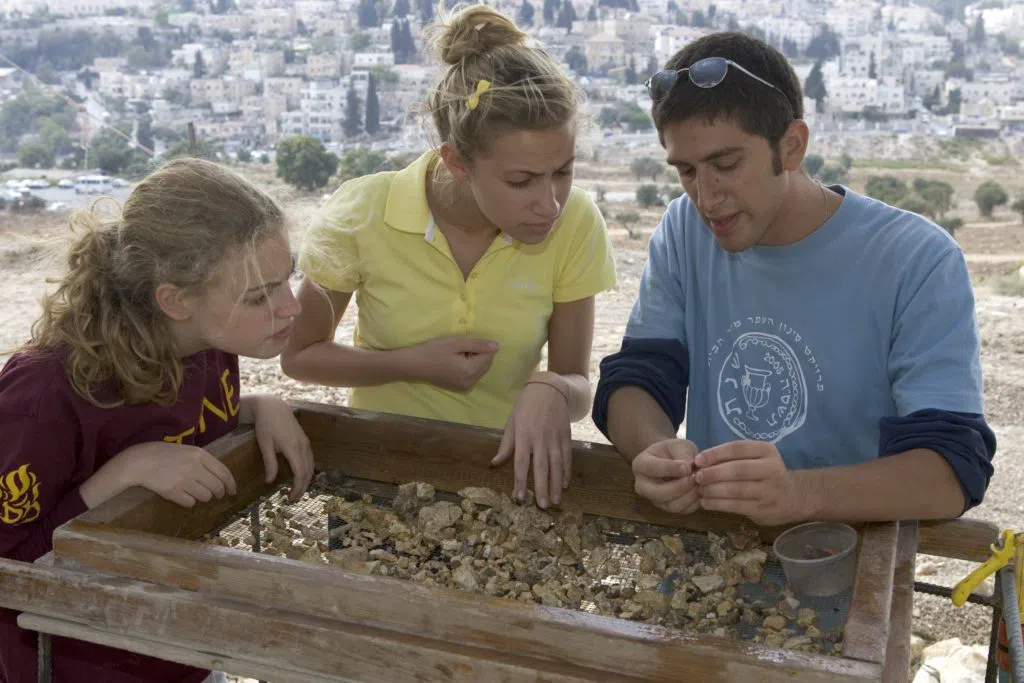
Temple Mount Sifting Project, HaMasu'ot Lookout charges ₪40 for an adult and ₪30 for a child, and takes two hours. You work open-air rows of wire mesh sifting tables with hoses, through buckets of grey rubble removed from the compound, sorting pottery sherds and tesserae into trays. Reservation is required and some days are closed. Children find things here, and nothing else on a Temple Mount day puts anything in their hands.
Lunch at Abu Shukri and knafeh on Khan al-Zeit
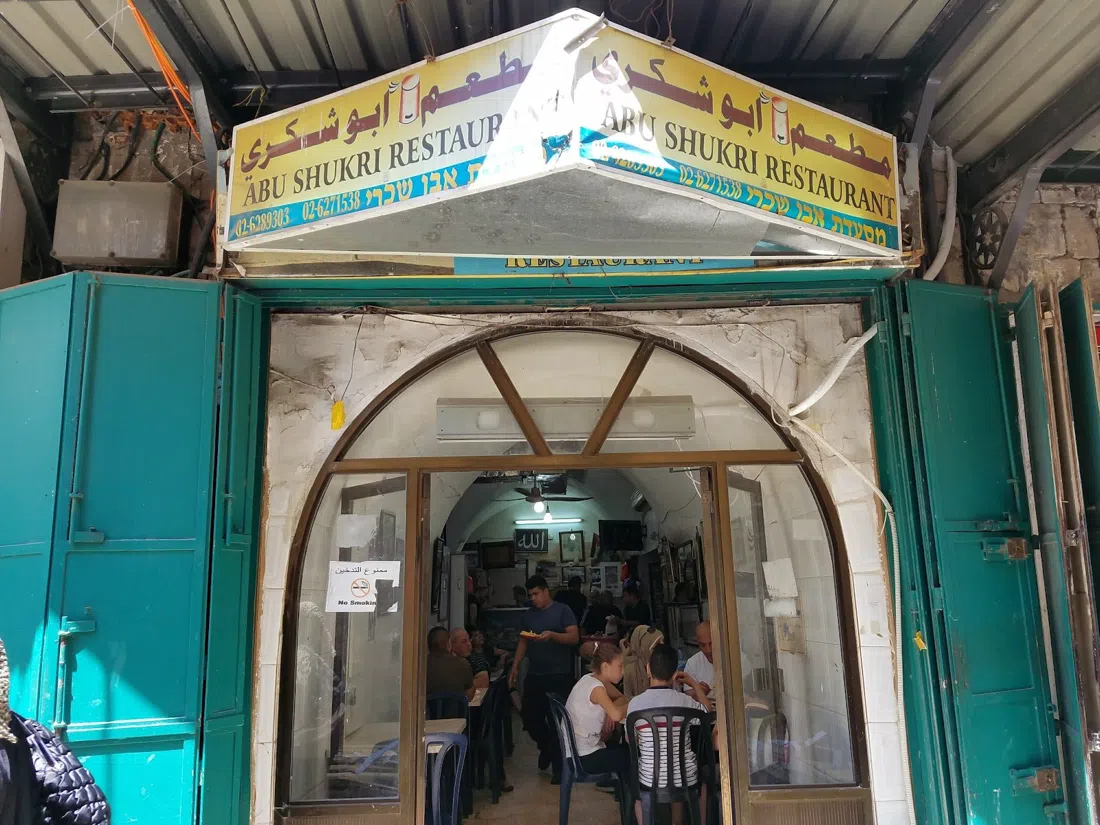
Abu Shukri, on the al-Wad and Via Dolorosa corner, opens from mid-morning and serves plates at ₪20 to ₪30 in a small tiled room, with plastic chairs out on the lane. The hummus arrives in shallow bowls, swirled with oil and scattered with whole chickpeas, under stacks of hot pita. Cash is easiest here. It fills the hour after the second window ends and before you start on the walls.
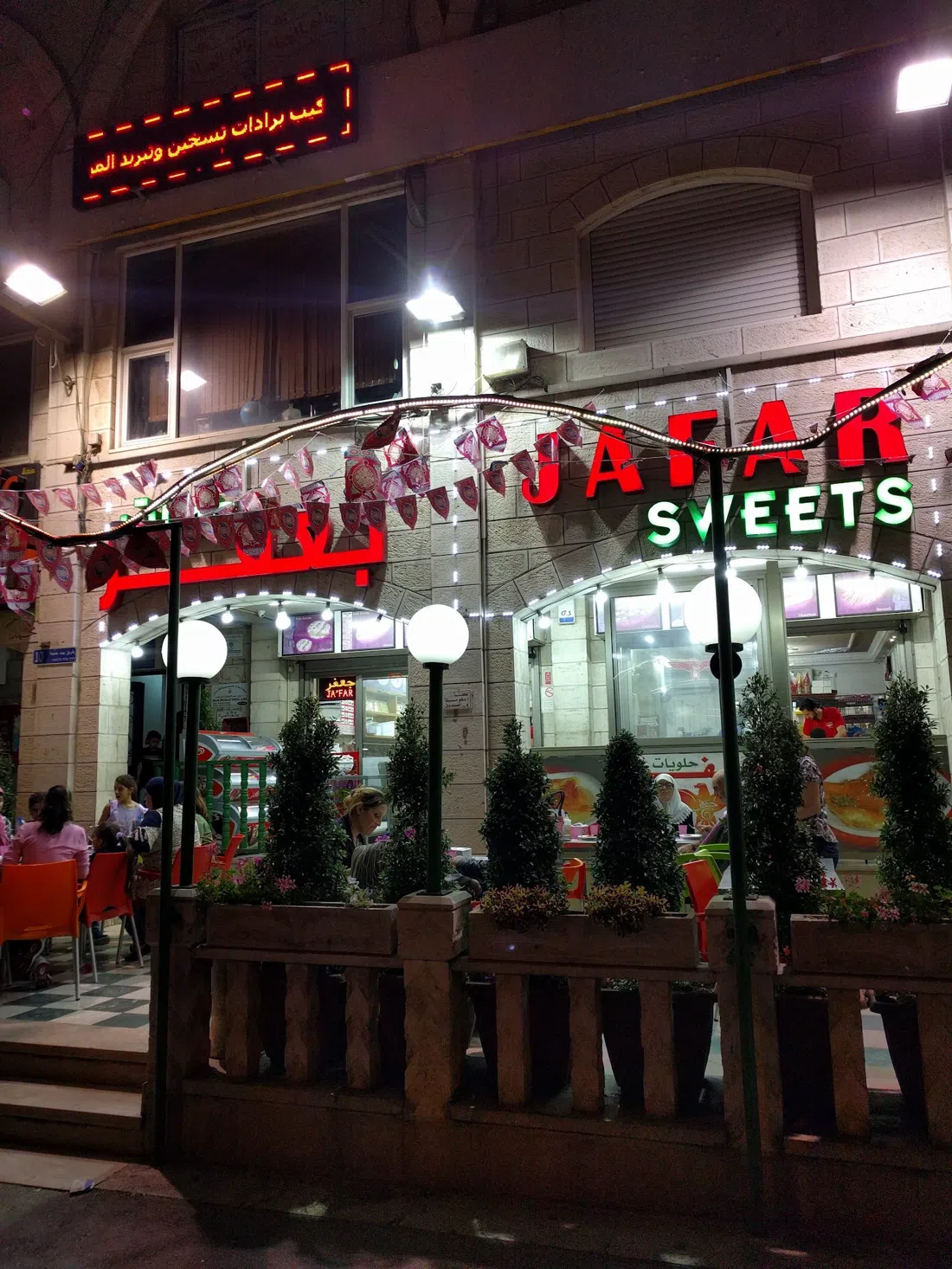
Jafar Sweets on Khan al-Zeit sells knafeh at ₪10 from a counter stacked with wide copper trays, the shredded pastry orange on top, the cheese pulling as a wedge is lifted, syrup ladled over it. You eat it standing in the souq. The shop keeps no published hours, so call ahead if it matters.
The Holy Sepulchre before the ramp opens
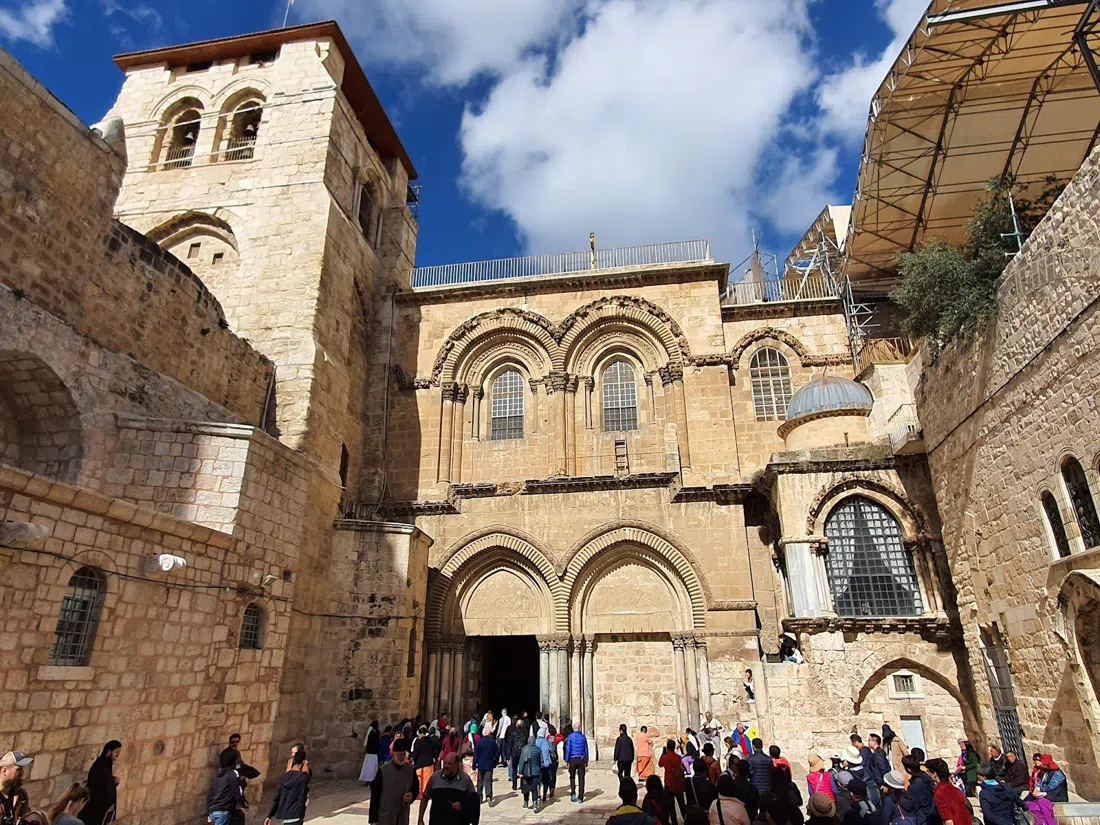
Church of the Holy Sepulchre, 10 minutes from the Mughrabi ramp, is free, open to all faiths and open 365 days, from 05:00 to 20:45 in summer and 04:00 to 19:00 in winter. Those hours absorb the dark part of the morning while you wait for the compound. Inside the Crusader twin-arched facade, with the immovable wooden ladder on its ledge, the pink Stone of Unction lies just through the door and the Aedicule stands under the pierced dome of the rotunda. Modest dress is expected.
Door prices and what to book ahead
Il n'y a pas de billet pour l'esplanade : on fait la queue, on est contrôlé, puis on monte. Toutes les activités payantes de la journée se déroulent en dehors de l'enceinte, et trois d'entre elles demandent à être organisées avant votre arrivée plutôt que le matin même.
Les visites guidées à pied qui incluent l'enceinte ont lieu sept jours sur sept. La plus demandée est signalée comme susceptible de se vendre rapidement, et certains départs sont déjà complets à certaines dates, tandis que d'autres restent ouverts. Réservez à l'avance si votre séjour ne vous offre qu'une seule matinée possible pour cela.
Meilleur moment pour y aller
Le dimanche au jeudi sont vos jours. Le premier créneau va de 07h30 à 10h00 ou 11h00, le second de 12h30 ou 13h30 à 14h30, et les créneaux d'hiver sont plus courts aux deux extrémités. Choisissez le premier. Le second ne laisse presque aucune marge si la file du contrôle de sécurité avance lentement, et la chaleur sur une plateforme de dalles sans ombre est alors plus pénible.
Vérifiez la situation le matin même avant de descendre vers l'esplanade. Des fermetures sont survenues et ont été levées sans préavis en 2026.
À qui convient la matinée
Elle convient à un visiteur qui acceptera de faire la queue à 07h00 et de savoir que les portes des mosquées lui resteront fermées. Il en retire une heure sur des dalles dégagées, à côté du Dôme du Rocher, gratuitement, dans un lieu qui fonctionne plutôt qu'il ne sert d'exposition. Un visiteur qui souhaite découvrir des intérieurs, des pierres sculptées et des strates datées tirera davantage profit des galeries de la citadelle, des tunnels et du parc au pied des remparts.
Notes pratiques
Le samedi, l'esplanade et le parc archéologique sont fermés, et le vendredi, le parc n'est ouvert que la moitié de la journée, sans accès à la rampe. Réservez les tunnels, les tables de tamisage et tout créneau guidé sur la route des Pèlerins avant de partir.
Consultez le guide de Jérusalem et la recherche d'hôtels à Jérusalem.