At six in the evening the counters along Calle de la Victoria start to steam, and you smell the garlic from the corner before you see the door. Puerta del Sol itself takes four minutes: a kilometre-zero plaque underfoot, a clock tower that owns New Year's Eve, a bronze bear most people photograph from the wrong side. The reason to stand here in October is the half-kilometre of bars around it, where a pan of prawns costs less than a museum ticket and the evening only gets going at an hour most visitors have already eaten.
What tapas hour actually is around Sol
Tapas hour is not an event anyone organises. It is the gap Madrid leaves between a lunch that ends at four and a dinner that starts at half nine, and around Sol it fills roughly between 7.30pm and 9.30pm midweek, earlier and far messier at weekends. Almost nobody sits. You stand at a counter, order one thing and a drink, pay, then walk two streets to the next place. That is why the advice below is mostly about doors, capacity and timing rather than menus.
Three things before you start. First, the price chalked up is usually the counter price; a table, and especially a terrace table, can cost more at the same address, and in October the terraces are still in play, so that difference is live. Second, the free-tapa-with-a-drink custom is weaker here than visitors expect. Around Sol you order and pay for what you eat, and that is fine, because what you are paying for is one thing done for a century. Third, the bar keeps your tab in chalk or in its head and you settle at the end; trying to pay per round confuses everyone, including you.
Everything in this article sits inside a twelve-minute walk of the square, which is the entire argument for eating here instead of trekking out to a district you have to research first. For how the rest of the city fits together, the Madrid guide is the better starting point.
Garlic prawns in the pan they were cooked in
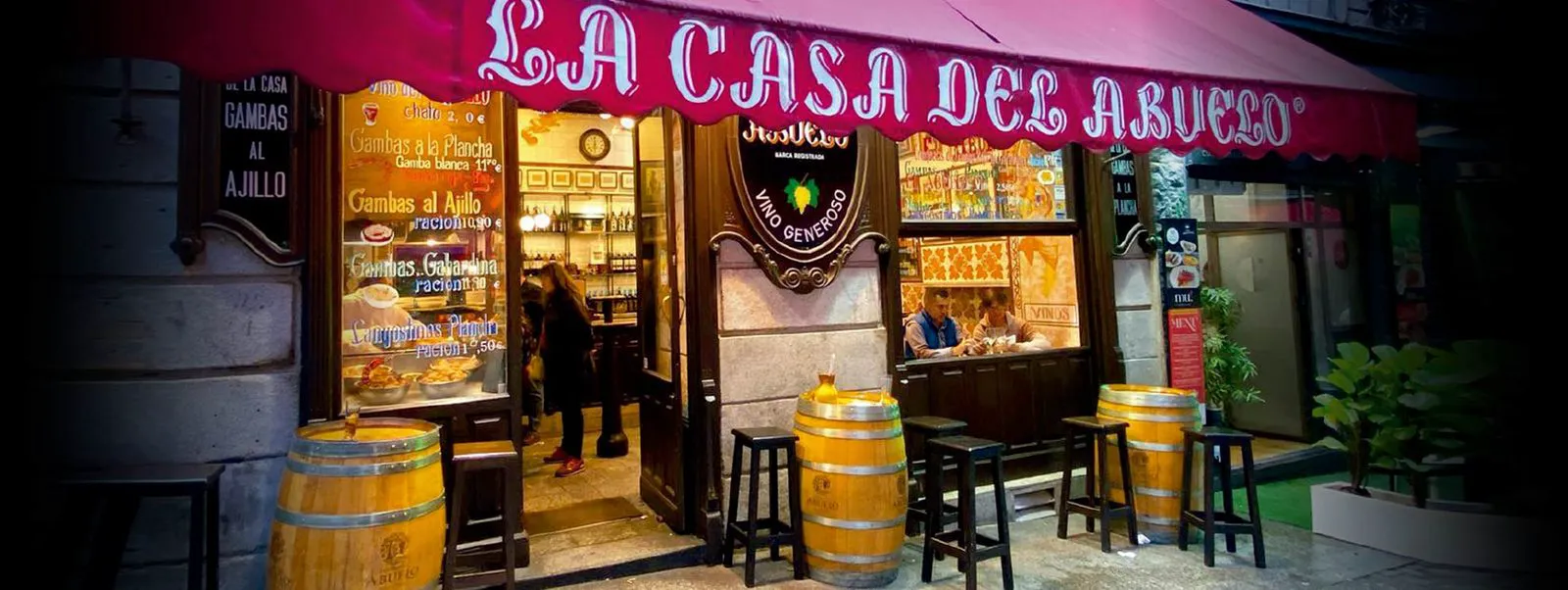
La Casa del Abuelo (Calle de la Victoria, thirty seconds off the square) has been open since 1906 and there is only one thing to order: gambas al ajillo, brought to the counter still spitting in its little metal pan, garlic and chilli and oil you are meant to mop with bread until the pan is clean. Budget €12–18 a head for the prawns and a drink. That is what good prawns cost rather than a tourist mark-up, and the bread is not optional.
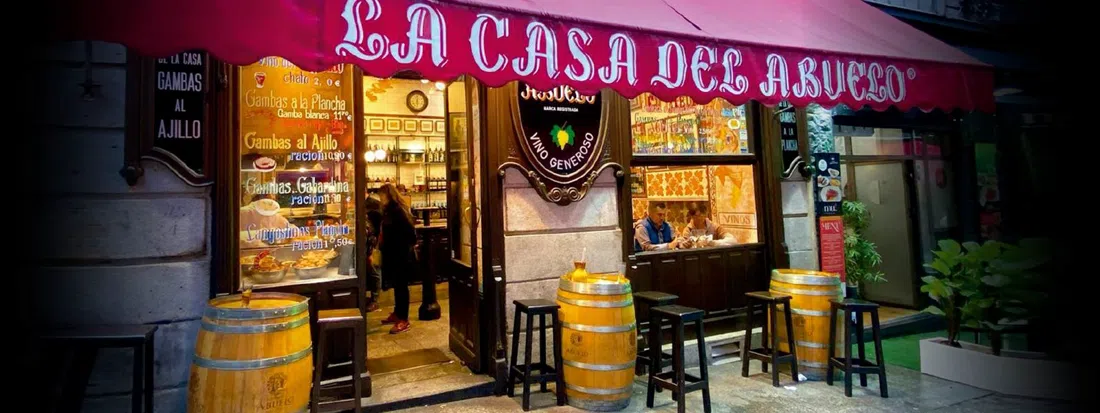
No reservations, first come first served, and the original Victoria 12 room is genuinely small: a bar, a strip of standing space, elbows. Two or three people will get in within minutes at 7.30pm. Four is the practical ceiling. Above four, split into two pairs or use one of the operator's other rooms a few doors along, which run under the same name and the same kitchen; the one entry covers the cluster. If you arrive at nine on a Saturday and the doorway is three deep, walk the loop and come back at ten, because this is the one address in the article I would wait for.
A five-minute stop for patatas bravas
Las Bravas (the Álvarez Gato alley, a minute east of Sol) has been trading since the 1930s and holds a patent on its sauce dating from 1959. It is a specialist rather than a restaurant: fried potato, that sauce, standing room, €5–12 a head, and a turnover so fast that a space usually opens up before you have decided what to drink. Walk-in only; no bookings exist to make.
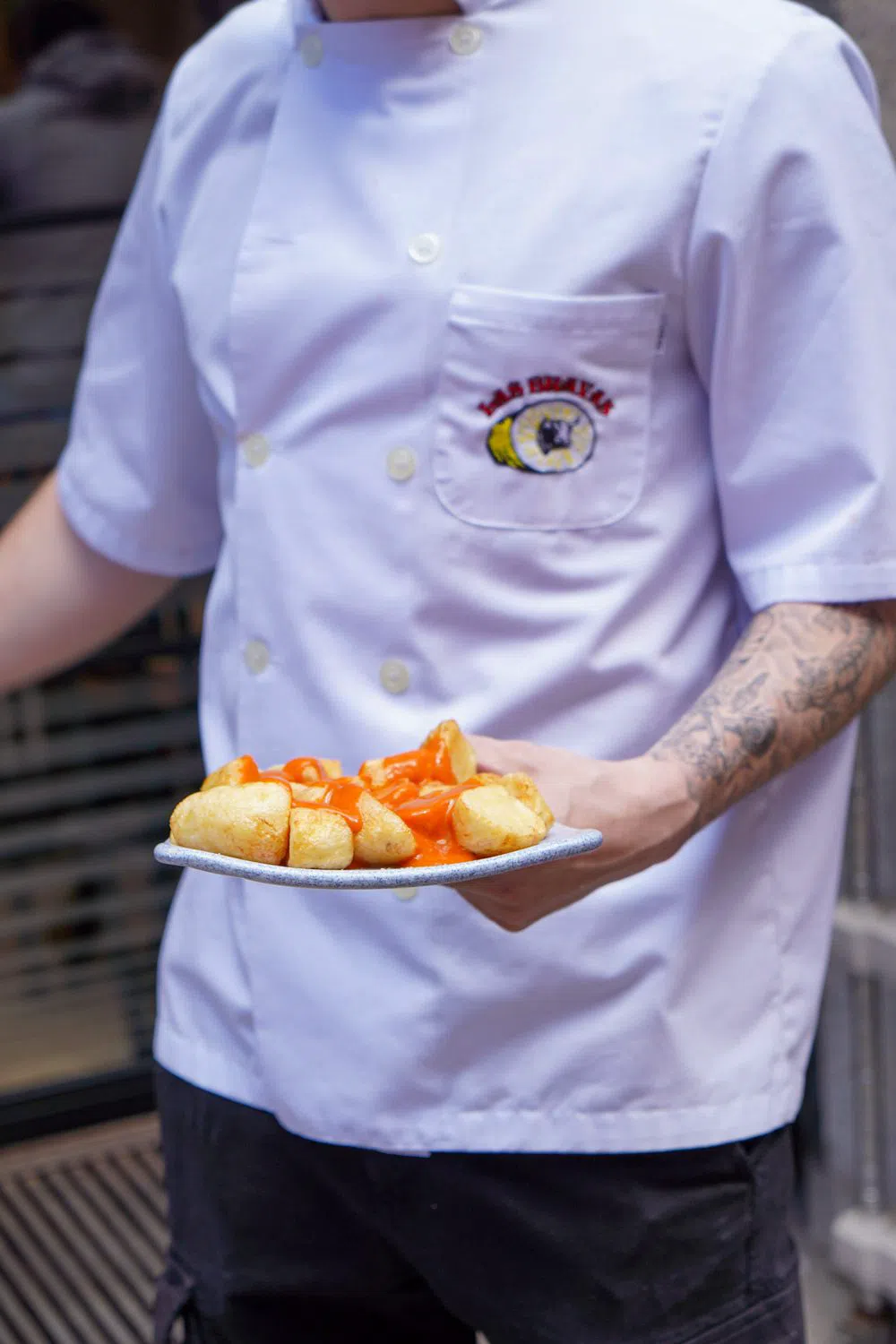
Treat it as a five-minute stop between two better meals. Couples and pairs do well here. A group of eight will end up standing out in the alley with plates balanced on forearms, which is survivable but not an evening. While you wait, look at the distorting funhouse mirrors mounted on the alley wall next door. They are a real Madrid fixture rather than a prop someone installed for photographs, and they are free.
The one address that can swallow a group of ten
Museo del Jamón on Carrera de San Jerónimo (the square's eastern lip) is not a museum, whatever the name and the ceiling full of hanging legs suggest. It earns its place for one reason: it is the only address right on Sol that can absorb a party of ten at any hour without a phone call. Large halls, tables upstairs, continuous service from 9am to past midnight, no booking.
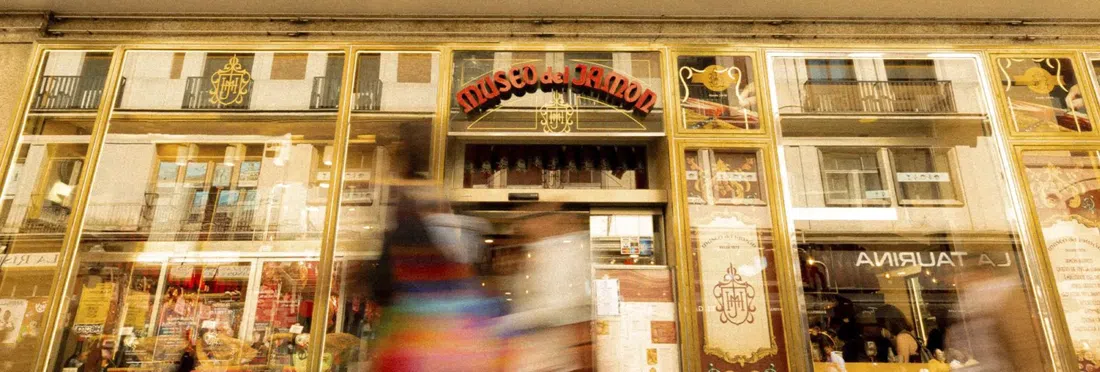
Prices split cleanly. A ham roll at the bar is €1.50–3, and a counter bocadillo with a caña is the cheapest honest lunch anywhere near the square: a ham sandwich and a small beer eaten standing up, the way half of Madrid does it. Sit down upstairs with a plate and you are at €15–25 a head. It suits groups too big for the counters, families, anyone arriving at 4.45pm when the serious kitchens are shut, and anyone who needs to eat before a train.
Two centuries of dining room for the price of a coffee
Lhardy (Carrera de San Jerónimo, two minutes east of Sol) has been open since 1839 and offers the sharpest door-price contrast in these streets. Downstairs is a self-service standing room with a samovar: you walk in free, take a cup, pour your own consommé from the urn, and pay about €4. A two-century-old room and a hot cup of broth for less than a cocktail, and on a cool October evening that is the best value-for-history ratio in this article.
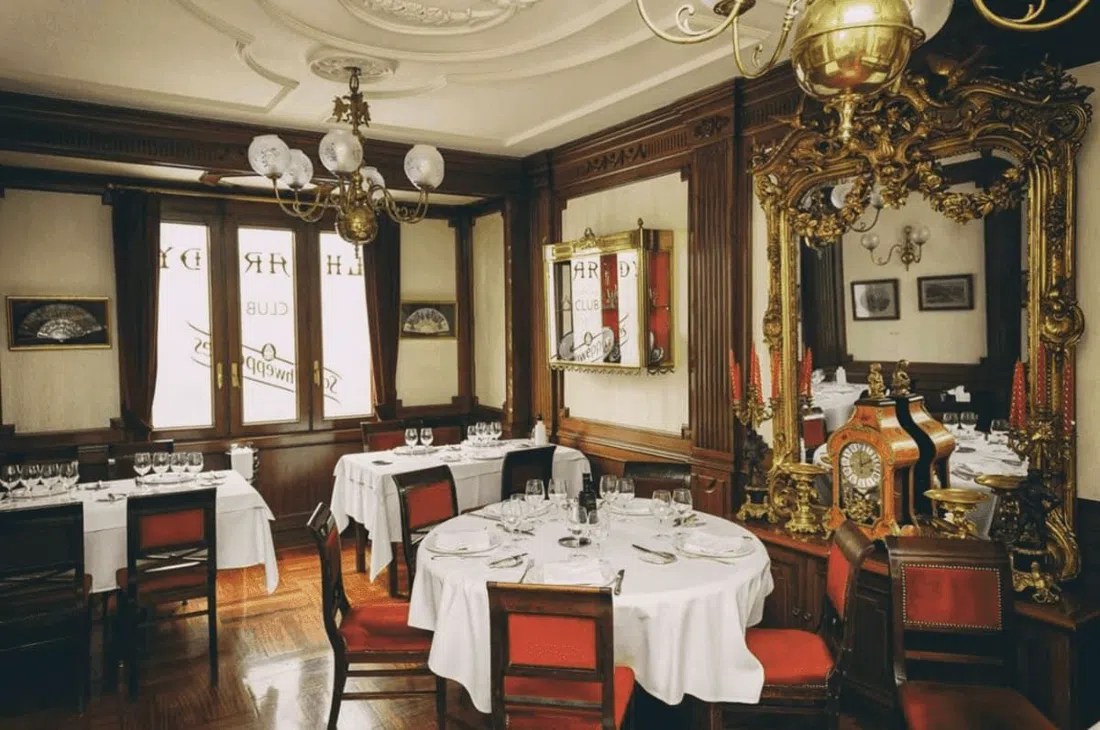
Upstairs is the other Lhardy: booked dining rooms, website or telephone only, no walk-ins for groups, and €60–90 a head for cocido madrileño served in its traditional courses. If that is your one big Madrid meal, book it well before you fly; the upstairs rooms are small and the cocido is why people come. One clarification worth making, because the internet has not caught up: the newer Lhardy Café on Calle Velázquez is a sister site. The cocido stays here.
Churros at eight in the morning, pastries at six in the evening
Chocolatería San Ginés (the passage off Calle Arenal, five minutes from Sol) has been serving since 1894 and is the only genuinely round-the-clock food stop near the square, open continuously Thursday to Sunday. Six churros and a chocolate thick enough to stand a churro upright run about €5–6. No bookings; capacity across two rooms and the passage tables means a group of ten gets in.
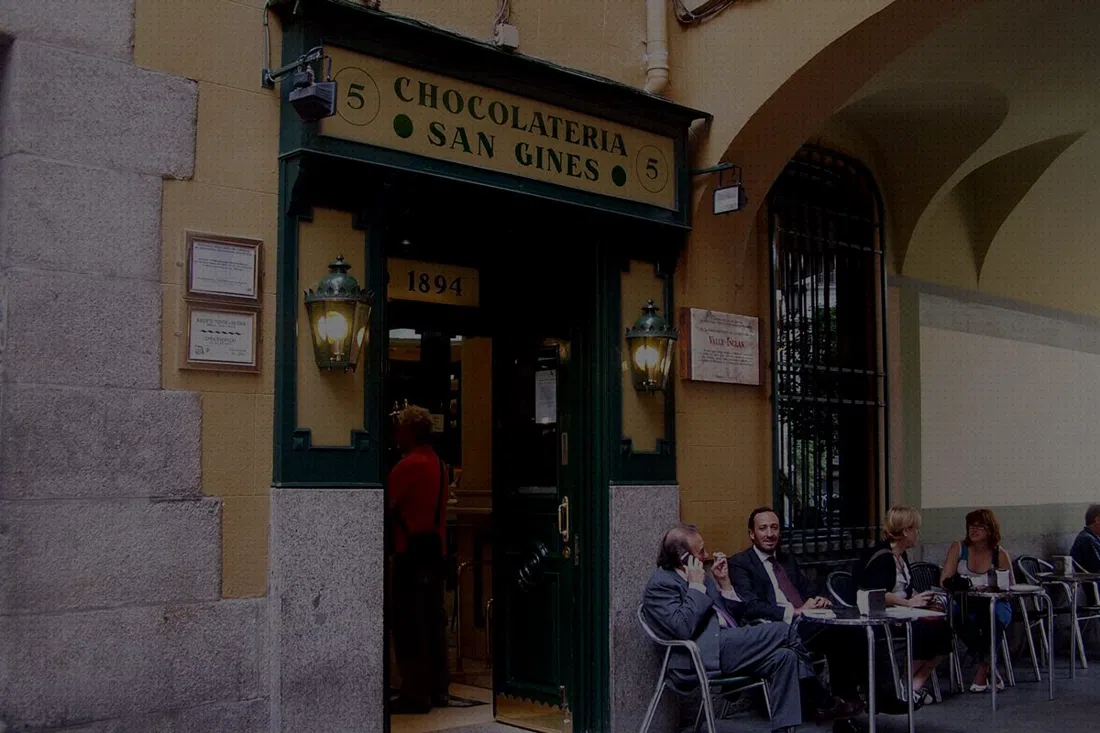
The timing advice here is the whole point. Mid-evening the queue outside is long and is not itself an experience. Go at 8am before anything else opens, or at 2am on your way back from wherever the night went, and you walk straight to a table. Both beat the 7pm version.
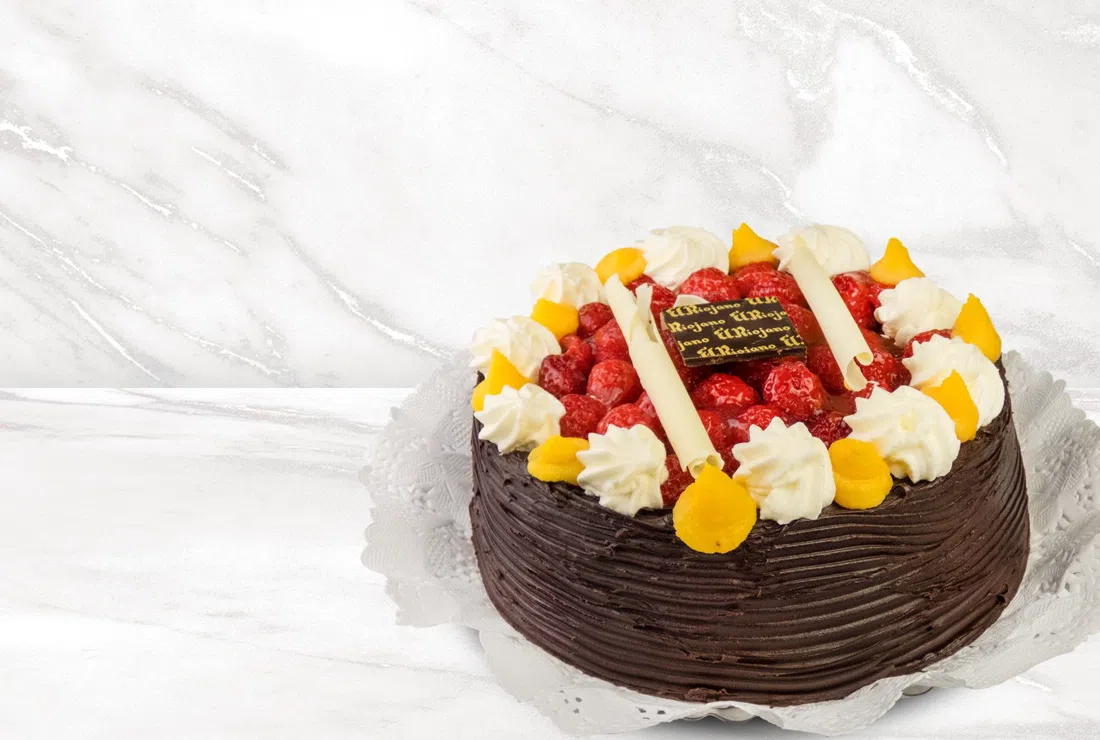
Pastelería El Riojano (Calle Mayor, three minutes from Sol) is a shop rather than a café, founded in 1855 by a pastry chef from the Royal Palace, with the best-preserved interior of any of these doors and only a couple of standing spots inside. Buy the pastel de yema, €2–5, and eat it walking. That makes it useful in a way cafés are not: it is open 9am–9pm daily, so it covers the dead afternoon when the taverns have shut their kitchens and you need something in your hands.
The market reopened in February, so ignore the old photographs
Mercado de San Miguel (Plaza de San Miguel, accanto alla Plaza Mayor, otto minuti da Sol) ha riaperto il 26 febbraio 2026 dopo una ristrutturazione durata diversi anni, quindi qualsiasi articolo o set di foto più vecchio di questa primavera descrive una sala che non esiste più. L'ingresso è gratuito, i piattini costano €4–8 e un conto realistico, dopo aver girato per quattro banchi, è di €15–30 a testa. Resta aperto fino a mezzanotte, e fino all'1am il venerdì e il sabato, il che lo rende una vera opzione serale tardiva e non solo teorica. Gli sgabelli sono rari nelle ore di punta; alcuni singoli banchi accettano prenotazioni tramite la pagina di prenotazione del mercato stesso.
Un giudizio onesto, perché questo è il locale costruito più apertamente per i visitatori: non ti consiglierei di venire qui per cena. I prezzi dei piattini sono prezzi esposti e il piacere si assottiglia in fretta. Funziona per un piatto e un bicchiere in un orario di morbida, oppure per un gruppo di sei che non riesce a mettersi d'accordo su una cucina e preferisce scegliere ciascuno per conto proprio. Se lo sai in anticipo, non te la prenderai.
Sei euro per la luce migliore vicino a Sol
Azotea del Círculo de Bellas Artes (Calle de Alcalá, sei minuti da Sol) chiede €6 per l'ascensore, €5 con riduzione, e le bevande si pagano a parte a prezzi da terrazza. È il confronto più chiaro tra prezzo d'ingresso e valore nella zona: pochi euro per una terrazza sul tetto con capienza controllata e una lunga vista sui tetti verso ovest, rispetto al costo di qualsiasi alternativa guidata.
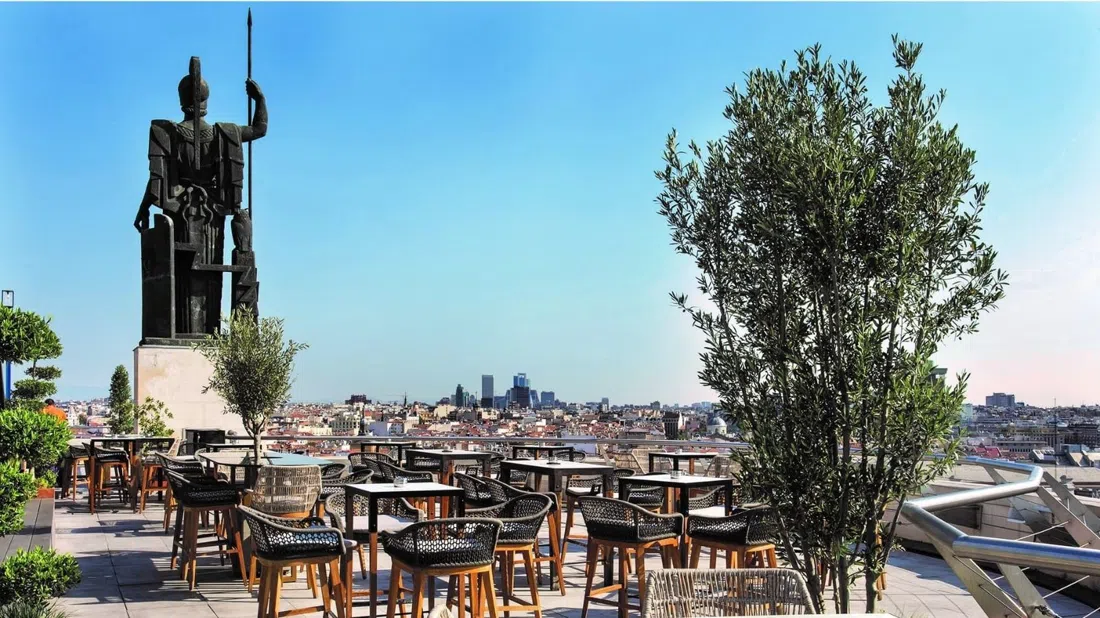
Due regole sono importanti. Il biglietto ti dà accesso al tetto, non a un tavolo in terrazza; quindi se vuoi sederti con la vista all'ora d'oro, arriva almeno quarantacinque minuti prima del tramonto: la ressa è prevedibile e il personale non può inventare tavoli. E i biglietti si vendono online, tranne tra le 2pm e le 4pm e dopo le 9pm, quando devi acquistarli alla reception dell'edificio, al piano terra. Inserisci questa tappa all'inizio di una serata di tapas, non alla fine: su al tetto all'ora d'oro, giù a un banco entro le otto.
Quanto costa la porta rispetto a una visita guidata
Se fai tutto da solo, il calcolo è semplice. Gamberi e una bevanda a €12–18, bravas a €5–12, un bocadillo al banco e una caña a pochi euro, una consommé a €4 e churros a €5–6: una serata completa in autonomia costa circa €30–45 a testa, di più se bevi con criterio. Niente di questa lista richiede una prenotazione, tranne le sale da pranzo del Lhardy.
C'è anche una visita guidata tra tapas e storia per queste stesse strade, e la domanda è reale, non costruita: tra le opzioni prenotabili ci sono 8,997 recensioni di viaggiatori, con la visita più votata che ha un punteggio di 5.0 su 5 da 3,625 recensioni. Si svolge sette giorni su sette, quindi trovare date ad ottobre non è un problema, e parte da 72 USD a persona. Circa il doppio di un giro fai-da-te.
Ciò che il supplemento ti regala è sicurezza nell'ordinare, qualcun altro che si occupa delle decisioni sulle code e il contesto che altrimenti leggeresti su una targa. Vale la pena se è la tua prima sera in città, se non parli spagnolo e non ami andare a tentoni, o se sei un gruppo di cinque o più persone che altrimenti verrebbe diviso a ogni banco. Puoi farne a meno se ti senti a tuo agio in piedi al bancone e indicando ciò che sta mangiando la persona accanto a te, che è il modo in cui Madrid stessa fa questo tipo di cena.
Il momento migliore per andare in ottobre
Il infrasettimanale, da martedì a giovedì, è il momento ideale della settimana: i banconi sono pieni di gente del posto da circa le 19.30, ma non devi lottare per trovare spazio. Il venerdì e il sabato tra le 20 e le 22 è la calca: resta divertente, ma preparati ad aspettare da La Casa del Abuelo e a stare in piedi nel vicolo da Las Bravas. La domenica pomeriggio è più tranquilla e la grande sala dei prosciutti regge meglio di tutto.
L'ora del giorno conta più della data. Un pranzo al banco tra le 13 e le 14 è economico, tranquillo e la finestra più facile per i gruppi. Dalle 16.30 alle 18.30 molte cucine chiudono, ed è proprio allora che la pasticceria e la sala del consommé in piedi si rendono utili. Inizia il giro alle 19.30, accetta che le 21.30 siano l'ora della ressa e tieni i churros aperti 24 ore su 24 e il mercato serale come piani di riserva.
La luce cambia sensibilmente nel corso del mese, cosa che conta per la terrazza sui tetti. Il tramonto passa da circa le 19.45 nella prima settimana a circa le 19.25 alla fine della quarta; poi, l'ultima domenica di ottobre, si tornano a spostare le lancette e scende poco dopo le 18.15, quindi una tappa in terrazza a fine ottobre va fatta prima di cena, non al posto di essa. Di solito i pomeriggi sono abbastanza caldi da stare fuori in maniche di camicia; le sere si raffreddano in fretta dopo il buio, quindi porta un strato in più. La pioggia è possibile e ogni indirizzo qui, tranne la terrazza, è al chiuso.
Consigli pratici
Come arrivare: Sol è un nodo della metro per le linee 1, 2 e 3, con una stazione dei Cercanías sotto, quindi puoi arrivare quasi da qualsiasi punto della città senza cambiare. Tutto ciò di cui si parla in questo articolo si raggiunge a piedi da lì, al massimo in dodici minuti, in piano, con tratti di ciottoli, quindi dimentica i tacchi.
Denaro: le carte funzionano quasi ovunque, ma tieni 20 € in banconote piccole e monete per i giri al banco e i churros, dove dividere il conto in otto con la carta non ti farà benvolere. Di solito si paga alla fine, non a ogni bevanda.
Budget: 15 € bastano per un bocadillo al banco, una caña e dei churros. 30–45 € coprono il giro vero e proprio con gamberetti e patatas bravas. 60–90 € a testa è il cocido prenotato al piano di sopra da Lhardy, che è una serata di tutt'altro genere.
Un'ultima cosa. Sol è uno dei luoghi più frequentati dai borseggiatori della città, soprattutto nella ressa davanti ai banconi più popolari: tasche anteriori, borsa davanti e niente nelle tasche posteriori. E se puoi, alloggia a distanza a piedi, perché trovarsi a dieci minuti di passeggiata da questi locali fa la differenza tra un secondo giro e un taxi; una ricerca di hotel a Madrid centrata su Sol ti mostrerà quanto costa a ottobre.