Green turtles graze the seagrass in Akumal bay in 2 to 4 m of water, and the clearest hour is the first one after the beach gate opens. By mid-morning other people's fins have stirred the silt and visibility drops. Cenote Dos Ojos holds its temperature and its visibility across the whole year.
What a cenote and turtle half-day involves
The trip has three parts: a freshwater swim in a cenote, a snorkel over the seagrass where the turtles feed, and lunch on the sand. Each part is a separate place with its own gate and its own ticket. You can assemble it yourself or buy it packaged with a transfer.
The turtle part happens at Akumal Bay Turtle Snorkel Zone (Bahía de Akumal), a shallow crescent of white sand and clear turquoise water with dark seagrass patches showing through it. An orange buoy line marks the turtle zone. You float the circuit inside that line in a bright life vest, in a cluster of other snorkelers, with low palms and palapa roofs along the shore behind you. The animals are green turtles feeding on the grass, in water shallow enough that you can follow every movement from the surface.
Guides work the buoyed circuit in pods of six snorkelers, and coach parties get split and staggered across the morning. A guided circuit with a vest runs 200 to 350 MXN. The beach gate charges bay and environmental access separately.
Who puts you in the water at Akumal
Centro Ecológico Akumal (Akumal) is the bay's research centre and has no commercial stake in it. The low white-and-turquoise building sits behind the beach under hand-painted turtle murals, with outdoor interpretation panels on seagrass and nesting, staff at a shaded kiosk and sea-turtle shell casts on display. Walking up is free, and a donation box takes what you want to give. The centre runs the nesting monitoring and certifies the bay's guides. It neither sells nor runs snorkel tours, and its own site corrects the sales line that a guide and a vest are legally compulsory for independent snorkelers. Talks and programmes happen by arrangement.
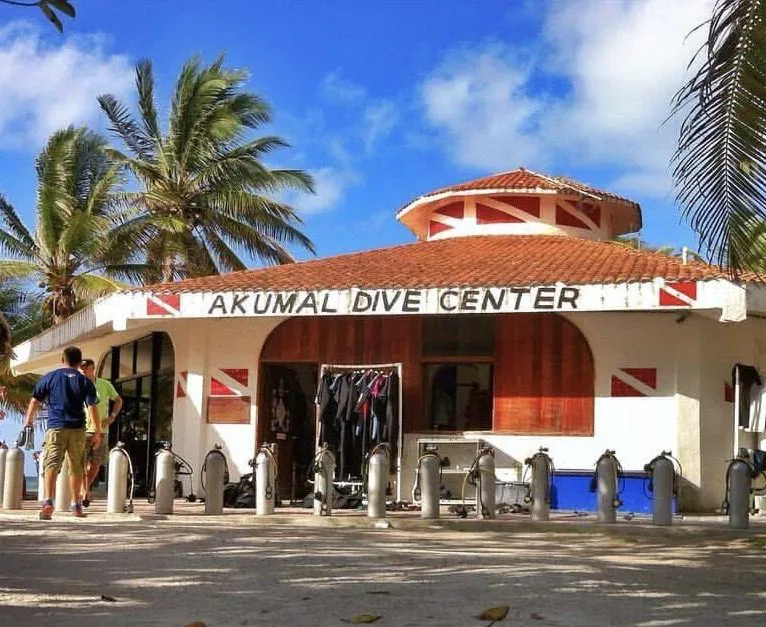
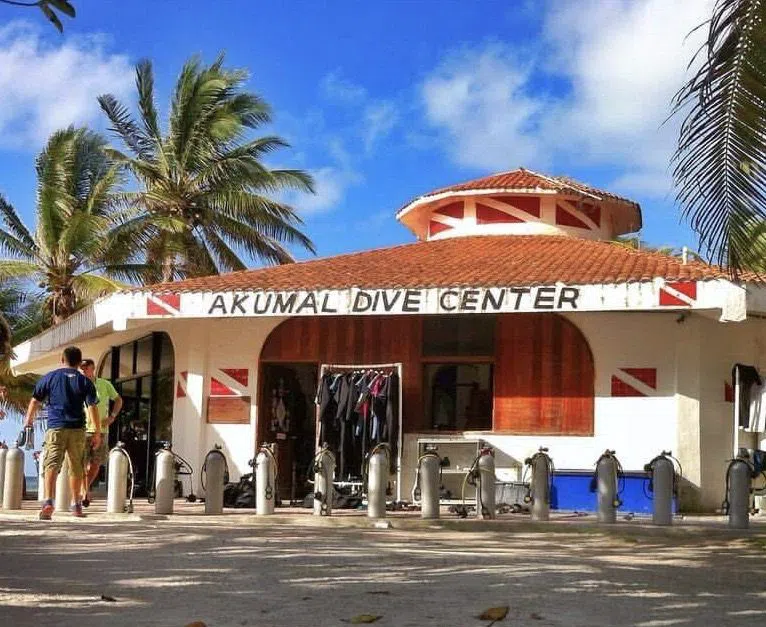
Akumal Dive Shop (Akumal main bay) works out of a weathered palapa-roofed shack on the sand, with wetsuits and fins hanging on racks, scuba tanks lined against a wall and boats pulled up a few metres away. The PADI 5 Star operation runs scheduled bay snorkel departures of 45 minutes in the water, at 700 to 1,500 MXN per person with gear, lockers and showers, and it splits larger parties across guides. Booking in the bay skips the transfer and the packaged lunch, and the guide who takes you out is certified. Anyone on the highway claiming to represent the conservation centre is selling something the centre does not sell.

Cenotes you can swim the same day
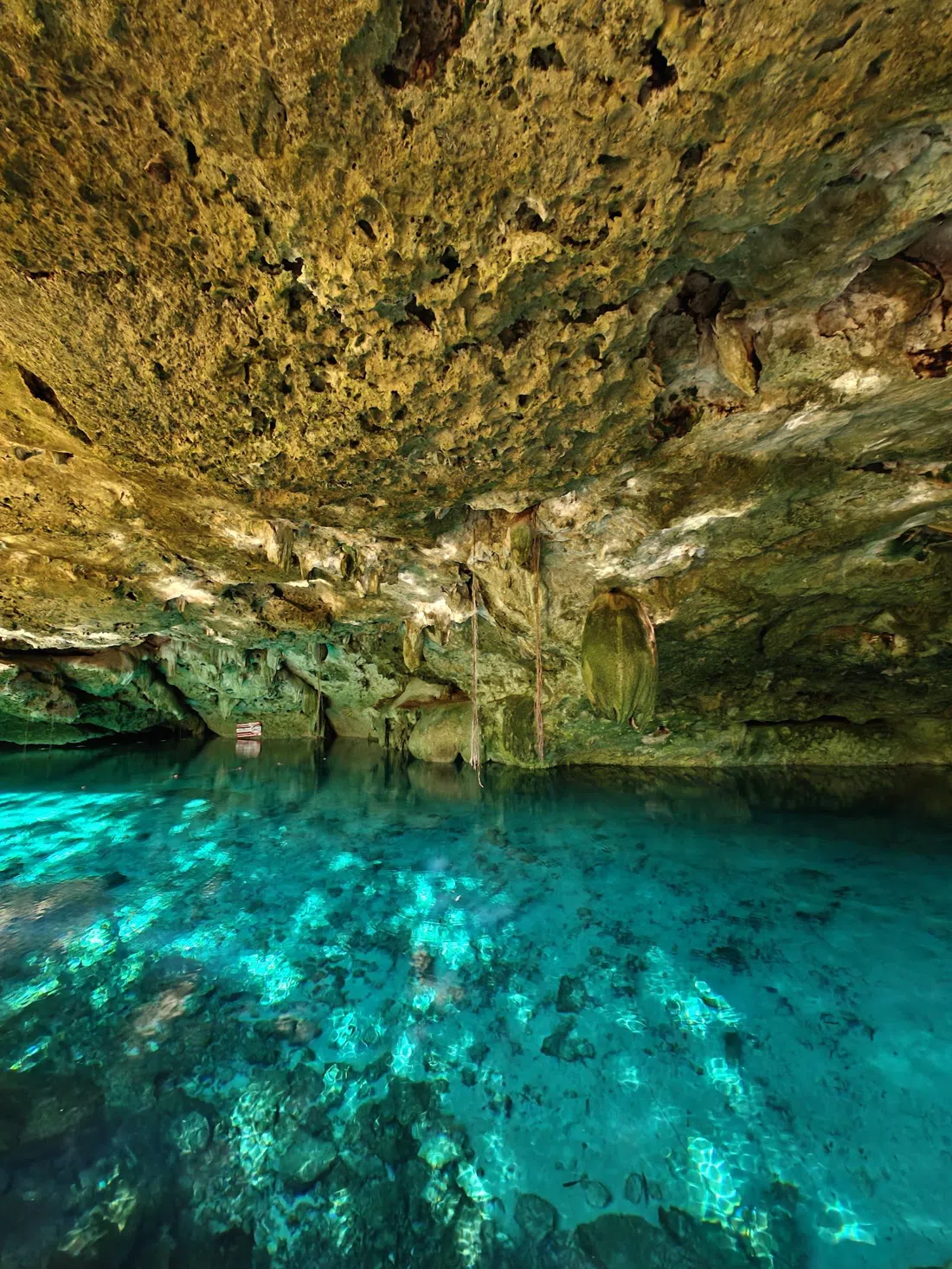
Cenote Dos Ojos (Parque Dos Ojos) is two linked sinkhole pools in jungle, reached by a wooden staircase down to a rock platform. The black water surface flips to electric blue where daylight lands on it, stalactites hang low over the swim-through and bats roost in the cavern roof. Snorkelling and swimming cost 350 to 400 MXN, with 300 MXN more to carry an action camera in. The park has parking, lockers and vests. Cave sections are guide-only and run in small groups. It opens 8 a.m. to 5 p.m., with last entry in the middle of the afternoon.
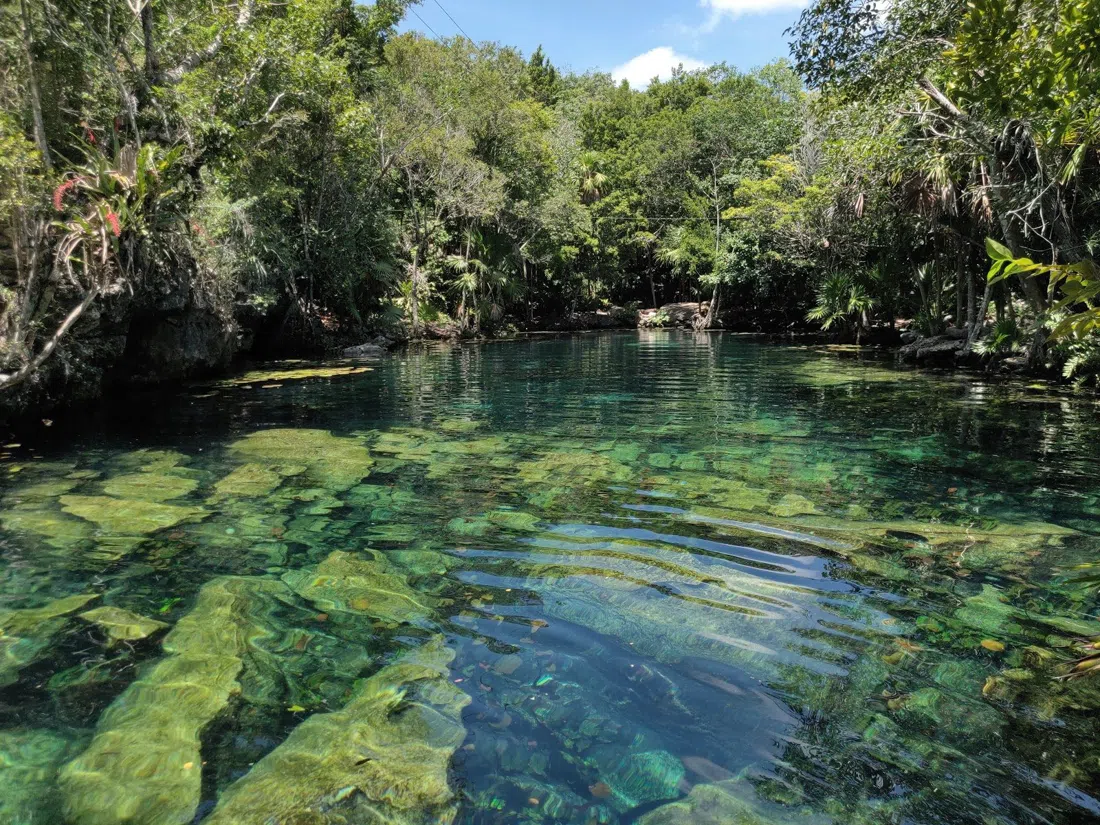
Casa Cenote (Cenote Manatí) surfaces as a winding freshwater channel through mangroves, with dense green banks on both sides and a wooden deck and steps into the water. You can see the halocline blur where fresh water meets salt. The channel runs out to the Caribbean a couple of hundred metres downstream. Entry is 150 to 200 MXN including a life jacket. A habituated Morelet's crocodile called Panchito has lived here since 2013, and the guides keep swimmers clear of him.
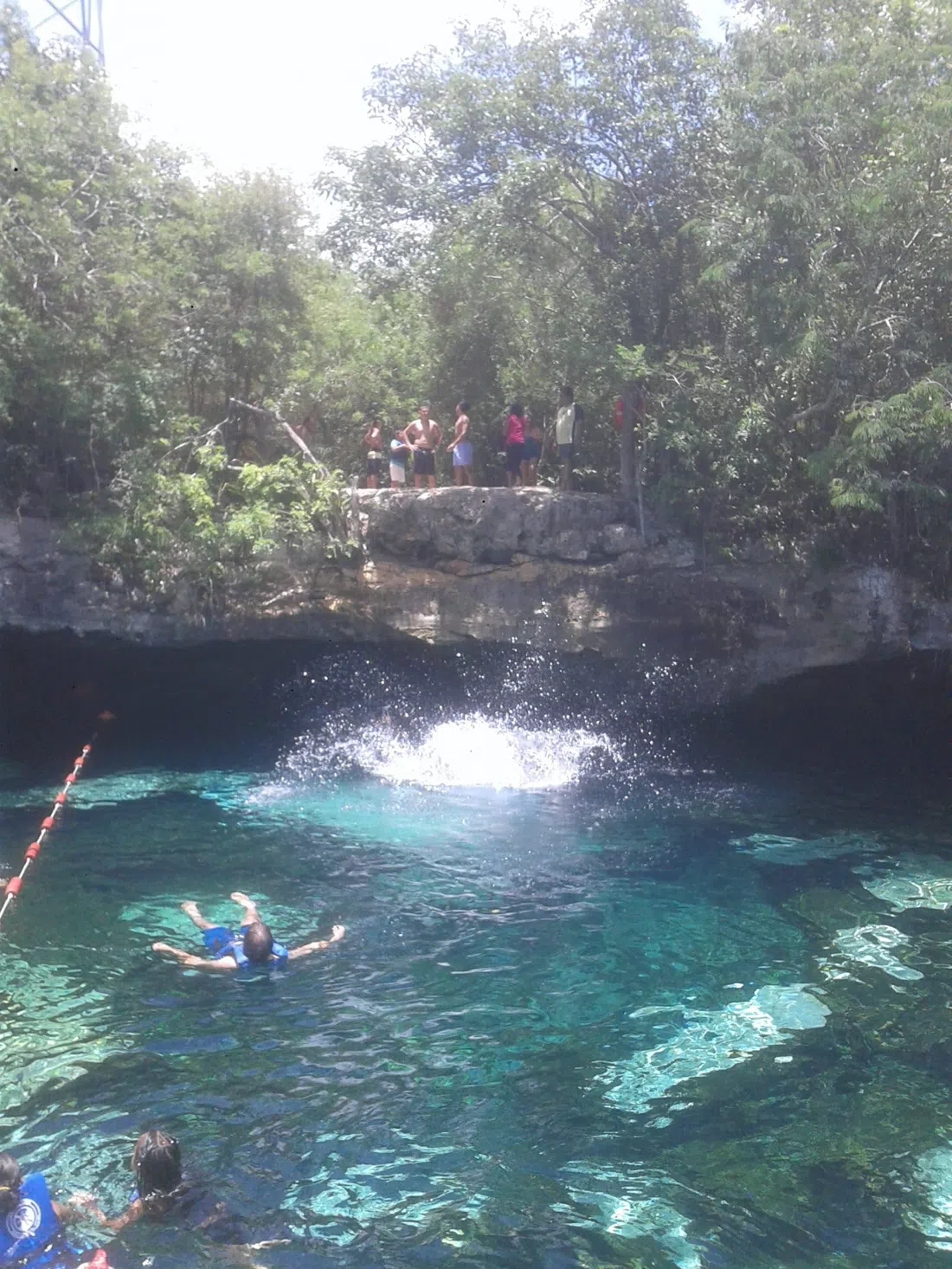
Cenote Jardín del Edén (Ponderosa) is a wide open limestone swimming hole with a high rock ledge for jumping and sunbeams cutting down through deep clear water. Lily pads and tree roots line one rim, and turtles and small fish hold in the shallows. Adult entry is 200 to 300 MXN, less for children. A vest costs 50 MXN and snorkel gear 25 MXN on site. The pool has room for a party to spread out.
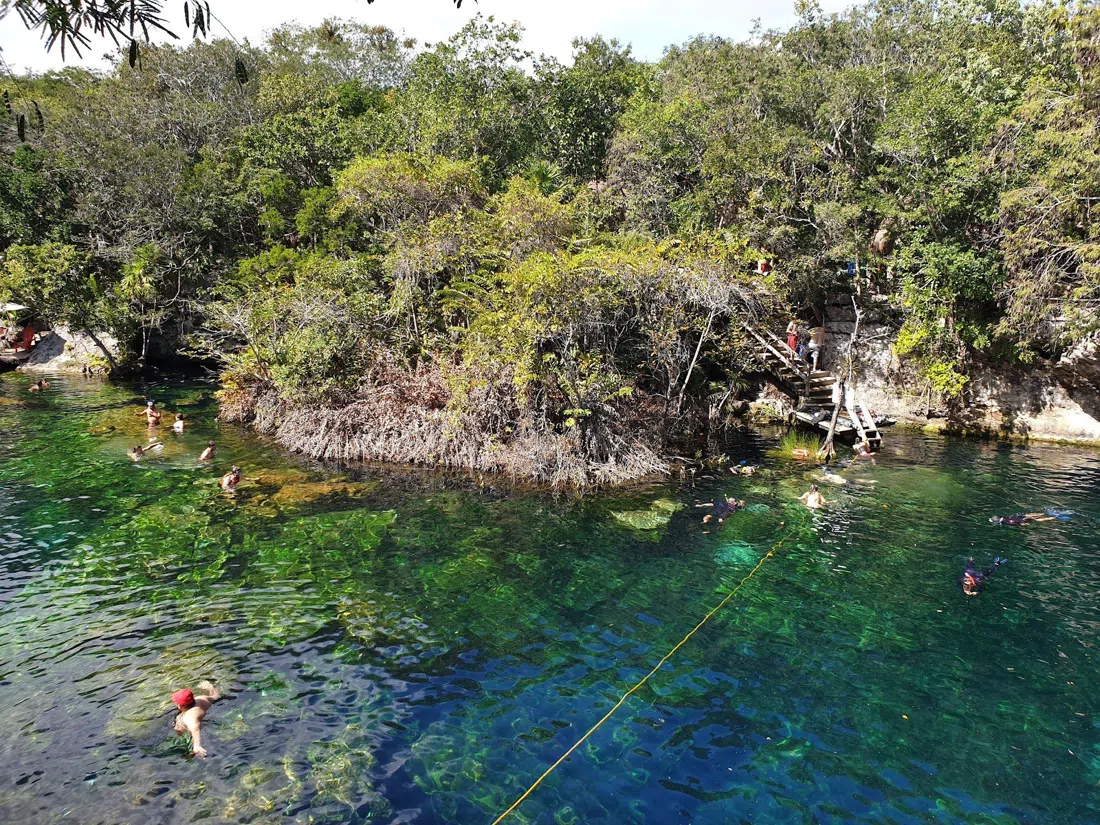
Cenote Azul is a chain of shallow terraced pools over pale limestone, with a cliff ledge and a jumping platform at one end and jungle pressing in on all sides. Shoals of tiny fish nibble at your ankles in the blue-green shallows. Adult entry is 180 MXN, 120 MXN for ages 4 to 7 and free under 4. The water is shallow enough for small children. It opens 8:30 a.m.
Chikin Ha Cenote Park holds three linked cenotes (an open pool, a cavern and a dark chamber), with zip-line cables overhead and timber decks and stairways between them. Basic entry to all three with a vest is 350 MXN, and the package with ziplining, bikes, snorkel gear and a Mayan ceremony is 650 MXN. The park bans sunscreen, creams and repellent, and the outdoor shower stalls at the entrance are compulsory before you get in the water. It opens 8 a.m. and absorbs a coachload without feeling crushed.
Breakfast and lunch on Akumal sand
Turtle Bay Café & Bakery (Plaza Ukana, Akumal pueblo) opens at 7 a.m., early enough to eat and still reach the buoys when the bay opens rather than after the first wave of vans. The courtyard is small and shaded, with bright painted walls, a pastry counter of sticky buns under glass, ceiling fans, potted plants and bicycles leaning outside. Breakfast, pastries and coffee come to 120 to 300 MXN. The rush runs 7 a.m. to noon and the courtyard is compact, so a dozen of you should expect a wait.
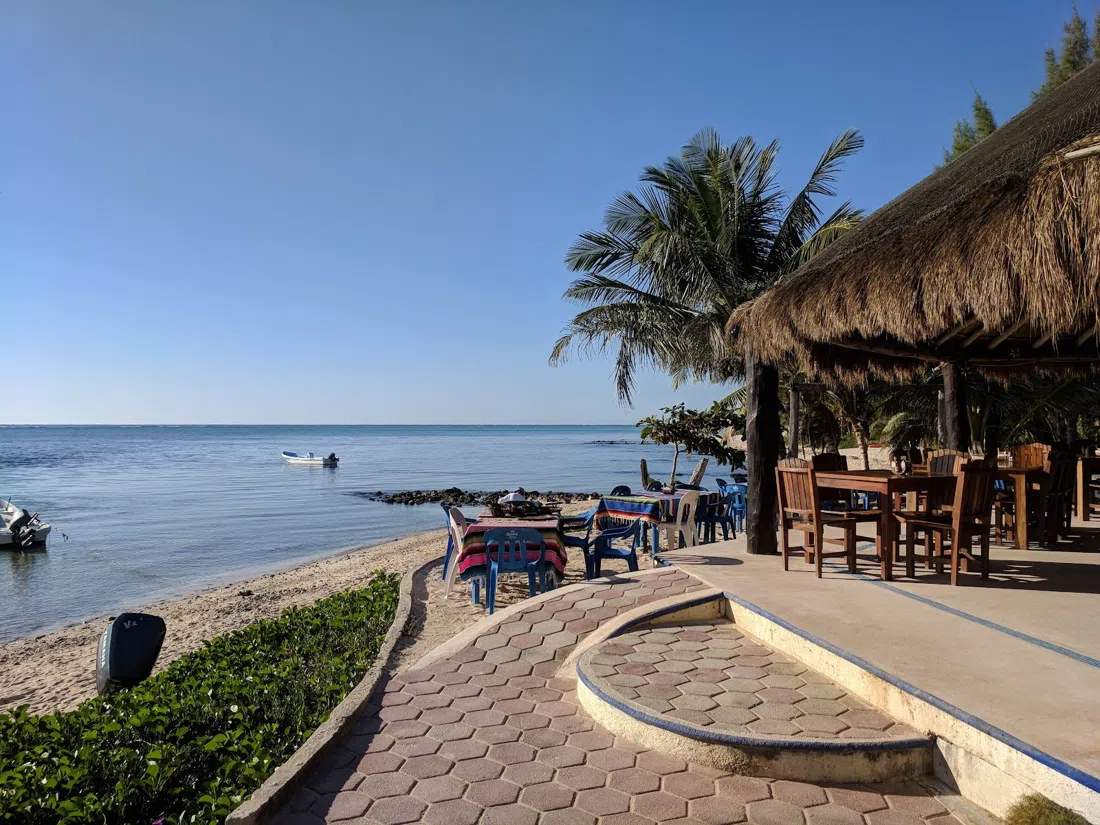
Lol-Ha (Akumal main bay) is the large open palapa on the sand, a long thatched roof on timber posts over white plastic chairs and wooden tables facing the water. It opens early for breakfast and stands right where the snorkel ends, which is also why it is busiest at the moment every morning circuit comes out of the water. Food runs 250 to 600 MXN a head, and the snack bar and pizzeria side is cheaper. It has the biggest sit-down capacity on the main bay, and snorkelers dry off at the edge of the terrace.
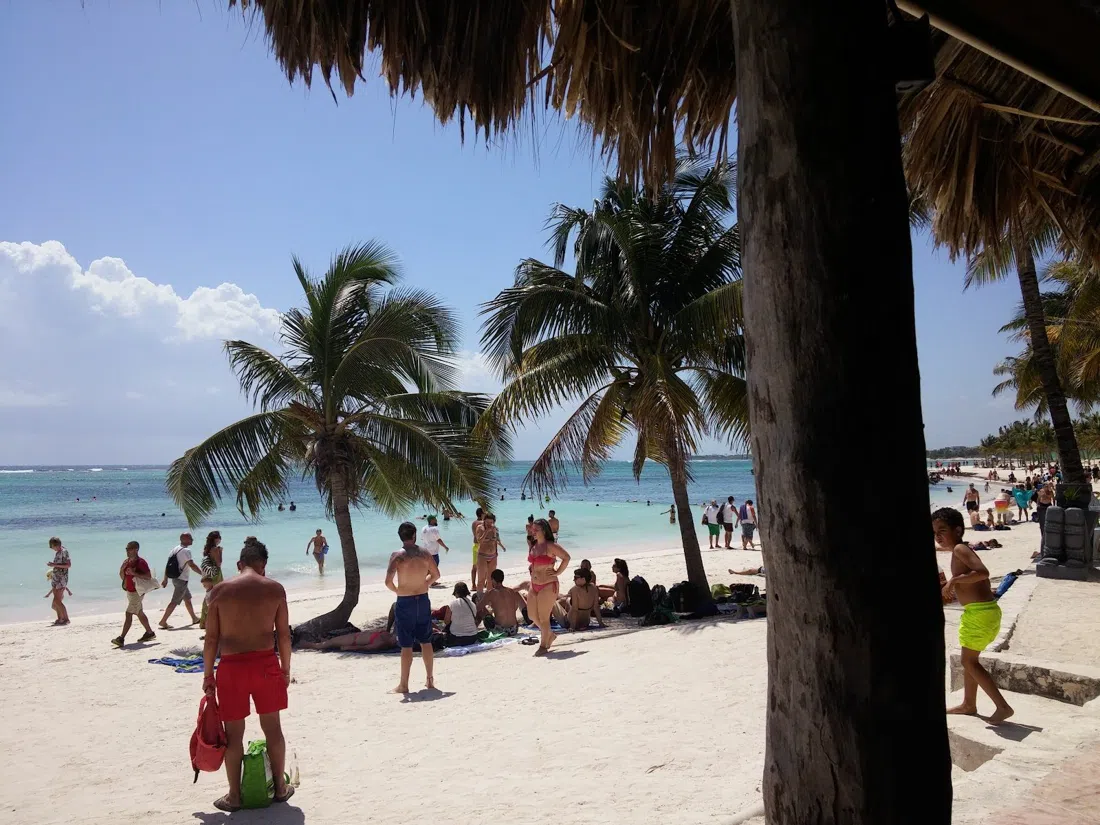
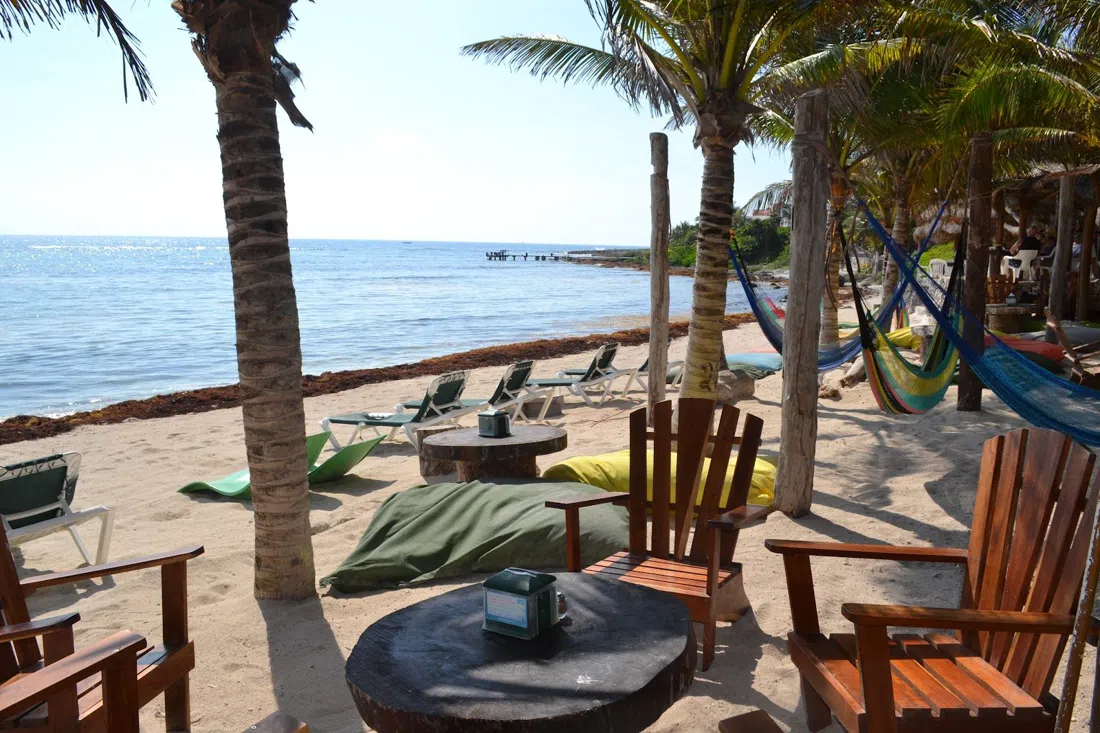
La Buena Vida (Half Moon Bay) has a sand floor, swings in place of bar stools, a treehouse-style upper deck on stilts and hammocks strung between the posts. Tacos, bowls or burgers with a drink come to 250 to 600 MXN a head. Parties sit under the beach palapas, and children are welcome. It trades Monday to Saturday from morning until late. It is easy to end up rating the afternoon here above the snorkel that preceded it.
Calmer water when wind or sargassum shuts the bay
Yal-Kú Lagoon (Laguna Yal-Kú) is a narrow rocky inlet where fresh water meets the sea, with jagged black limestone edges, jade-green water carrying a hazy halocline shimmer, stone sculptures dotted along the shoreline path and a mangrove and palm fringe. The brackish water is shallow to 4 m and calm enough for a nervous swimmer. Two gates sit under different management and charge differently, so agree the entrance before you arrive. The original blue-sign gate is 300 MXN and the second gate runs higher.
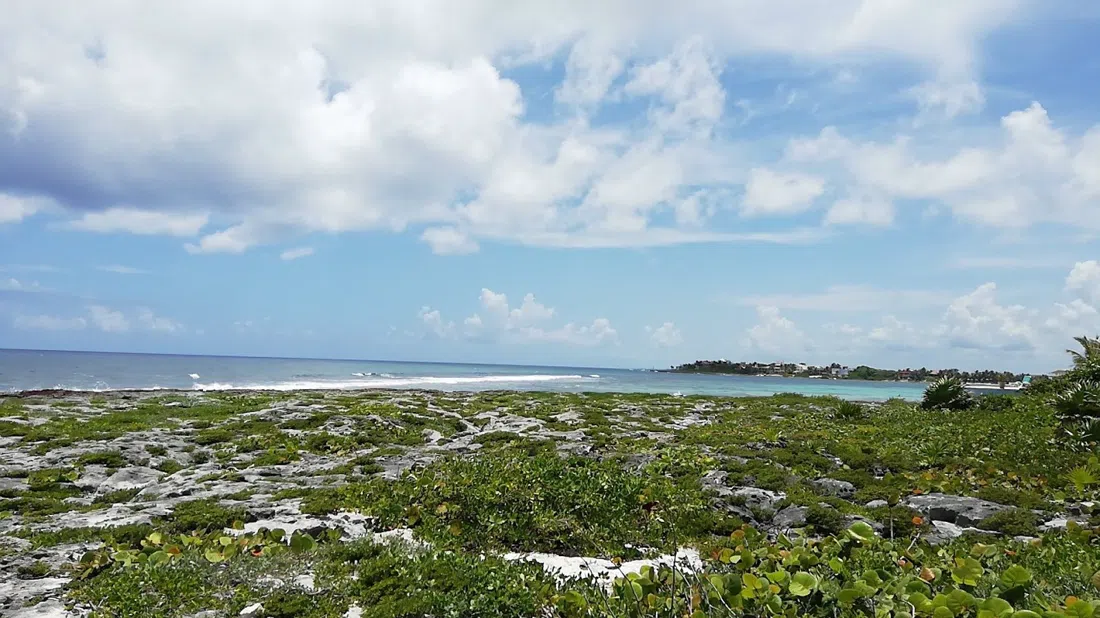
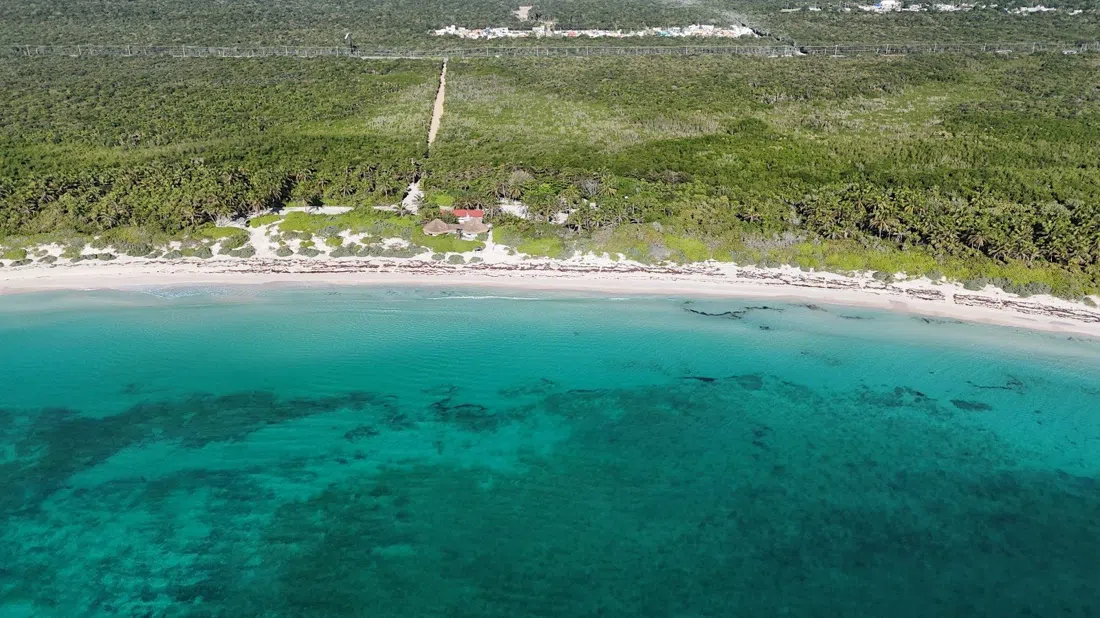
Half Moon Bay (Bahía Media Luna) is 700 m north of the turtle zone. The seabed is rocky and coral close in, the water is calmer than the main bay, and the swim-out reef shows as dark patches under pale turquoise with low-rise condos and palms at the sand line. Access is free and unregulated, mostly through the restaurant frontage, and you pay only for food, drinks or gear hire. Turtles are fewer here and the coral and reef fish are better. The frontage suits a small party.
Nesting beach and a wet-weather swap
Xcacel-Xcacelito Sea Turtle Sanctuary is 362 hectares of protected coast where the turtles nest instead of feed. The bay is undeveloped white sand backed by raw jungle with no hotels in sight, roped-off nesting plots on the dunes and a wooden boardwalk through low scrub. Foreign visitors pay 97 to 114 MXN, with lower rates for Mexican nationals and Quintana Roo residents. A small freshwater cenote sits inland from the beach and takes six people at a time. A large party waits on the sand. It opens 10 a.m. to 4 p.m.
Akumal Monkey Sanctuary & Rescued Animals is five minutes from the bay and houses 200 rescued animals. Guided tours run 9 a.m. to 5 p.m. on set timings, along jungle walkways under dense canopy with spider monkeys and capuchins moving through the trees above you, past large open enclosures, starting from a shaded palapa briefing area. Adults pay 1,400 MXN and ages 5 to 11 pay 1,000 MXN. VIP and ATV options run considerably higher, and children must be five or older. The price sits well above a cenote ticket, so give it the whole afternoon if you go.
現地払いか事前予約か
セノーテの入場料とアクマルの周遊は、いずれも当日ゲートで支払います。ゲートの料金は上記のとおりです。送迎と昼食が付いた半日パッケージは別途購入となり、ガイド付きの出発便は毎日(週7日)運行しています。2026年11月8日、15日、22日、29日、12月6日、13日の便と、ほかに26日分の出発日はすでに満席ですが、それ以外の日付はまだ予約できます。日程が決まったら事前予約をおすすめします。
ベストな時間帯
ウミガメが目的なら、ビーチゲートの開場時刻に合わせて到着しましょう。Jardín del Edénは生態系を休ませるため毎週土曜日は休業するので、週末の計画には入れられません。Xcacelは月曜日が休業日です。Cenote Azulの駐車場とプールは週末やメキシコの祝日に混み合うため、平日の午前中がおすすめです。
行く価値はあるか
淡水と海水の両方を同じ午前中に楽しみたい方、そして開場時間に起きられる方に向いています。訪れるたびに各ゲートで別途料金を支払う必要があり、ウミガメとのシュノーケリングは一日のなかで最も短い時間です。
出発前に
現金(ペソ)を用意しましょう。Casa Cenote、Cenote Azul、Xcacelは現金払いのみで、Jardín del Edénはベストや用具のレンタルに現金が必要です。Chikin Haも現金を優先しています。Cenote Azulには敷地内にATMがありません。カンクンのガイドとカンクンのホテル検索もご覧ください。
Cancunのホテル
よくある質問
アクマルでウミガメとシュノーケリングするには、ガイドとライフベストが必要ですか?
Centro Ecológico Akumalは産卵の監視を行い、湾のガイドを認定しています。また、独立したシュノーケラーはガイドとライフベストを付けることが法律で義務付けられている、という一般的な販売文句は否定しています。ガイド付きでライフベストを着用するツアーが今も最も簡単な方法ですが、ビーチゲートでは湾の利用料と環境保全料を別途請求されます。
アクマル湾に入るのは、一日のどの時間帯がよいですか?
ビーチゲートが開いてからの最初の1時間です。アオウミガメは水深2〜4 mの海草を食べています。シュノーケラーが何組か通ると、フィンで泥が巻き上がり、透明度が落ちます。アクマルの集落にあるTurtle Bay Café & Bakeryは午前7時に開店するので、先に朝食をとりたい方にも便利です。
当日に直接行けば大丈夫ですか、それとも事前予約が必要ですか?
セノーテの入場料とアクセス周遊の料金は、当日ゲートで支払います。送迎付きの半日パッケージツアーは毎日(週7日)運行していますが、2026年11月8日、15日、22日、29日、12月6日、13日の便と、ほかに26日分の出発日はすでに満席です。日程が決まっている場合は事前予約をおすすめします。
小さなお子さま連れに向いているセノーテはどこですか?
Cenote Azulは、小さなお子さまでも安心して遊べるほど浅いテラス状のプールが連なるセノーテです。入場料は大人180 MXN、4歳から7歳は120 MXN、4歳未満は無料で、支払いは現金のみです。Cenote Jardín del Edénはより広々としており、ベストやシュノーケル用具をその場でレンタルできます。Akumal Monkey Sanctuaryは5歳から入場できます。
Casa Cenoteのワニは、泳ぐ人にとって問題になりますか?
2013年から暮らしている、人に慣れたモレレワニのPanchitoが、マングローブの水路にいます。ガイドが泳ぐ人をワニから離れて泳ぐよう誘導しているため、大人数のグループにはやや不向きな水路です。入場料は救命胴衣込みで150〜200 MXN、支払いは現金のみです。
執筆
Maja Lindqvist
The city past the hotel zone
Maja moved from Malmö to Quintana Roo in 2013 and has spent the years since mapping the parts of Cancún that sit off Boulevard Kukulcán — El Centro's plazas, the Puerto Juárez ferries, the ruins at El Rey and the cenotes an hour inland. She times routes on the R1 and R2 buses herself rather than repeating what the hotels hand out.