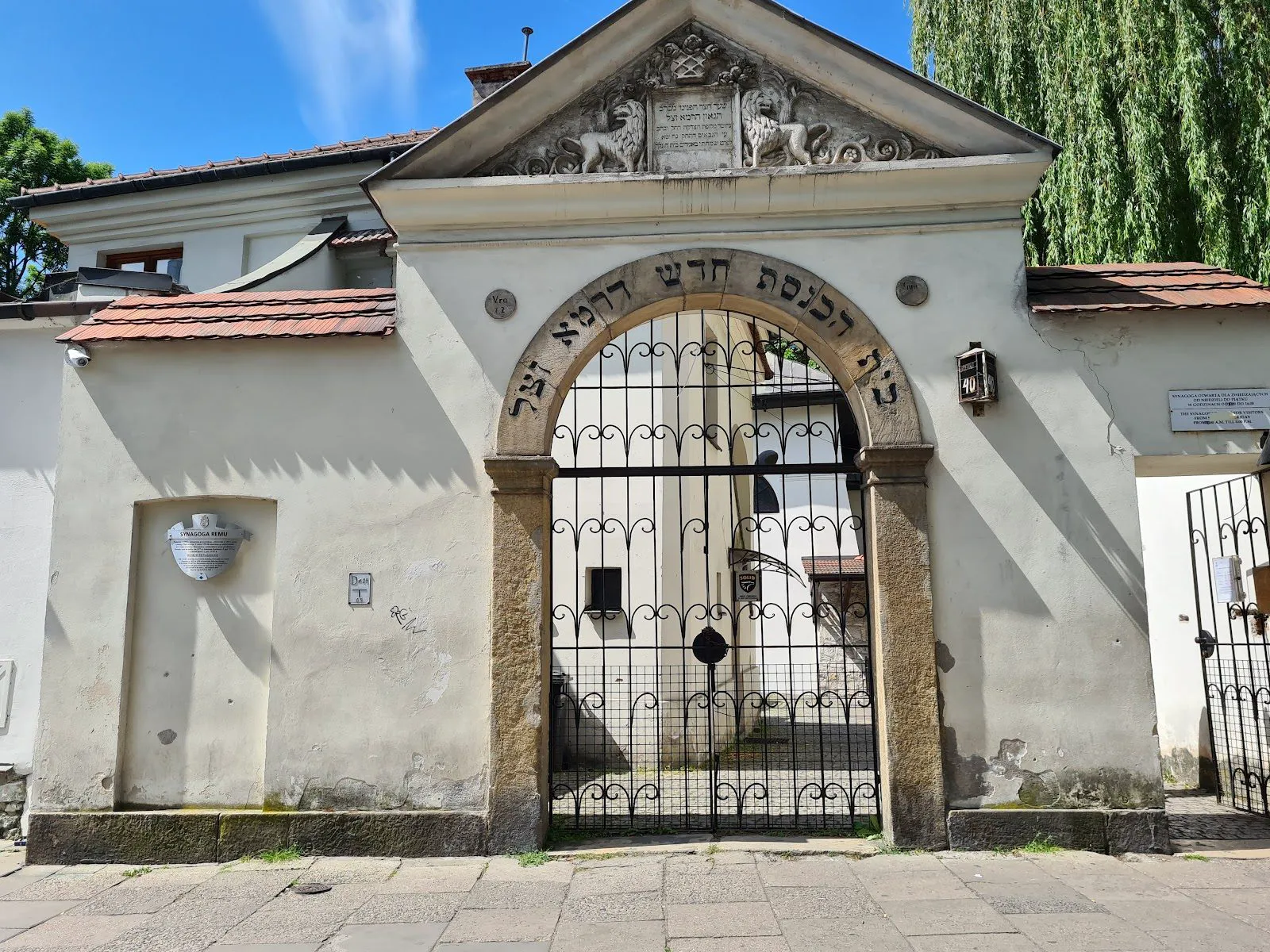
The whitewashed prayer hall at Szeroka 40 holds a handful of low wooden benches under a brass chandelier. Through a side gate behind it lies a dense field of weathered sandstone matzevot, the 16th-century Remuh cemetery, where most of a 20 to 30 minute visit goes. A donation of 10 to 20 zł at the door covers both.
What stands behind the Remuh gate
Remuh Synagogue (Szeroka 40) sits behind a wrought-iron gate halfway along the square, and it is the only synagogue in Kazimierz still in daily use. The Renaissance hall is plain. A stone Torah ark carries a gilded crown inside a carved vine frame, and that ark, the benches and the chandelier are the whole of the interior.
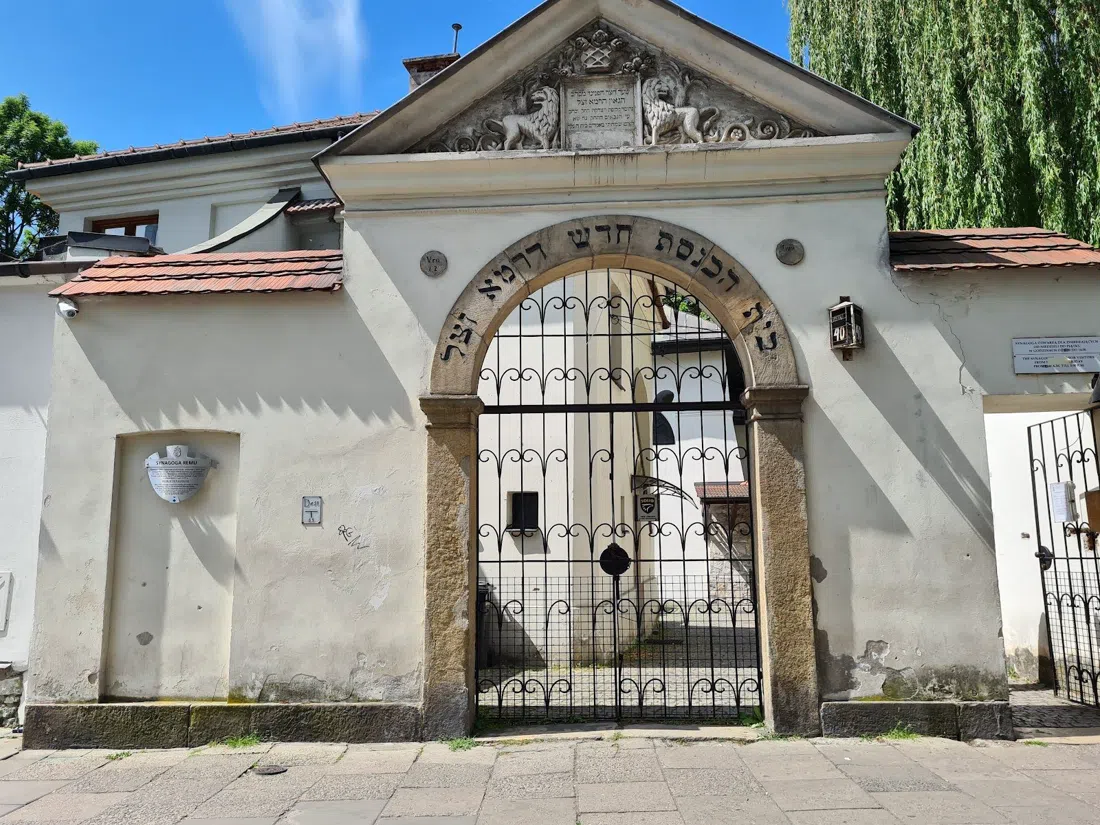
The room is small enough that coach-sized parties get split and wait their turn in the courtyard, so guided parties should book ahead by phone. Pairs and small walking groups go straight in.
The side gate leads to the older half of the visit. Sandstone matzevot stand close together, many weathered past reading, and one wall is a mosaic of broken tombstone fragments, the Wailing Wall.
How long the visit takes
Allow 20 to 30 minutes for both halves, with the cemetery taking the larger share. The hall suits the pace of an audio-guide pair rather than a procession.
The one place on Szeroka with a proper rented audio guide is the Old Synagogue, so pair the two if you want narration rather than a leaflet.
Tickets at the door and guided slots
The door donation is the entire transaction at Remuh. Nothing needs booking in advance unless you arrive as a guided party, in which case the phone call matters more than the money.
Guided tours covering the quarter run seven days a week. Individual departures are already fully booked on dates including 2026-11-02 and 2026-11-03. Other dates are still bookable, so fix a morning before you travel.
Rules at the Remuh door
Men must cover their heads in the hall. Free kippot are kept on site, so you need not buy anything. Keep your voice down inside; the congregation uses the building every day.
Szeroka Street and the Old Synagogue
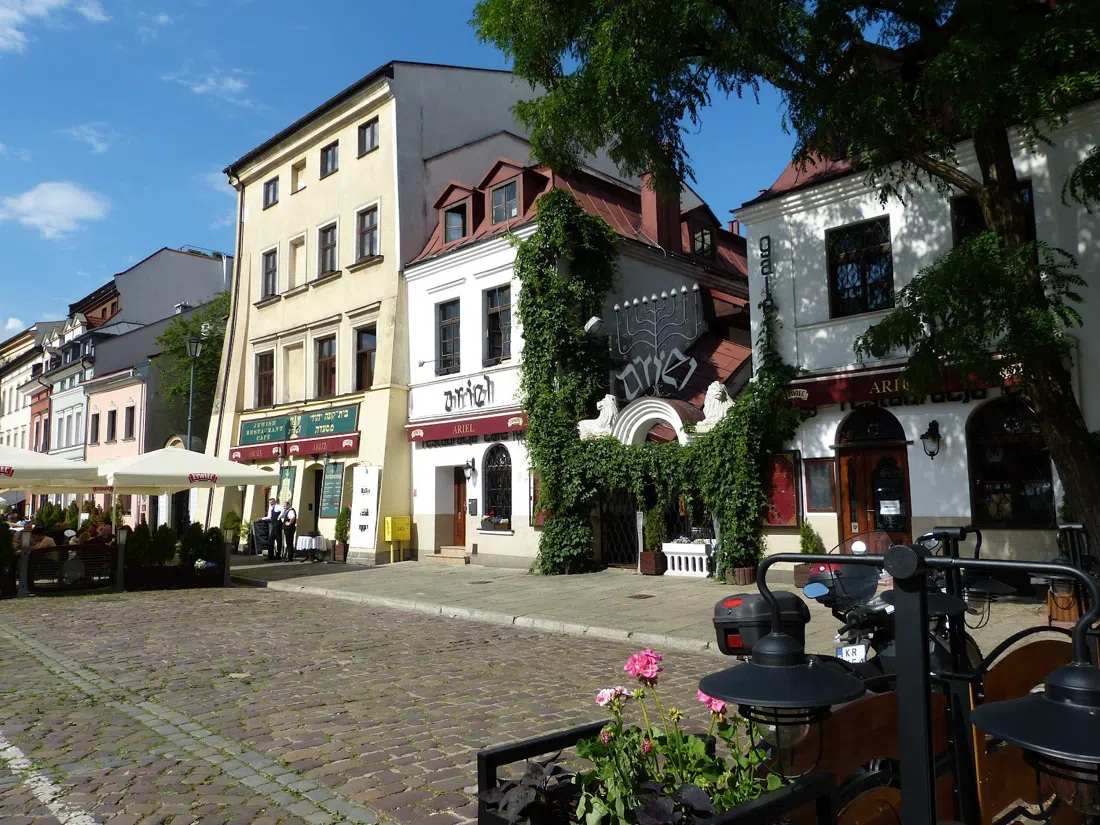
Szeroka Street (ulica Szeroka) is an elongated cobbled square rather than a street, low pastel townhouses on both sides, café awnings and heaters down the middle. The squat bulk of the Old Synagogue closes the south end, the Remuh gate sits halfway along, and a Ghetto-era memorial tree stands at the top. It is free to walk, and an audio guide started here covers four stops in 200 metres.
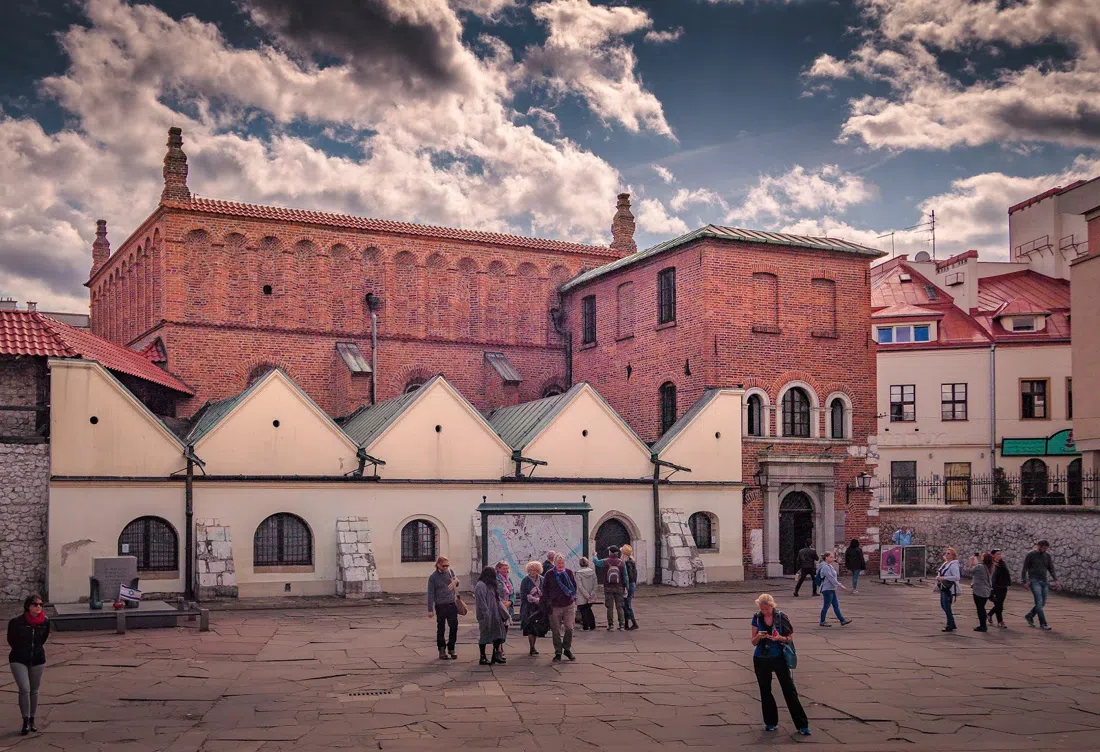
Old Synagogue – Museum of Kraków (Szeroka 24) is a fortress-like Renaissance block with an attic parapet. Inside, a twin-pillared hall carries ribbed vaults around a wrought-iron bimah cage at its centre, and glass cases hold Torah crowns, shofars and Hanukkah lamps. Standard entry is 22 zł, reduced 16 zł and family 44 zł; the audio guide rents for 15 zł. Last entry for a group is 60 minutes before closing, and the museum closes for Jewish holidays such as Yom Kippur even though it is a city museum.
Audio guides a short walk away
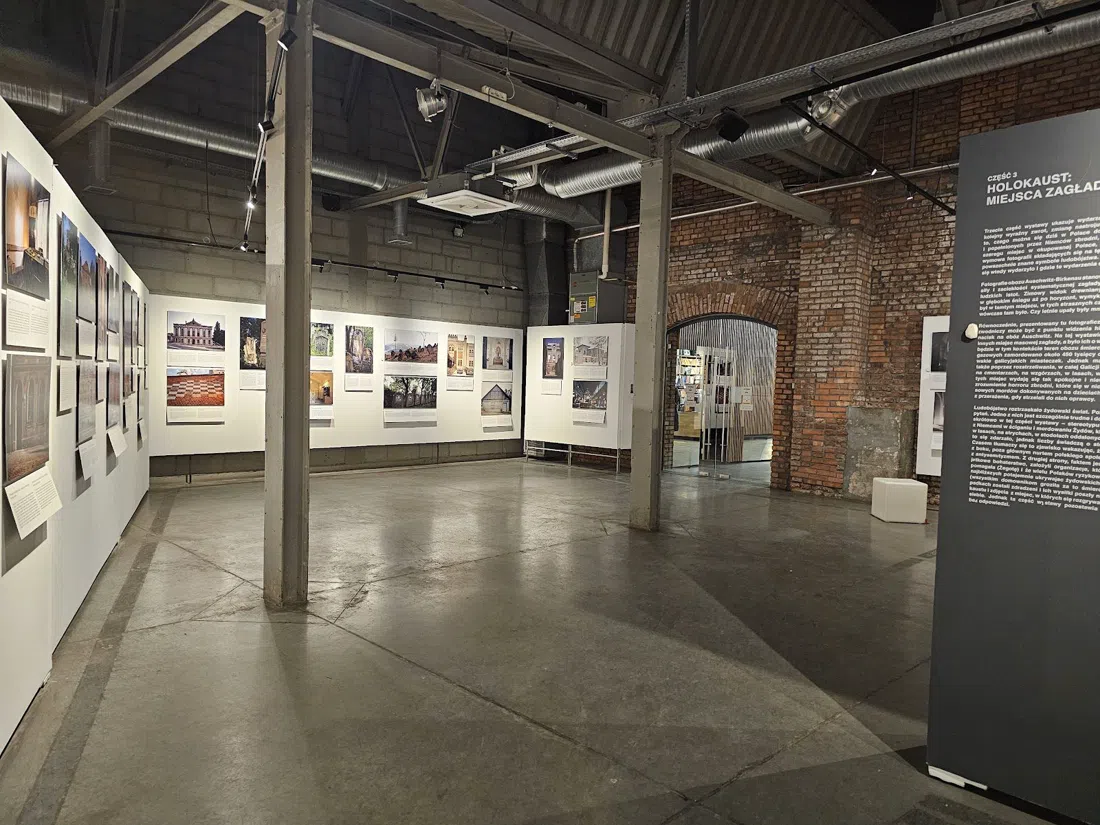
Galicia Jewish Museum (Dajwór 18) occupies a converted brick furniture factory with raw roof trusses and whitewashed walls. Large-format colour photographs of overgrown cemeteries and ruined shtetl buildings hang free-standing in the hall, and a bookshop-café stands by the entrance. Entry is 35 zł for adults, 25 zł for students and seniors and 55 zł for a family. Audio guides come in multiple languages, guided tours run in several, and the doors open daily from 10:00 to 18:00. Within walking distance of Remuh, this is the one place whose recorded commentary carries a whole visit.
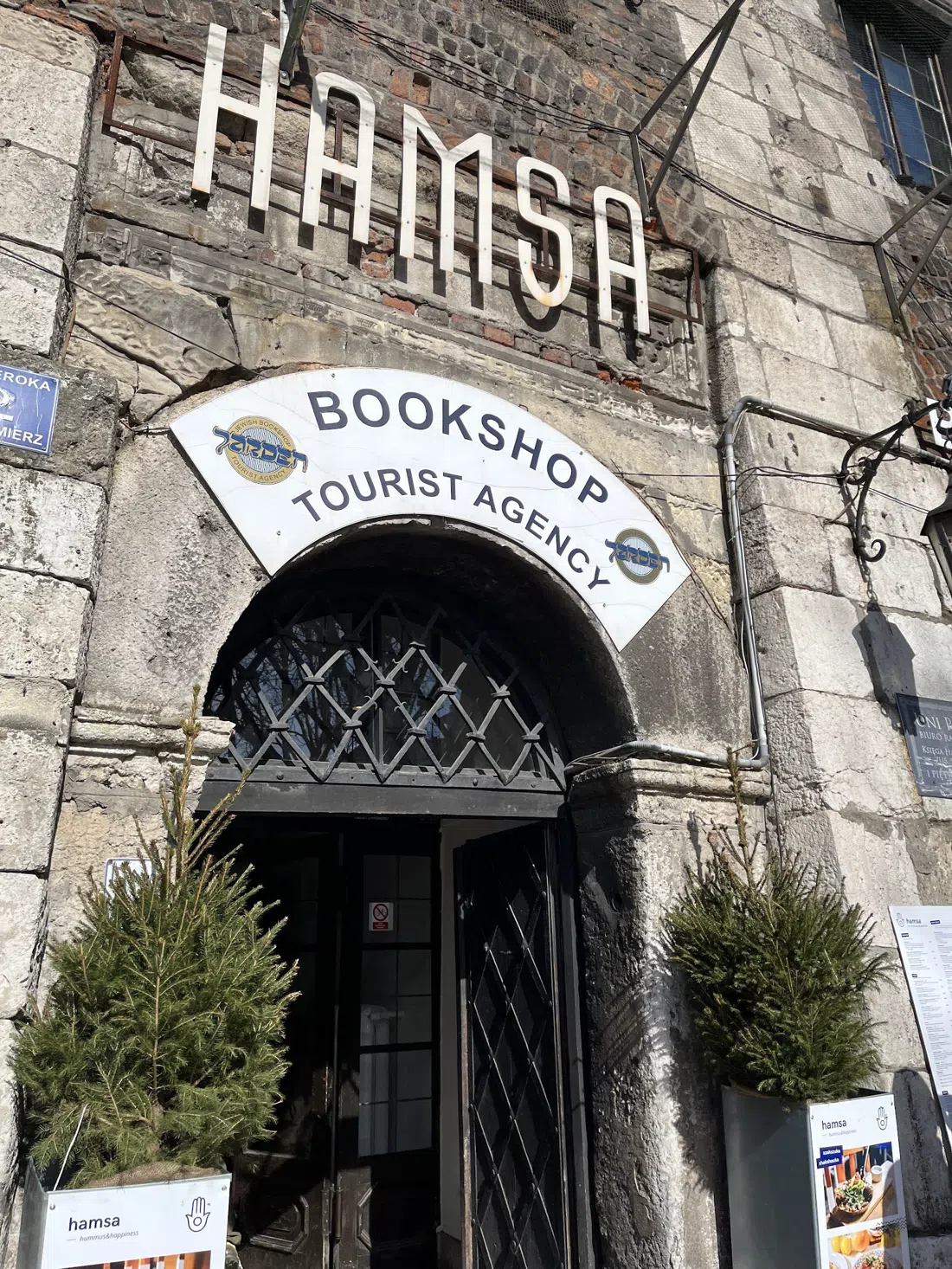
Jarden Jewish Bookshop (Szeroka 2) has stood on the square since 1993 and sells the maps and English-language histories of Jewish Krakow that a recorded commentary only skims. Old photographs of pre-war Kazimierz are propped on the shelves. It opens at 10:00 and shuts by early evening. One narrow aisle runs to a counter at the back, so browse in twos and threes.
Isaac, the Tempel and the High Synagogue
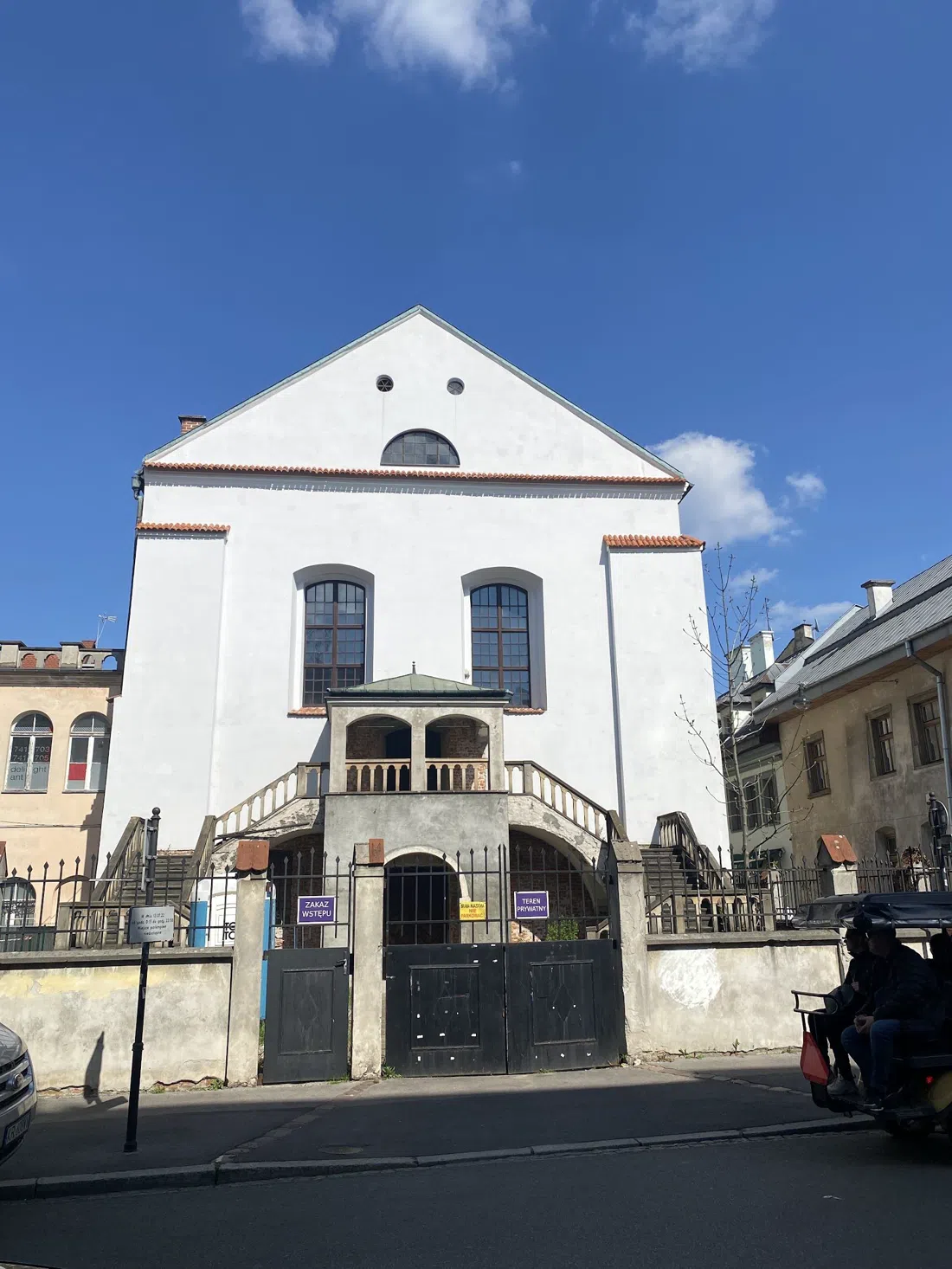
Isaac Synagogue (Kupa 18) reopened to visitors in May 2026 after years of rescue works, which makes its vault the freshest thing to see in the quarter. The prayer hall is the largest in Kazimierz, its barrel vault covered in restored white stucco ribbing and plaster rosettes, with bare brick patches where the conservators stopped and tall arched windows throwing light across scaffolded side walls. A small donation goes in at the door. Conservation runs for years yet and parts may be fenced, so confirm the route on the day.
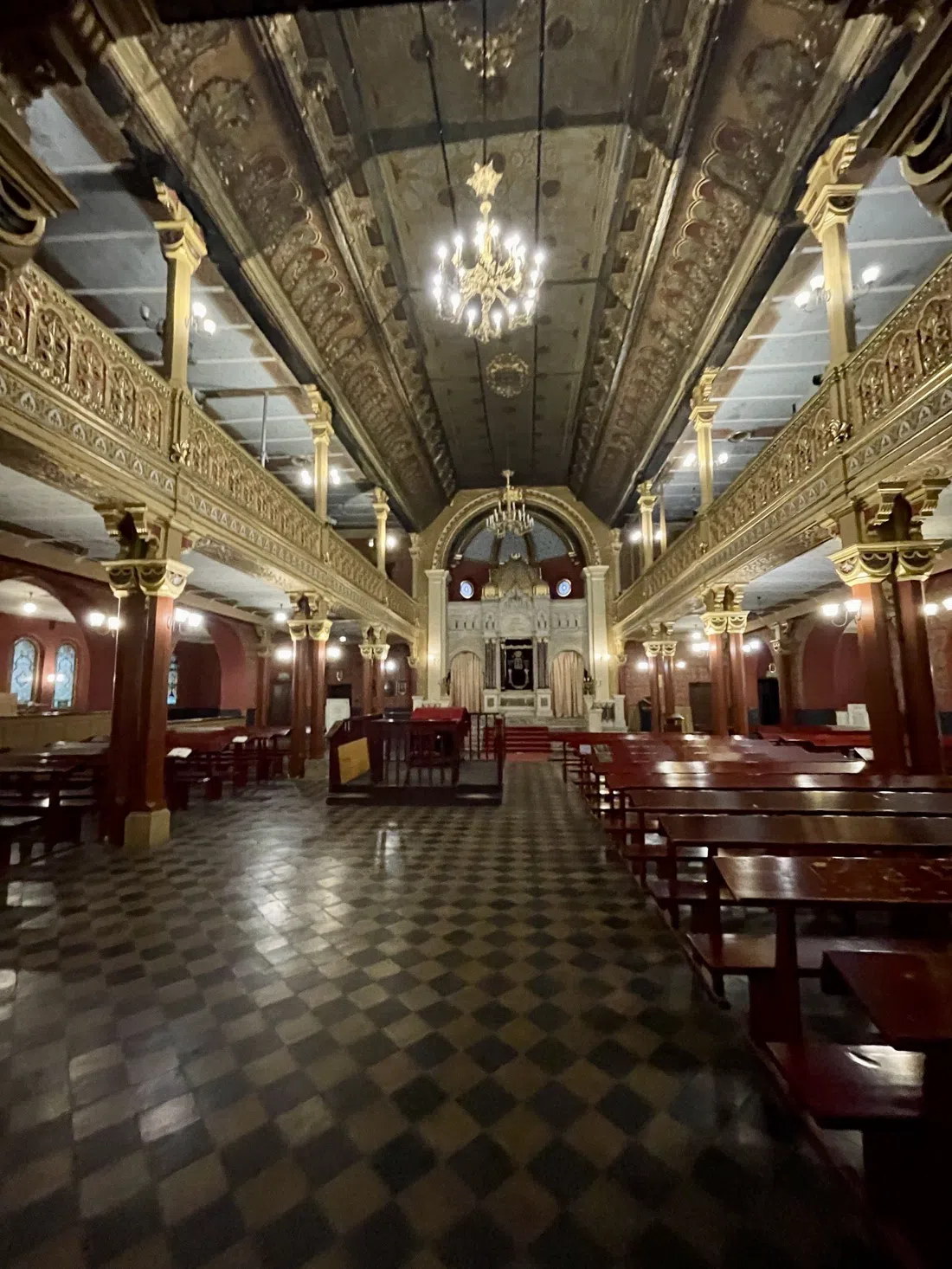
Tempel Synagogue (Miodowa 24) stands 5 minutes' walk from the Remuh gate and is its visual opposite. Gilded Moorish arabesque panels climb to a deep-blue and gold ceiling, a double gallery rests on cast-iron columns, and huge stained-glass windows light the hall. The donation is 10 to 15 zł and concert tickets are priced separately. It takes groups better than anything else in Kazimierz, being a proper hall with seating, and it is used regularly for concerts and festival events.
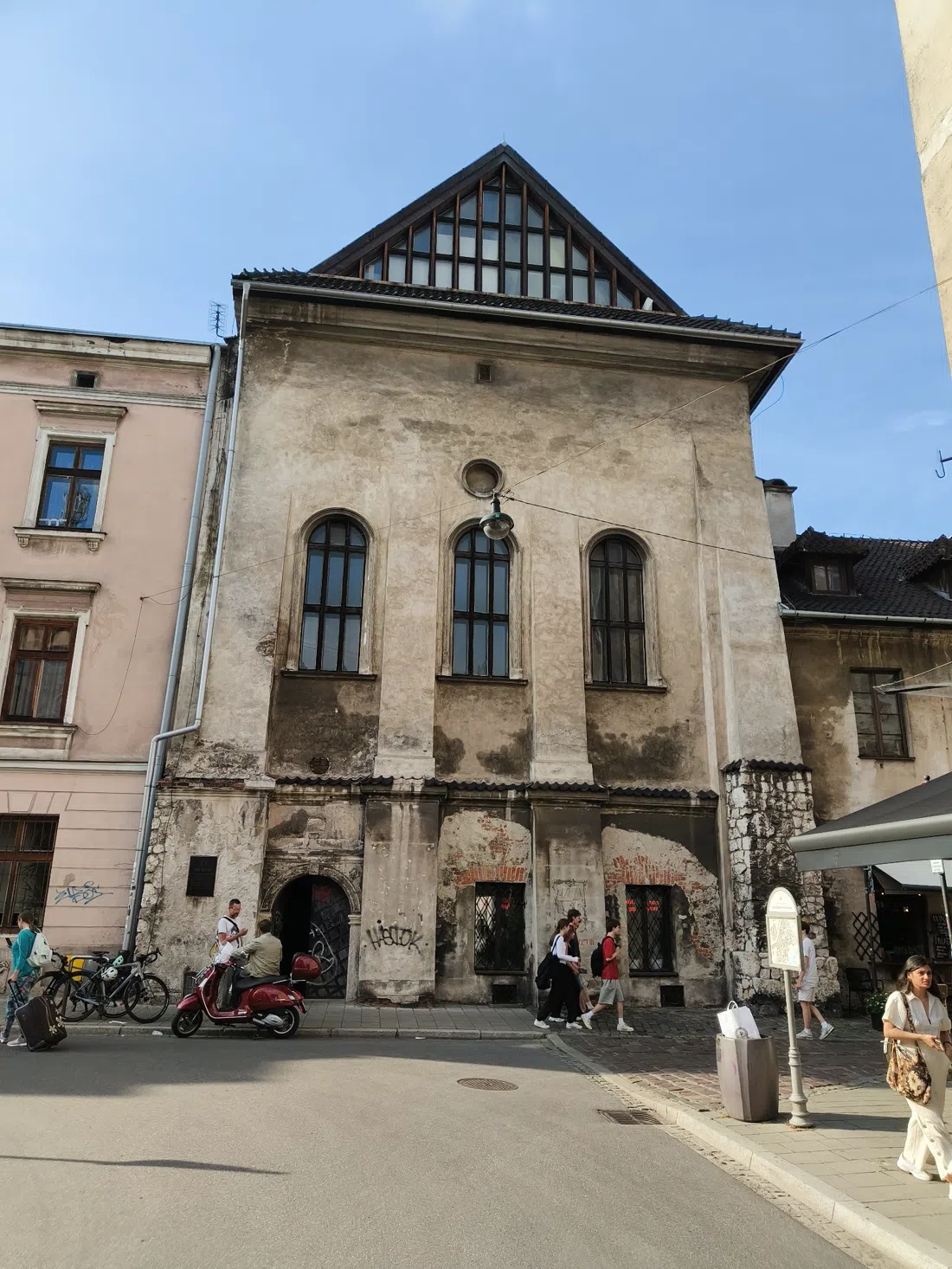
High Synagogue (Józefa 38) has a narrow façade on Józefa and a long stone stair climbing to the first-floor prayer hall that gave the building its name. Fragments of painted Hebrew inscription survive on the bare plaster, and photographic exhibition panels hang in the room. Entry is free or cheap, depending on the exhibition; in 2026 the hall showed 'Chains of Light' before it moved to the Tempel. The Galicia Jewish Museum runs the ground-floor bookshop.
Miodowa and the living quarter
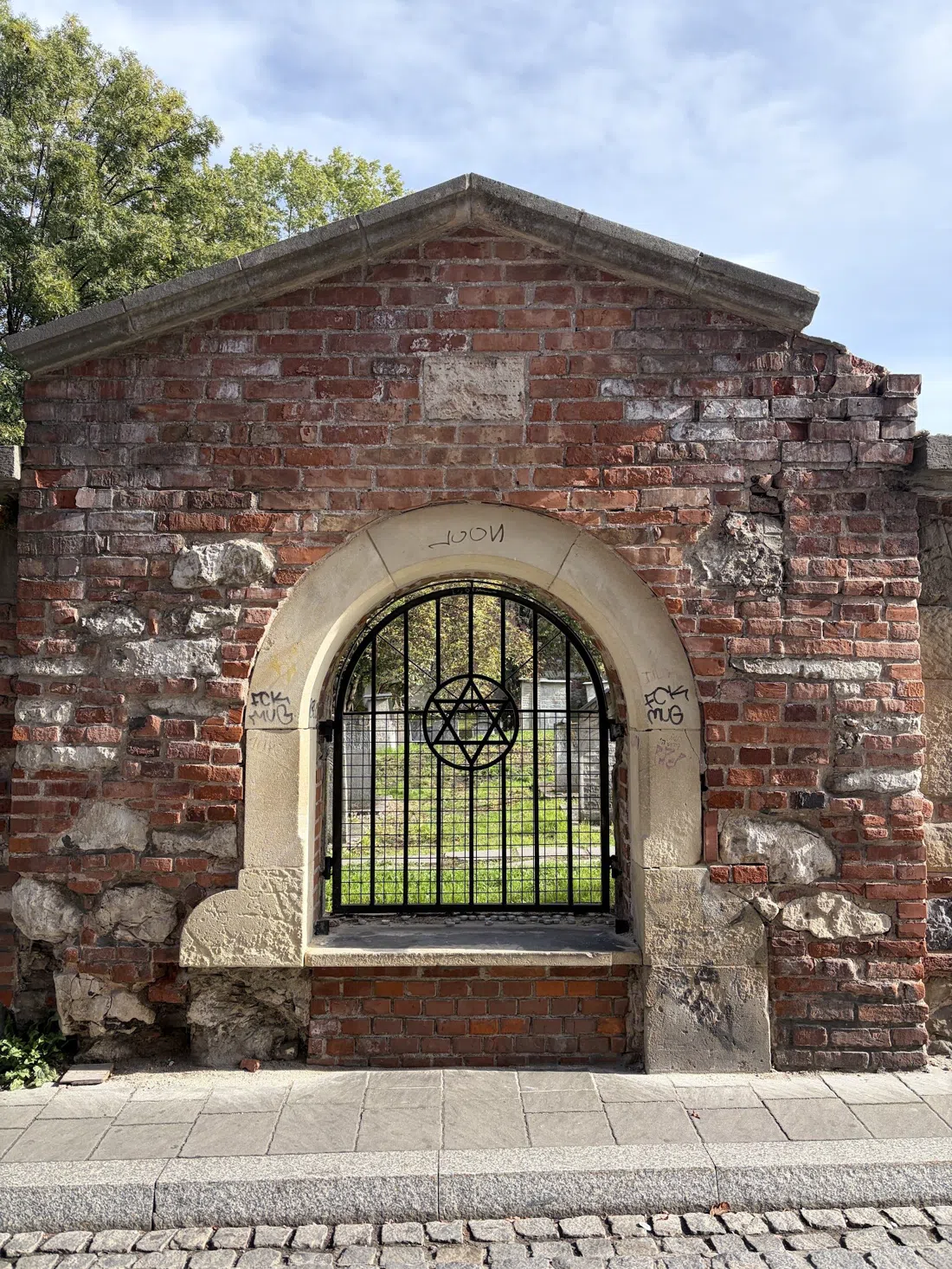
New Jewish Cemetery (Miodowa 55) begins with a long tunnel under the railway embankment, which opens onto more than 10,000 tombstones under mature trees. Ivy covers granite obelisks, Hebrew and Polish inscriptions stand side by side, and a wall of recovered fragments sits near the entrance. It is Krakow's only still-operating Jewish cemetery, entry is free, and the paths are open 09:30 to 16:30 Sunday to Friday. Men cover their heads here as well, voices stay low and nobody picnics.
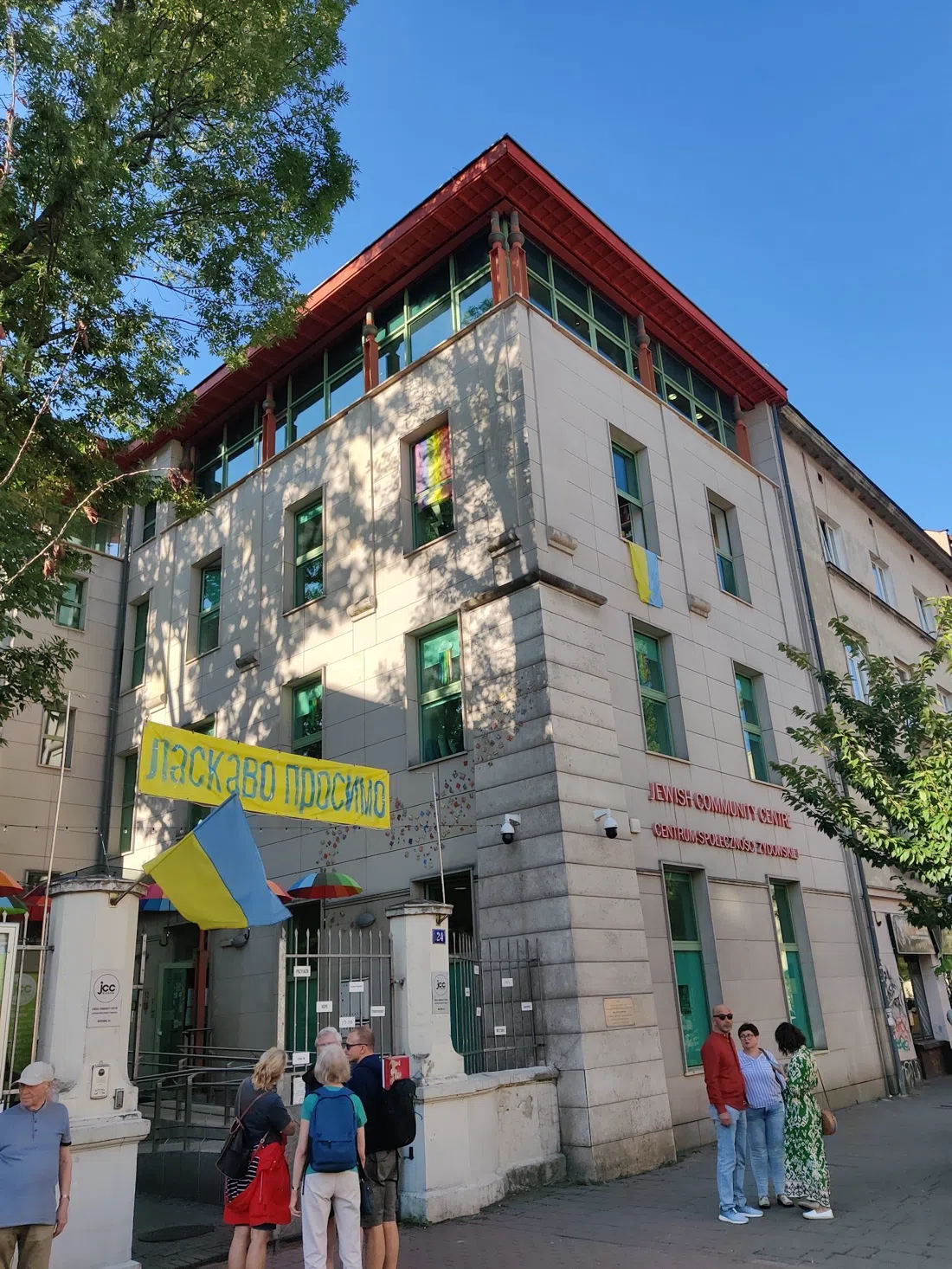
JCC Krakow (Miodowa 24) stands beside the Tempel in a modern glass-and-stone building. The café-lobby is bright and open to anyone who walks in, with notice boards in Polish, English and Hebrew, a community photo wall and a garden in the courtyard behind. Programmes are quoted per group and include meet-a-survivor sessions, Shabbat dinners and culinary workshops, with kosher catering on request. Book those by email in advance.
Centre for Jewish Culture (Meiselsa 17) occupies a restored 1880s house of prayer behind a plain cream façade. The single high white hall holds a small stage, stacked chairs and poster exhibitions on the walls, with a reading-room of Judaica books alongside. The Judaica Foundation has run it since 1993 and still programmes events; its 'Bayit Hadash' encounters series ran from September to November 2026. Exhibitions are free and concerts carry a small charge.
Eating and sitting near the gate
Hamsa Hummus & Happiness (Szeroka 2) is the closest sit-down lunch to the Remuh gate, a bright modern Tel Aviv-style room of pale wood, plants and hanging brass hamsa charms, with a pavement terrace facing the square. Shared boards arrive with hummus, labneh balls and charred aubergine, and the vegetarian and vegan choice is strong. The kitchen serves until 23:00. Reserve the terrace in warm weather.
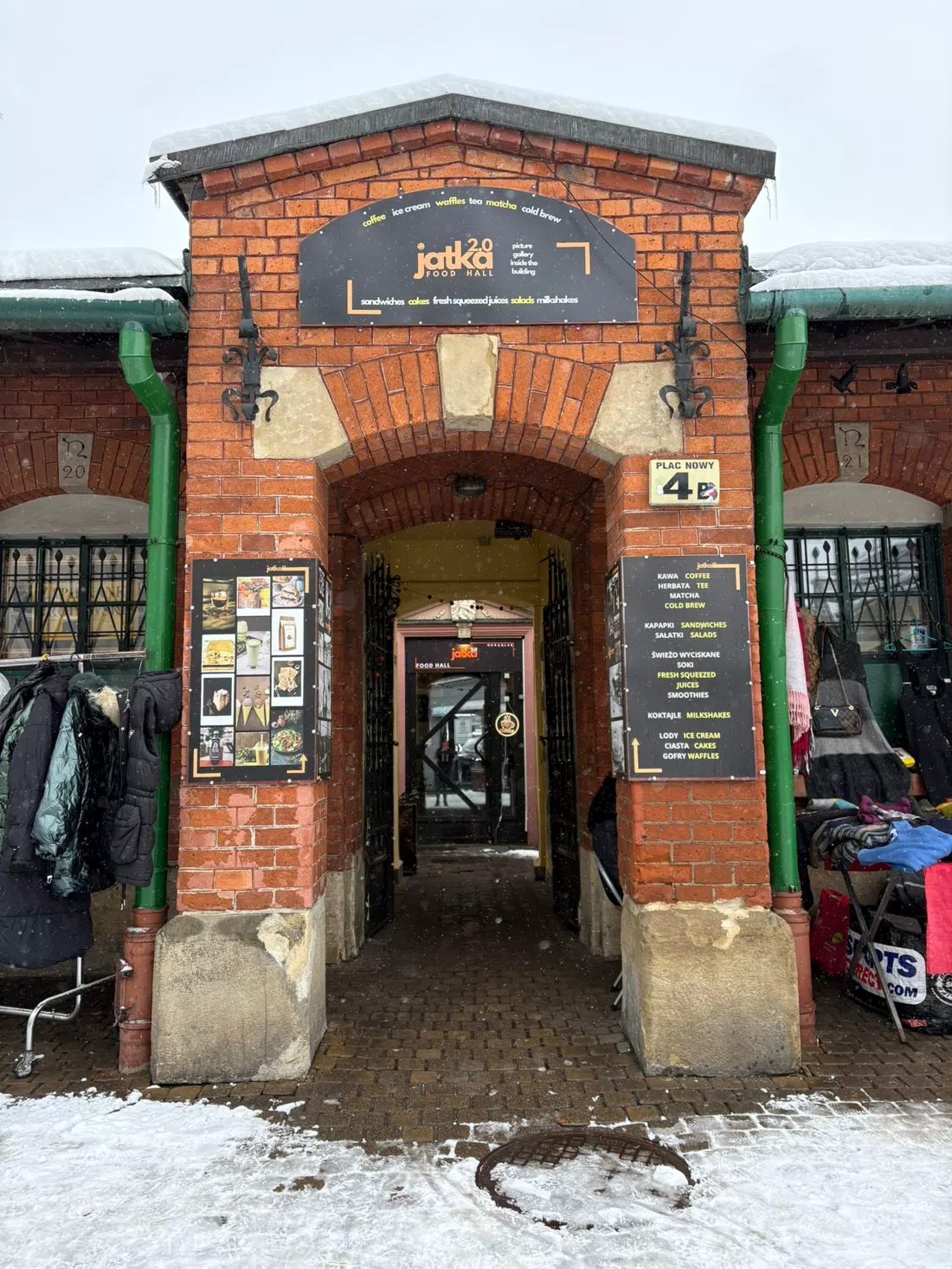
Plac Nowy and the Okrąglak, 3 minutes from Remuh in Kazimierz, centre on a circular brick rotunda built as a poultry slaughterhouse. Serving hatches are cut into its outer wall under hand-written zapiekanka boards, with a queue at each almost round the clock. Inside, the Jatka 2.0 food hall is white-tiled with long tables and limited seating, and flea-market stalls fill the cobbles outside.
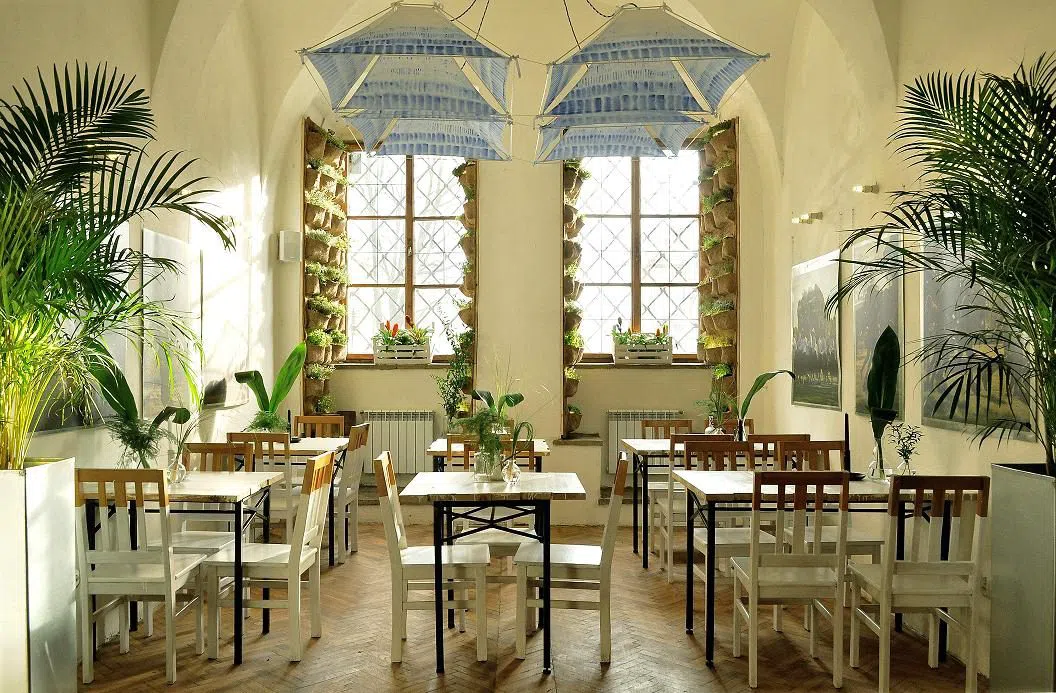
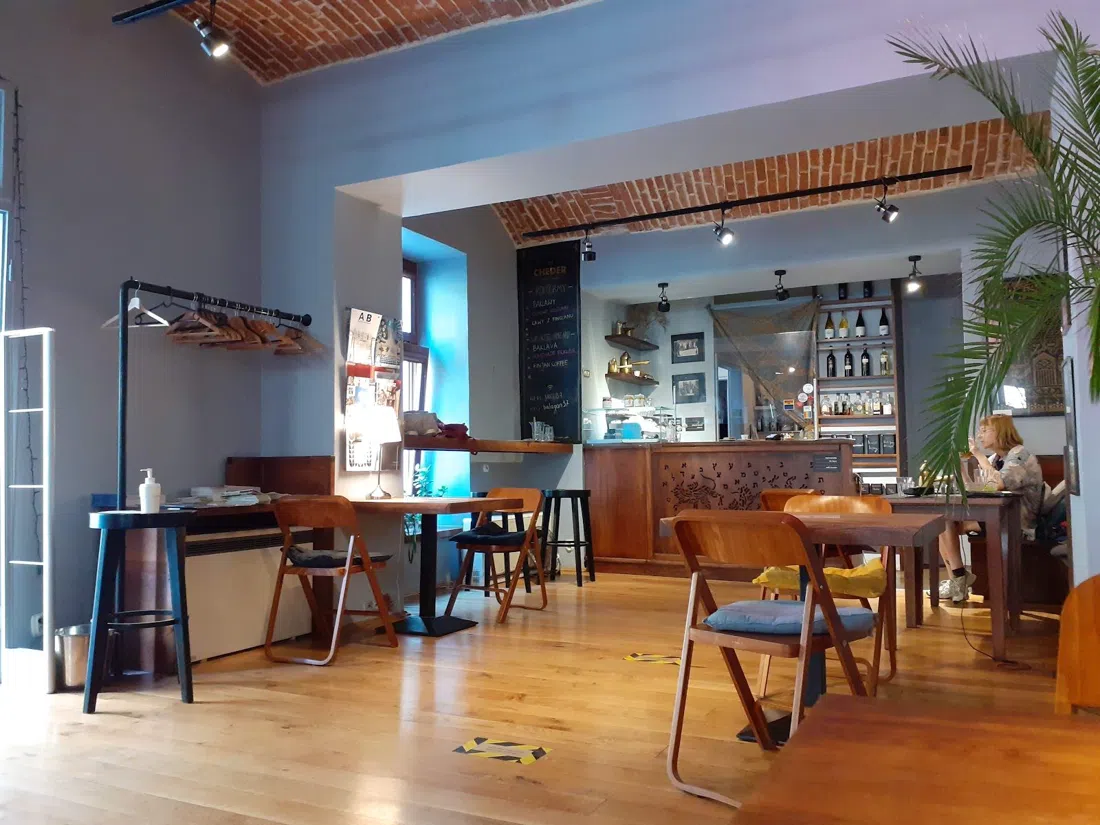
Cheder Café (Józefa 36) sits 2 minutes from the High Synagogue in a low vaulted room of bare brick, floor cushions and low tables, with shelves of Hebrew and Yiddish books and a sand-bedded burner behind the counter. Coffee is brewed in hot sand and poured into small cups, slow by design, and Middle Eastern mezze plates come alongside. Readings and film screenings fill the one room fast.
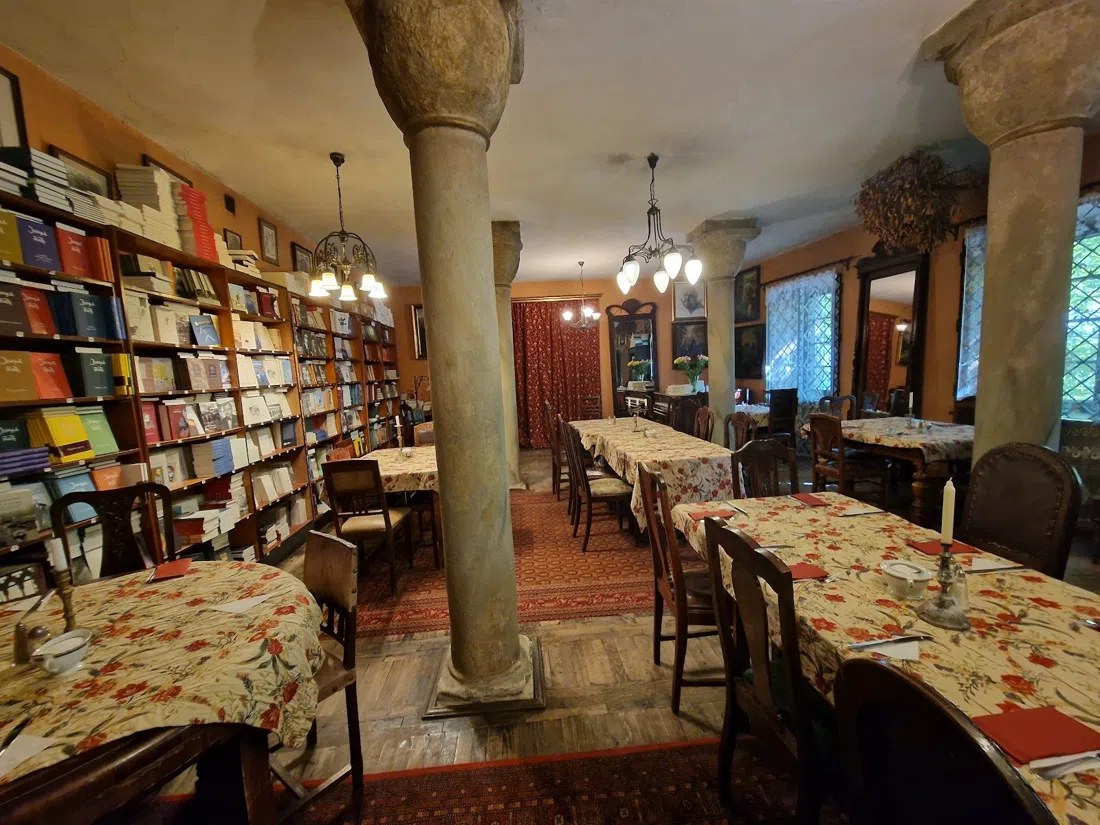
Klezmer-Hois (Szeroka 6) occupies a former mikveh a few doors from Remuh, dressed as a 19th-century drawing room with patterned wallpaper, lace, oil lamps, framed sepia portraits and a battered upright piano. Violin and accordion players squeeze between the tables for the klezmer set at 20:00, and the three rooms take tour groups, so book ahead for the set. The kitchen cooks kosher-style without rabbinical supervision, so the food is not certified kosher.
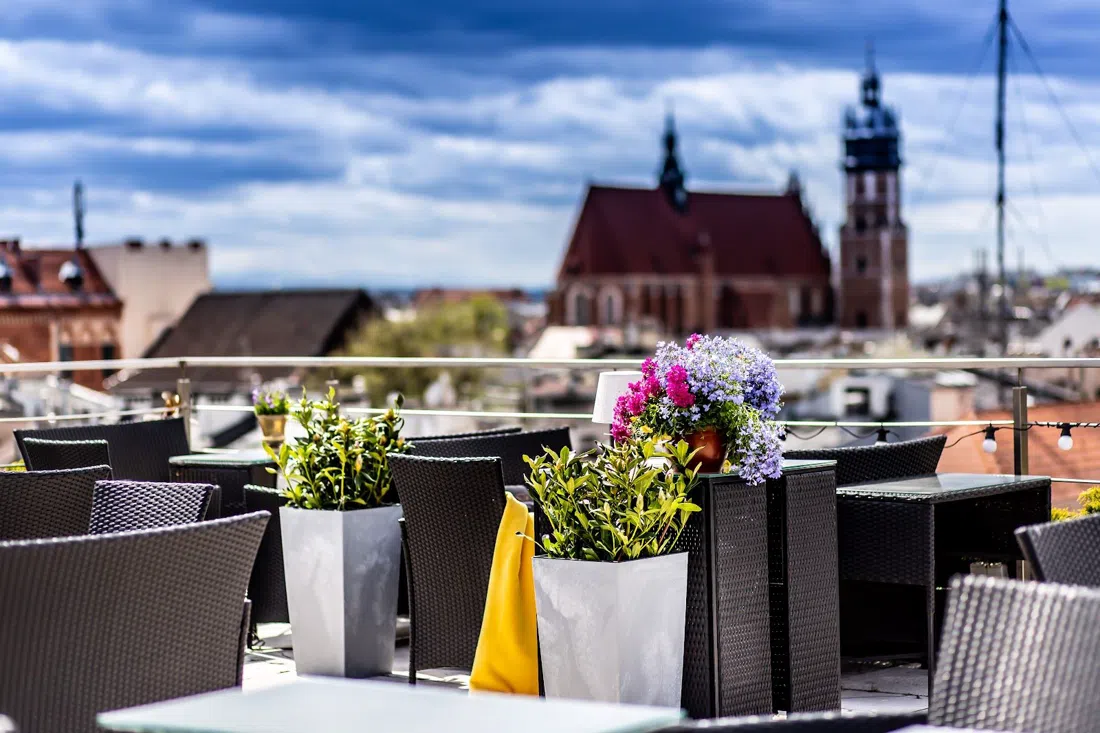
Rubinstein Sky Bar (Szeroka) er det eneste ekte utsiktspunktet på selve torget, en terrasse i femte etasje med trekkdekk og parasoller over en bygård fra 1400-tallet. Fra rekkverket ser du hvordan kirkegården, Den gamle synagogen og Tempel ligger i forhold til hverandre, med Kazimierz' tegltak og kirketårn i forgrunnen og Wawel-slottet på horisonten. Cocktailer og vin på glass har priser på linje med Kazimierz' fineste steder. Terrassen avhenger av været, og den fylles opp ved solnedgang, så reserver på forhånd.
Beste tidspunkt for besøk
Besøk på en morgen i ukedagene. Remuh, Isaac-synagogen, Tempel og den nye jødiske kirkegården er alle stengt på lørdager og jødiske helligdager, og selve Szeroka er travlest sent på ettermiddagen når terrassene fylles.
Hvis lørdag er din eneste ledige dag, er Galicia Jewish Museum åpent og redder dagen. Vinterlyset gjør at den nye jødiske kirkegården stenger tidligere, så gå til Miodowa først på en kort dag.
Hvem besøket passer for
Remuh passer for deg som vil se en levende bønnehall og en gammel gravplass tett på hverandre, og som har tålmodighet til å stå stille i begge. Vil du ha forklaringer, lei lydguiden ved Den gamle synagogen eller bli med på en guidet vandring.
Planleggingstips
Lørdager og jødiske helligdager er Remuh og de fleste synagogene rundt stengt, så legg vandringen til en ukedag. Ring på forhånd hvis dere kommer som en guidet gruppe, bestill bord til klezmer-konserten og reserver takterrassen. Se Krakow-guiden og hotellsøket i Krakow.