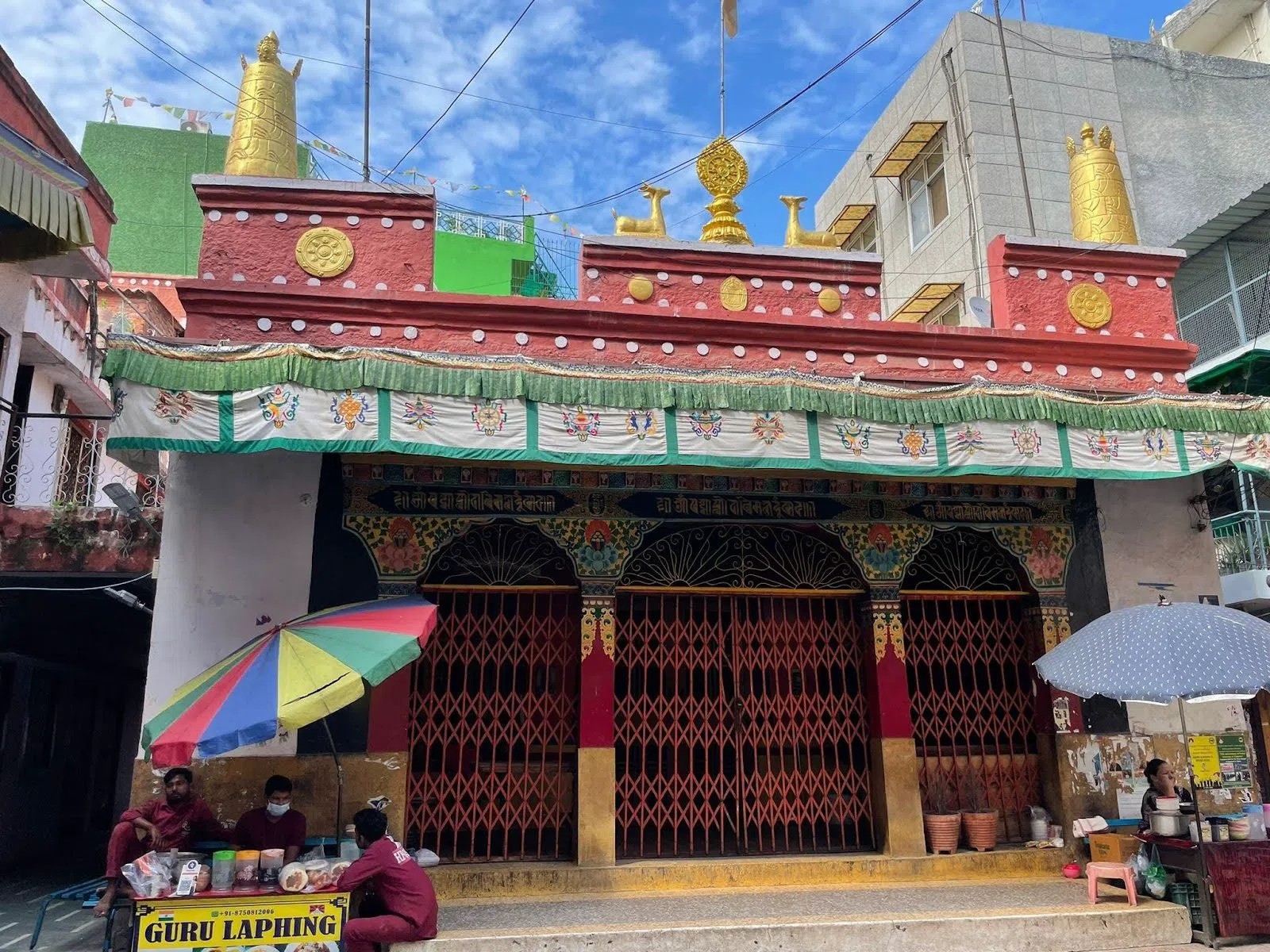
Morning chanting in the monastery courtyard at the centre of Majnu ka Tila starts hours before the clothing shops in the lanes around it lift their shutters at 11 a.m. The mound under all of it is much older: a Sufi called Majnu met Guru Nanak here in 1505, the gurudwara went up in 1783, and the first Tibetans arrived a century and a half after that.
The monastery courtyard
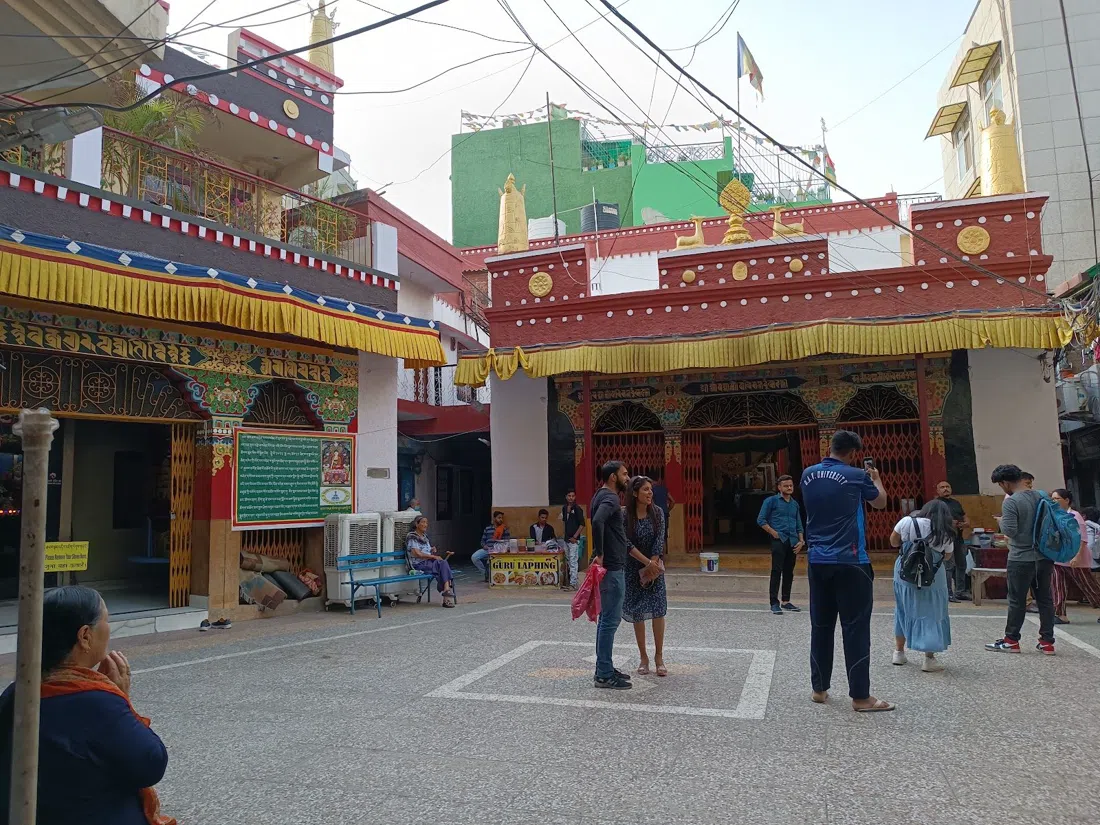
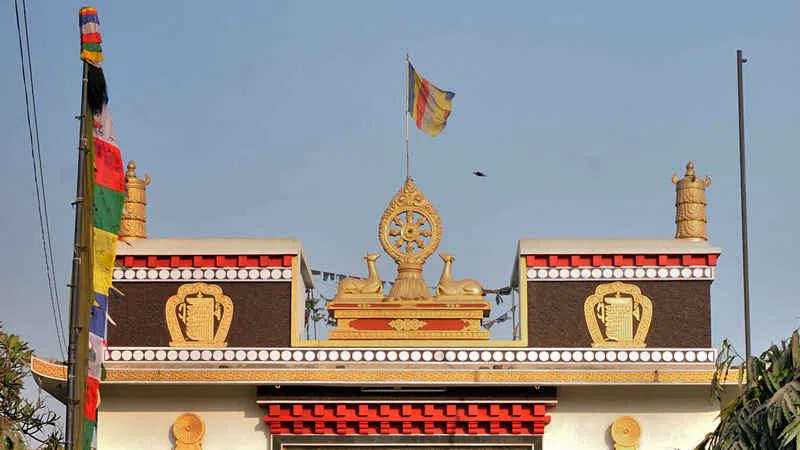
Samyeling Tibetan Buddhist Monastery (Majnu ka Tila Monastery) sits at the dead centre of the colony, small, gold and maroon, with gilded finials on the roof. Brass prayer wheels run along the outer wall, and five-colour prayer flags criss-cross the tiny paved courtyard. Every lane in the settlement radiates from that courtyard, which is the reason to start there. Entry is free, nothing is booked, and walking groups are normal here. Keep your voice down and circulate clockwise. The prayer hall holds thangka paintings and mandalas, and photography stops at its door. Come for the morning chanting, when the courtyard feels least like a tourist stop.
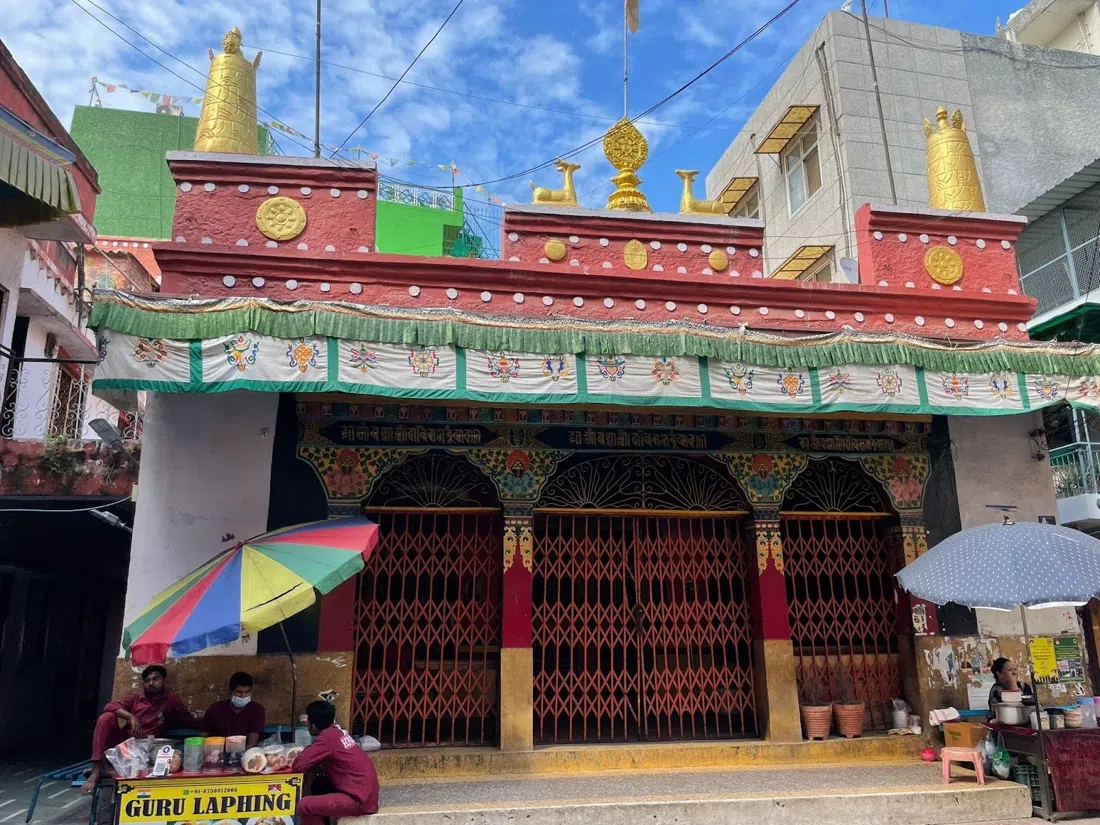
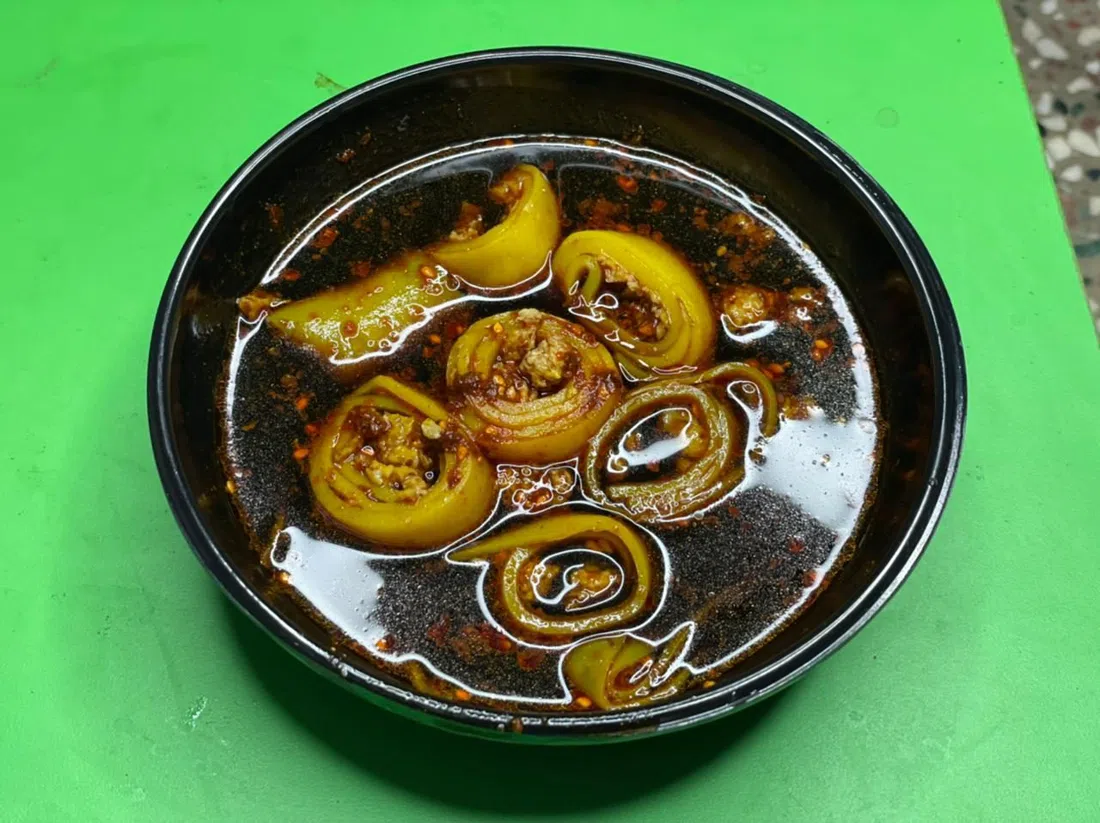
Tenzin Aunty's Laphing Stall (monastery courtyard) is one low kiosk on the same paving. Tenzin works by hand over a steel tray, rolling sheets of translucent yellow mung-bean laphing, cutting them into strips and dousing them in red chilli oil. A paper bowl runs ₹30 to ₹50, cash only (₹). There is no seating, so you queue and eat standing up in the courtyard. The chilli is aggressive, and you can order it mild if you are testing the water. Copycat stalls nearby buy their laphing in, while this one is made in front of you, and it is the single most-cited bite in the neighbourhood.
The gurudwara on the mound
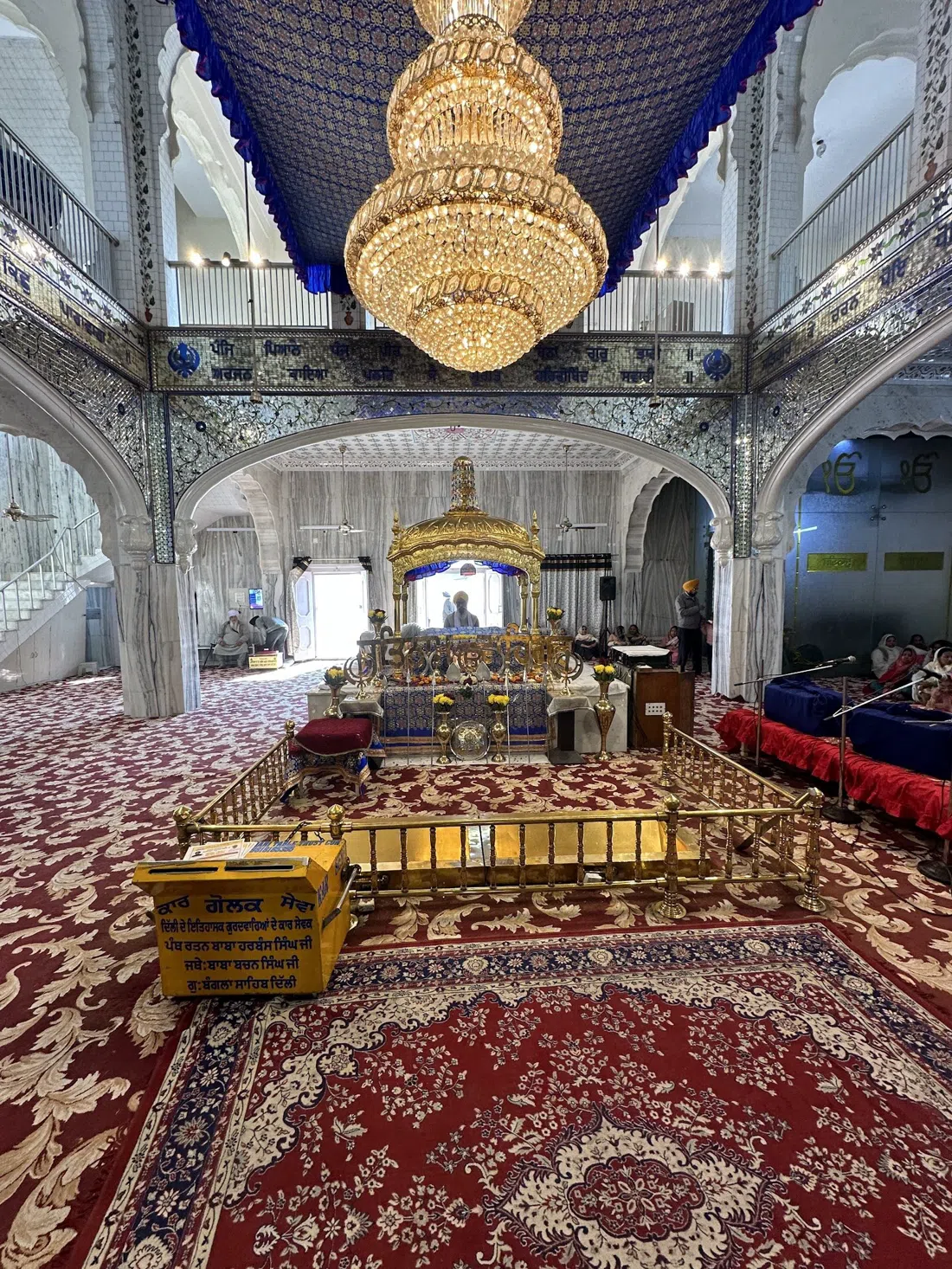
Gurudwara Shri Majnu ka Tila Sahib (right bank of the Yamuna) is the reason the place carries the name at all. Baghel Singh built it on a raised earth mound, white under a gilded dome, with a tall saffron Nishan Sahib flagpole and a broad marble forecourt where shoes are left. River flats open out behind the building. Entry is free and the doors stand open effectively round the clock, with core hours of 5 a.m. to 9 p.m. Cover your head and leave your shoes in the forecourt. The langar kitchen feeds anyone who sits down, including you.
Shopping the New Aruna Nagar lanes
Majnu ka Tila Tibetan Market (New Aruna Nagar) is what most visitors come for. The alleys run barely two people wide between six and seven storey houses, and racks of clothes hang overhead until the sky is a thin strip. Stock is thrift and Korean-style clothing, plus Tibetan curios, books and incense, at a fraction of central Delhi prices (₹). Hand-painted Tibetan shop signs hang above trays of silver jewellery and bundles of prayer flags at street level, and momo steam comes out of the doorways. It is an open street grid with no door policy anywhere in it, but a big group blocks a lane, so split up and regroup at the monastery. A lot of shops shut on Mondays.
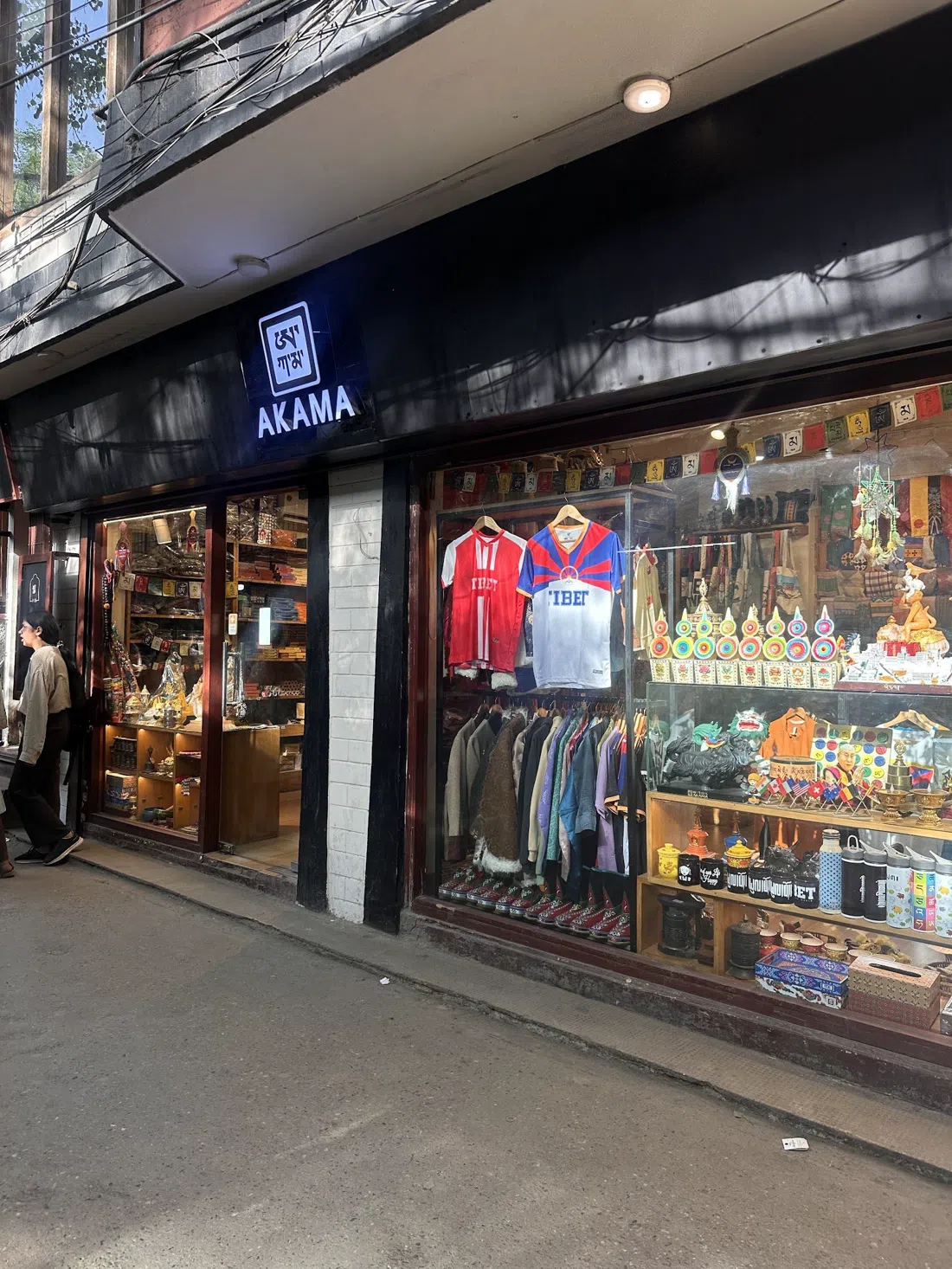
Akama Himalayan Handicrafts (House 6) is the shop in that grid worth singling out, on the ground floor directly beneath AMA Café. The walls are stacked with folded pashmina shawls and stoles in block colours. Canvas bags in traditional prints hang beside trays of Tibetan silver jewellery and prayer beads, racks of hand-drawn postcards, and tins of Darjeeling and Assam tea (₹₹). The stock is real Himalayan work, and the staff are relaxed about browsing and will pack what you buy for travel. The room is small. Open 9 a.m. to 10 p.m.
Breakfast and coffee at House 6
AMA Café (House 6) is on the first floor above the handicraft shop, with rough whitewashed walls, plain wooden tables and benches, and a window looking straight down into a narrow Tibetan lane. The Financial Times put it among the best independent coffee shops in the world. Order the Himalayan plate with Tibetan bread and aloo khatsa, or the banana pancakes (₹₹). Shelves along the wall hold hand-thrown ceramics and Himalayan single-origin coffee bags for sale. It opens daily 7:30 a.m. to 10:30 p.m. and takes no reservations. A party of more than four should arrive before 11 a.m. or after 8 p.m. to be seated together.
Tibetan tables in the colony
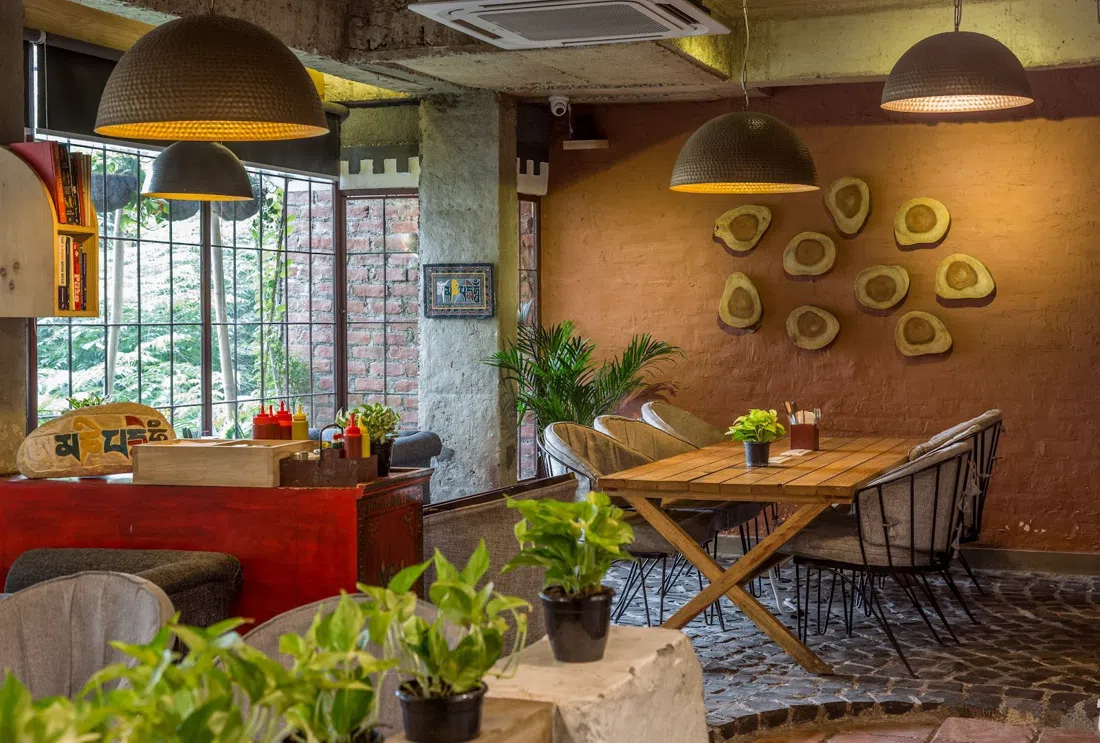
Tee Dee Restaurant (H-32 Aruna Nagar) has traded since 1991 and still sets the local benchmark for momos, thukpa and tingmo. Stacked bamboo steamer baskets go past laminate tables and plastic chairs packed close in a plain ground-floor room. The windows fog with condensation and the specials are written out by hand (₹₹). It is walk-in only, the tables are small and the turnover is fast. The room has no atmosphere by design, and Tibetan families eat here. Open 9 a.m. to 10:30 p.m. daily.
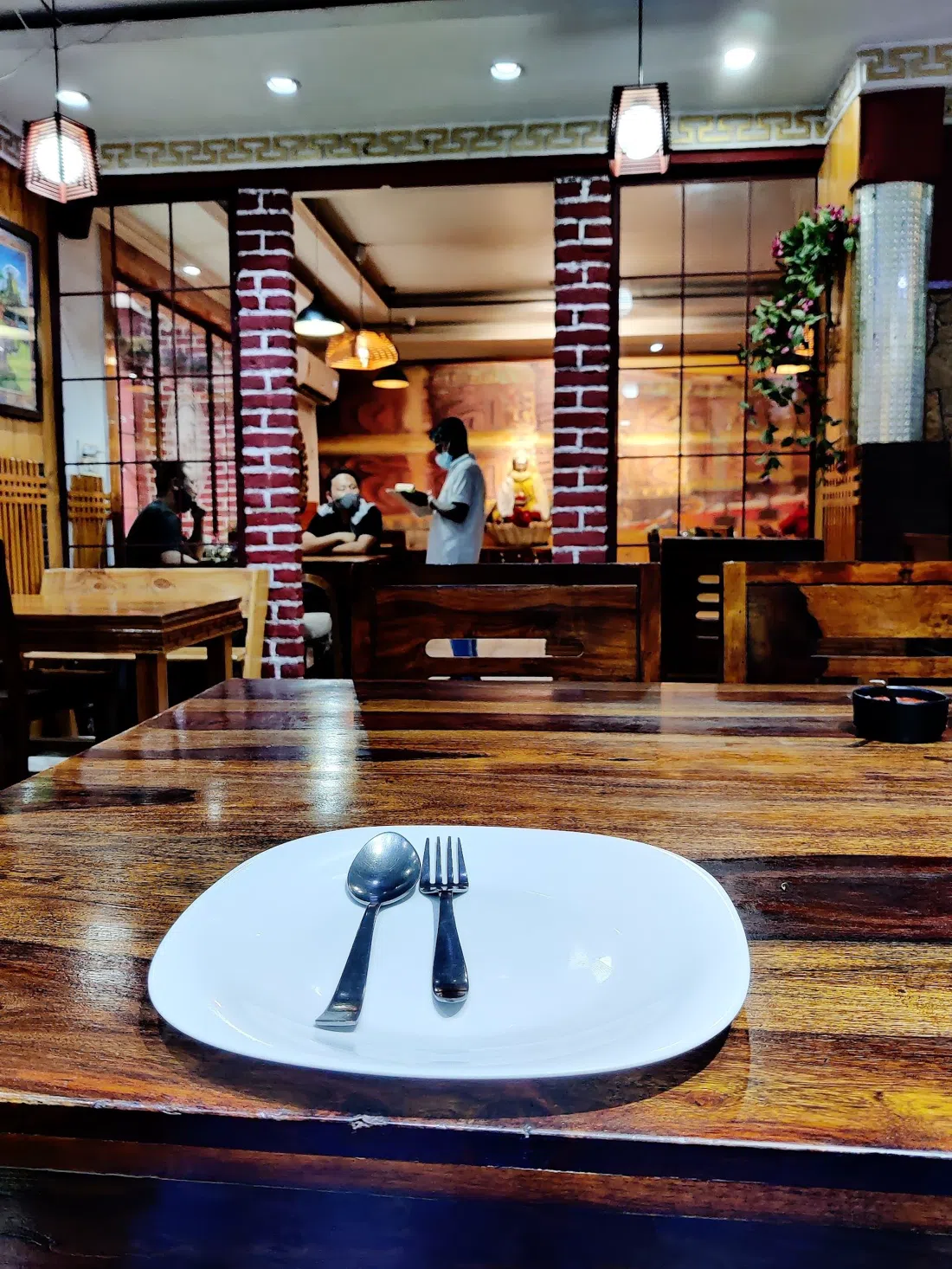
Makye Amay Tibet Kitchen (Rabsel House, 47 New Aruna Nagar) is the calmest sit-down room in the colony, wide and bright, with an open kitchen counter where you watch momos being pleated and thukpa ladled. Decoration runs to clean modern Tibetan motifs. It is named for Lhasa's Makye Ame, and it is the closest thing the neighbourhood has to a proper restaurant (₹₹₹). Open 11:30 a.m. to 10:30 p.m. Phone ahead at a weekend.
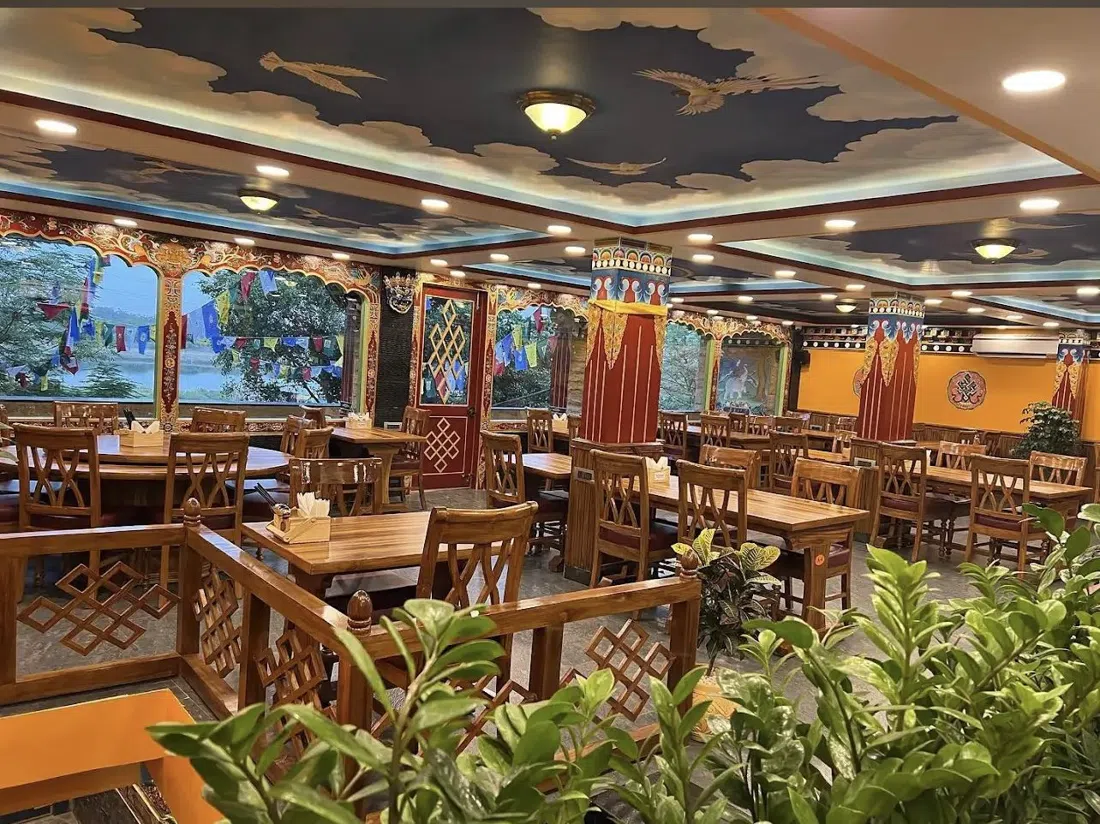
Cafe Dolma – Since 1984 (Tsampa House, plots 18 to 19) carries the oldest restaurant name in Majnu ka Tila, run by the Dolma family since 1984 and now trading under this one. Ignore any listing for a ground-floor Dolma House, which is dead. The dining room is on the sixth floor up a tight stairwell, dim and warm, with dark banquette seating and open views across the colony to the Yamuna flats (₹₹₹). Order gyuma, the homemade Tibetan sausage, and shabhaley. The climb rules out anyone with mobility problems. Open 12:30 p.m. to 11 p.m. daily.
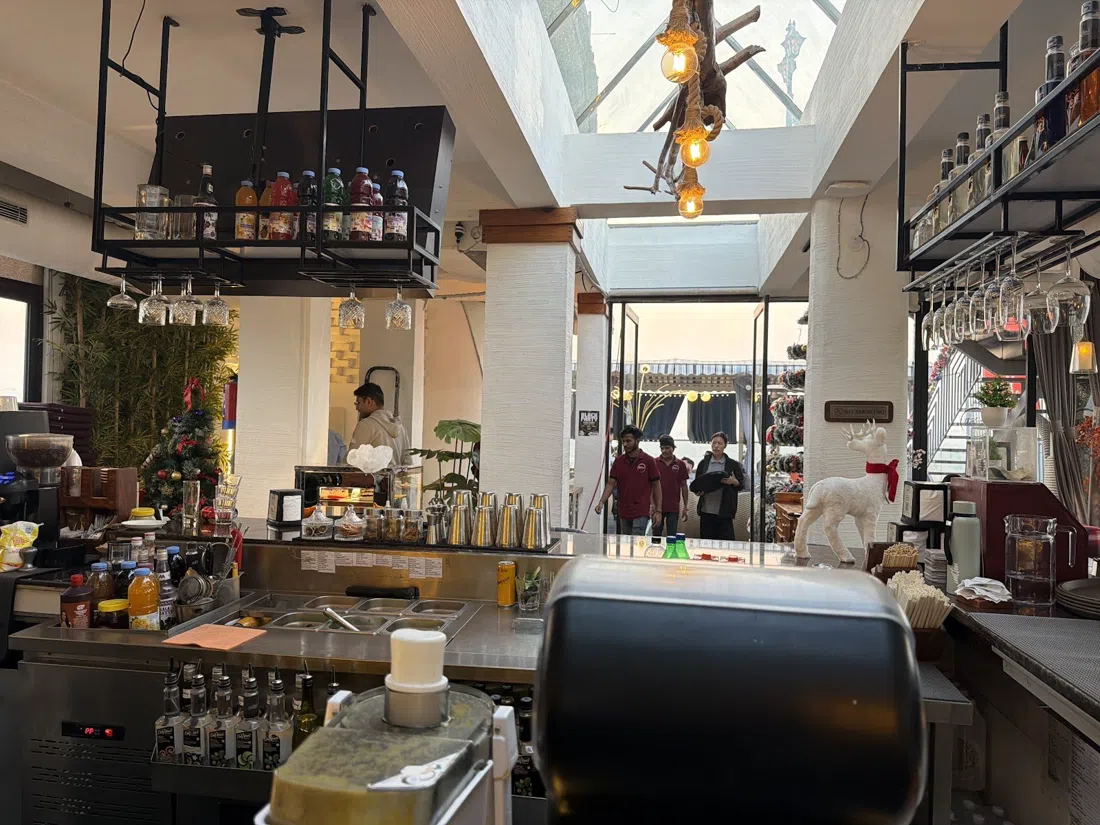
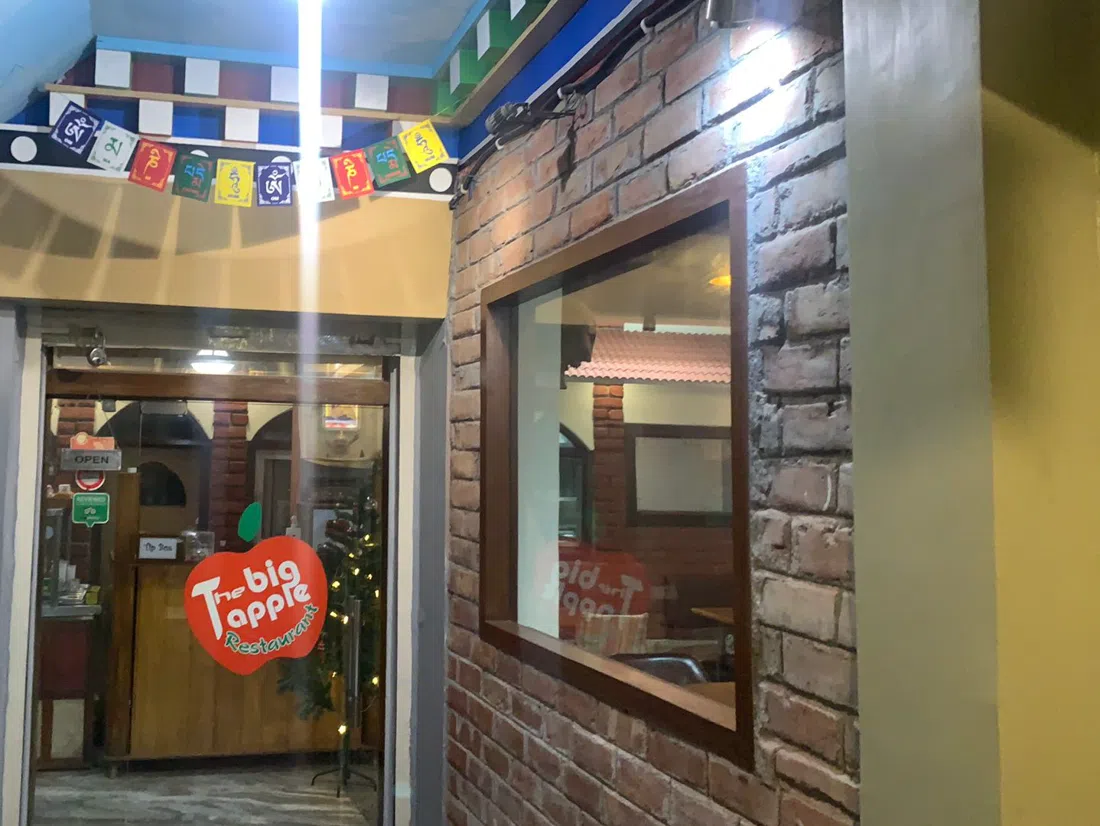
The Big Apple (43 to 48 Dazang House, New Camp) does the cheapest proper sit-down meal in the colony, Tibetan and Bhutanese thalis on compartmented steel plates (₹). It is the one kitchen here serving a Bhutanese thali, and that is what to order. Carrot cake is baked on site and sits in a glass cabinet at the counter by the slice. The room is small and informal, music on, young staff working it. Open 11:30 a.m. to 11 p.m.
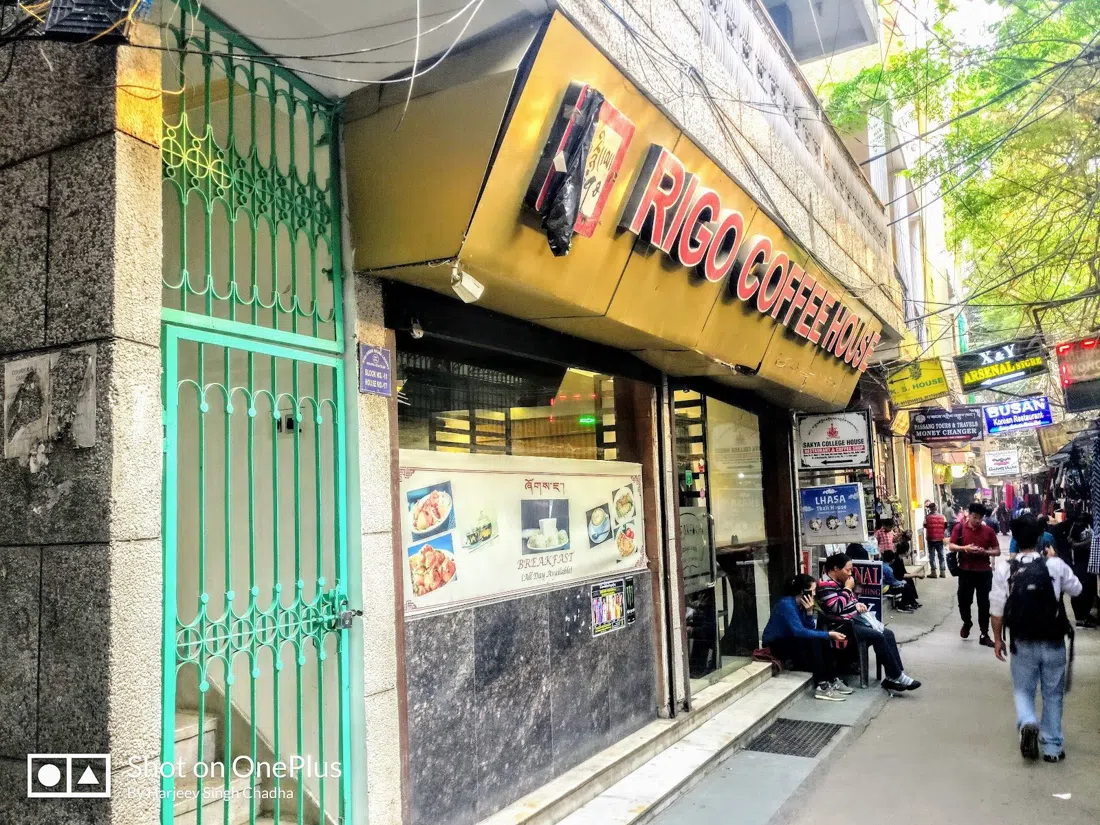
Rigo Restaurant + Bistro (Nyingma House, 180 Tibetan Old Camp) is one operator running two linked rooms. The restaurant does Tibetan and pan-Asian food, and the bistro, high up on the fifth floor, adds pasta and pancakes (₹₹₹). Big windows give you a sea of flat colony rooftops, water tanks and prayer flags, and the interiors are dark wood under warm pendant lighting. This is the biggest room in the neighbourhood and the service is fast. Ring ahead before you go. Upper-floor venues like this one are the exact target of the Delhi High Court's building-safety order of December 2025. Open noon to 10 p.m.
Evening rooms with live music
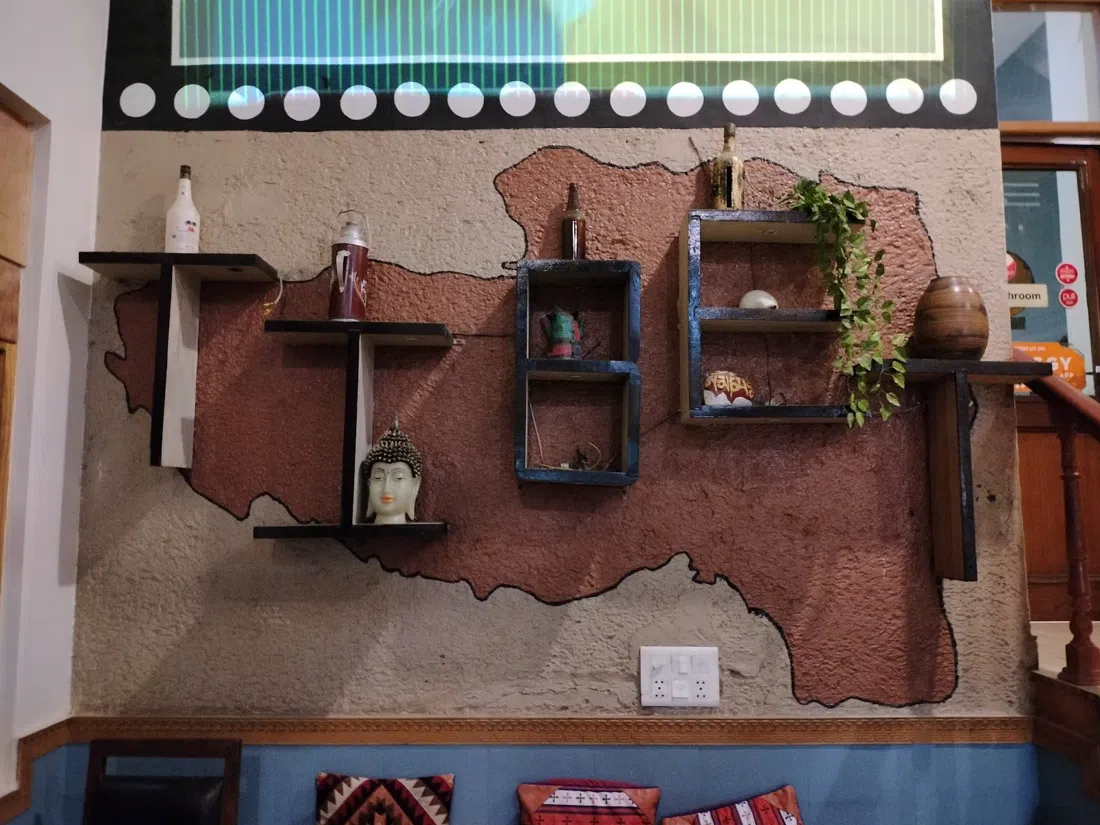
Himalayan Restaurant (House 26, New Tibetan Camp) is the pick for an evening rather than a lunch. Framed Himalayan mountain photography covers the walls edge to edge, the lighting is low, and a band plays in a small corner. Tibetan and Indo-Chinese dishes arrive on steel platters, and the kitchen serves alcohol (₹₹). Wifi works. The room is step-free, one of the few in the colony. Open noon to 10:45 p.m.
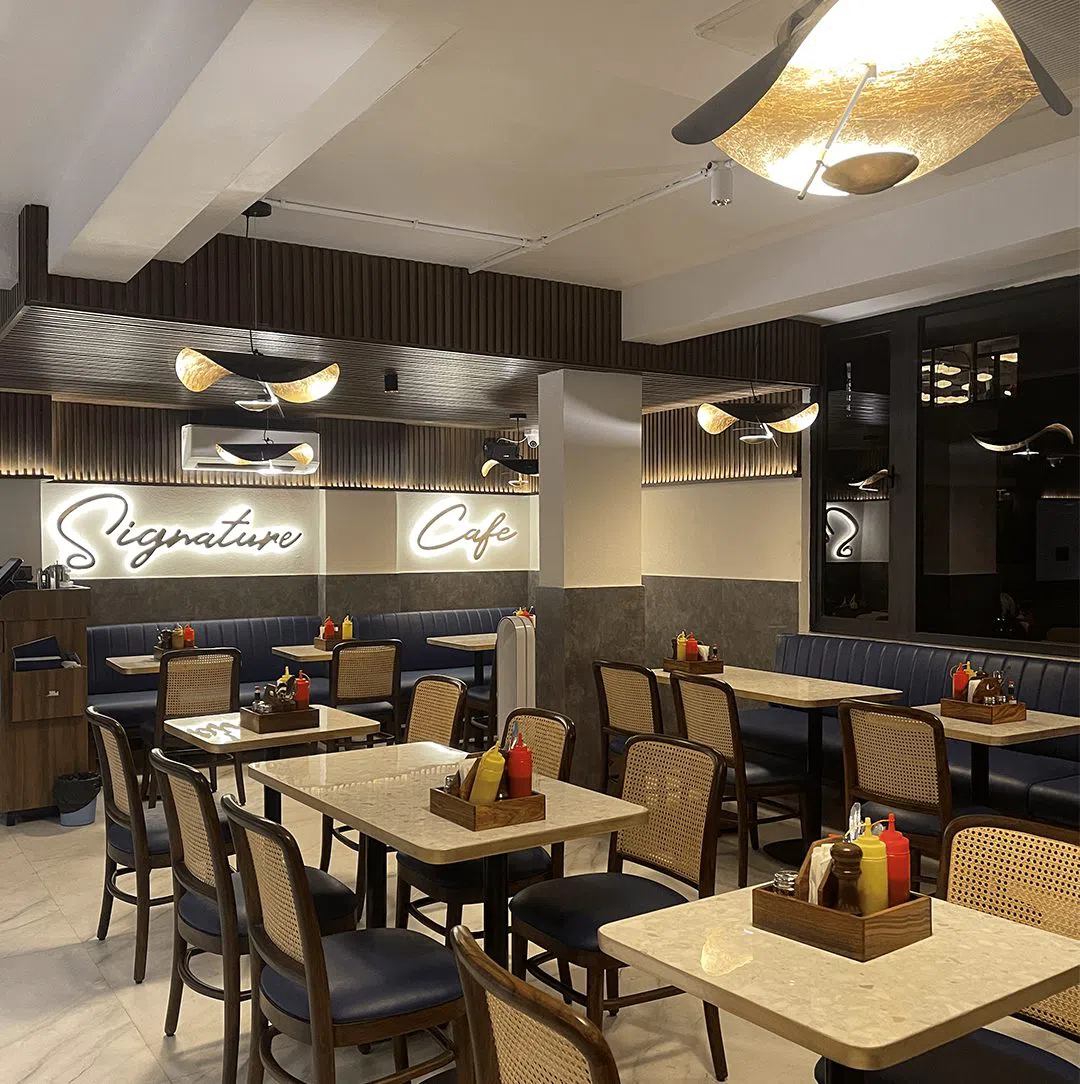
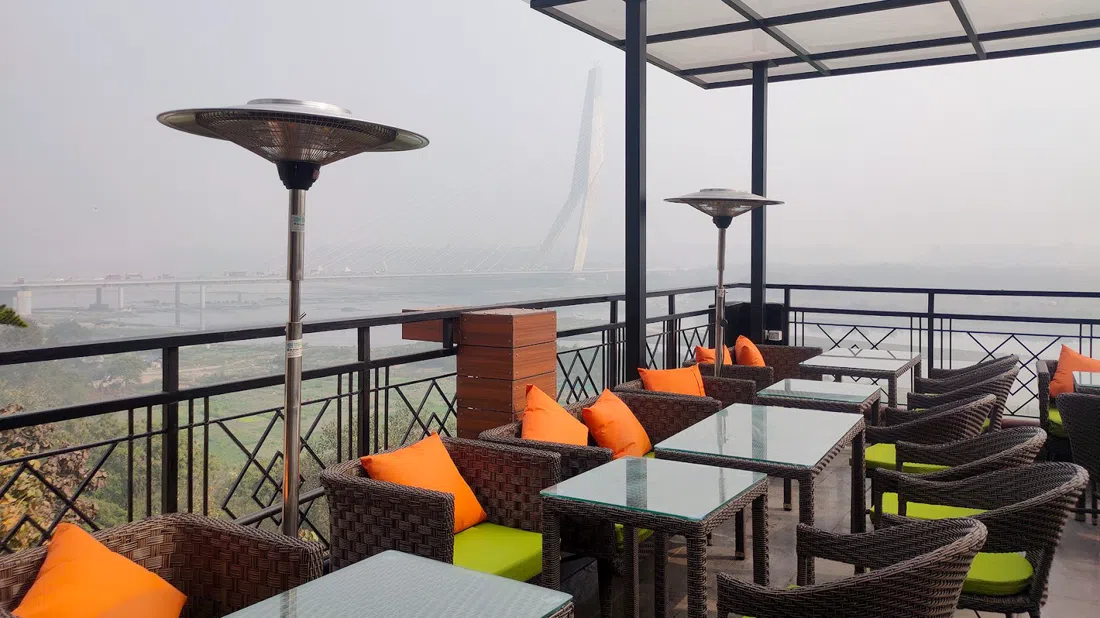
Signature Cafe(New Aruna Nagar 5A号)把河景搬进了窗户里。餐厅后面的街道紧邻亚穆纳河漫滩,餐桌的角度经过调整,使Signature大桥白色的桥塔和斜拉索扇面充满整扇玻璃。角落里有现场音乐演出,厨房供应喜马拉雅和亚洲风味的菜肴(₹₹)。建议在日落前后前往,并尽早到达,因为面向河流的餐桌是唯一值得抢的位置。近来刷卡支付时好时坏,请备好UPI支付。营业时间为上午8点至晚上10点。
社区后方的亚穆纳河步道
亚穆纳河码头与河畔步道(社区后方)是Majnu ka Tila最安静的五分钟,免费开放,位于空旷的场地上,没有任何限制。一条平坦的泥土与混凝土堤岸沿着漫滩延伸,漫滩上是灌木丛和菜地,下游则矗立着Signature大桥白色的斜拉索塔。社区的屋顶和水箱层层叠叠地堆在身后,从这里你可以理解这个定居点为何会建在此处。建议早晨散步。步道没有照明,也没有巡逻,天黑后不宜逗留。这一带的河滩也一直牵扯着德里的各类诉讼,清理工程和围栏设施时有时无。
Bela路上的拉达克佛教精舍
拉达克佛教精舍(Bela Road,ISBT Kashmere Gate站旁)位于社区以南,步行约20分钟或乘坐短途自动三轮车即可到达,离得足够近,可以算作邻居,也是德里佛教文化的另一半。它由拉达克人修建,尼赫鲁于1963年为其揭幕。建筑采用拉达克风格,色彩鲜艳多彩,红色与金色涂饰的飞檐和雕花窗框十分醒目,内有一座镀金佛像神龛,以及摆满佛教经典的书架。入场免费,开放时间为上午8点至晚上7点,无需许可证。偶尔会对游客开放冥想课程。旁边的Monastery Market摆满了藏式服饰和唐卡摊位,是最早的藏人集市。
住在Majnu ka Tila
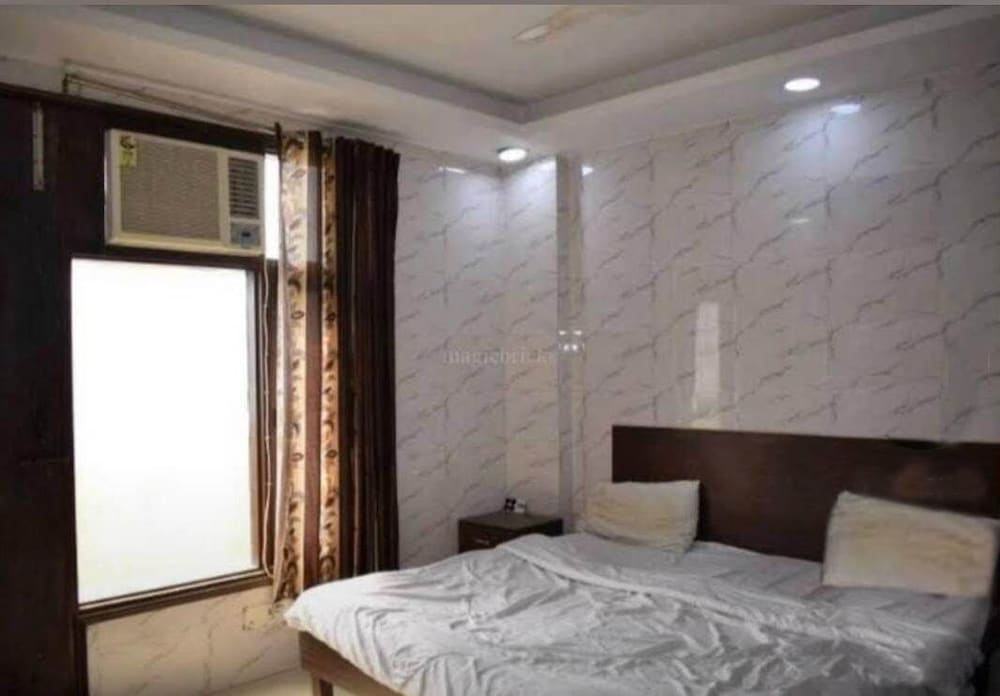
Wongdhen House(New Tibetan Colony 15A号)是这里历史悠久、深受旅行者喜爱的住宿地,由藏人经营,干净且价格实惠,紧邻古鲁德瓦拉。客房共21间,朴素而宽敞,浴室异常宽大,贴满瓷砖(₹₹)。楼顶露台餐厅可俯瞰亚穆纳河滩,傍晚有现场音乐。底层的Sumo是店内餐厅,两处空间都能容纳一个团体。店方可安排机场和车站接送。Kashmere Gate地铁站和ISBT位于南面2公里处。德里没有哪家住宿能以这样的价格让屋顶拥有河景。
行程规划提示
市场大多在周一歇业,小巷在上午11点前都拉着卷帘门,因此上午的时间最好留给寺院、古鲁德瓦拉和河畔步道。去楼上的Bistro之前请先给Rigo打电话,周末去Makye Amay也请提前致电。
Delhi的酒店
常见问题
Majnu ka Tila 的购物店铺几点开门?
New Aruna Nagar小巷里的大多数店铺要到上午11点才拉起卷帘门,许多店铺周一歇业。请把上午的时间留给寺院、古鲁德瓦拉和河畔步道,购物安排在之后。
进入寺院或锡克教神庙需要付费吗?
两处都免费。Samyeling 藏传佛教寺院无需预约,也不收费,不过祈祷殿门口禁止拍照,参观者在殿内需顺时针行走。在 Gurudwara Shri Majnu ka Tila Sahib,需要覆盖头部,并把鞋子留在大理石前院;核心开放时间为早上 5 点至晚上 9 点。
在 Majnu ka Tila 应该去哪里吃 momos?
H-32 Aruna Nagar 的 Tee Dee Restaurant 自 1991 年营业至今,仍是人们品尝 momos、thukpa 和 tingmo 的首选;只接受现场用餐,每天早上 9 点至晚上 10 点 30 分营业。Makye Amay Tibet Kitchen 则是更安静的正餐选择,营业时间为上午 11 点 30 分至晚上 10 点 30 分,周末最好提前致电。
可以在 Majnu ka Tila 住宿吗?
New Tibetan Colony 15A 号的 Wongdhen House 拥有 21 间由藏族人经营的客房,毗邻锡克教神庙。浴室宽敞,铺有瓷砖;一楼餐厅名为 Sumo,屋顶露台可俯瞰亚穆纳河畔的公寓楼,晚间有现场音乐演出。工作人员可安排机场和车站接送;Kashmere Gate 地铁站和 ISBT 汽车总站位于南面 2 公里处。
寺院后面的亚穆纳河滨小路步行安全吗?
这里是一片开阔的空地,免费且不设限,白天步行即可。河堤没有照明,也无人巡逻,因此请在上午前往,且不要留到天黑之后。由于这片狭长地带位于洪泛平原上,清理工程和围栏设置时有变化。
作者
Bram Verhoeven
A Dutchman reading Delhi one neighbourhood at a time
Bram moved from Utrecht to a Nizamuddin flat six years ago and spends his weekends walking Lodhi Garden, the Mehrauli Archaeological Park and the quieter lanes of Shahjahanabad. He plans routes around the metro map and the afternoon heat, so a Humayun's Tomb morning doesn't collapse into a sweltering midday queue.