Milan stories
28 stories from milancitybreaks.com, newest first.

Barolo tastings in the Langhe hills on a day from Milan
The Barolo hills are close enough to Milan for a single day out, if you pick the right stops. Where to taste, which cellars take walk-ins and how to get there without driving.

Eating the length of Milan's Naviglio Grande
A flat day of eating down Milan's canal, starting with standing sandwiches at the Darsena market hall and ending with cocktails one street back from the water.

Inside Milan's Duomo and Onto the Roof in October
The cathedral interior and the rooftop walk, with the stairs and the lift priced separately. Then the weekday closures that decide which October day you pick.

October Steam at QC Termemilano in Milan
The sauna is a 1928 tram carriage, the pool sits over Roman masonry, and the weekday slots are what is left once Friday evening sells out.

How the Bernina Express Works as a Day Trip from Milan
What the red train costs, which stops are worth getting off at, and whether thirteen hours out of Milan is time well spent.

Brera in October, Milan's Art Quarter Done Properly
How to work Milan's Brera in October 2026: the 08:30 opening at the Pinacoteca before the queue builds, the new rooms that aren't in the guidebooks yet, gold ginkgos in a free walled garden, and the closed days that ruin an unplanned day.

Where to Stay in Milan on Your First Visit
Fifteen hotels and hostels across the Duomo, Brera, Porta Venezia, Centrale and the canals, with walking times, straight group notes and what a night costs at each.

Lake Como and Lake Garda on Day Trips from Milan
How to run both lakes from a single Milan hotel room, with the trains, the ferries, the villas worth crossing for and the days to avoid.

The Ninety-Second Ritual at Milan's Coffee Counters
A trail through Milan's espresso bars, from two-century-old marble counters to the specialty labs doing it differently, with honest notes on doors, groups, and prices.

Above the Spires: Milan's Rooftop Season
From the Duomo's marble forest to Porta Nuova's glass towers, Milan's best conversation about itself happens on the roof — here's where to go up, and who each terrace actually suits.

Milan's Autumn Ritual: Parks, Ginkgos, Roast Chestnuts
A walking guide to Milan's parks, hidden gardens and chestnut carts, from the ginkgo avenue at Giardini Pubblici to the artificial hill at Monte Stella, for the six weeks a year the city turns gold.

The Galleria: Where Milan Comes to See and Be Seen
Inside Milan's glass-vaulted crossroads between Piazza del Duomo and La Scala — a working arcade of coffee bars, tailors, and one very lucky bull, not a museum piece to rush through.

Fifteen Minutes With Leonardo's Last Supper in Milan
How to actually get inside the Cenacolo Vinciano in 2026, why the restoration story matters as much as the fresco, and how to fill the rest of the afternoon around it.

Milan's Fashion Week Hangover: Where the City Actually Shops
When the tents come down on Via Tortona, the real shopping season begins — runway samples, editor cast-offs and archive vintage move through the city's outlets, ateliers and back-room sales for weeks after the shows end.

Leonardo da Vinci's Milan: The Twenty-Year Commission
Leonardo spent the better part of two decades in Milan on Ludovico Sforza's payroll, and what he left behind is scattered across a refectory, a library, a castle ceiling, and a canal lock — this is how to see all of it without wasting a day.

Milan for the Repeat Visitor
Milan doesn't give up its best rooms, canals, and drinking rituals on a first pass — this is a guide built for the traveller who plans to come back.

The 1928 Carrelli: Milan's Antique Trams and the Routes Worth Riding for the Ride Itself
Milan never tore up its trams — a fleet of wooden 1928 Class 1500 cars still runs daily routes through the city, and riding one, not just photographing it, is the point.

Hidden courtyards and cortili — Milan's secret inner gardens and Renaissance courtyards most visitors never find
Thirteen cloisters, walled gardens, and cortili tucked behind Milan's basilicas, palazzi, and Renaissance facades — grouped into walkable clusters, with honest notes on who each one suits and what to book ahead in 2026.

The Competitive Sport of Milan's Aperitivo Hour
A calm, walkable route through the bars that invented Milan's early-evening ritual — from the Duomo's marble counters to the Navigli waterline — with honest notes on doors, queues, and who each place actually suits.
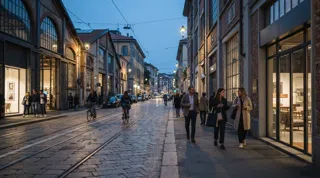
Tortona, Milan: the city’s design district with a working-class spine
Behind Porta Genova, Tortona turns old industrial sheds into museums, showrooms and serious dining, then turns quiet again the rest of the year.
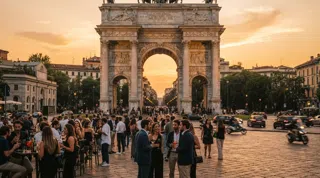
Sempione & Arco della Pace, Milan: the city’s greenest elegant hour
Between the Sforza Castle and the Arco della Pace, Milan loosens its tie: a park district of museums, terraces and slow evenings that still feels properly local.
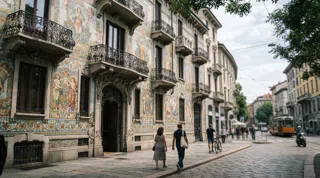
Porta Venezia, Milan: rainbow stripes, Liberty facades and the city’s most open table
A district where Art Nouveau mansions, Eritrean canteens, queer nightlife and the longest shopping street in Milan all jostle within a few blocks.
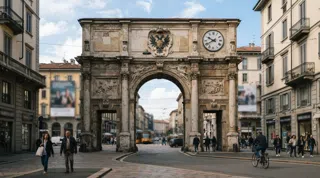
Porta Romana, Milan: the neighbourhood where Milan really eats
South of the Duomo, Porta Romana trades postcard Milan for a calmer, better-fed city of trams, trattorie, contemporary art and grown-up evenings.
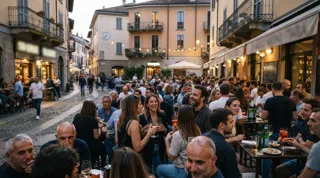
NoLo, Milan: the neighbourhood that learned to brand itself
North of Loreto is Milan’s scrappiest success story: a lived-in grid where cheap noodles, natural wine and street murals share the same pavements.
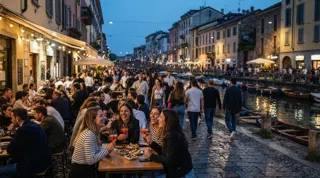
Navigli, Milan: canals, aperitivo and the city after dark
Milan’s canal district is loud, sociable and just scruffy enough to feel alive — a place where aperitivo, antiques and late-night cocktails share the same towpath.
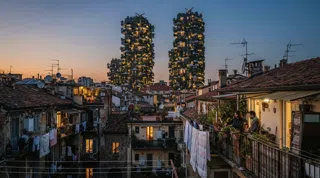
Isola, Milan: where the towers meet the old quarter
A walk through Milan’s most human-scaled neighbourhood, where the Bosco Verticale rises above artisan streets, old osterie and some of the city’s best bars.
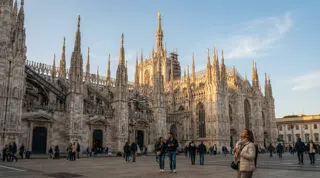
Duomo & Centro Storico, Milan: marble, mosaics and the city performing itself
A walk through Milan’s most concentrated quarter, where the cathedral spires, the Galleria’s glass dome and La Scala sit a few minutes apart, and every step comes with a premium.
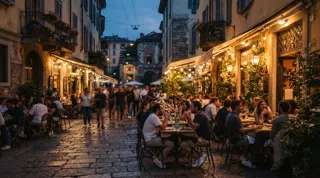
Brera, Milan: the city’s art quarter with a cellar-side aperitivo habit
A walk through Brera’s cobbled lanes, where the Pinacoteca, old-world trattorie and wine-cellar evenings still give central Milan its most civilised pulse.